
Reviewed · LUCCA TOURS
Lucca: City Highlights Walking Tour
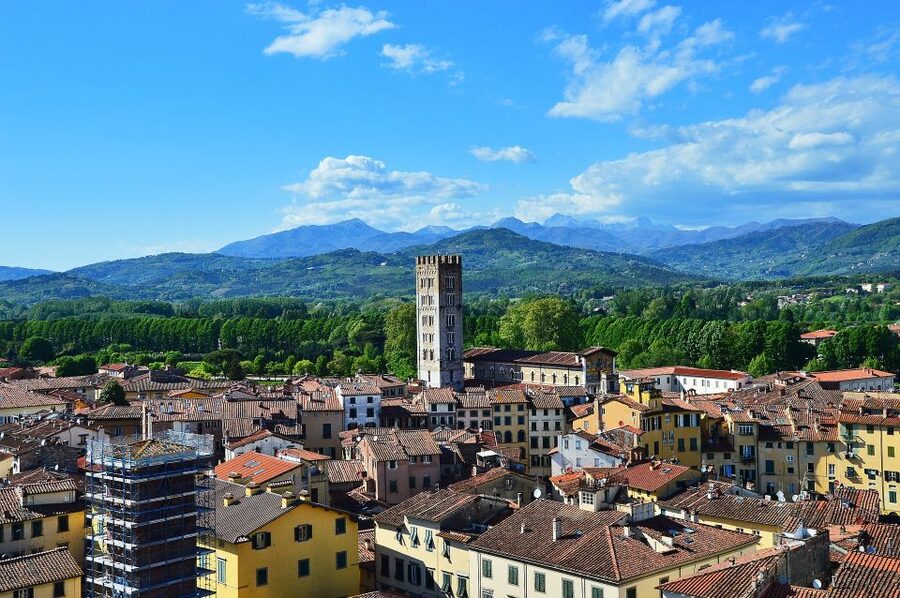
Lucca is the kind of Italian city that rewards calm wandering, and this 2-hour highlights walk is a smart way to connect the dots fast. I like the focus on the big stories behind the landmarks, especially how the Piazza Anfiteatro got its ovular shape from a Roman arena. I also like the mix of civic sights, Baroque beauty, and local street life along via Fillungo. One drawback to consider: it is still a walking tour, so you need comfortable shoes and realistic expectations for what you can cover in just two hours.
You’ll start at the Saint Maria Gate and move through the most memorable core: Piazza Anfiteatro, Palazzo Pfanner, Piazza San Martino and the cathedral area, Teatro del Giglio, then out to the walls for panoramic city views. The pace is relaxed, fitting Lucca’s famously slow rhythm, but it is organized enough that you will get coherent explanations rather than just a checklist.
Key highlights worth timing your day for
- Roman arena to ovular square: the Piazza Anfiteatro shape is explained in plain, visual terms.
- Palazzo Pfanner Baroque contrast: Baroque-style architecture paired with opulent gardens.
- Via Fillungo street time: a practical break for a bite and retail browsing on Lucca’s main shopping street.
- Cathedral area in Piazza San Martino: you’ll see why Lucca earned the nickname City of a Hundred Churches.
- Teatro del Giglio city theater: a quick look at Lucca’s historic stage life.
- Walls and Porta San Pietro views: you finish with elevated, panoramic photo angles.
Getting oriented at Saint Maria Gate, then learning the city’s logic
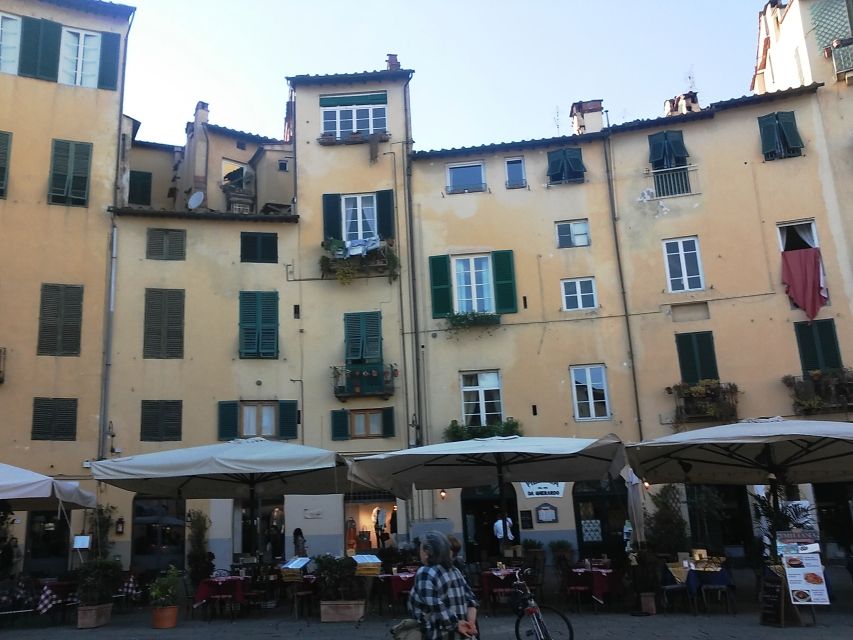
The tour starts in front of the Saint Maria Gate, Piazza Santa Maria, 42. That is a good choice because it puts you at a boundary point, where you can mentally map Lucca’s old walls and fortress-era urban layout before you go deeper. Even if Lucca is small enough to walk on your own, a guide helps you avoid the common trap of wandering without context.
One of the best parts is how quickly you begin hearing the theme of the city: Lucca’s historic core is shaped by 16th and 17th century fortress-style planning, yet the day-to-day feel stays calm and unhurried. You get that contrast right away, which makes the later stops land better. And because the walking loop returns to the meeting point, you are not stuck figuring out how to get back after a photo stop.
More Lucca tours:
- Lucca: 2-Hour City Center Walking Tour
★ 4.7 · 1,314 reviews - Lucca: Puccini Festival Opera Recitals and Concerts
★ 4.7 · 1,278 reviews - Lucca: Guided Winery Tour with Wine Tasting
★ 4.7 · 611 reviews
Piazza Anfiteatro and the ovular shape you can actually visualize
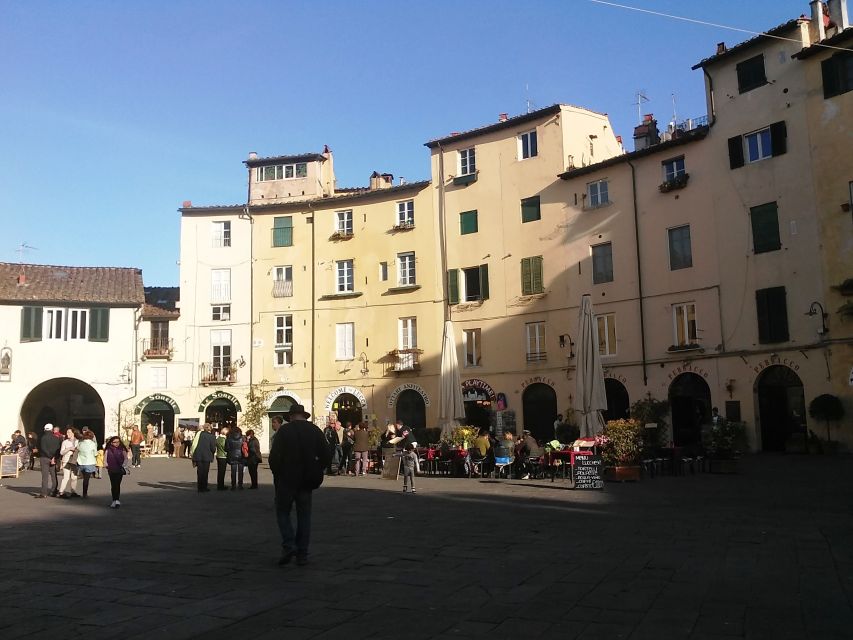
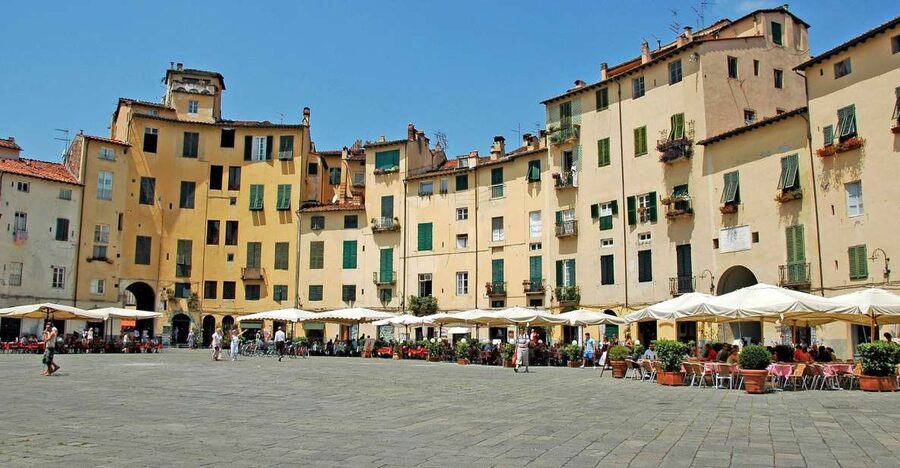
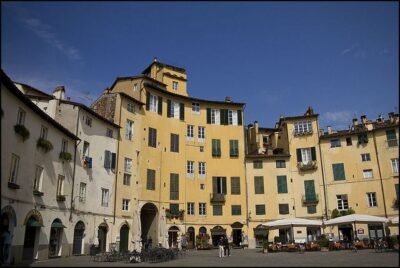
Piazza Anfiteatro is where Lucca stops being abstract. The key story you hear is how the square’s ovular shape connects to the ruins of a Roman arena underneath. Rather than treating it as trivia, the guide’s explanation helps you look at the street plan and “read” the leftover geometry.
Here is what I find practical about this stop: once you understand why that oval exists, you naturally notice how buildings and streets align around it. You stop thinking of Lucca as just pretty stone and start seeing how layers of time create patterns you can spot on foot.
Take a slow lap inside the square area. Even within the short tour time, a minute spent looking across the edges pays off because it reinforces the Roman-to-medieval transformation you just learned.
Palazzo Pfanner: Baroque style meets opulent garden calm
Next comes Palazzo Pfanner, one of the most impressive stops on the route. You’ll get the quick version of why it matters, with its Baroque-style architecture and opulent gardens stealing the spotlight. This is the kind of place where a guide’s description adds weight to what you see, because you are not just viewing a facade. You are being pointed toward what makes the building feel theatrical in a quiet Luccan way.
This stop also works as a mood reset. Earlier, you are focused on urban form and Roman roots. Here, the story shifts to aesthetics and lifestyle, and that makes the overall tour feel balanced.
If you get sensory overload easily, keep your expectations simple: you are not there for a long museum visit. You are there to catch the main visual idea and move on with a clearer sense of Lucca’s style.
From old walls to Via Fillungo: the city’s slow rhythm, in real time
After the palace and gardens, the tour heads toward the main shopping street, via Fillungo. This is not a random detour. It is a purposeful slice of daily Lucca, and it helps you understand why the city can feel peaceful even with plenty of visitors.
I like that you get time here to do two very normal tourist things: grab a bite and do a little shopping. You can keep it practical, like picking up a snack for later, or go a bit broader with souvenirs and small purchases. Either way, the benefit is that you are not forced to sit through information back-to-back without a human break.
Also, notice the pacing. Lucca is described as slow-paced, and you can feel it in how people move through the street. That makes it easier to match your own walking tempo to the city, which is exactly what you want on a two-hour plan.
More walking tours in Lucca:
- Discover Lucca’s Secrets on a Guided Walking Tour
★ 4.5 · 485 reviews - Lucca: Guided City by Night Walking Tour
★ 4.5 · 31 reviews - Lucca: Musical Walking Tour with Puccini Museum Visit
★ 4.5 · 21 reviews - Lucca: join a ‘must see’ walking tour! (English)
★ 4.7 · 11 reviews
Piazza San Martino and Lucca Cathedral: why the city feels like a church town
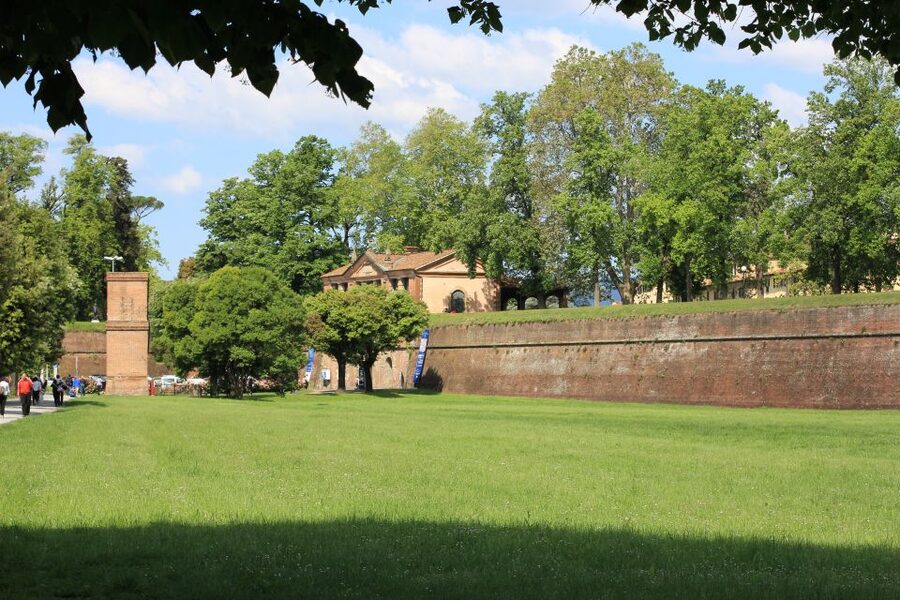
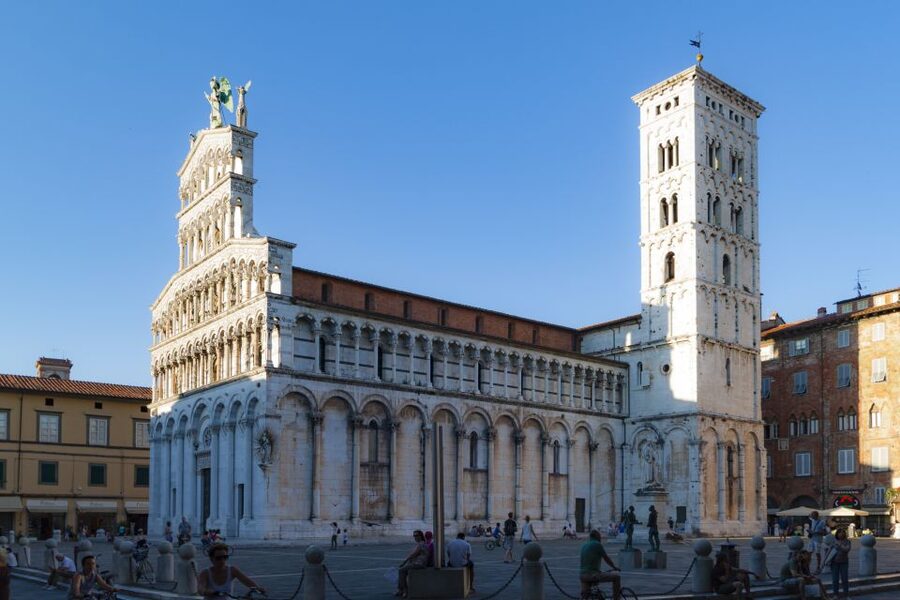
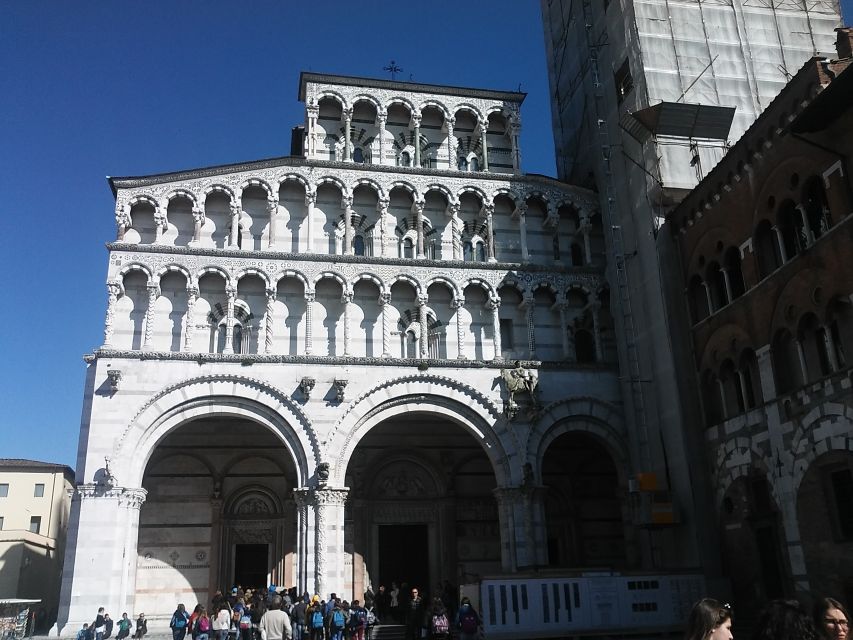
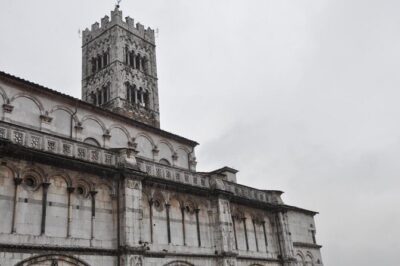
Then the tour moves into Piazza San Martino, an area tied to Lucca’s most important monuments, including the cathedral built in 1070. This is where the nickname City of a Hundred Churches comes into focus. Even if you do not count churches on foot (no, you should not try), the guide’s framing helps you see why Lucca earned the label.
This stop is valuable because you get a sense of religious and civic power in one place. Cathedral areas in Europe often feel like separate worlds, but Lucca’s center ties sacred sites into the everyday street fabric. You will understand that better after you’ve already been through Piazza Anfiteatro and the palace stop, because the tour shows how “public” space changes shape across centuries.
One practical tip: take a moment to step back and look at how the plaza holds space. That bigger view helps you connect the cathedral landmark to surrounding streets, instead of treating it like a one-off photo object.
Teatro del Giglio and the panoramic payoff from the walls
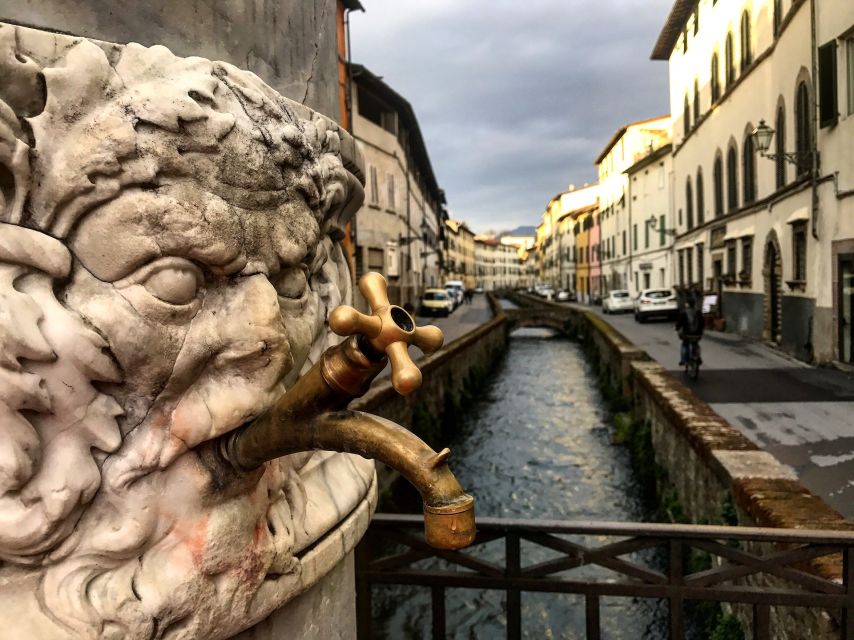
From Piazza San Martino, you continue to the Teatro del Giglio, Lucca’s historic theater and opera house. This is a nice change of pace because it reminds you that the city was not only religious and military. It also had cultural life, with a built space designed for performance and gathering.
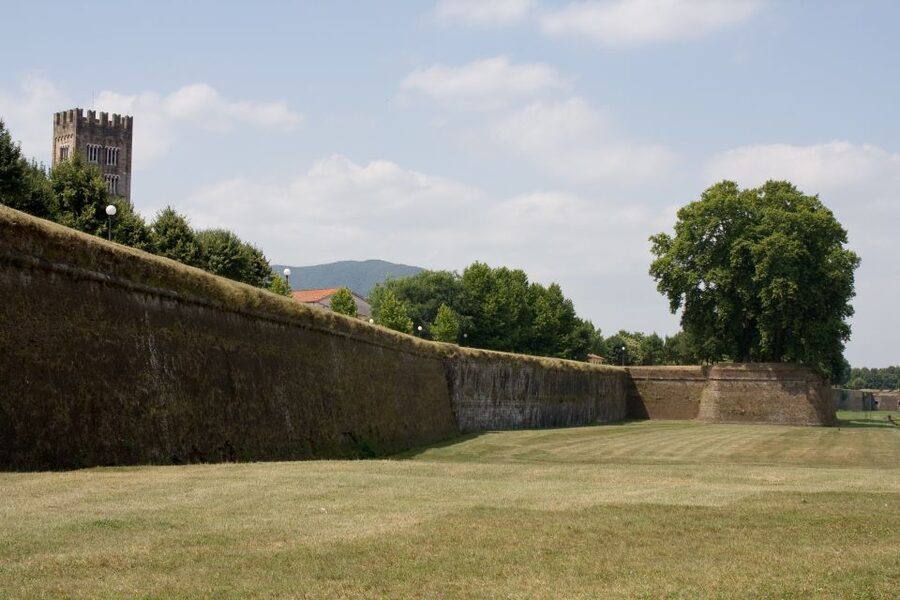
After that, you end with the walls in front of Porta San Pietro. This is the panoramic moment you are likely to remember. When you look over Lucca from the walls, you finally understand why the city is so easy to explore: the old layout stays readable, and the urban density feels controlled rather than chaotic.
If you care about photos, this is the time to slow down and choose your angle. Even within the short walk, wall views give you a “map in a picture” feeling. And visually, they tie everything together, from fortress-style planning to the slow street rhythm you noticed earlier.
What I think makes this tour feel worth it in two hours
This isn’t an all-day extravaganza. It is a tight route, and that can be good. You get guided explanations at the places that matter most, while still leaving enough time for you to continue exploring on your own after the tour ends back at the starting point.
A couple of things to keep in mind so you enjoy it fully:
- The group is walking-based, so you will spend more time outdoors than in any single attraction.
- You will not linger for long like you would on a museum ticket day. The value here is orientation and context.
- You are in central Lucca, so expect compact, classic street scenes where comfortable shoes are not optional.
This tour is well suited for first-timers in Lucca who want a coherent introduction, plus travelers who like their guides to focus on meaning, not just dates.
Price and value: what $195.42 buys you here
At $195.42 per person for about two hours, you are paying for an expert guide and a curated route that hits multiple landmark categories: Roman legacy, Baroque architecture, shopping street life, cathedral space, and wall views. It is not cheap compared with self-guided strolling, but it is also not just paying for walking.
The biggest value factor is interpretation. The ovular shape story and the Roman arena connection are the kind of details that you can miss completely without a guide. The cathedral area and Teatro del Giglio also become more satisfying when you understand why they fit into Lucca’s broader identity, especially the City of a Hundred Churches theme.
One more value angle: the tour is listed as a private group experience. That tends to make Q and A and pacing feel more natural than big, rigid group tours.
Languages, timing, and who should book this walk
The live guide can be in Italian, English, French, German, or Spanish. That matters because these stops are best understood with clear explanations. If you want the narrative flow, choose a language you’re comfortable following closely.
Timing-wise, the duration is set for two hours. Starting times depend on availability, so you should plan your day around the start window rather than assuming a fixed hour.
Who this suits best:
- You want a smart introduction to Lucca’s core in a short window.
- You like architecture with context, not just sightseeing photos.
- You prefer a relaxed pace and a guide who keeps you moving through the key places.
Who might want to rethink it:
- If you have mobility limitations, double-check suitability. The info provided lists wheelchair accessibility, but it also states the tour is not suitable for people with mobility impairments. You should clarify details directly so you do not arrive and discover a mismatch.
Should you book this Lucca highlights walking tour?
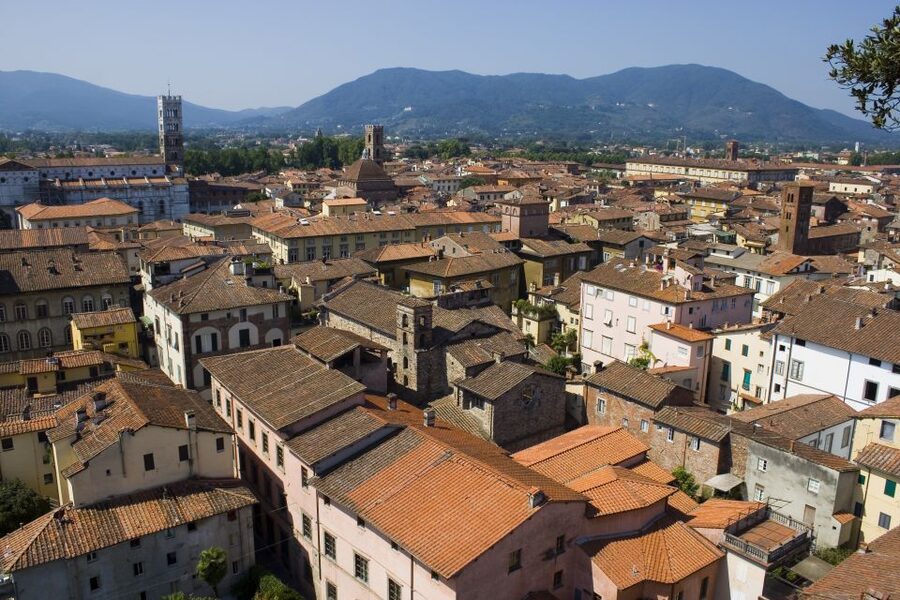
I’d book it if you want the fastest route to understanding Lucca, with the best story behind the most recognizable spaces. The combination of Piazza Anfiteatro, Palazzo Pfanner, Piazza San Martino and the cathedral area, Teatro del Giglio, and wall views is a strong mix for a two-hour plan. You also get practical street time on via Fillungo, which helps you keep the day comfortable and not all “look, listen, move” the whole way.
If you want to wander slowly with no schedule at all, you could do Lucca on your own. But if you want your first visit to feel organized and meaningful, this is a good use of your time.
FAQ
How long is the Lucca city highlights walking tour?
The tour lasts 2 hours.
Where does the tour start and end?
It starts in front of the Saint Maria Gate at Piazza Santa Maria, 42, 55100 Lucca, Italy, and it ends back at the same meeting point.
What is included in the price?
The included items are an expert guide and the walking tour.
Is food and drink included?
No. Food and drinks are not included.
What languages are available for the guide?
The guide offers live interpretation in Italian, English, French, German, and Spanish.
What should I bring?
Wear comfortable shoes for walking.
Can I cancel and get a refund?
Yes, free cancellation is available up to 24 hours in advance for a full refund.
Just reviewed around Lucca
- Lucca: Private Guided Walking Tour★ 4.1 · 7 reviews
- Lucca: Musical Walking Tour with Puccini Museum Visit★ 4.5 · 21 reviews
- Lucca: Guided City by Night Walking Tour★ 4.5 · 31 reviews
- Lucca: E-Bike Rental★ 4.7 · 27 reviews
- Lucca: Guided Walking Tour★ 4.2 · 8 reviews
- Lucca: Pasta Cooking Class with a Local Chef★ 5.0 · 56 reviews
- Lucca: escursione soft in Canoe★ 4.9 · 27 reviews
- Lucca: Market and Cooking Class at a Local’s Home★ 4.8 · 5 reviews
Lucca Tours, compared.

Discover Lucca’s Secrets on a Guided Walking Tour
Read our review →

Lucca Bikes and Bites with food tastings for Small Groups or Private
Read our review →Browse the lists this tour appears in