
Reviewed · MEDICI TOURS
The Best Tour in Florence: Renaissance and Medici Tales
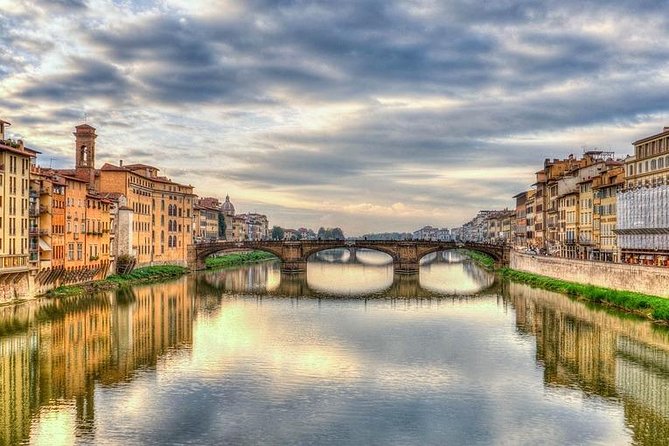
Florence can feel like a museum you’re walking through. This tour works because it gives you a Medici-led storyline while you’re still on the street, staring at the buildings. It’s a 2-hour walking route that connects the big Renaissance headlines with the places right in front of you.
What I like most is how the guide turns Florence into a set of cause-and-effect stories. If you get someone like Aurora, Manuel, Camilla, or Alberto, you’ll usually hear clear explanations in English, plus the kind of extra context that makes the sights feel less random.
One possible drawback is that the pace is tight. Many stops are quick exterior looks, so if your goal is going inside big-ticket sites (like the Uffizi), you’ll want a separate plan after the walk.
Key things to know before you go
- Donation-supported, budget-friendly setup: the listed price is very low, and you choose what to donate at the end.
- A smart first-day path: it starts at San Lorenzo and finishes around Piazza della Signoria near the Uffizi area.
- Medici storytelling that sticks: guides such as Aurora, Deborah, and Simona are praised for making Medici power easy to follow, with humor and good Q&A.
- Iconic Florence, efficiently: you see the Duomo complex, the Baptistery, Giotto’s Campanile, and views tied to Brunelleschi’s dome.
- Small-group feel: up to 30 people, guided by a licensed professional, and in English.
- You leave with next-step ideas: many guides also share practical suggestions on where to go and what to try after the tour.
Why the Medici and Renaissance story works in Florence
Florence is famous for art and architecture, but it’s also a city of power. The Medici family story helps you read the buildings like a living map, not just postcards. When you understand who funded what, you start noticing details you would otherwise miss.
This is also a good format for first timers. You get the landmarks people expect, plus the smaller stops that explain why Florence looked the way it did during the Renaissance. And because it’s on foot, you’re not stuck looking at screens.
More Medici history tours in Florence:
- The Best tour in Florence: Renaissance & Medici Tales – guided by a STORYTELLER
★ 5.0 · 12,316 reviews - Florence: Renaissance and Medici Tales Guided Walking Tour
★ 4.8 · 1,549 reviews - Florence: Mysteries of the Medici Guided Walking Tour
★ 4.4 · 940 reviews
Start at San Lorenzo, where Medici power becomes real
The walk begins in the heart of Florence at Piazza di San Lorenzo, right by San Lorenzo Church. This matters because San Lorenzo isn’t just another pretty church. It’s tied to the Medici family, since it’s the burial place of principal Medici members from Cosimo il Vecchio through Cosimo III.
Even if you don’t go deep into the interior, the setting does something. You’re starting in the city’s active market area, so Florence feels like Florence, not a staged photo set. It’s a strong opener because the guide can frame the Medici as patrons and politicians, not just a name from textbooks.
Practical note: Stop time is short here, about 10 minutes. Come with a curious mind, but don’t expect a full church visit in a two-hour tour.
Palazzo Medici Riccardi, Renaissance politics in stone
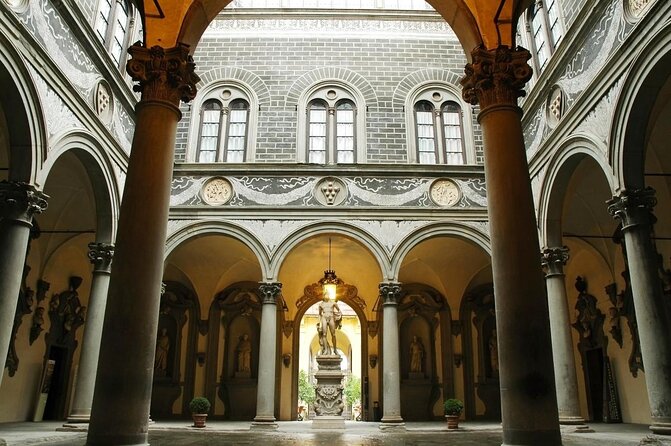
Next comes the Palazzo Medici Riccardi. This is the kind of building that makes the Renaissance feel personal, because it connects the Medici directly to the urban fabric. The palace was designed for Cosimo de’ Medici and built between 1444 and 1484.
What you take away from a stop like this is the link between banking wealth and artistic ambition. In Florence, money was not abstract. It turned into commissions, public prestige, and architecture that announced influence.
The drawback to keep in mind: you’ll get a brief look. If you want to linger, this stop is one of the best candidates to revisit on your own afterward.
Florence Baptistery, one of the city’s oldest anchors
Then you move to the Battistero di San Giovanni, the Florence Baptistery. The tour places it in a key location across from Florence Cathedral and near the Campanile di Giotto. It’s also one of the oldest buildings in the city, built between 1059 and 1128 in Florentine Romanesque style.
This is a smart stop because it gives you timeline contrast. The Medici story pushes you toward Renaissance Florence, but the Baptistery reminds you the city’s sacred roots run much deeper. When you stand there, you can start to see how Florentines built on what was already present.
Admission note: the plan lists this as not included, so you’re mainly seeing the site and hearing context unless you add your own time for entry.
A different way to spend the day in Florence:
- Florence: Skip-The-Line Uffizi Gallery Timed Entry Ticket
★ 4.5 · 27,832 reviews - Tuscany Day Trip from Florence: Siena, San Gimignano, Pisa and Lunch at a Winery
★ 5.0 · 21,634 reviews - Florence: Timed Entrance Ticket to Michelangelo’s David
★ 4.6 · 16,983 reviews - Florence: Michelangelo’s David Skip-the-Line Entry Ticket
★ 4.5 · 12,764 reviews
The Duomo complex, see it all in one sweep
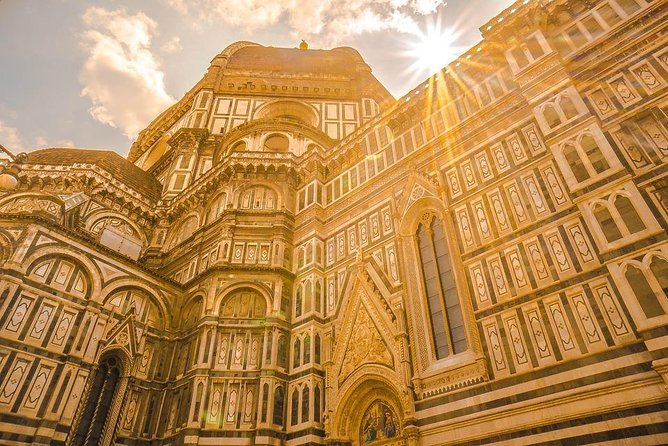
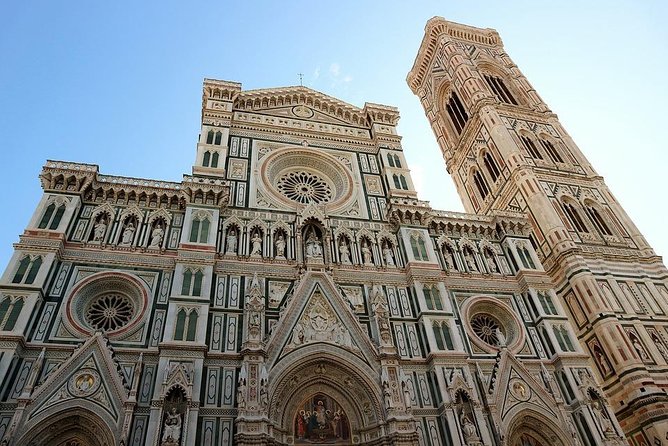
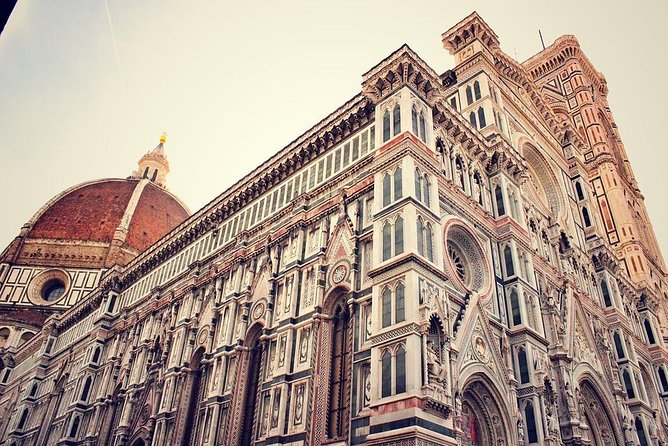
You’ll then hit the Duomo complex, the cathedral of Florence called Cattedrale di Santa Maria del Fiore. The tour connects it to UNESCO historic center status, which is a big clue that this is not just a local landmark. It’s part of the city’s global identity.
The complex also includes the Baptistery and Giotto’s Campanile, so you’re getting a whole architectural relationship in a tight corridor. The tour says the Duomo stop is admission ticket free, which can be helpful for pacing when you’re trying to keep the rest of your costs under control.
What I like about seeing it on a guided walk is the framing. The Gothic start date and the fact that the cathedral complex sits right in the center help you understand why people treat this area like Florence’s living hub, not a detour.
Giotto’s Campanile, Gothic craftsmanship you can actually spot
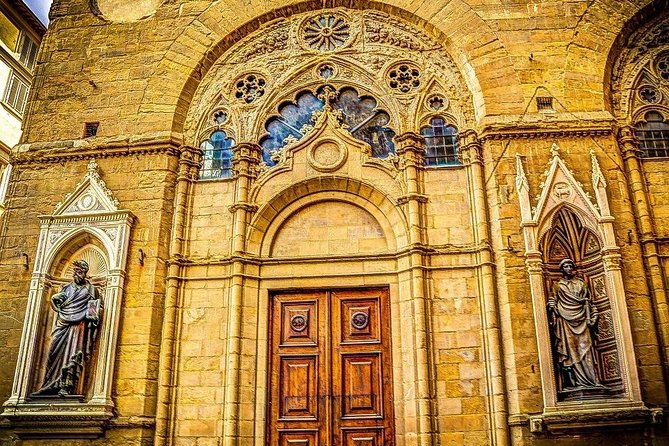
Right after the cathedral, you’ll see Campanile di Giotto. This tower is adjacent to both the Basilica of Santa Maria del Fiore and the Baptistery of St. John. It’s described as a showpiece of Florentine Gothic architecture with Giotto connected to the design and known for rich sculptural decoration and polychrome marble.
This stop is valuable because it trains your eyes. You’ll start looking for texture, color, and sculptural storytelling rather than treating the tower as background. If your guide is strong, this is where the city feels extra “readable.”
Admission note: the plan lists this as not included, so again, you’re mostly absorbing from the outside. That said, outside is still impressive here, and it’s a good way to decide if you want additional paid access later.
Brunelleschi’s Cupola views, big-engineering wonder without the ticket stress
Next is the Cupola del Brunelleschi. The tour calls it one of the biggest mysteries in art and architecture, and it notes the dome was the largest in the world and remains the largest brick dome ever constructed.
Even if you’re not going inside, the dome is a psychological anchor for Florence. It’s the thing you’ll keep looking up at, and it helps you connect architecture to the Renaissance obsession with human ingenuity.
Admission note: it’s listed as not included, so you’re hearing the story and getting the perspective, not buying a separate pass as part of this walk. That’s often how you keep a first trip affordable.
Casa di Dante, a quick look at how Florence shaped literature
The itinerary then shifts from art and architecture to literature with Museo Casa di Dante. Dante Alighieri wrote the Divine Comedy, and the tour describes it as one of the most important poems of the Middle Ages and a major work in the Italian language.
It’s a short stop, about 5 minutes. But that shortness is useful, because it plants a seed. If you like what you hear, you can later choose to spend more time where Dante lived and wrote, without feeling like you spent your entire day on one figure.
Admission note: this stop is listed as free, which is a nice bonus inside a tour that stays budget-minded.
Piazza della Signoria, where public life and art meet
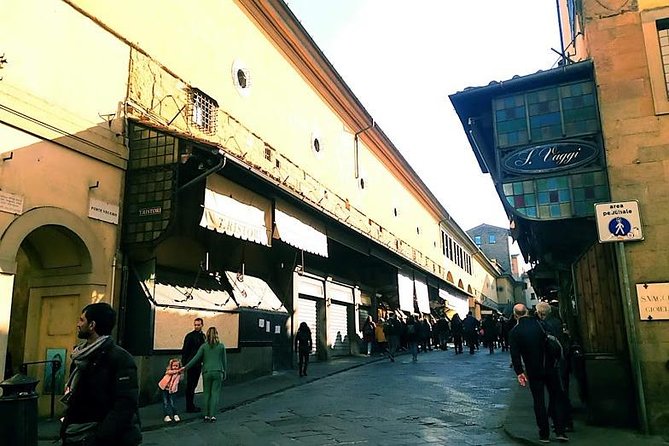
After Dante, the walk arrives at Piazza della Signoria. The tour describes it as an L-shaped square in front of Palazzo Vecchio. It’s a major meeting place for Florentines and tourists, near Palazzo Vecchio and also connected to the Uffizi Gallery.
This is where Florence stops feeling like a sequence of sights and starts feeling like a place. The square sets the tone for politics, pageantry, and everyday life. You’re not just viewing history, you’re standing in history that still functions as a social center.
Admission note: the plan lists Piazza della Signoria as free. The value here is interpretation, not entry tickets.
Palazzo Vecchio and the copy of Michelangelo’s David
Palazzo Vecchio, the city’s town hall, is the next anchor. The tour calls it a massive fortress-palace and one of the most impressive town halls in Tuscany. You’re also told it’s one of Italy’s most significant public places and hosts museums and cultural points.
In the square, you’ll also see a copy of Michelangelo’s David. Even though it isn’t the original, seeing it here explains something important: Florence didn’t keep major art locked inside. It put iconic symbols in public, so citizens learned to see power through sculpture.
Admission note: the plan lists Palazzo Vecchio as not included. So expect the main experience here to be exterior and viewing context from the square and loggias.
End near the Uffizi Gallery, and plan your next museum move
The tour concludes at the Uffizi Gallery area, near Piazza della Signoria. The Uffizi is one of the most important Italian museums and the most visited, with a famous Renaissance collection. The tour also notes the Uffizi building complex was begun by Giorgio Vasari in 1560 for Cosimo I de’ Medici to house offices of Florentine magistrates, which explains the name uffizi, meaning offices.
This ending is smart for planning. After a guided walk, you’ll have clearer priorities. You might know whether you want to focus on specific Renaissance artists, or whether you want to save your energy for another museum day.
Admission note: the plan lists Gallerie Degli Uffizi as not included. That’s normal, and it’s how this walk stays short and affordable.
Price, value, and what you really pay for
The listed price is $3.62 per person and the tour is typically booked about 25 days in advance. That sounds almost too good, but the important detail is how compensation works: this tour is made possible only thanks to your donations, and you decide how much to give at the end.
So what are you paying for? Not entry tickets, not a long museum visit. You’re paying for a licensed guide, a structured route, and the storytelling that helps you connect Medici power to the buildings you see.
The result is good value if you do two things:
- Take notes or pictures of the places, then match them to what the guide explains.
- Use the walk to decide what to visit next, instead of trying to do everything in one day.
If you skip the guide part, the tour becomes just a scenic walk. If you lean into the story, it becomes a shortcut for understanding Florence.
Timing, pace, and what to wear for a smooth walk
This is about 2 hours on foot, with up to 30 people. That length is ideal when you’re trying to get your bearings fast without draining your whole day.
The “good weather” requirement matters. If it’s raining or stormy, the experience may be canceled and you’ll be offered a different date or a full refund.
For comfort, wear shoes that can handle old streets. Florence cobblestones can be a pain when you’re standing still to listen and then walking again.
Who this tour suits best
This is a great match if you want a first-day anchor in Florence. It gives you the Medici storyline, the Renaissance context, and a high hit-rate on major landmarks, without turning your trip into a ticket marathon.
It also works well if you’re not chasing every inside visit. Many stops are quick, and that makes it easier to stay flexible with your other plans.
If you already have every museum scheduled and you want only ticketed access, you might prefer a more museum-heavy day. But even then, the story can sharpen what you see later.
Should you book this Medici and Renaissance walk?
If you’re trying to understand Florence instead of just checking boxes, I’d book it. The highest praise is consistent: guides make the Medici and Renaissance story clear, funny, and memorable, and they help you connect what you’re seeing to why it mattered.
Book it early in your trip. In two hours, you’ll learn enough to make your later choices easier, especially around the Duomo complex, Dante, and the Piazza della Signoria area.
If short exterior stops frustrate you, keep your expectations realistic. This is a guided walk that points you in the right direction, then leaves the deep dives for your next day.
FAQ
How long is the Florence walking tour?
It runs for about 2 hours.
Where do I meet the guide, and where does the tour end?
You meet at Piazza di San Lorenzo, 35R, 50123 Firenze FI, Italy, and the tour ends near Piazza della Signoria, 50122 Firenze FI, Italy.
Is the tour offered in English?
Yes, the tour is offered in English.
Is a mobile ticket included?
Yes, it includes a mobile ticket.
Is admission included for the main sights?
Admission ticket inclusion varies by stop. The plan lists some items as ticket not included, while the Duomo stop is listed as free, and the Museo Casa di Dante and Piazza della Signoria stops are listed as free.
What is the group size limit?
The tour has a maximum of 30 travelers.
Who can participate?
Most travelers can participate.
Is it donation-based?
Yes. The tour is made possible thanks to your donations, and you decide what amount to compensate the guide at the end.
What is the cancellation and weather situation?
You can cancel for free up to 24 hours in advance for a full refund. The experience requires good weather, and if it is canceled due to poor weather you will be offered a different date or a full refund.
Just reviewed around Florence
- Tuscany: Leonardo da Vinci – Oil and Wine Discovery Tour★ 4.8 · 5 reviews
- Livorno Port, Pisa, Florence: Full-Day Shore Excursion★ 4.8 · 51 reviews
- Legends of Florence: Exclusive Walking Tour by night★ 4.9 · 70 reviews
- Leather and Passion: A Tour of Florentine Craftsmanship★ 5.0 · 16 reviews
- Illuminated Florence Tour for Kids with Gelato & Pizza★ 5.0 · 6 reviews
- Inferno Florence Private 3-Hour Tour★ 4.8 · 20 reviews
- Hidden Florence: 2-Hour Guided Walking Tour★ 4.7 · 36 reviews
- 3-Hour Historic WhoDunIt Tour in Florence★ 3.2 · 6 reviews
Medici Tours, compared.

The Best tour in Florence: Renaissance & Medici Tales – guided by a STORYTELLER
Read our review →
Renaissance and Medici Tales Guided Walking Tour
Read our review →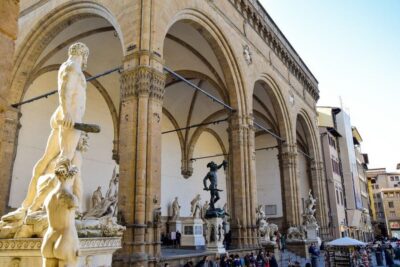
Guided Tour of Medici Family Secrets and Chapels
Read our review →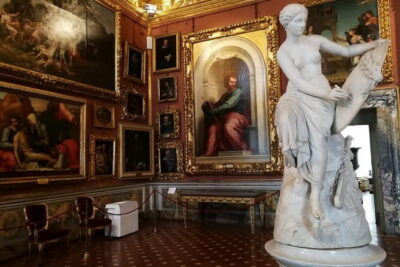
Pitti Palace, Palatina Gallery and the Medici: Arts and Power in Florence.
Read our review →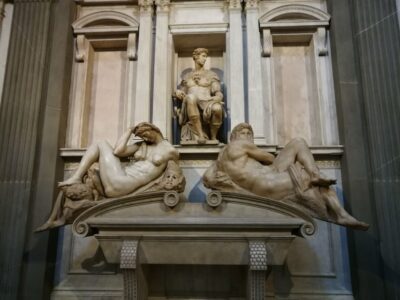
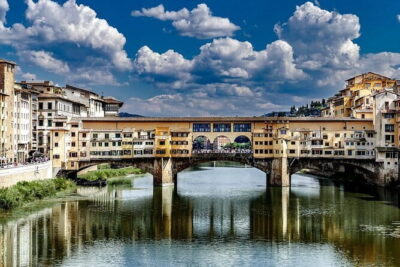
Medici Legends & Renaissance Wonders: Florence Small Group Tour
Read our review →
Browse the lists this tour appears in