
Reviewed · MEDICI TOURS
Medici Legends & Renaissance Wonders: Florence Small Group Tour
If Florence feels like a blur of stone monuments, this Medici-focused walk helps you connect the dots fast. You start near Caffè Scudieri and end at Ponte Vecchio, with a licensed guide turning major landmarks into a story about power, art, and ambition.
I like two things most. First, the route is built around the Medici family’s footprint in the city, so you get a clear timeline instead of random photo stops. Second, you get a small-group setup, max 15, plus a whisper system that keeps the narration understandable on busy streets. The main drawback to consider is the pace, it is tight, and while stops cover famous interiors like the Duomo complex and the Uffizi area, admission tickets are not included, so you will need to decide what you want to pay for on your own.
Key things to know before you go

- Medici thread through Florence’s biggest sights, from burials and chapels to palaces and the arts
- Small group of up to 15, which makes it easier to hear and ask questions
- Short, guided stops (about 5 minutes each), good for time-poor first-timers
- Whisper system included, helpful when street noise gets loud
- Admission not included for major churches and museums, so expect extra ticket costs if you want inside access
- Ends at Ponte Vecchio, a perfect landing spot for your next walk or aperitivo
Why this Medici-lens tour makes Florence click fast
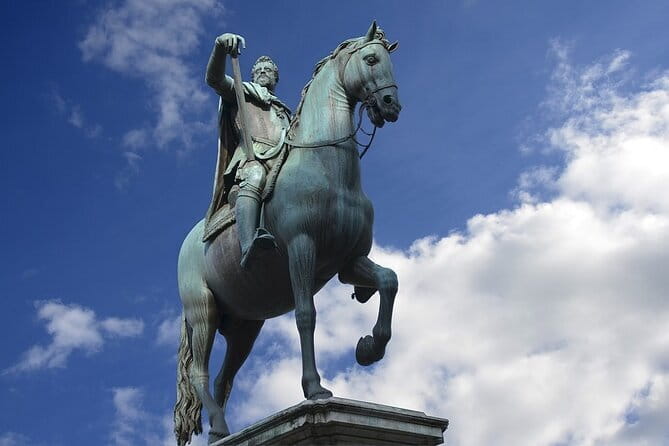
Florence can overwhelm you. One minute you are admiring a dome, the next you are lost in a square full of statues, then suddenly you are staring at a palace door while wondering why it matters. This tour gives you a spine. The guide ties what you see to the Medici family, so the city starts to feel like one coherent story.
I also like the practical length. At about 1 hour 45 minutes, you get real context without eating half a day. If you have only a short window in Florence, you can still leave with a mental map and a sense of where to go next.
Finally, the group limit is not just marketing. With a maximum of 15, you are not trying to compete with a crowd. In the feedback I read, people often praised guides like Manuel and Martina for making the streets feel like a living history lesson, not a list of dates.
More Medici history tours in Florence:
- The Best tour in Florence: Renaissance & Medici Tales – guided by a STORYTELLER
★ 5.0 · 12,316 reviews - The Best Tour in Florence: Renaissance and Medici Tales
★ 5.0 · 10,810 reviews - Florence: Renaissance and Medici Tales Guided Walking Tour
★ 4.8 · 1,549 reviews
The 5-minute stop rhythm, and how to use it well
This walk is designed as a “get your bearings fast” experience. Each stop is brief, then you move on. That can be a bonus if you like structure and momentum. You will get the what, the why, and the how to look at it.
But it also means you should not treat it like a sit-down museum lesson. If you want slow looking, you will need follow-up time on your own. Also, since admission tickets are not included for places like San Lorenzo, the Medici chapels, and the Uffizi, you may have to choose between inside time and outside orientation during your day.
My tip: wear comfortable shoes and bring a water bottle. Florence heat and cobblestones do not care how good the story is.
Stop 1: Basilica di San Lorenzo, Medici burials in the heart of the market area
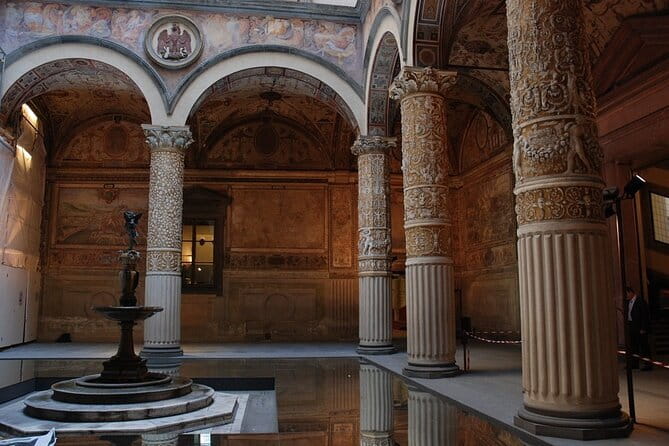
San Lorenzo is not just a big church on a postcard. It is one of the key Medici connections because it served as the burial place for major Medici family members, from Cosimo il Vecchio through Cosimo III. That single fact changes how you read the space. You start thinking of the church as part of a long-term legacy project, not only a religious building.
You also get a sense of location. The basilica sits in the center of the city’s main market district. That matters because Medici influence was never isolated in a palace bubble. It lived in neighborhoods, commerce, and everyday life.
Because the admission ticket is not included, decide ahead of time if you want inside time later. If you do, this stop works as a strong preview, so the building will feel less mysterious when you return.
Stop 2: Biblioteca Medicea Laurenziana, power written into architecture
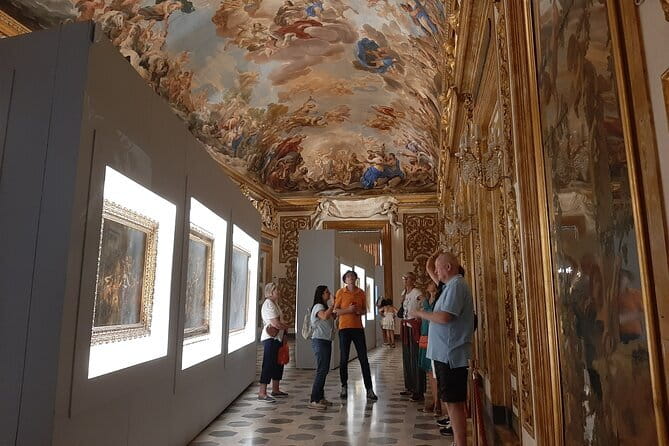
Next up is the Laurentian Library. This is where the tour shifts from monuments you can see from afar to ideas you can feel in the design.
The library was built through patronage connected to Medici pope Clement VII. The intent was also symbolic: the Medici wanted to be seen as people of culture and ecclesiastical standing, not just merchants. In other words, art and architecture were political branding.
The standout detail here is the library’s renown for architecture associated with Michelangelo and for its Mannerism character. Even if you only get a quick look from the street, the guide’s explanation helps you understand why this building matters. It is not ornament for ornament’s sake. It is a statement about status and taste.
Again, admission is not included, so treat this stop as a visual and storytelling primer unless you plan to add ticketed museum or library time elsewhere.
A different way to spend the day in Florence:
- Florence: Skip-The-Line Uffizi Gallery Timed Entry Ticket
★ 4.5 · 27,832 reviews - Tuscany Day Trip from Florence: Siena, San Gimignano, Pisa and Lunch at a Winery
★ 5.0 · 21,634 reviews - Florence: Timed Entrance Ticket to Michelangelo’s David
★ 4.6 · 16,983 reviews - Florence: Michelangelo’s David Skip-the-Line Entry Ticket
★ 4.5 · 12,764 reviews
Stop 3: Cappelle Medicee, the Medici story in stone and shadow
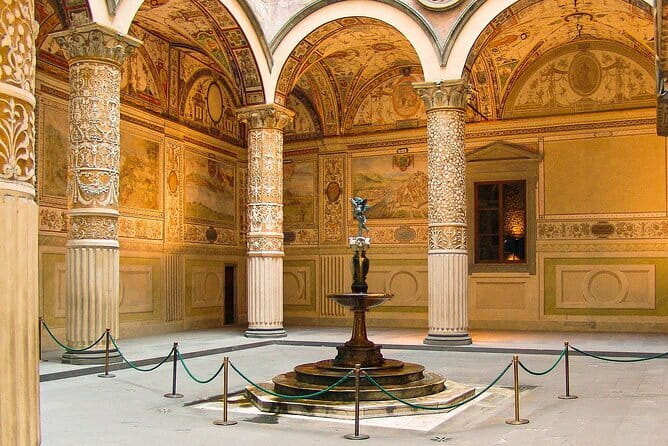
The Medici Chapels are built between the 16th and 17th centuries, as expansions to Brunelleschi’s 15th-century church. This is a useful detail because it shows Florence in layers. You are not only seeing one era. You are seeing successive eras negotiating space.
One especially memorable piece is the Sagrestia Nuova (New Sacristy), designed by Michelangelo. The effect, when you stand nearby and hear the context, is that the Medici chapels become a stage for identity. The chapels were created to celebrate the family and their role as patrons and Grand Dukes of Tuscany.
Since admission is not included, you will want to plan your expectations. If you love funerary art, you might come back later for a deeper look. If you want the broader sweep right now, the guide’s framing at this stop is the value.
Stop 4: Palazzo Medici Riccardi, from banking to prestige
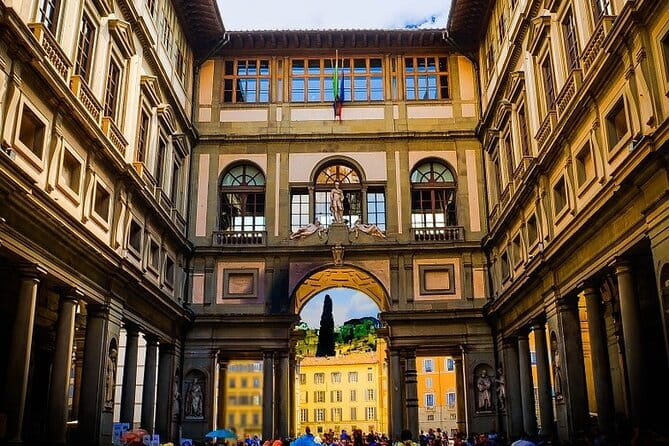
This palace was designed for Cosimo de’ Medici and built between 1444 and 1484. It is a good reminder that Medici power began with banking and finance, then moved into culture and governance.
Walking past a palace like this, it is easy to miss how new and intentional it was. The tour’s Medici lens helps you notice the message: money used to build legitimacy. The building becomes proof, in stone, that the family had the resources to shape Florence.
This is one of those stops that works best if you keep your eyes on the big picture. Look at the scale, the solidity, and the way the palace holds its place in the street.
Stop 5 and 6: Duomo complex, then Baptistery di San Giovanni
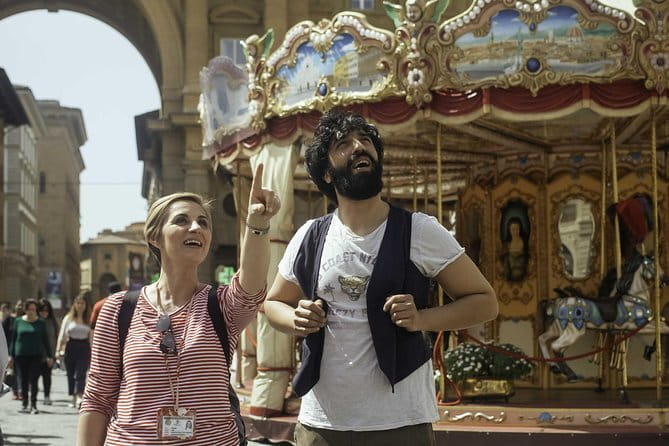
The Florence Cathedral complex is part of a UNESCO World Heritage Site, and the tour uses that status as more than a label. It is a teaching moment about why these buildings were so important to Florence’s self-image.
The cathedral, the Cattedrale di Santa Maria del Fiore, began in 1296 in Gothic style based on a design by Arnolfo di Cambio. Even if you only get a quick stop, it helps to know the start date because the Duomo story is long and complicated, and it connects to Florence’s ambition over time.
Then the tour moves to the Baptistery of Saint John. It is one of the oldest buildings in Florence, constructed between 1059 and 1128 in the Florentine Romanesque style. Standing there with the guide’s explanation, you can feel the age difference. The Baptistery reads like a foundation, while the cathedral reads like a later crescendo.
Because admission is not included for these stops, you have two smart options:
- Use the tour for outside orientation and save ticketed entry for a later visit.
- Or, if you love interiors, plan your day so you do not run out of time or energy.
Stop 7: Brunelleschi’s dome, the engineering shock to the system
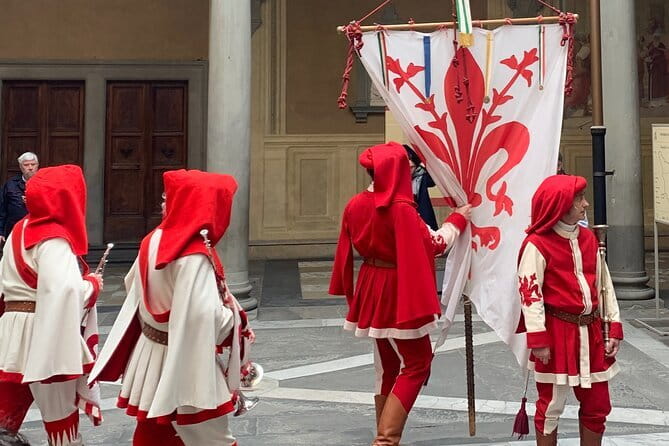
The dome is often the moment people remember later. This tour gives you the essential facts: it was the largest brick dome in the world when it was completed, and it remains the largest brick dome ever constructed.
Also, the dome is described as a mystery of art and architecture. That line is a hint about how people looked at it. It was not just pretty. It was a technical leap.
Even with brief time, you will learn what to pay attention to when you look upward. Instead of treating the dome as a single view, you start thinking about how it changed what was possible.
Stop 8 and 9: Giotto’s Campanile and the cathedral façade colors
Next is Giotto’s Campanile, adjacent to the basilica and the Baptistery. The tower is one of the showpieces of Florentine Gothic architecture, and it is known for its sculptural decorations and polychrome marble encrustations.
That word, polychrome, matters here because it explains the visual effect. Florence is not only about gold-toned stone. It is about color, texture, and surface design as identity.
The tour also revisits the Duomo cathedral area with emphasis on the white, green, and pink marble façade. If you have ever wondered why people stop and stare at this building even after the dome, this is why. The façade is like a long art project.
Stop 10 and 11: Palazzo Vecchio and Piazza della Signoria, government on display
Palazzo Vecchio is the town hall and a fortress-palace type of building. The name Old Palace tells you the role, but it is the size and position that signal power.
The tour frames the square you are in, and it is worth paying attention to the space itself. Piazza della Signoria sits in front of Palazzo Vecchio and acts as a meeting point for Florentines and tourists. It is also close to the gateway area for the Uffizi.
There is a detail worth knowing while you look around: the square features a copy of Michelangelo’s David. That is a useful anchor for your brain. Florence loves to remix famous art into public space, and once you notice that pattern, your self-guided walks get easier.
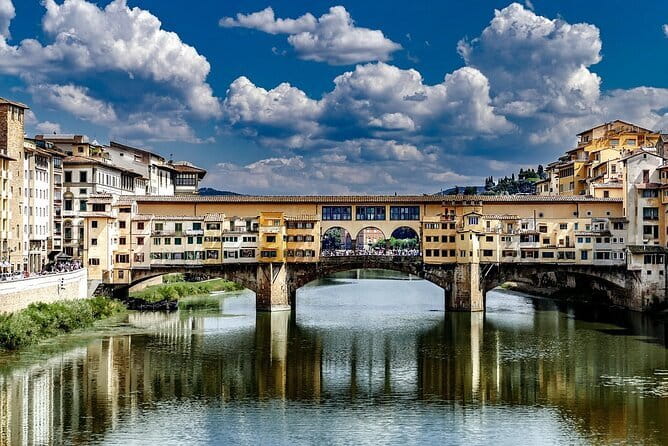
Stop 12: Ponte Vecchio, the Arno bridge with built-in commerce
Ponte Vecchio is one of those places that feels inevitable, even if you are not sure why. Here, the tour focuses on the reason it was special historically: shops lined the bridge. First it was a cluster for trades like butchers, tanners, and farmers, and later it evolved, with today’s shops mainly jewelers and art dealers.
The practical value is that you end your walk here. After 1 hour 45 minutes, you can simply continue your way along the river. You are also in one of the best spots to grab a drink and watch life move.
Stop 13: Palazzo Pitti, Medici residency and the luxury machine
Palazzo Pitti is tied to the Medici because the Medici family purchased it in 1549. It became the chief residence of ruling families of the Grand Duchy of Tuscany.
This stop is a good reminder that power shifts roles. The Medici were once linked to banking and a public image of credibility. Later they were linked to living in the center of rule, surrounded by accumulated wealth.
The tour notes that the palace grew into a treasure house as later generations amassed paintings, plates, jewelry, and luxurious possessions. Even if you do not go inside during the tour, knowing that backstory changes how you interpret the building’s scale.
Stop 14: Gallerie degli Uffizi, Renaissance painting as a payoff
This is the big name stop. The Uffizi Gallery is described as one of Italy’s most important museums and the most visited. It houses major Renaissance painting collections, including works by artists like Michelangelo, Leonardo da Vinci, Raphael, and Botticelli.
The tour’s key value here is orientation. The description points out that the collection covers works from the 12th century up to the 16th century, spread across “over 80 halls full of masterpieces.” In real terms, that means the Uffizi is not something you can fully conquer in one quick stop.
Admission is not included, so you should plan like this:
- Use the tour’s Uffizi moment as a prompt for what to prioritize.
- Then buy tickets for your separate museum time when you can go at your pace.
If you do this, the tour feels like the map. The museum becomes the journey.
Price and value, what you actually get for $119.77
At $119.77 per person, you are paying for a licensed guide, a small group, and the whisper system. You are also paying for time. The tour compresses a lot of Florence’s most important Medici-linked sites into a single guided window.
Is it good value compared to DIY? For first-time Florence, yes, if you want context. A ticketed museum alone can cost a similar amount, and a lot of Florence’s outside sights are free. The tour’s real advantage is the story thread. It helps you see relationships between buildings and why the Medici mattered.
However, there are two cost realities:
- Tickets are not included for many stops.
- The short pacing means you may want follow-up time to see interiors in detail.
If you are the type who loves walking with a guide, asking questions, and learning what to look for, you will likely feel the cost is justified. If you want only one Florence attraction and you already know the Medici story well, you might prefer a museum-focused day.
When a guide really makes or breaks the experience
This tour clearly depends on the guide’s storytelling. In the feedback I read, guides such as Manuel, Martina, Amanda, and Giacomo came up repeatedly for their ability to make Medici history feel alive.
A few patterns stood out:
- People praised guides for being organized and slow-paced enough to follow the narrative.
- People also noted how a guide can point out details you would miss on your own.
- One person flagged that the sound setup may need improvement for some walkers, including seniors using hearing aids, though the tour includes a whisper system.
My practical advice is simple. If audio matters to you, ask at the start to make sure the whisper system is working well for your seat in the group. Do not assume it will be perfect everywhere, street noise is real.
Who this tour fits best, and who might prefer a different format
This works best if you are:
- In Florence for a short stay and want a structured intro
- Interested in the Medici family and how they shaped art, buildings, and status
- Traveling with kids or teens who need a moving plan, since the stops are frequent and the pace keeps attention
It might not be perfect if you want:
- A full Medici museum experience with longer time in galleries
- A slow, detailed look at interiors without extra ticket planning
One thoughtful consideration: the tour is “Medici legends and Renaissance wonders,” which can feel like a broad theme. If you are searching for a pure Medici-family deep dive, you may want to pair this with an additional museum visit on your own schedule.
Should you book this Florence Medici walking tour?
Book it if you want to start your Florence trip with a storyline you can carry into the rest of your day. The route links major landmarks into a Medici timeline, it keeps moving without being rushed, and the small group size makes it feel more human than typical big-city group tours.
Skip or rethink it if you already have a tight itinerary and you know you only want museum time in a specific building. In that case, the tour can still help, but you may want to prioritize a museum visit first, then take a shorter orientation walk later.
If you are deciding when to book, I’d also book early in your trip planning. The tour is often reserved ahead, and a first-day slot is ideal because it helps you navigate what to see next. When you leave with a map made of stories, Florence becomes a lot easier to explore on your own.
FAQ
How long is the Medici Legends and Renaissance Wonders: Florence Small Group Tour?
It lasts about 1 hour 45 minutes.
How big is the group for this Florence tour?
The group is limited to a maximum of 15 travelers.
Is the tour offered in English?
Yes, it is offered in English.
Are tickets to the landmarks included in the price?
No. The tour notes that admission tickets are not included for the basilica, library, chapels, cathedral complex, baptistery area, and Uffizi, among others.
Where do you meet, and where does the tour end?
You meet at Caffè Scudieri Firenze, Piazza di San Giovanni, 19R, 50123 Firenze FI, Italy, and the tour ends at Ponte Vecchio, 50125 Firenze FI, Italy (the exact endpoint can vary slightly).
Does the tour provide a sound system?
Yes. It includes a whisper system.
Is free cancellation available?
Yes. You can cancel for a full refund up to 24 hours before the experience starts. Weather can also affect scheduling, and you are offered a different date or a full refund if canceled due to poor weather.
Just reviewed around Florence
- Tuscany: Leonardo da Vinci – Oil and Wine Discovery Tour★ 4.8 · 5 reviews
- Livorno Port, Pisa, Florence: Full-Day Shore Excursion★ 4.8 · 51 reviews
- Legends of Florence: Exclusive Walking Tour by night★ 4.9 · 70 reviews
- Leather and Passion: A Tour of Florentine Craftsmanship★ 5.0 · 16 reviews
- Illuminated Florence Tour for Kids with Gelato & Pizza★ 5.0 · 6 reviews
- Inferno Florence Private 3-Hour Tour★ 4.8 · 20 reviews
- Hidden Florence: 2-Hour Guided Walking Tour★ 4.7 · 36 reviews
- 3-Hour Historic WhoDunIt Tour in Florence★ 3.2 · 6 reviews
Medici Tours, compared.
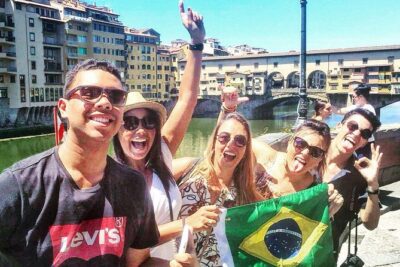
The Best tour in Florence: Renaissance & Medici Tales – guided by a STORYTELLER
Read our review →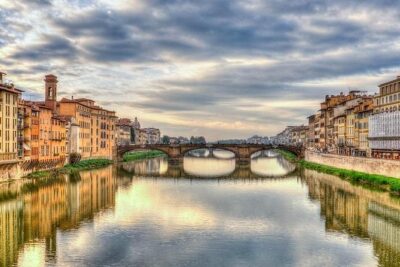
The Best Tour in Florence: Renaissance and Medici Tales
Read our review →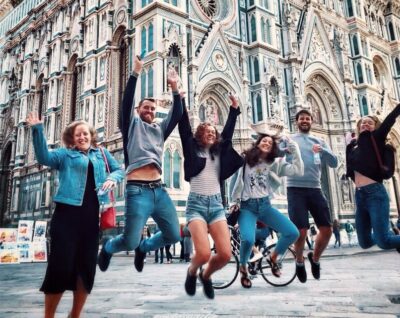
Renaissance and Medici Tales Guided Walking Tour
Read our review →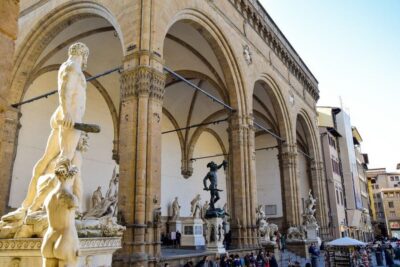
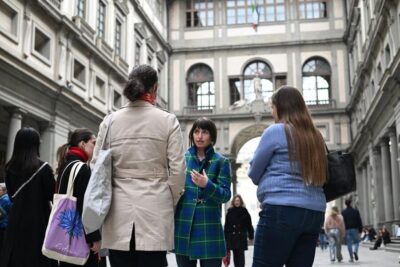
Guided Tour of Medici Family Secrets and Chapels
Read our review →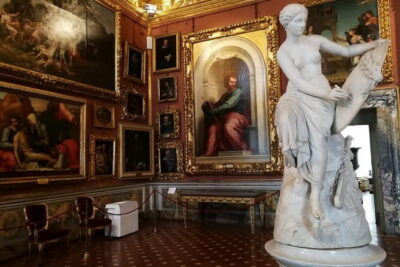
Pitti Palace, Palatina Gallery and the Medici: Arts and Power in Florence.
Read our review →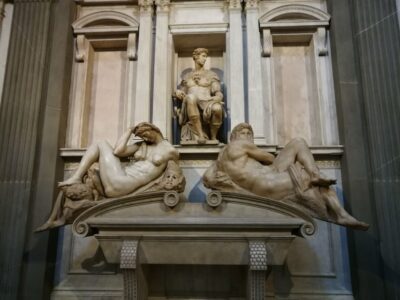
Browse the lists this tour appears in