
Reviewed · MEDICI TOURS
Florence: Renaissance and Medici Tales Guided Walking Tour
Florence feels like a living museum, and this guided walk makes its Renaissance story easy to follow, from Medici power to famous domes. You get street-level context, so the city stops being a postcard checklist.
I love the way the tour turns buildings into plot points, so the politics behind the Medici feel human, not dusty. I also love that your guide shares practical advice for where to eat, drink, and shop, especially around the Uffizi area.
One possible drawback is that it runs rain or shine, so you should come ready for a steady walk on slippery cobblestones.
Key things that make this tour worth your time
- Medici power and intrigue, told through the city’s real landmarks
- A clear Renaissance storyline, from the birth of new art ideas to civic control
- Duomo-area symbols and design explained in plain language
- Photo-friendly exterior stops at major sights without museum overload
- Local, on-the-ground food and shopping tips to use that same day
- Guides who tell the story well, with names like Chiara, Michele, Glenda, and Antonio showing up in the guide roster
Starting in Piazza San Lorenzo, with a guide who sets the story fast
The tour begins around Piazza di San Lorenzo, in a spot that also makes you look twice at Florence’s layers. You’ll meet near Florence Free Tour-Tale, and you’re told to look for a green umbrella in front of the stairs leading to the main entrance of the San Lorenzo church area. It is an easy tell, even if you are running late or the streets are busy.
San Lorenzo is a smart first stop because it quietly shows how Florence mixes styles. You’ll see the distinct mix of Renaissance and Romanesque architecture there, which is a nice “how to read this city” warm-up. The guide then uses that setting to frame what you’re about to see: Florence as the birthplace of the Renaissance, shaped by wealth, ambition, and control.
If you have ever felt overwhelmed by Florence, this is a good cure. Instead of jumping from site to site, the guide gives you the threads. Expect topics like the role of the Medici family, why certain buildings mattered, and how symbols and design choices were used to send messages.
More Medici history tours in Florence:
- The Best tour in Florence: Renaissance & Medici Tales – guided by a STORYTELLER
★ 5.0 · 12,316 reviews - The Best Tour in Florence: Renaissance and Medici Tales
★ 5.0 · 10,810 reviews - Florence: Mysteries of the Medici Guided Walking Tour
★ 4.4 · 940 reviews
San Lorenzo to Palazzo Medici Riccardi, where Florence’s politics has a face
From San Lorenzo, you move into the Medici orbit. The tour specifically sets you up to understand that the Medici were not just patrons of art. They were power brokers who used public life, family influence, and architecture to shape what Florence became.
One of the best parts here is how the tour treats these places like chapter headings. You’re not just told what something is. You’re told why it was built or why it mattered. That is where storytelling turns into understanding. A lot of guides in this style are praised for being engaging, and names like Chiara and Michele come up often in the guide feedback. The common theme is that they answer questions and keep the group moving with a pace that feels neither rushed nor slow.
At Palazzo Medici Riccardi, you get to see the kind of building that lets you connect the dots. A palace like this signals status, but it also signals intention. When you know the Medici were managing influence at the civic level, the façade and location stop looking decorative. They start looking strategic.
Practical tip: keep your camera handy, but don’t treat every stop like a sprint. The most useful photos are the ones where you capture context, like how a building sits in the square or street corner. Those are the images you will use to remember the story later.
The Duomo complex, Giotto’s Bell Tower, and Brunelleschi’s Dome explained like a puzzle
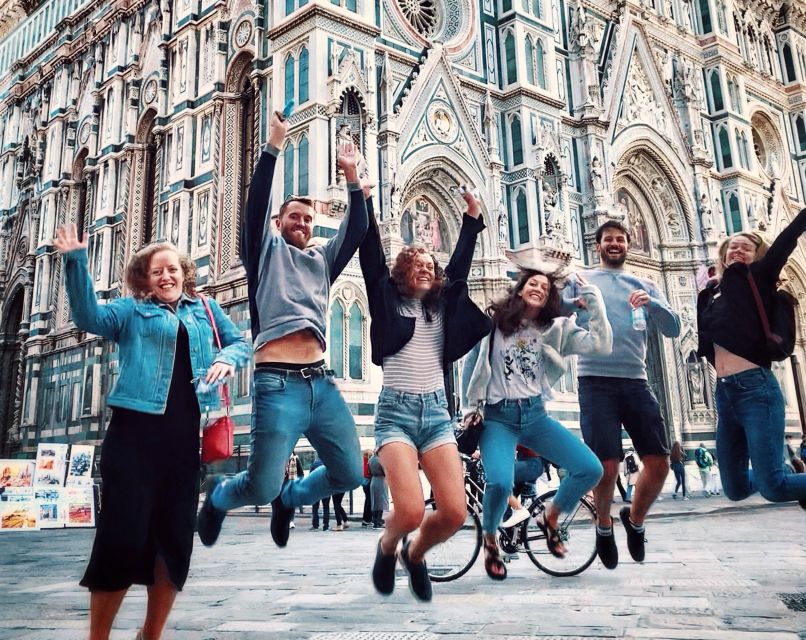
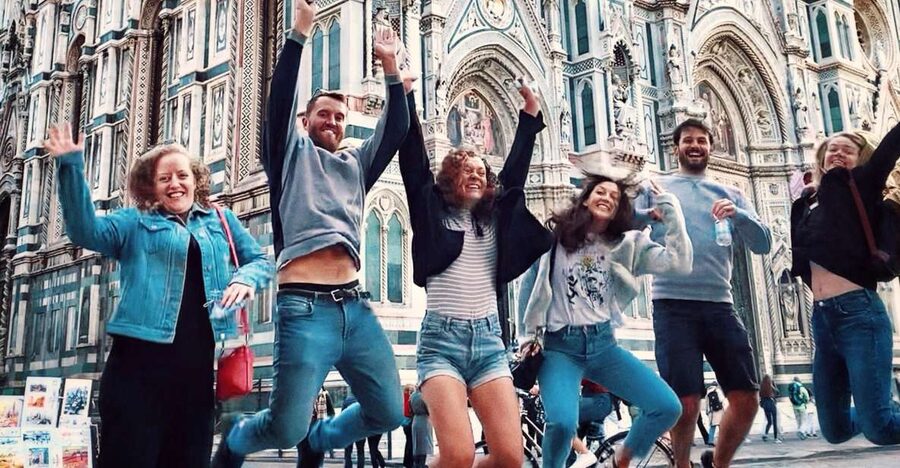
The centerpiece of the walking route is the Duomo complex area. This is where the tour really leans into symbols and design, and it’s also where guides shine when they can translate big ideas into street-level reality.
You’ll get guided time around the Duomo complex and then move on to Giotto’s Bell Tower and the dome area. The guide specifically sets you up to understand the story behind Brunelleschi’s Dome, and this is exactly the kind of stop that pays off after you’ve heard the Renaissance context earlier. Without that setup, the dome can feel like just another famous thing. With it, you start to see the dome as part of a larger shift in thinking: engineering, artistry, and civic identity all tied together.
Also, you’ll hear about symbols you encounter along the route. Even when you cannot point to a specific detail, you can still learn what to look for. Look for family marks, civic emblems, and design choices that communicate authority. Florence loves to talk through art and architecture. This tour helps you overhear that conversation.
A possible mismatch to watch for: if you were hoping for long, inside-only museum time, this tour is built around walking and exterior viewing. You’ll get the big visual moments and explanations, but it is not the same thing as an all-day deep dive into every site. Think of it as the “make it make sense” layer before you go deeper on your own.
House of Dante and the shift from Medici scenes to Florence’s civic heartbeat
After the Duomo zone, you head toward the House of Dante. This stop matters because it broadens the story beyond patrons and buildings into ideas and literature. Dante is tied to Florence’s identity, and hearing his name in the middle of a Medici and Renaissance-focused walk helps connect the dots between culture and power.
Then the route moves into the political heart of the city at Palazzo Vecchio and Piazza della Signoria. This is where Florence feels most like a stage. A palace like Palazzo Vecchio is not just a pretty historic structure. It signals governance. And Piazza della Signoria is the kind of place where public life becomes performance.
Loggia dei Lanzi is part of this same civic zone. You’ll see it as an open-air space meant for display and presence. The tour’s goal is not to make you memorize art history labels. It is to help you understand why these spaces existed and how people would have used them as part of daily civic life.
If you are traveling with teens or first-time Florence visitors, this pacing works. Guides here are repeatedly praised for making the stories easy to follow and fun to listen to. One of the most consistent takeaways is that the tour gives a clear orientation in a short time.
More walking tours in Florence:
- Florence: Guided Walking Tour
★ 4.5 · 3,334 reviews - Skip the line: Uffizi and Accademia Small Group Walking Tour
★ 4.5 · 3,135 reviews - Florence: Guided Walking Tour
★ 4.6 · 1,602 reviews - Florence: Uffizi & Accademia Small Group Walking Tour
★ 4.7 · 1,380 reviews
Ponte Vecchio and the finish near Uffizi, plus practical local advice you will actually use
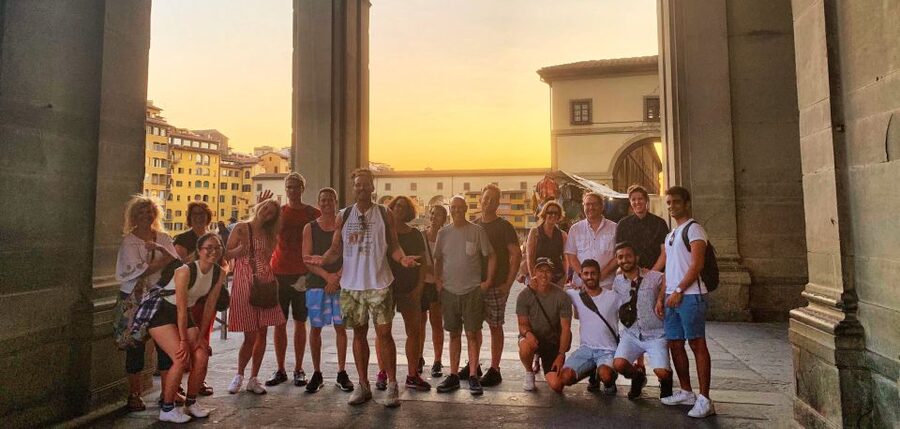
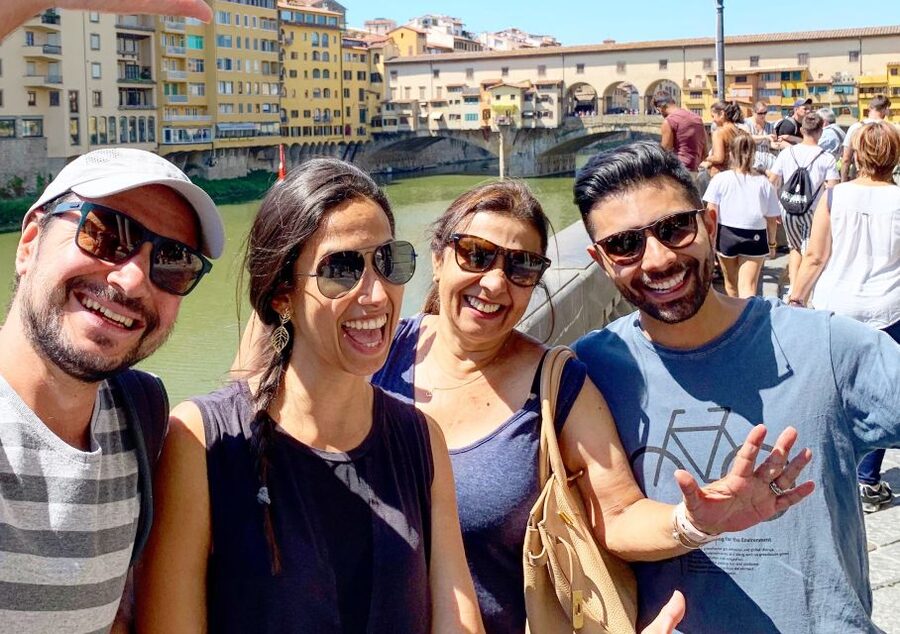
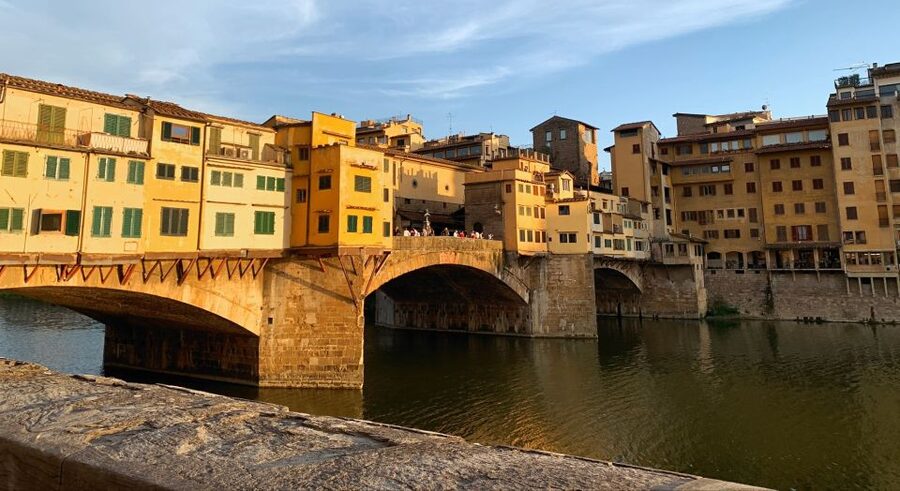
After the civic stops, the tour ends outside the Uffizi Gallery. Before you reach that finish point, you cross Ponte Vecchio, the iconic bridge over the Arno. This is a stop that almost works even if you have never read a line of Florence history. But the guide’s job is to help you see why it became such a symbol in the first place.
Ponte Vecchio is one of those places where the crowds can feel like a wall. The upside is that it is also the perfect moment to look around and absorb the bigger picture. You’ll feel where the story in the center leads you toward the art world represented by the Uffizi.
The finishing touch is practical advice. Your guide is positioned to help you plan your next moves with real local recommendations for where to eat, drink, and shop. That matters because Florence is a city where it is easy to pick a “famous” option that is overpriced or not very good. Even if you already have a plan, take the guide’s suggestions as a short list. Then compare to what you like.
One small thing to do right away: if tips are part of your payment approach, bring cash. Multiple guide comments highlight bringing cash to tip the guide. It is the kind of detail that saves an awkward moment at the end.
How long is it, how hard is it, and what should you bring?
This is a walking tour designed for about two hours. It is short enough to fit into a first-day schedule, and long enough to feel like you got your bearings. It also runs rain or shine, so you should assume you will be outside.
Come prepared:
- Comfortable shoes (cobblestones add up)
- Water
- Weather-appropriate clothing
- A camera, because these stops practically beg for photos
Wheelchair accessibility is listed, which is good to know if you need it. If you have mobility concerns, it is still wise to ask what the walking pace feels like on your exact departure day, since it is a city walk and streets can be uneven.
A helpful review detail to keep in mind: some groups have microphone and ear-piece support, which makes it easier to hear the guide on busy streets. If you are sensitive to noise or you want to catch every story beat, that’s a perk worth noting when you check in.
Price and value: a budget-friendly Florence intro that can save you hours
The price listed is extremely low per person, shown as $2.36. That is the kind of number that makes you wonder what you are really getting. Here is the value angle that makes this tour make sense: you are not paying for a long museum ticket. You are paying for a focused orientation and a narrative. When you get that, you start noticing things on your own.
Also, the tour is described in a way that lines up with a free-tour mindset in practice, with tips expected based on your satisfaction. Some feedback notes paying a small base amount and then tipping according to what felt fair. Either way, the key is this: treat it like an educational walking service, and plan a tip budget.
Why that can be worth it, even on a tight trip:
- You see a concentrated route of Florence highlights in about two hours
- You get a Renaissance and Medici storyline that helps everything click later
- You leave with a better sense of where you are, and what to do next near Uffizi
- You get local food and shopping guidance, which can directly improve your remaining days
If you only have one half-day, I would rather have you do this tour than spend that time guessing what to see and why it matters.
Best for your trip style, and who should skip it
This tour is a great fit if you:
- Want a first-day Florence orientation
- Are curious about the Renaissance, Medici influence, and how art connects to politics
- Prefer guided storytelling over reading plaques alone
- Like practical tips for food, drinks, and shopping
It may not be the right fit if you:
- Want mostly interior museum time and controlled access to major sites
- Hate walking in the rain, since it runs rain or shine
- Need a very slow pace, since it covers a strong cluster of central landmarks
Should you book the Florence Renaissance and Medici Tales walking tour?
Yes, I think it is an easy “book it” for most first-time visitors. It is built to give you the mental map of Florence in a short window, with the Renaissance and Medici story acting like a guide rail. Add in the practical food and shopping tips at the end near Uffizi, and you are not just learning history, you are setting yourself up to enjoy the city smarter for the rest of your stay.
If you want Florence to make sense fast, this is one of the best starts you can make.
FAQ
Where do I meet for the Florence Renaissance and Medici Tales guided walking tour?
Meet at Florence Free Tour-Tale. Look for the green umbrella in front of the stairs that lead to the main entrance of San Lorenzo Church.
How long is the tour?
Plan for about 2 hours.
What languages are the guides?
The live tour guide speaks Spanish and English.
Does the tour run in bad weather?
Yes, it takes place rain or shine.
Is the tour wheelchair accessible?
Yes, wheelchair accessibility is listed.
What should I bring?
Bring comfortable shoes, a camera, water, and weather-appropriate clothing.
Is there free cancellation?
Free cancellation is available up to 24 hours in advance for a full refund.
Just reviewed around Florence
- Tuscany: Leonardo da Vinci – Oil and Wine Discovery Tour★ 4.8 · 5 reviews
- Livorno Port, Pisa, Florence: Full-Day Shore Excursion★ 4.8 · 51 reviews
- Legends of Florence: Exclusive Walking Tour by night★ 4.9 · 70 reviews
- Leather and Passion: A Tour of Florentine Craftsmanship★ 5.0 · 16 reviews
- Illuminated Florence Tour for Kids with Gelato & Pizza★ 5.0 · 6 reviews
- Inferno Florence Private 3-Hour Tour★ 4.8 · 20 reviews
- Hidden Florence: 2-Hour Guided Walking Tour★ 4.7 · 36 reviews
- 3-Hour Historic WhoDunIt Tour in Florence★ 3.2 · 6 reviews
Medici Tours, compared.
The Best tour in Florence: Renaissance & Medici Tales – guided by a STORYTELLER
Read our review →
The Best Tour in Florence: Renaissance and Medici Tales
Read our review →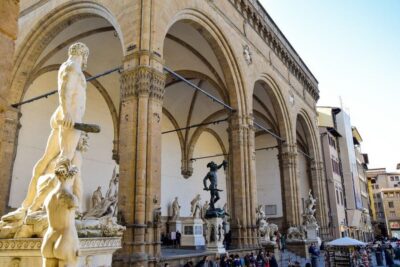
Guided Tour of Medici Family Secrets and Chapels
Read our review →
Pitti Palace, Palatina Gallery and the Medici: Arts and Power in Florence.
Read our review →

Medici Legends & Renaissance Wonders: Florence Small Group Tour
Read our review →
Browse the lists this tour appears in