
Reviewed · LUCCA TOURS
Lucca: 2-Hour City Center Walking Tour
Lucca feels like a real old town, not a theme park. You get a focused route through a former city-state, where centuries of independence helped it survive with its character intact. I like the way the walk threads Roman-era church details with everyday streets, and I also love the payoff of Lucca’s ancient walls within such a short time. One thing to plan for: Lucca Cathedral interior access costs extra (about €3), so you will decide on that at the end.
This is also a guide-powered experience. Many tours here hinge on the person leading you, and the reviews you will read are full of praise for guides like Marta, Roberta, Giorgio, Nadia, and Lucia, often for humor and clear storytelling. A possible consideration is language coverage: the guide speaks both English and Italian during the walk, so moments can feel slightly split depending on the group.
If you want an efficient introduction to Lucca’s sights, this tour hits a sweet spot. You’ll walk comfortably for about 2 hours, gather context fast, and leave with a short list of places to return to on your own.
Key Points I’d Book This For
- San Michele in piazza San Michele: a standout stop tied to a church that is over 1000 years old
- Wall walking time that’s realistic: you get the feel of the ramparts without turning the day into a hike
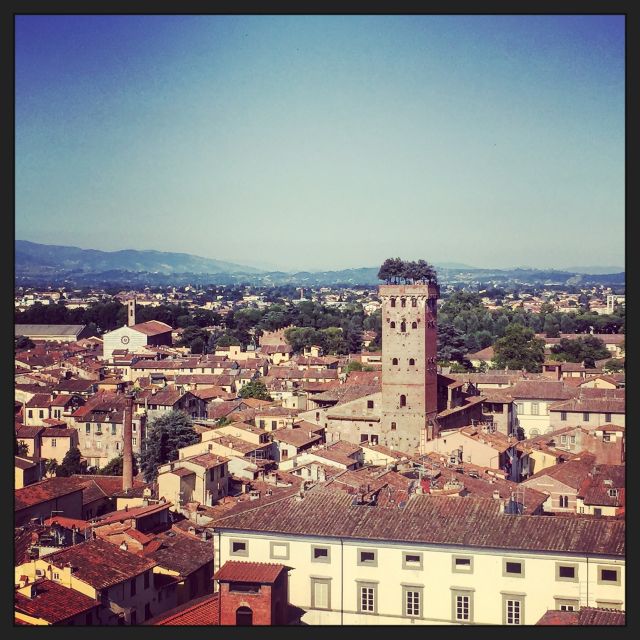
- Torre Guinigi and Torre delle Ore views: skyline moments built into the route, not tacked on
- A guide who keeps it lively: multiple guides (Marta, Roberta, Irine, Giorgio, Nadia, Lucia) are repeatedly praised for storytelling and humor
- Balanced city-core route: streets, towers, churches, and squares, ending near Lucca Cathedral
Lucca City Center On Foot, With Real-Time Context
Lucca is one of those Tuscan towns that doesn’t require constant wow moments to feel special. The “wow” comes from layers. You sense it when a street narrows into a square, when a tower frames the skyline, and when the walls appear like a plan drawn centuries ago and still respected.
This 2-hour guided walk works because it stays in the city center and keeps the pacing gentle. You are not just collecting photos. You are learning how Lucca’s past shaped where people built, what they protected, and why certain monuments matter. Guides often bring in anecdotes and side stories, and that is what makes the route feel like a guided conversation instead of a checklist.
If your goal is to understand Lucca early in your trip, this is a strong start. If you are already a huge cathedral-and-towers person and want deeper museum time, you might still add extra standalone visits after the tour.
More Lucca tours:
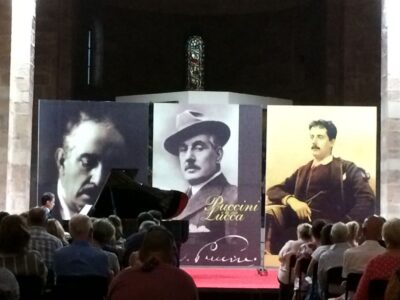
- Lucca: Puccini Festival Opera Recitals and Concerts
★ 4.7 · 1,278 reviews - Lucca: Guided Winery Tour with Wine Tasting
★ 4.7 · 611 reviews - Discover Lucca’s Secrets on a Guided Walking Tour
★ 4.5 · 485 reviews
Start At Ufficio Informazioni (Vecchia Porta S. Donato) And Get Oriented Fast
You meet at the Tourist Information Office, Ufficio Informazioni, at Vecchia Porta S. Donato, Piazzale Giuseppe Verdi, 55100 Lucca. This matters more than it sounds. Starting in the city core helps you avoid wasted time and gives the guide a clean path to build the story.
From the beginning, expect the route to feel logical, not random. Your guide sets up why Lucca’s monuments are where they are, and then you walk from sight to sight in a way that builds momentum. One practical tip: wear comfortable shoes. Lucca is easy to walk, but you are still covering multiple stops in a short window.
The tour is Italian and English, run simultaneously. That means you can listen in your language, but the guide switches between the two as they address the group. It is a normal rhythm for this format and usually goes smoothly.
Piazza San Michele: The Over-1000-Year-Old Anchor Stop
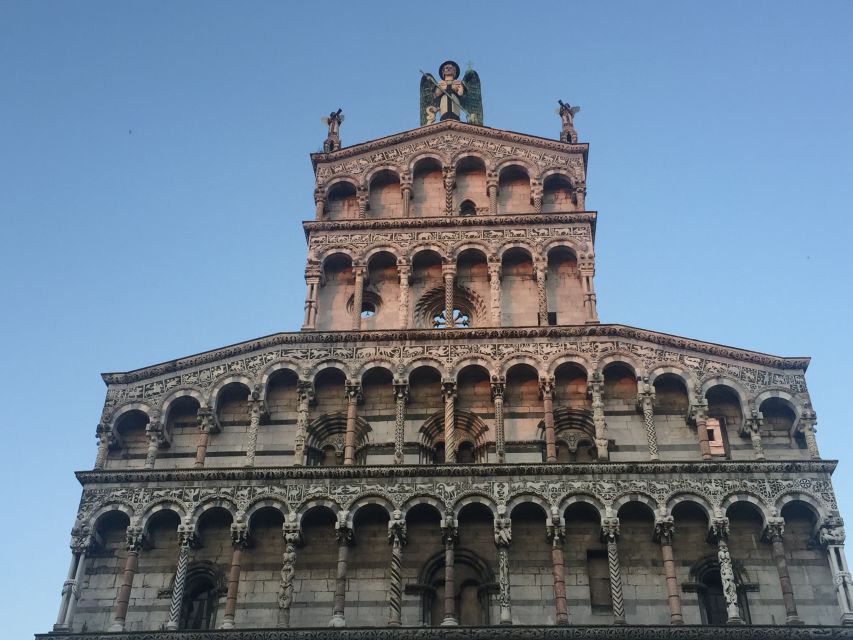
The tour’s first “big identity” moment is piazza San Michele and the nearby Church of San Michele. This is the kind of stop that gives you the history without making you memorize dates.
Why it matters is simple. When a church like this has been part of the town for more than a millennium, it becomes a reference point. Your guide helps you see the structure as something the city has kept returning to, not something that appeared once and then faded away.
In practice, this is where the tour starts feeling more than sightseeing. You learn how the square functions in Lucca, how the church fits into the town’s layout, and what to pay attention to visually as you move on. Many guides also slow down here, so if you like to look closely, this stop usually rewards you.
Piazza Napoleone And Via Fillungo: The Streets Where Lucca Lives
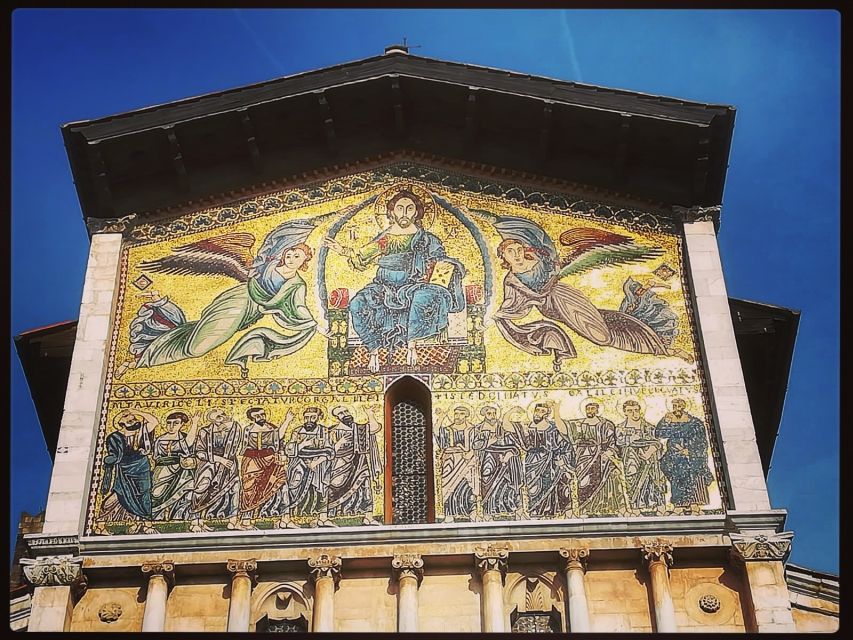
After the church square, the route shifts into the human scale of piazza Napoleone and via Fillungo. These stops are valuable because they show you the “between the monuments” part of Lucca.
Via Fillungo is the kind of street that makes you understand what a city core really is: shops, movement, and daily life set against older architecture. If you spend your whole trip only chasing major monuments, you miss this texture. This is the antidote.
Your guide’s job here is to connect architecture to function, like why certain buildings ended up shaping the street, and how squares acted as social and civic spaces. It also helps you pick up practical instincts for your self-guided time later, like which lanes you might enjoy browsing and which viewpoints are worth aiming for.
More walking tours in Lucca:
- Lucca: Guided City by Night Walking Tour
★ 4.5 · 31 reviews - Lucca: Musical Walking Tour with Puccini Museum Visit
★ 4.5 · 21 reviews - Lucca: join a ‘must see’ walking tour! (English)
★ 4.7 · 11 reviews - Lucca: Guided Walking Tour
★ 4.2 · 8 reviews
Torre delle Ore And Torre Guinigi: Two Towers, Two Reasons To Look Up
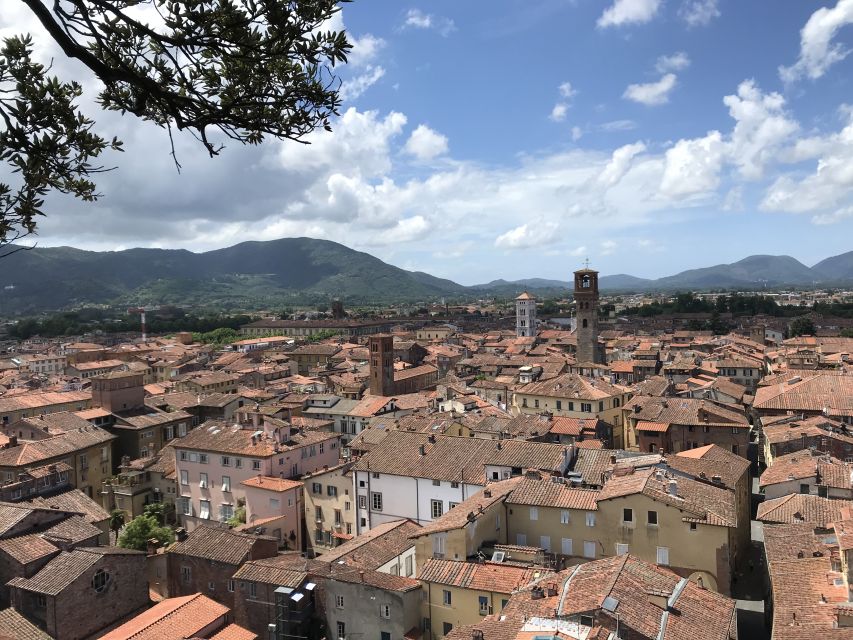
Lucca’s towers are not just vertical shapes. They are landmarks you can use to navigate. The tour includes Torre delle Ore and Torre Guinigi, and that is one of the best planning choices in a 2-hour route.
Torre delle Ore gives you the clock tower element, and your guide will help you interpret what you are seeing, including how towers communicated time and presence in daily life.
Then comes Torre Guinigi, the one people tend to remember. It is famous for its unusual presence near the top, and seeing it in the real skyline context is part of the payoff. Even if you have seen images before, you usually get more out of it when you understand what makes that tower distinctive and how it relates to the surrounding buildings.
Look up often on this walk. These stops are designed as skyline beats. If you keep your eyes on the ground only, you will miss the best moments.
San Frediano And Piazza Anfiteatro: When Lucca Turns Past Into Atmosphere
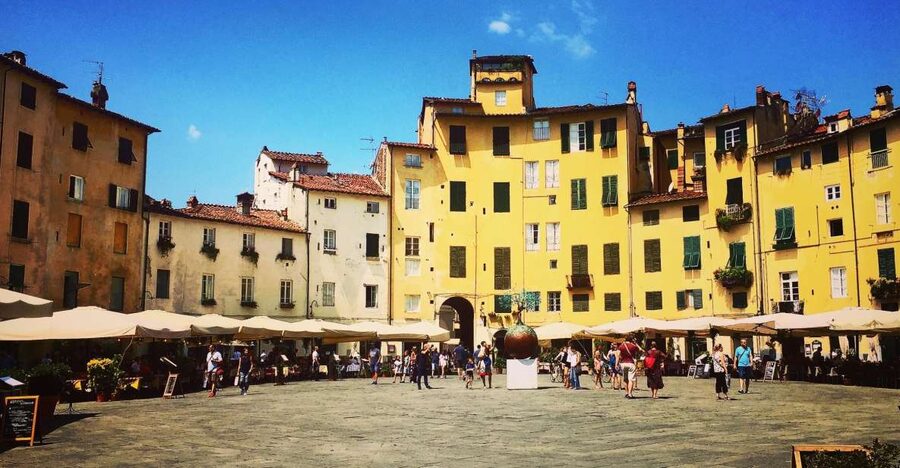
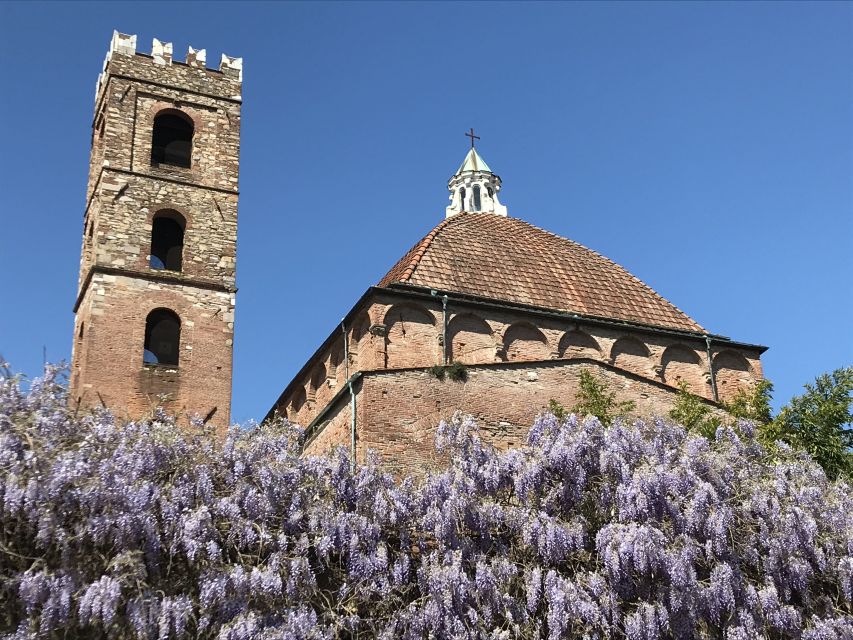
The walk continues through areas like San Frediano and into Piazza Anfiteatro. This is where Lucca shifts from monument viewing into atmosphere.
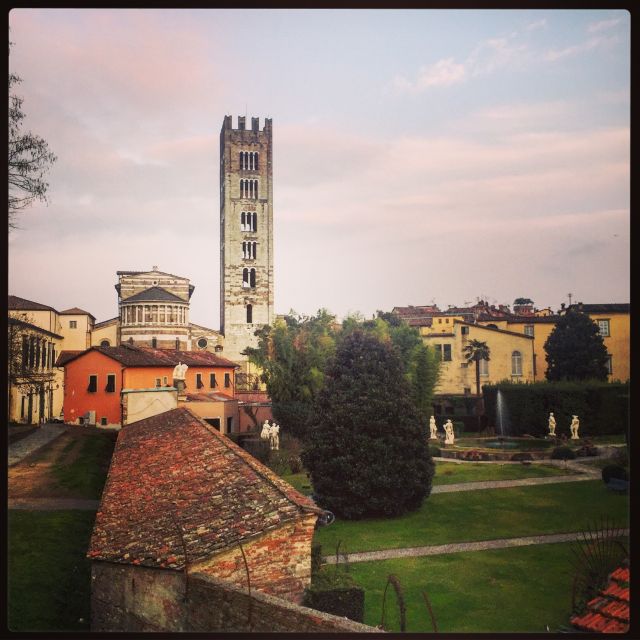
San Frediano is a church stop that adds depth to the religious and architectural layers of the town. The guide helps you understand why it fits into the broader story, rather than treating it as a standalone photo target.
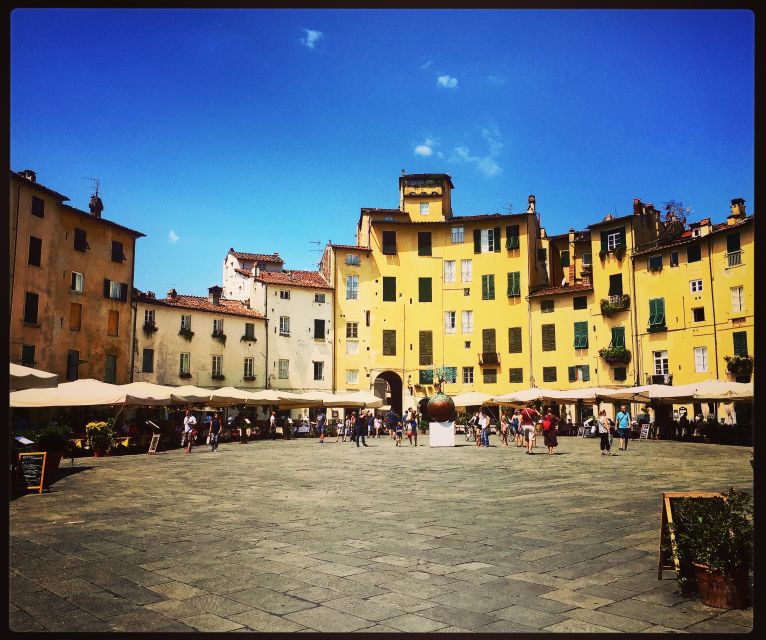
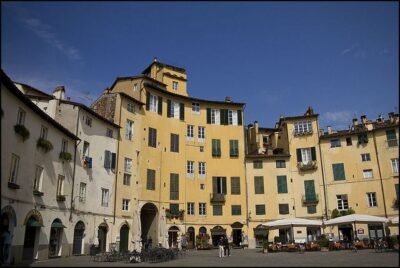
Then Piazza Anfiteatro is a favorite because it feels like the town repurposed an ancient footprint into something you can actually enjoy as a modern public space. In at least one guided experience described here, there was mention of the site connecting back to a 1st-century amphitheater concept. Whether or not you memorize that detail, the effect is the same: you start to feel how old structures can shape daily life long after their original purpose has changed.
If you like wandering, this area often becomes a natural place to linger after the tour. It is also a strong base for grabbing a drink or snack nearby.
Sixteenth-Century Walls: The Walkable Part Of A Legendary Loop
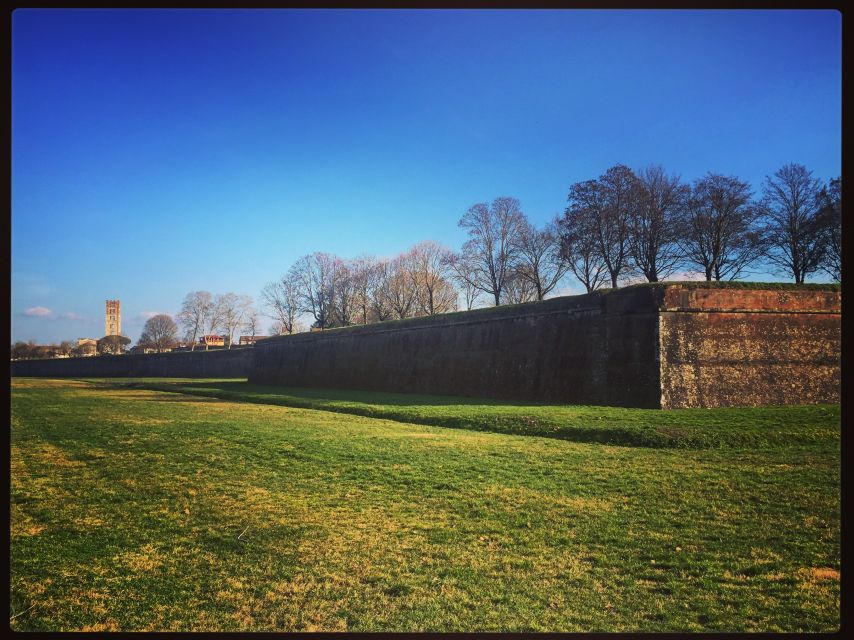
Now for the big practical value: the Sixteenth-century Walls. You get the chance to walk the ramparts and understand why Lucca’s defenses mattered. Your guide explains the logic, then you experience the views.
Even if you are not a “history of fortifications” person, walls are still a smart stop because they do two jobs at once:
1) They give you perspective on the town layout.
2) They offer a scenic break from streets and squares.
In the reviews, people consistently talk about a gentle strolling pace, and that is key. You are not asked to suffer. You are asked to move just enough to feel the town from a different angle. If you want to extend later, you can often connect wall-walking to additional independent exploring.
Bring the same mindset you would for a relaxed viewpoint walk. Stop when something catches your eye, and let the guide’s explanations make the scenery click.
Lucca Cathedral Finish Line, Plus The Optional €3 Interior
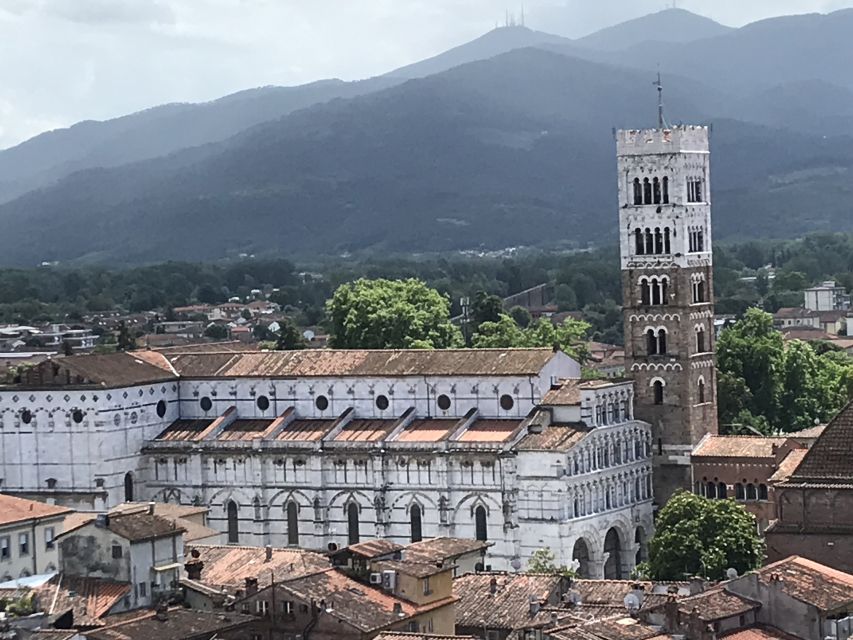
The tour ends at Lucca Cathedral. This is a smart final stop because it is the moment where you can choose what you want next.
You can keep walking with your guide to see the interior if you pay a small entrance fee (around €3). If you do not want to go inside, the structure of the tour still works. You finish outside, then you are free to relax in a café or continue exploring on your own.
Some of the guide stories and humor tend to peak during this final stretch, and in a few cases described here, the guide also spent extra time with people inside the cathedral. That is great if you want depth, but if you have a hard schedule after the tour, just plan a little buffer.
One more nuance: the booking details can sound slightly different about the exact finish point. The important thing for your planning is this, the tour concludes at Lucca Cathedral, and it is described as an activity that ends back at the meeting point in the operator details. In real life, you will have the cathedral finish as your landmark, then you will wrap up from there.
What $17 Buys You (And When It’s Worth More)
At $17 per person for a guided, 2-hour walk, you are paying for two things: direction and interpretation.
Direction means you do not waste time figuring out a route in a compact town. Interpretation means you do not just see towers and squares, you understand why they show up in the same walk and what to notice while you are there. That is the part that changes your photos from souvenirs into memories.
Value also shows up in the guide quality. The strongest praise across the guides includes clarity, humor, patience, and the ability to turn factual information into stories you remember. If you have ever done a walking tour where you feel like you are being lectured, this one tends to avoid that. The pacing described here is often a gentle stroll, not a route march.
Add-on note: the cathedral interior costs about €3 if you choose to enter. Even with that, the overall value can still be excellent because the main route is already guided, and the interior option only adds what you want.
How Long The 2-Hour Walk Feels, And Who Should Book
The tour is listed as 2 hours, with starting times based on availability. In practice, guided walks can run a little long if people have questions or if the guide takes more time at a major stop like the cathedral. That can be a good thing, but if you have dinner reservations that are strict, aim for a bit of flexibility.
Who this suits best:
- You are in Lucca for a short time and want an efficient introduction
- You prefer walking over hopping between separate attractions
- You like guides who mix facts with storytelling, often with humor
- You want a route that helps you plan the next day on your own
If you are traveling with family and want something not too intense, this can be a good fit because the tour is described as a gentle stroll. It is also wheelchair accessible, which is a real plus for mixed mobility groups.
If you are an extreme “only want the biggest sights for the longest time possible” type, you might want to pair this with targeted longer visits to any one stop that grabs you most.
Tips To Make Your Tour Smooth (Small Things That Matter)
Here are the small practical moves that make a big difference on a short walking tour in an old town.
- Wear comfortable shoes. You will be on your feet for the full route.
- Bring a layer. Even in calm weather, churches and open squares can feel cool or breezy.
- Keep your eyes up at the tower moments, Torre delle Ore and Torre Guinigi.
- If the cathedral interior interests you, plan your timing so you do not feel rushed. The guide can show you the interior if you pay the entrance fee.
Also, take advantage of the bilingual setup. If you speak some Italian, listen for the transitions. It can help you follow key names and location cues even when you are not 100 percent fluent.
Should You Book This Lucca City Center Walking Tour?
I would book it if you want a smart first pass through Lucca’s most important city-core sights without overplanning. The route makes practical sense: you get church context early, skyline landmarks mid-walk, the town’s atmosphere through squares and neighborhoods, and then the wall walk for perspective. Finish at Lucca Cathedral so you can decide on the interior rather than committing blindly.
Skip or consider alternatives if you already know Lucca well and you mostly want independent time in one place, like only the walls or only the cathedral interior. This tour is built for variety and orientation, not for an hours-long museum experience.
If you value a guide who can keep things clear and fun, this one has strong momentum behind it, including praise for guides such as Marta, Roberta, Giorgio, Nadia, Lucia, and others. That kind of guide-driven quality is often the difference between a walk you forget and a walk that actually helps you fall for a place.
FAQ
Where do I meet for the Lucca 2-Hour City Center Walking Tour?
You meet at the Tourist Information Office (Ufficio Informazioni), Vecchia Porta S. Donato, Piazzale Giuseppe Verdi, 55100 Lucca, Italy.
What time does the tour last?
The tour duration is 2 hours. Starting times depend on availability.
What is included in the price?
The tour includes an Italian- and English-speaking guide (conducted simultaneously in English and Italian).
Is the Lucca Cathedral interior included?
The Lucca Cathedral interior is not included. There is an entrance fee of about €3 if you want to go inside.
What should I bring?
Wear comfortable shoes for walking.
What languages will the guide speak?
The guide speaks both English and Italian during the tour.
Is the tour wheelchair accessible?
Yes, the tour is wheelchair accessible.
Is cancellation free?
Yes. You can cancel up to 24 hours in advance for a full refund.
Just reviewed around Lucca
- Lucca: Private Guided Walking Tour★ 4.1 · 7 reviews
- Lucca: Musical Walking Tour with Puccini Museum Visit★ 4.5 · 21 reviews
- Lucca: Guided City by Night Walking Tour★ 4.5 · 31 reviews
- Lucca: E-Bike Rental★ 4.7 · 27 reviews
- Lucca: Guided Walking Tour★ 4.2 · 8 reviews
- Lucca: Pasta Cooking Class with a Local Chef★ 5.0 · 56 reviews
- Lucca: Market and Cooking Class at a Local’s Home★ 4.8 · 5 reviews
- Lucca: escursione soft in Canoe★ 4.9 · 27 reviews
Lucca Tours, compared.

Discover Lucca’s Secrets on a Guided Walking Tour
Read our review →
Lucca Bikes and Bites with food tastings for Small Groups or Private
Read our review →
Browse the lists this tour appears in