
Reviewed · WALKING TOURS
Florence: Small Group Guided Walking Tour
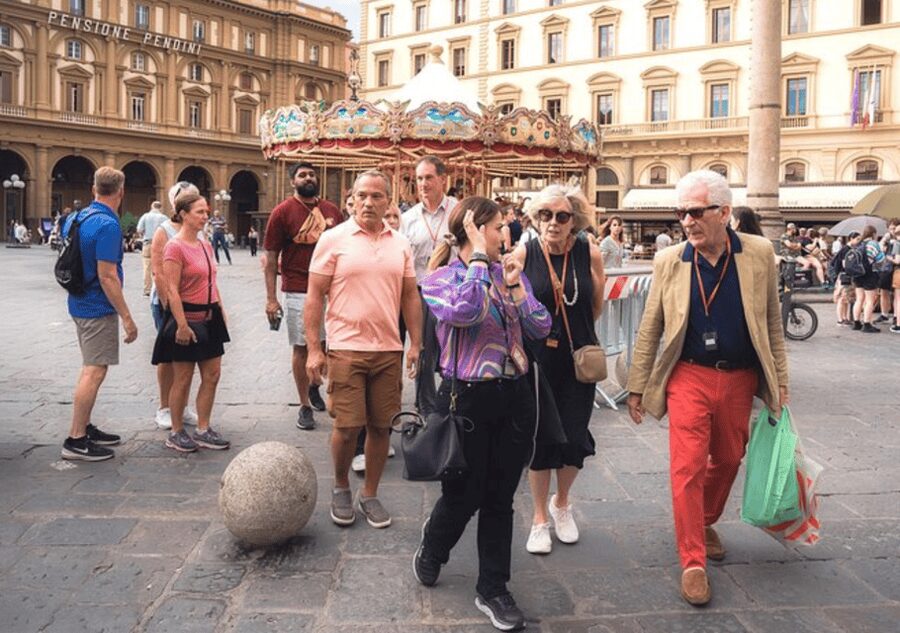
Florence is one of those cities where the monuments feel like they are talking back to you, and this small-group walk is a fast way to get that conversation going. You start at the Duomo complex, then move to the political heart of town at Piazza della Signoria, and finish with the famous bridge that everyone photographs for a reason. I especially love the professional guide approach and the way the radio system helps you actually hear the stories while you’re moving.
Two things I like a lot: first, you get a guided route that links the Duomo’s artistry to Florence’s power plays at the Medici era, not just a list of buildings. Second, the guide style seems to matter here, and names like Itene, Pam, and Francesca are associated with a fun mix of history, humor, and calm pacing.
One drawback to plan around: this is an exterior-oriented walking tour. You will not be buying entrance tickets as part of the experience, so if your dream is to go inside every site, you’ll want a separate plan for that.
Key highlights you should care about
- Duomo complex orientation with real context for Santa Maria del Fiore, the Baptistery of Saint John, and Giotto’s Bell Tower
- Piazza della Signoria power story, including the replica of Michelangelo’s David and the Renaissance backdrop
- Ponte Vecchio walk right where the shops line the bridge and the atmosphere is pure Florence
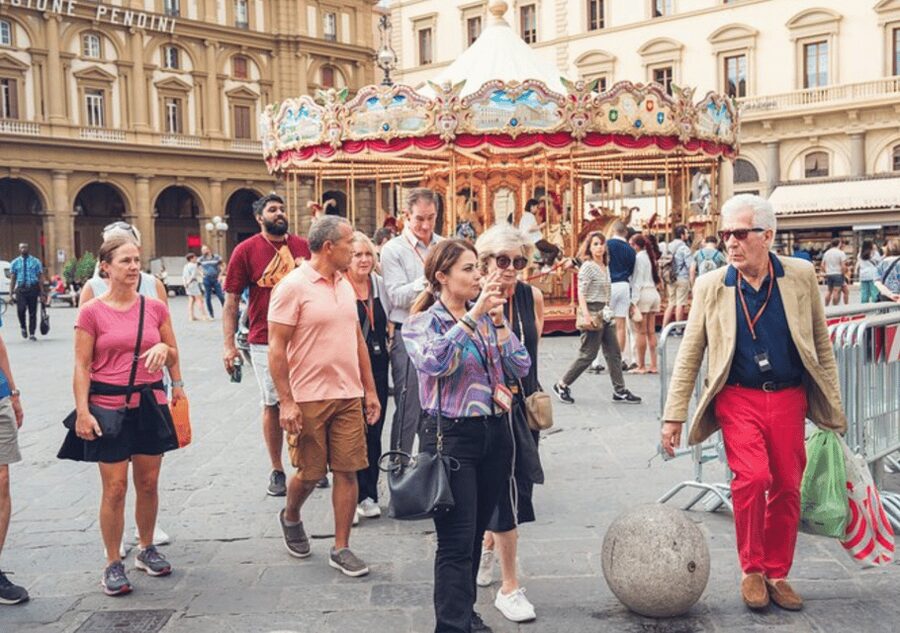
- A certified guide plus radio system, so you can follow along even in crowded streets
- Small-group feel with a minimum of two guests to run, which often means less chaos than big buses
Duomo complex orientation: what you see and why it matters in 90 minutes
If Florence feels overwhelming, you are not alone. Even people who love art can hit information overload fast, because the city is stacked with centuries of genius. This tour helps you sort it out by starting at the Duomo complex, where the city’s identity is carved into stone.
From the start, you will be walking in the area of Santa Maria del Fiore, then moving toward the Baptistery of Saint John and the Museo dell’Opera del Duomo, with Giotto’s Bell Tower as a constant visual anchor. Because the tour operates only outside each attraction, you are not trying to beat lines inside. Instead, the guide helps you “read” what you are looking at: why these buildings are grouped together, how they connect to Florence’s civic pride, and what you should notice on the façade and surroundings.
That outside-only structure is a big deal for value. In 1.5 hours, you get the big visual hits and the interpretive story that makes those hits mean something. If you have limited time, this is a smart way to get your bearings fast, and it can also guide you on what to prioritize later if you decide to go in.
More walking tours in Florence:
- Florence: Guided Walking Tour
★ 4.5 · 3,334 reviews - Skip the line: Uffizi and Accademia Small Group Walking Tour
★ 4.5 · 3,135 reviews - Florence: Guided Walking Tour
★ 4.6 · 1,602 reviews
Santa Maria del Fiore and the Baptistery: the story the buildings tell you
The Duomo complex looks like art from a distance, but the guide’s job is to translate scale into meaning. You are not just looking at famous shapes. You are learning the why behind the landmarks: how Florence built its reputation through religion, craftsmanship, and public display.
At Santa Maria del Fiore, the focus is on the cathedral’s architectural brilliance and the role it plays as a centerpiece. The tour then turns your attention toward the Baptistery of Saint John, a building that often gets photographed quickly and forgotten. With a guide, it becomes part of a bigger conversation about Florence’s artistic ambition and civic identity.
Then there’s the Museo dell’Opera del Duomo. Even though you stay outside, you still benefit from learning what the museum holds and why it matters to the cathedral story. The museum is about preserving and explaining original artworks and craftsmanship that give the Duomo complex its depth. The exterior walk approach works well if you want context right now, and then decide later whether you want to pay for entry when you have more time to slow down.
Finally, Giotto’s Bell Tower is there to ground your attention. When you can see it as a neighbor to the Basilica of Santa Maria del Fiore, you start understanding how Florence designed the skyline like a statement.
Practical tip: bring comfortable shoes and be ready for walking on uneven, historic surfaces. This part is about standing, looking up, and moving again.
Piazza della Signoria: politics, symbols, and Michelangelo’s David replica
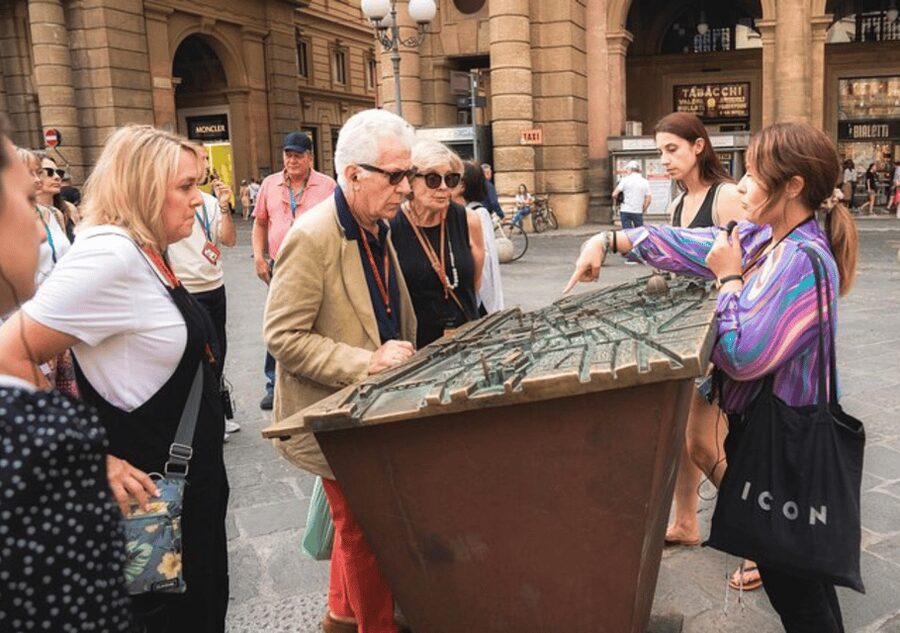
Once you leave the Duomo area, the tour shifts gears to Florence’s political center at Piazza della Signoria. This is where the city stops being only spiritual and starts being openly political. You can feel it in the square’s purpose and the way landmarks sit like characters in a drama.
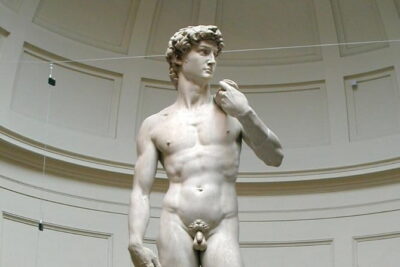
In the center of the experience is the sight of the replica of Michelangelo’s David. The key point is not just that it resembles the famous statue. The guide connects it to what Michelangelo’s work represented for Florence, including the idea of defiance tied to the Republic. When a guide frames David as a symbol rather than a photo op, you tend to look longer and remember more.
You will also hear stories about the Medici and the Renaissance. That matters because the Renaissance did not happen in a vacuum. Florence’s cultural power was tied to patronage, politics, and the way ruling families used art to signal status. The guide’s job is to stitch those threads together so the square stops being a backdrop and starts being a map of influence.
A small note on expectations: you are seeing the statue and square from the outside, at street level. That is still a strong experience. If you want details like you’d get from museum-level viewing, plan to return to specific sites later when you can slow down.
Ponte Vecchio walk: the bridge as a living marketplace
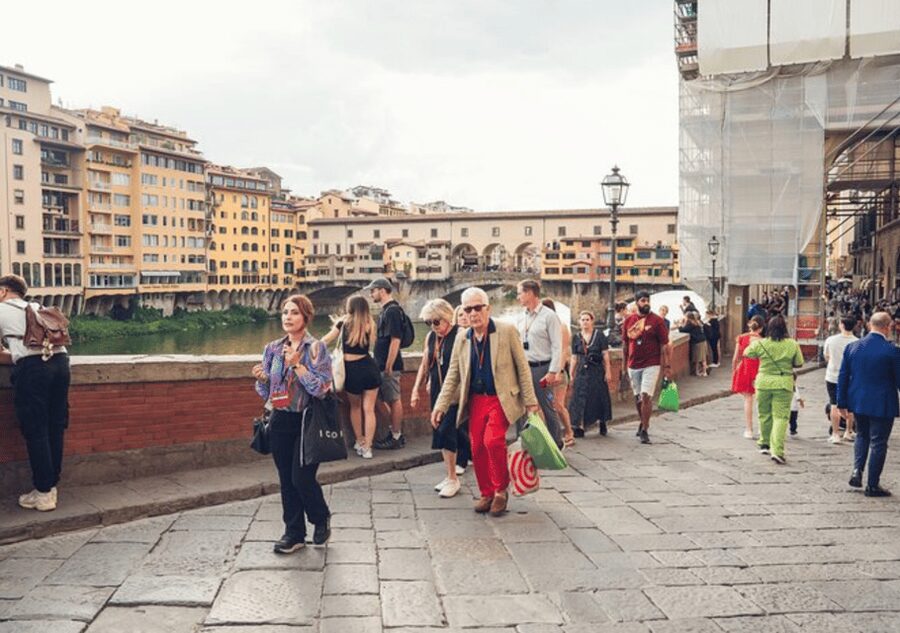
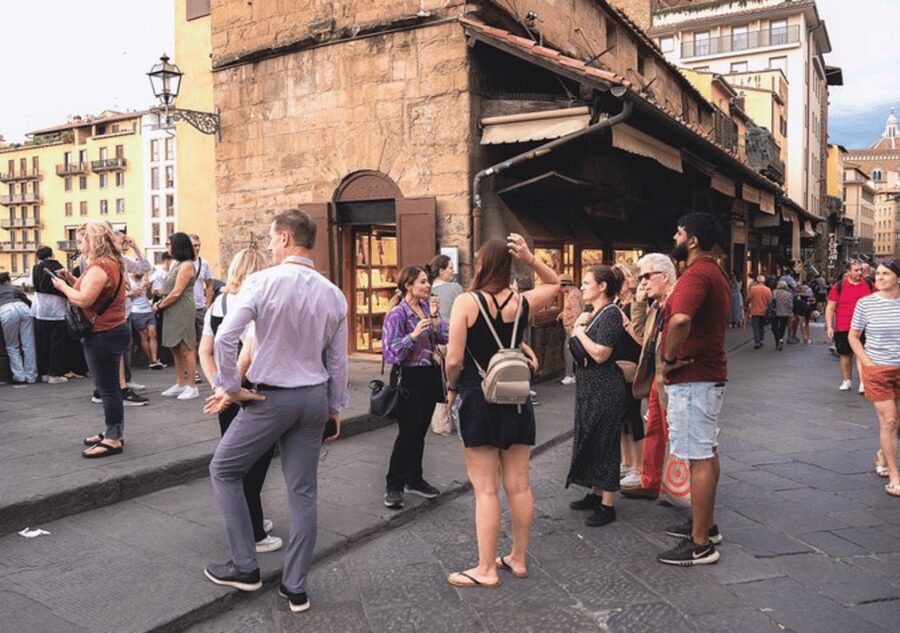
Then the tour moves to Ponte Vecchio, Florence’s bridge famous for its shops and the way the storefronts crowd the sides of the walkway. This is where the city becomes practical and human at the same time. The bridge is not a quiet monument. It is a place people move through, shop, pause, and look.
Walking over Ponte Vecchio during your tour gives you two advantages. First, you get the landmark at the right moment in the route, after the Duomo complex and Signoria Square. That sequencing helps the whole story feel connected: religion, civic power, then commerce and everyday life. Second, your guide can point out what you might otherwise miss, like how the bridge’s layout shapes the views and the street energy.
Because it is a guided walk, you spend less time trying to figure out where to look and more time understanding what you are seeing. If you like photography, this is a section where you will probably pause more than you expect, especially when you start noticing how the shopfronts frame the river views.
If you are prone to leg fatigue, consider a slower pace here. The tour is only 1.5 hours, but Ponte Vecchio can still feel like a lot if you are coming from other sightseeing already that day.
More Florence experiences worth a look
- The Best tour in Florence: Renaissance & Medici Tales – guided by a STORYTELLER
★ 5.0 · 12,316 reviews - Florence: Duomo Cathedral Guided Tour
★ 3.9 · 5,970 reviews - Uffizi Gallery Small Group Tour with Guide
★ 4.5 · 4,923 reviews - Florence: Accademia Gallery Guided Tour
★ 4.6 · 4,156 reviews
The guide experience: why radio and group size change everything
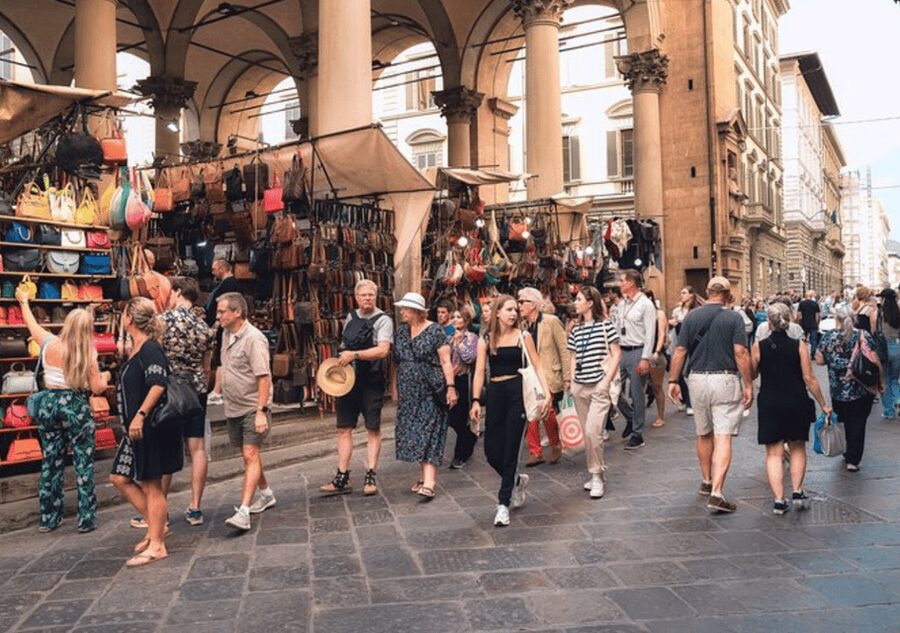
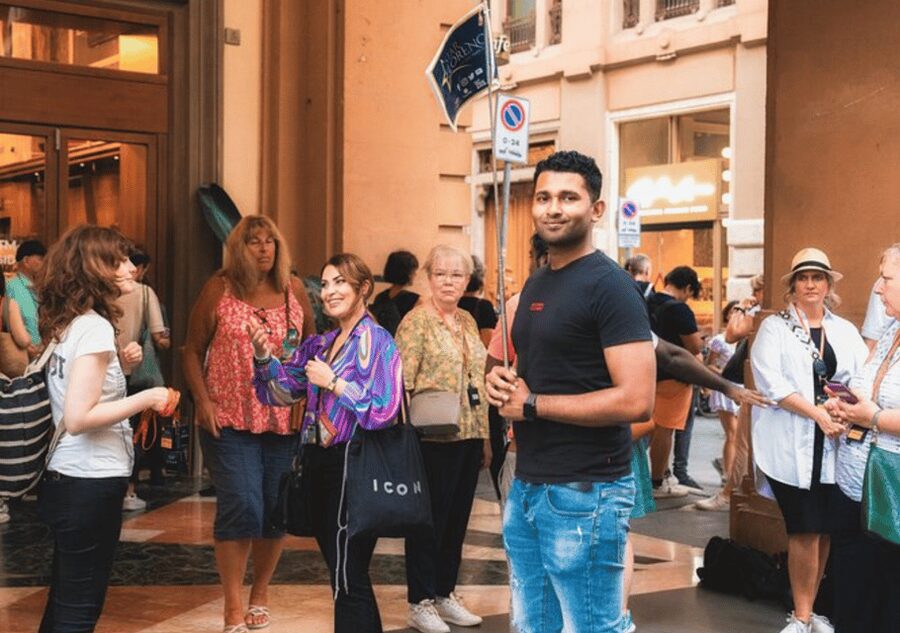
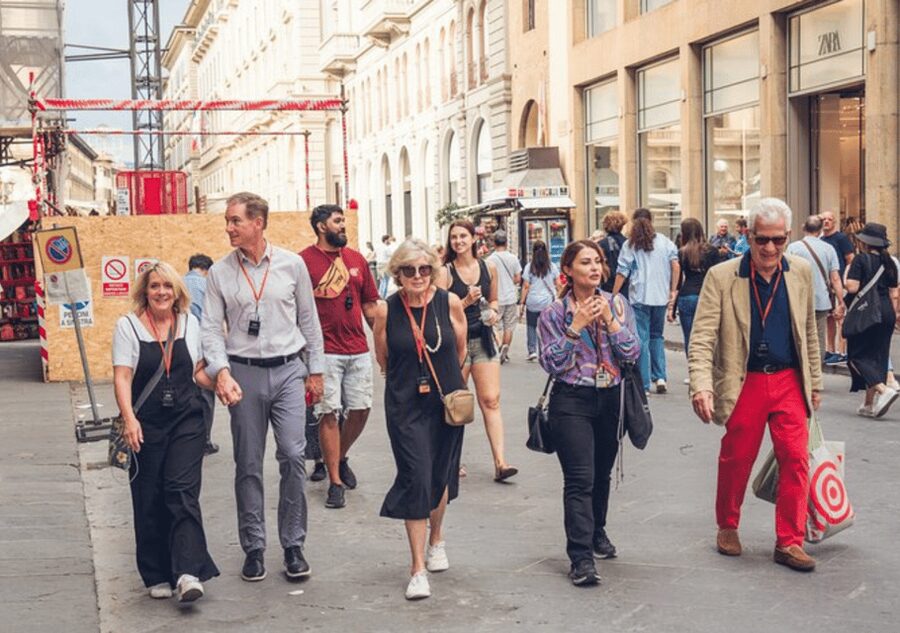
The biggest quality marker here is the guiding style. The guide is a certified professional, and the tour uses a radio system, which is quietly one of the best features for comfort and understanding. In busy Florence streets, voices get swallowed up fast by crowds and traffic. With a radio, you can keep your eyes where they should be, instead of constantly turning your head to chase the guide.
Also, the tour tends to be praised for a few guide traits: clear explanations, humor, patience, and a pace that does not feel like a sprint. Names like Itene, Pam, and Francesca come up in connection with guides who are both friendly and organized with the route flow. If you are traveling with teens, that relaxed pace can make a difference. You do not feel like you are dragging a group through a lecture.
The other practical benefit is the small-group format. You get the feeling of a real conversation without the chaos that comes with big bus groups.
One more operational detail to remember: the walking tour requires a minimum of two guests to run. If you are traveling solo, booking early matters, but you do not need to worry that it is a vague dream tour. It runs when there are enough people.
Price and value: $18 for 1.5 hours of direction and context
At $18 per person for a 1.5-hour walk, the main value is not the stops. It is the setup: a guided route, a certified guide, and radio so the story lands while you walk.
Entrance tickets are not included, and neither are food and drinks. That means you should treat this tour as an orientation and story engine, not as a ticket bundle that tries to do everything in one go. If you want to go inside places like the cathedral area exhibits, you will likely pay separately later.
But for many visitors, that is exactly the right balance. Paying for one guided walk first can help you decide what to prioritize next. You might find you want to spend extra time at the cathedral complex, or you might decide to keep your budget for later neighborhoods. Either way, the tour helps you spend your time more intelligently.
If you care about maximizing value, arrive on time and wear shoes you can walk in for an hour and a half. Those two small choices make the experience feel like more than the price tag.
Getting ready: meeting point, what to bring, and how to avoid stress
Meet at the Hard Rock Cafe area, with the rule to arrive 15 minutes before departure. This matters because the tour will not wait for late arrivals, and you would miss the chance to join.
Bring a passport or ID card, and dress for the weather. The tour is outside the attraction spaces, so you cannot fully escape heat, wind, or rain. Comfortable shoes are non negotiable. Florence streets can be uneven, and the tour is structured as a walk with frequent viewing stops.
There are also luggage limits. You should plan not to bring luggage or large bags, and avoid oversized items.
The tour is listed as wheelchair accessible, and strollers are also accessible. Because the experience stays outside each attraction, accessibility tends to be more about route planning and manageable surfaces rather than navigating interior lines.
Languages are available, which is great if you want the history explained clearly, not guessed at. The guide works in English, German, French, Italian, and Spanish.
Should you book the Florence Duomo, Signoria, and Ponte Vecchio walking tour?
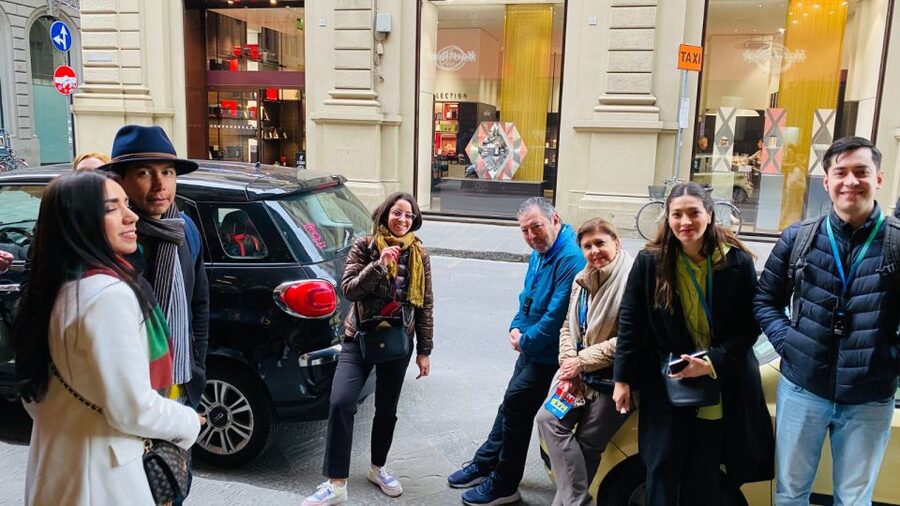
I think this is a strong booking when you want three classic Florence hits with explanations that help you connect the dots. It is especially worth it if:
- You are short on time and want a focused route that still covers major symbols like David in Piazza della Signoria
- You like your history delivered through real city landmarks, not just a slideshow
- You value a guide who can keep a calm, humorous pace while you walk
- You want help hearing the story in the street with a radio system
I would skip it or pair it with other plans if:
- You want to go inside the cathedral complex sites during the tour. This one works outside only, so entrance tickets are separate.
- You want to spend extra time lingering in museums and galleries, not just moving between the biggest architectural and civic locations.
If Florence is your first stop in Italy, this tour can act like your map, letting you explore afterward with confidence. And if you are already confident with the basics, it still adds value by turning monuments into a connected story from the Duomo to the bridge.
FAQ
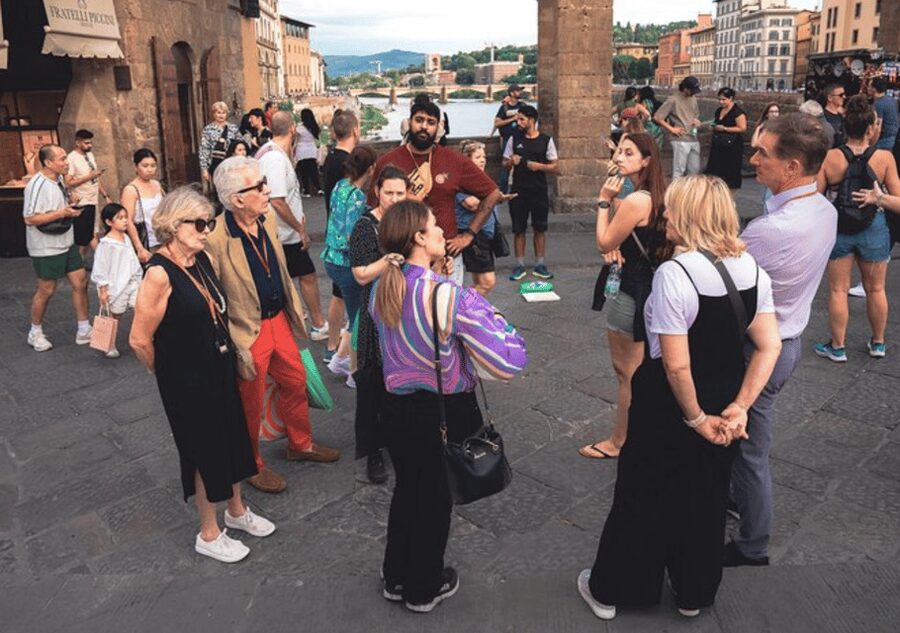
Where do I meet for the tour?
You meet in front of the Hard Rock Cafe. Plan to be there 15 minutes before departure to avoid delays.
How long is the Florence walking tour?
The tour lasts 1.5 hours.
What is included in the ticket price?
The price includes an official certified guide, a radio system so you can hear the guide, and a walking tour of Florence.
What is not included?
Entrance tickets are not included, and food and drinks are also not included.
Does the tour go inside the cathedral and other attractions?
The walking tour operates only outside of each attraction.
What should I bring?
Bring a passport or ID card, wear weather-appropriate clothing, and wear comfortable shoes.
Is it wheelchair accessible?
Yes. The tour is listed as wheelchair accessible, and strollers are accessible as well.
What languages are available, and what if I arrive late?
The guide speaks English, German, French, Italian, and Spanish. If you arrive after the tour start time, you will not be able to join and will not be refunded or rescheduled.
Just reviewed around Florence
- Tuscany: Leonardo da Vinci – Oil and Wine Discovery Tour★ 4.8 · 5 reviews
- Livorno Port, Pisa, Florence: Full-Day Shore Excursion★ 4.8 · 51 reviews
- Legends of Florence: Exclusive Walking Tour by night★ 4.9 · 70 reviews
- Leather and Passion: A Tour of Florentine Craftsmanship★ 5.0 · 16 reviews
- Illuminated Florence Tour for Kids with Gelato & Pizza★ 5.0 · 6 reviews
- Inferno Florence Private 3-Hour Tour★ 4.8 · 20 reviews
- Hidden Florence: 2-Hour Guided Walking Tour★ 4.7 · 36 reviews
- 3-Hour Historic WhoDunIt Tour in Florence★ 3.2 · 6 reviews
Walking Tours, compared.
Skip the line: Uffizi and Accademia Small Group Walking Tour
Read our review →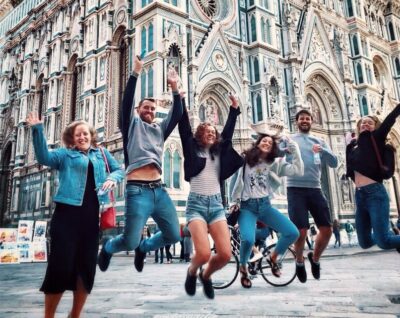
Renaissance and Medici Tales Guided Walking Tour
Read our review →
Skip-the-Line Florence Highlights and David Walking Tour
Read our review →
Browse the lists this tour appears in