
Reviewed · WALKING TOURS
Florence: Private Guided Walking Tour
Florence feels like a live history class, and this private walking tour is built to help you see it. In about 3 hours, you’ll go from medieval corners to Renaissance landmarks, with a guide putting the stories into plain words. I like that you get a real private group up to 8, so the pace stays human. I also like the focus on famous places plus smart stops like the House of Dante. One thing to consider, though, is that it’s a walking tour with no museum or church entries included, so you’ll want to be comfortable admiring many sights from outside.
You’ll cover a lot of Florence without racing. The route links major sights across the city, including a crossing of the Ponte Vecchio, and it also points out photo moments and small details along the way. I especially like the flexibility of a private guide. In real life, that can mean more time for gelato stops and better angles for photos, not just a rigid checklist.
Before you book, check what fits your body. The tour lists wheelchair access, but it also says it is not suitable for people with mobility impairments. That mismatch means you should confirm expectations with the provider if mobility is a question for you.
Key highlights worth planning for
- Duomo Square to Giotto and Brunelleschi: You’ll understand the landmark complex without needing entry tickets
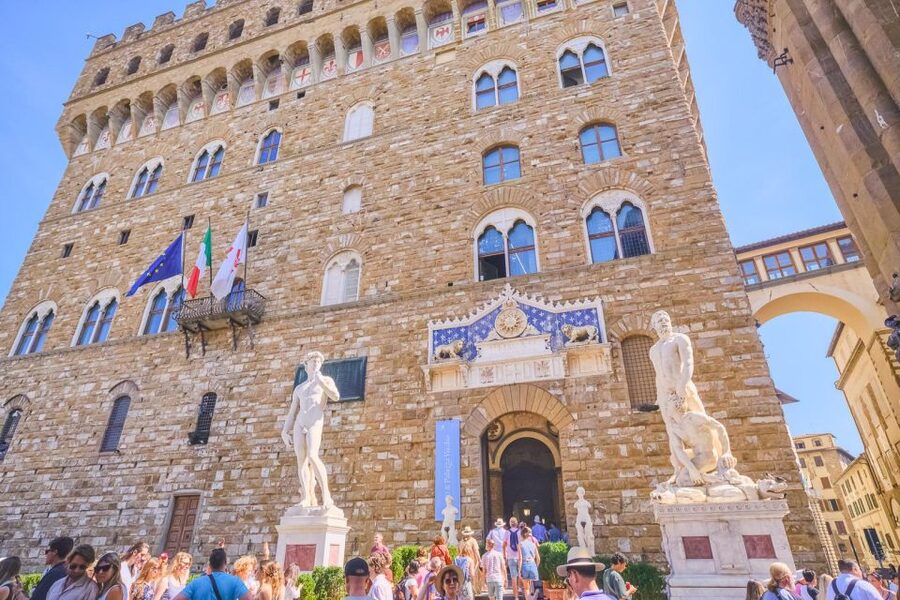
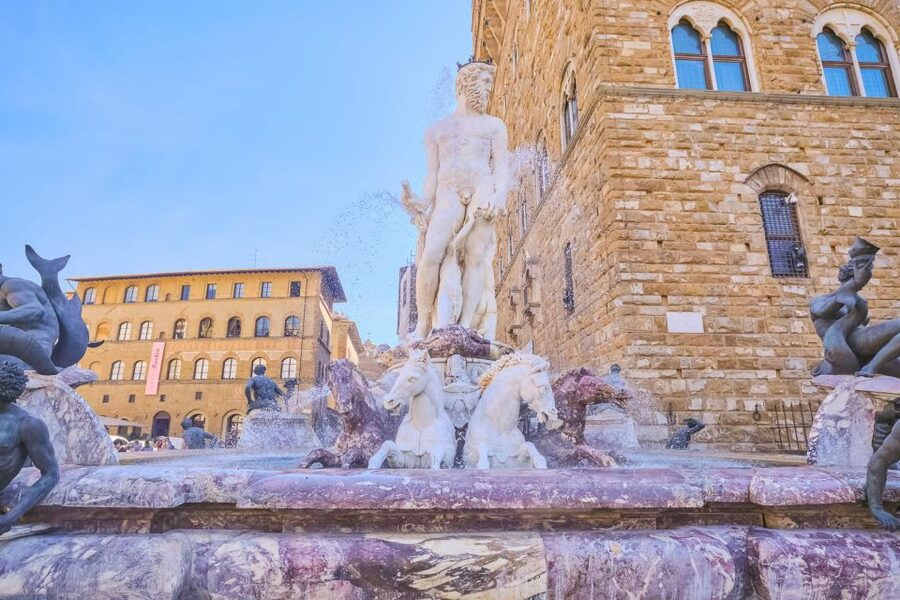
- Piazza della Signoria as an open-air museum: Palazzo Vecchio and major sculpture stops in context
- House of Dante connection to the Divine Comedy: A focused stop that turns a name into a place
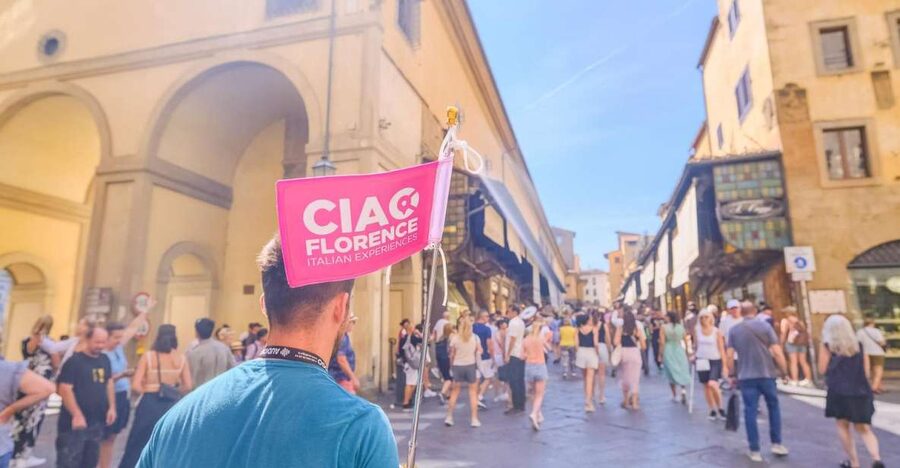
- Ponte Vecchio crossing: The oldest bridge feeling up close, not at postcard distance
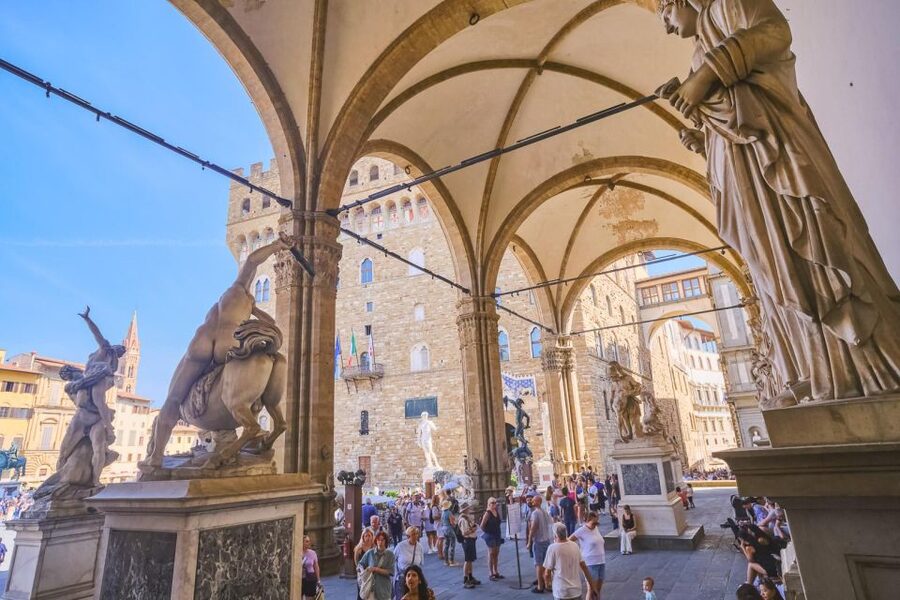
- Loggia dei Lanzi originals (Cellini and Giambologna): Seeing Renaissance sculpture where it was meant to stand
- Vasari Corridor mention: You’ll learn the secret link between Palazzo Vecchio and Pitti Palace
Private 3-Hour Florence Walk: How It Fits Your Day
This is a private guided walking tour of Florence centered on the city’s Renaissance roots, with a price of $341 per group for up to 8 people. That pricing structure is important. If you’re traveling with friends or family, the cost per person drops fast. If you’re solo, you’re paying mostly for the privacy and the guide’s time, not for museum tickets.
The big practical win: the guide is included, but entrances to churches and museums are not. So you should expect a route that emphasizes exterior views, streetscapes, and key viewpoints, plus the kind of explanation that makes the buildings click. If your dream Florence day includes sitting inside museums for hours, plan that separately. This walk is about understanding what you’re looking at while you’re actually there.
Pickup is also straightforward. Your private guide picks you up on foot at your hotel or apartment’s main entrance. That beats the stress of hunting a meeting point at the edges of the historic center.
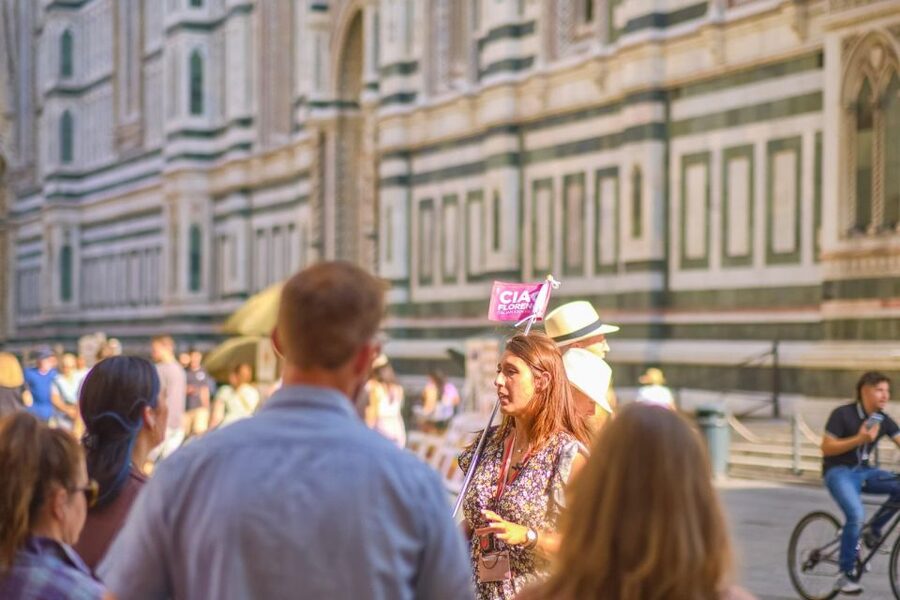
One more detail that matters for comfort and pacing: it’s live-guided in Italian, Spanish, English, and French. If language support matters to you, this is a good match. And because it’s a private group, you can ask questions freely and steer moments toward what you care about most, like architecture, artwork, or photo stops.
More walking tours in Florence:
- Florence: Guided Walking Tour
★ 4.5 · 3,334 reviews - Skip the line: Uffizi and Accademia Small Group Walking Tour
★ 4.5 · 3,135 reviews - Florence: Guided Walking Tour
★ 4.6 · 1,602 reviews
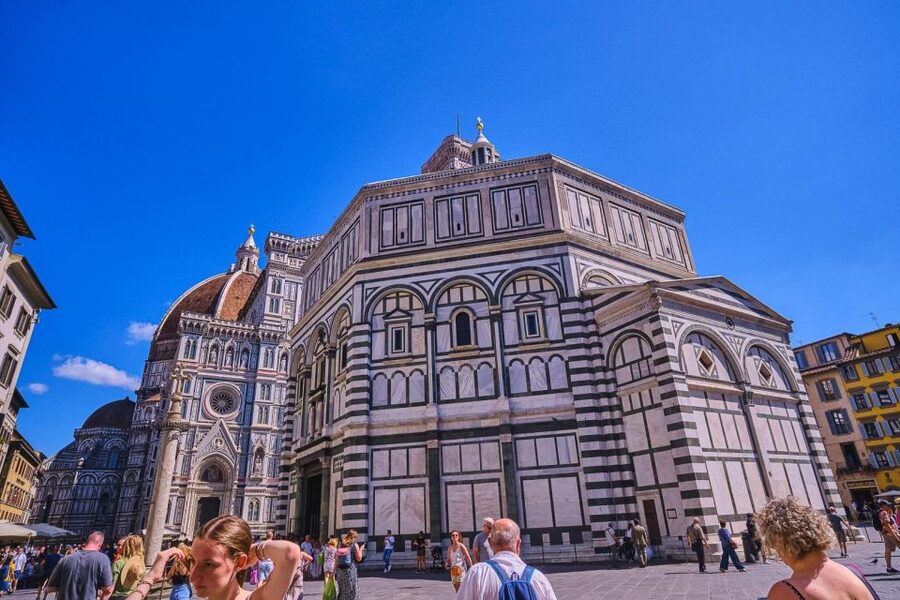
Duomo Square and the Cathedral Complex You Can Read Like a Map
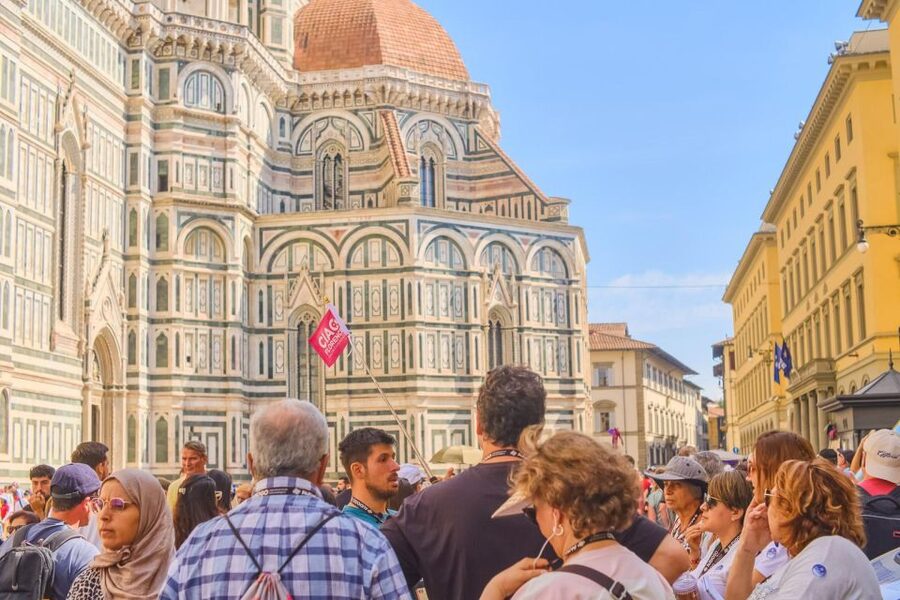
Your walk includes Duomo Square, and this is one of the best places in Florence to practice your “slow looking” habit. Without going inside, you still get a powerful overview of how the Cathedral complex works as a visual system.
Here’s what you can expect to focus on:
- the Cathedral and its construction story
- the Baptistery, an older anchor that changes how you read the skyline
- Giotto’s Bell Tower, which helps you understand the shift toward Renaissance boldness
- Brunelleschi’s Cupola, the moment where engineering and art show off together
Why this stop is valuable is simple. In Florence, people sometimes rush the Duomo because the photos are so famous. A guide helps you slow down in the right spots. You learn what to notice in the façade, why the complex looks the way it does, and how the pieces relate. You also learn how construction time and changing styles show up in what you see today.
For photos, Duomo Square can be tricky because angles compete with crowds. Your best move is to take a couple of quick wide shots, then step back and let your guide point out where the details line up. Even without museum entry, you’ll leave with photos that look like you planned the day, not like you got lucky.
Piazza della Signoria: Florence’s Open-Air Museum Feel
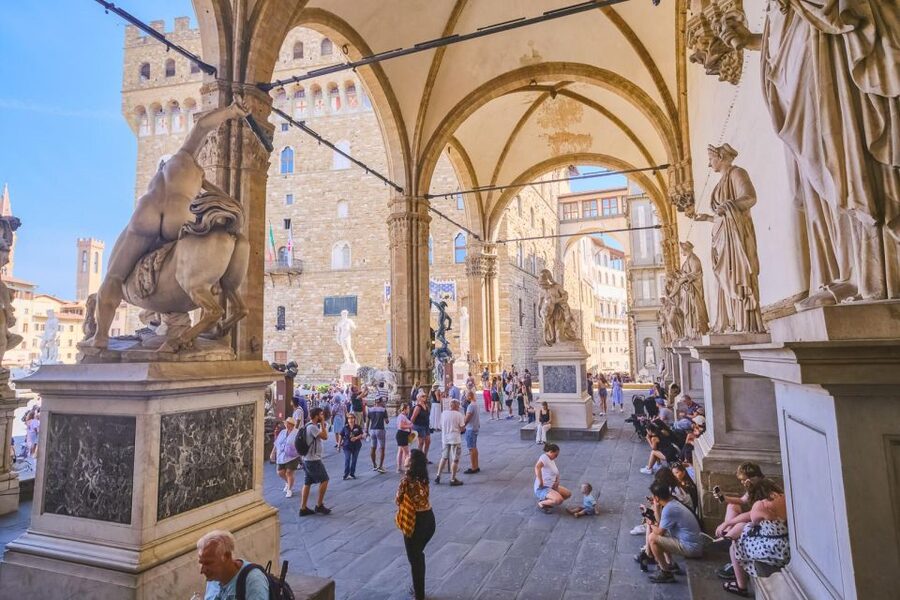
Next, you’ll hit Piazza della Signoria, which is essentially Florence’s outdoor stage. It’s also where history feels close enough to touch.
In this square you’ll encounter:
- Palazzo Vecchio, the political heartbeat of the area
- the sense of an open-air museum, where sculpture and architecture act like a gallery wall
Then you’ll walk over to the Loggia dei Lanzi, where the guide points out a standout feature of Florence’s art scene: original Renaissance statues. The tour specifically calls out works by artists including Cellini and Giambologna.
This matters because it changes the way you experience sculpture. Instead of seeing statues as background, you learn how they were placed, why they matter, and what they represent in the city’s public culture. If you’ve ever felt confused standing in front of famous art, this is the kind of guidance that turns “I recognize the name” into “I get what I’m looking at.”
Practical tip: stay near your guide during the sculpture stops. Loggia areas often have the best sightlines at the edges of the walkway, not directly in the center. Let your guide position you for the most readable angles.
House of Dante: The Divine Comedy Connection in One Focused Stop
One of the most satisfying moments of this tour is the stop at the House of Dante, tied to where Dante wrote the Divine Comedy.
Even if you don’t consider yourself a literature person, this stop can still land. Florence doesn’t only love art on canvases. It loves art in language, in ideas, and in how stories shape a city’s identity. Dante becomes less like a distant textbook figure and more like a neighbor whose work changed how people thought.
This part of the experience is also a good pace reset. After sculpture and major civic spaces, you shift into a tighter, story-driven stop. Your guide’s anecdotes help connect the setting to the writing, so the name makes sense when you leave.
If you’re the kind of traveler who collects context, this is the kind of stop you’ll remember later when you see references around town.
More Florence experiences worth a look
- Cinque Terre and Pisa Tower Tour from Florence Semi Private
★ 5.0 · 1,406 reviews - From Florence: Private Chianti Hills Tour with Tasting
★ 4.3 · 809 reviews - Private Self-Guided E-Bike Ride in Tuscany with Vineyard Visit
★ 5.0 · 775 reviews - Florence Private Transportation in Rickshaw
★ 5.0 · 730 reviews
Uffizi Colonnade and the River Route: Art and Power Meet on Foot
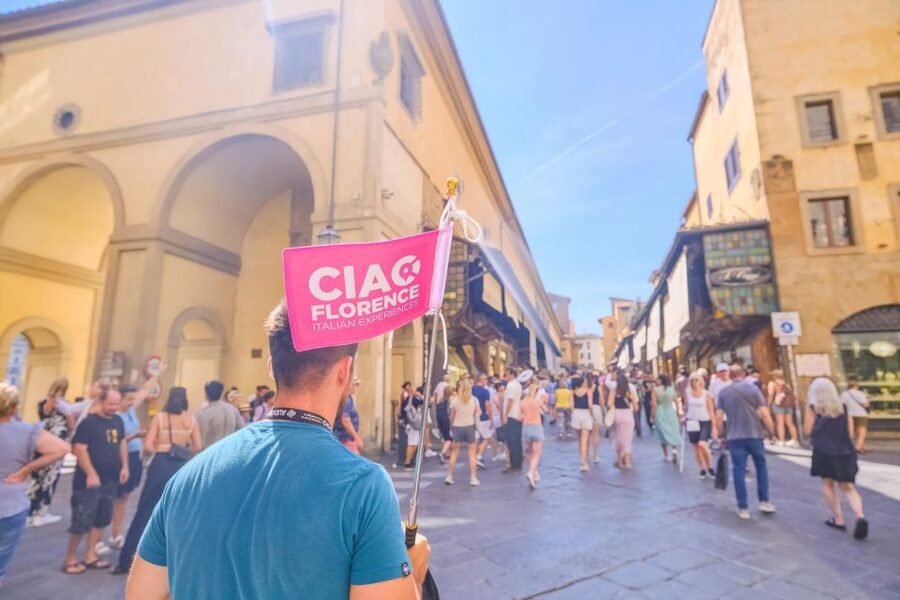
You’ll pass by the Uffizi Gallery area, including time walking through the colonnade of the Uffizi Gallery. Even without museum entry, the setting matters. The building and its approach help you understand why Florence became a magnet for art and patronage.
Then the route takes you toward the river for the classic Florence experience: Ponte Vecchio.
This bridge is called the oldest bridge in the city, and walking it feels different from looking at it from a distance. The guide helps you notice how the bridge functions in the city’s layout and why it became such a symbol. You get that “walk through the postcard” moment, but with real context behind it.
The practical payoff is timing and flow. In a short tour, bridges can become chaotic photo traps. A good private guide helps you avoid the worst crowd bottlenecks and plan your side steps for the view.
If you love photography, this is the spot to slow down. Get one wide overview, then reposition for a tighter shot that includes the bridge structure and the water line.
Ponte Vecchio to Pitti Palace: The Stops That Make the City Feel Connected
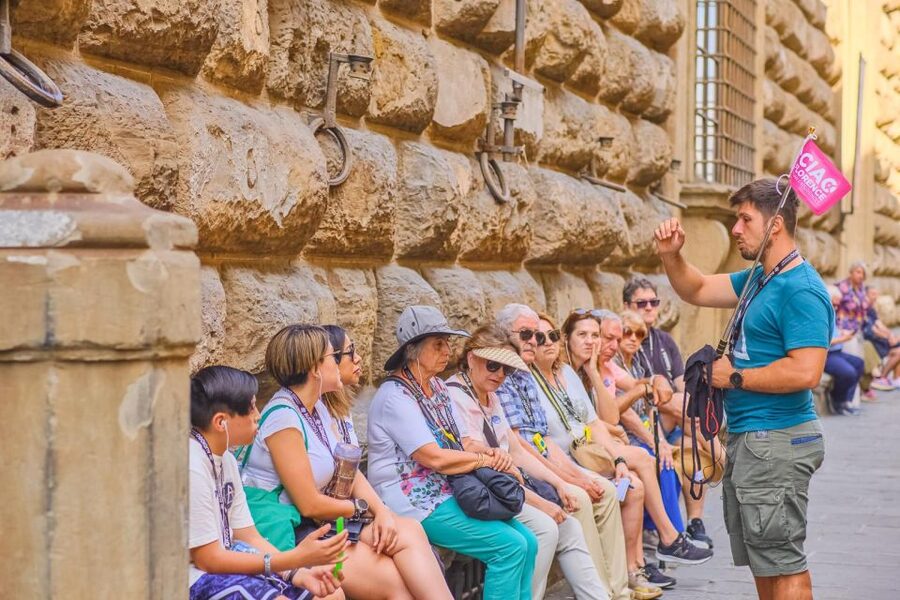
From the river area, you’ll continue toward Pitti Palace, another major anchor in Florence’s Renaissance story.
One of the tour’s most intriguing components is the mention of the Vasari Corridor, described as a well-kept secret of Florence. The corridor connects Palazzo Vecchio to Pitti Palace, which is the kind of detail that makes a map suddenly make sense in your head.
Even if you cannot physically walk every hidden passage, learning the idea of a connected route changes how you understand the city’s design. Florence isn’t only about standalone landmarks. It’s also about power networks, movement, and the practical systems behind art and governance.
This is where your guide’s historical anecdotes pay off. The corridor detail is interesting on its own, but it’s even better when your guide explains why Florence developed such clever connections and what they meant for the people who used them.
And again, because museum entry is not included, you’re focused on what you can experience best while walking: sightlines, street layout, and the feeling of moving through the city as it was meant to be used.
Medieval Streets to Renaissance Squares: Why the Route Actually Works
The tour’s combination of areas is the secret sauce. You start in the rhythm of Florence’s medieval layers, then move toward Renaissance icons and power centers.
You’ll spend time in the Medieval District, then stop again at Duomo Square for that big moment with the Cathedral complex. That structure is smart. It helps you compare eras while your brain is still grounded in the same walking reality.
Along the way, you’ll also spend time around Loggia dei Lanzi and the civic square atmosphere of Piazza della Signoria. These aren’t random stops. They work like chapters in one story:
- city power
- art placed in public space
- sacred buildings and their engineering
- literature tied to a real address
- bridges and river identity
If you want one practical takeaway for planning the rest of your day: this tour is best as a “map maker.” It helps you decide where you want to go next after 3 hours, whether that means booking a museum time window later or returning for a longer walk at an unhurried pace.
The Guide Factor: Why Private Means More Than Fewer People
The quality of a private guide shows fast, and the experience here is clearly shaped by that. Guides like Larla, Constansa, and Andrea have been highlighted for being patient, professional, and comfortable with questions.
One of the nicest parts is that your guide doesn’t treat your time like a conveyor belt. In practice, it means you can usually adjust for real-life needs like a quick gelato stop or photo time if you spot a better angle. That kind of flexibility makes your tour feel personal.
Also, a good guide doesn’t just list facts. They give you anecdotes that connect buildings and artworks to the people who lived there. And because the group is small and private, you’re more likely to get answers that fit what you actually care about.
If you’re traveling with kids, couples who want to talk, or anyone who hates feeling rushed, this private setup is the difference between seeing a city and understanding it.
Price and Value: What $341 Gets You, and What It Does Not
Let’s talk money honestly.
The tour costs $341 per group up to 8. If you split it with 8 people, you can think in the neighborhood of about $43 per person for 3 hours with a private guide. If you have fewer people, the per-person cost rises, because you’re paying for the guide and private pacing, not for a fixed number of entrances.
What you get for the price:
- a local tour guide
- a private walking route through major Renaissance and medieval landmarks
- outside-focused sightseeing with historical explanations
What you don’t get (and you should plan around):
- entrance fees to churches or museums
- lunch or drinks
So the value is best if you want orientation and storytelling more than ticketed museum time. If you’re the type who wants to spend hours inside major museums, you may feel like you are only sampling. But if you want to build a mental framework for Florence, then this tour pays you back quickly when you walk afterward and start recognizing themes.
My practical advice: budget for a snack break and water, and consider pairing this walk with one timed-entry museum visit later. That combo gives you both context and the ticketed experience.
Walking Comfort and Accessibility Reality Check
This tour is wheelchair accessible and also states it is not suitable for people with mobility impairments. That sounds contradictory, and it is exactly the kind of detail you should not ignore.
Because it is described as a private walking tour through historic streets and major squares, you should assume uneven surfaces and some challenging stretches. If you have limited mobility, confirm with the provider before booking and ask what the route looks like and how much time is spent walking.
The flip side: if you can comfortably walk for a few hours, this route is a great way to see a lot without adding extra transit time. You’ll get the benefit of staying in motion while a guide keeps the story straight.
Should You Book This Private Florence Guided Walking Tour?
Book it if:
- you want a 3-hour orientation to Florence’s Renaissance and medieval layers
- you enjoy architecture, art context, and short story stops like the House of Dante
- you like the idea of a private guide who can answer questions and adjust pacing
- you’re traveling with up to 8 people and can split the cost
Skip or reconsider if:
- you need museum or church entry tickets included
- your main goal is spending long hours inside major institutions
- mobility limitations make walking an issue, since the tour is flagged as not suitable for mobility impairments
If you’re unsure, treat this as the best first step. You’ll come away knowing where the city’s big themes live, from Duomo Square to Ponte Vecchio, and you’ll understand why those landmarks feel like they belong together.
FAQ
How long is the Florence private guided walking tour?
The tour duration is 3 hours.
What is the price for this private tour?
It is priced at $341 per group, up to 8 people.
Is this a private group tour?
Yes. It’s a private group walking tour.
Where does the guide pick you up?
Your private guide will pick you up on foot at your hotel or apartment’s main entrance.
What languages are offered for the live guide?
The live tour guide is available in Italian, Spanish, English, and French.
Are museum or church entrances included?
No. Entrance to churches or museums is not included.
Is lunch included?
No. Lunch is not included.
Is the tour accessible for wheelchairs, or is it not suitable for mobility impairments?
The tour information says it is wheelchair accessible, but it also says it is not suitable for people with mobility impairments. If this affects you, confirm details with the provider before booking.
What is the cancellation policy?
Free cancellation is offered up to 24 hours in advance for a full refund.
Is reserve and pay later available?
Yes. You can reserve now and pay later.
Just reviewed around Florence
- Tuscany: Leonardo da Vinci – Oil and Wine Discovery Tour★ 4.8 · 5 reviews
- Livorno Port, Pisa, Florence: Full-Day Shore Excursion★ 4.8 · 51 reviews
- Legends of Florence: Exclusive Walking Tour by night★ 4.9 · 70 reviews
- Leather and Passion: A Tour of Florentine Craftsmanship★ 5.0 · 16 reviews
- Illuminated Florence Tour for Kids with Gelato & Pizza★ 5.0 · 6 reviews
- Inferno Florence Private 3-Hour Tour★ 4.8 · 20 reviews
- Hidden Florence: 2-Hour Guided Walking Tour★ 4.7 · 36 reviews
- 3-Hour Historic WhoDunIt Tour in Florence★ 3.2 · 6 reviews
Walking Tours, compared.
Skip the line: Uffizi and Accademia Small Group Walking Tour
Read our review →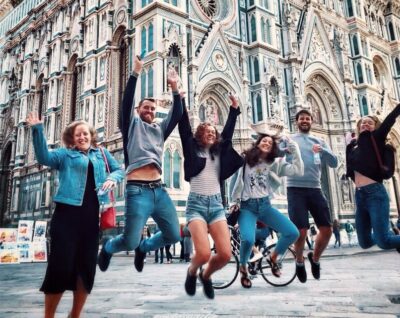
Renaissance and Medici Tales Guided Walking Tour
Read our review →
Skip-the-Line Florence Highlights and David Walking Tour
Read our review →
Browse the lists this tour appears in