
Reviewed · WALKING TOURS
Florence: Private City Walking Tour
Florence is interesting because you can walk through its power, art, and religious life in just a few hours. I love how the tour starts at the Duomo and keeps your bearings with the right context, and I love the mix of big-name Renaissance stories tied to places you can actually stand in. You’ll get a guided flow through the squares and art hubs, instead of playing guesswork with a map.
The main thing to consider is that it’s a walking-heavy route with short stop times at major sights. If you want long museum moments or lots of independent wandering, you may feel a bit rushed.
Key Things I’d Plan For
- Duomo complex first, so you understand the city’s religious center before you wander anywhere else
- Medici-era landmarks, tied to Cosimo the Elder, Lorenzo the Magnificent, and artists linked to the palace
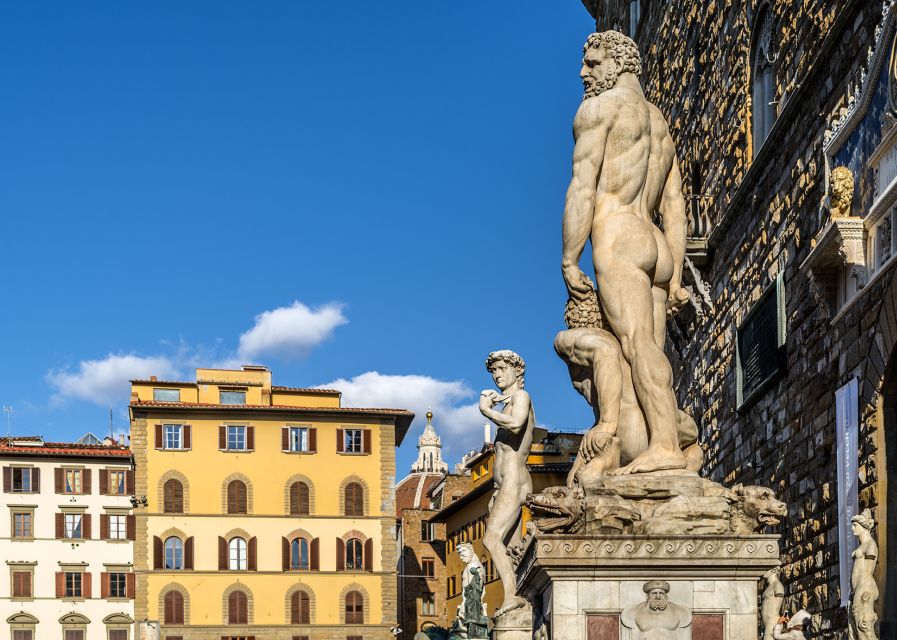
- Piazza della Signoria plus La Loggia dei Lanzi, where sculpture meets politics right in the open air
- Uffizi Gallery time is brief, so it works best as an orientation stop, not a full museum experience
- Ponte Vecchio to Oltrarno, a practical crossing that shifts the vibe from official Florence to lived-in Florence
- Wrap-up at Piazza della Repubblica, connecting Roman history cues to the 19th-century story
Why This 3-Hour Private Walk Works So Well in Florence
Florence can feel like a highlight reel that never ends. This tour keeps it usable. You’re on a private format, so your guide can pace the walk and explain what matters where you are standing, not just when you’re scrolling your phone.
At $192.58 per person for a 3-hour outing, it’s not a budget deal, but it can be solid value if your group wants maximum structure. Private tours work best when you do not want to waste time choosing between sites, or when you want the stories tied to specific spots rather than generic background.
If you like your sightseeing organized, this fits. If you prefer to drift slowly and read every plaque on your own, you may want more free time after the tour.
More walking tours in Florence:
- Florence: Guided Walking Tour
★ 4.5 · 3,334 reviews - Skip the line: Uffizi and Accademia Small Group Walking Tour
★ 4.5 · 3,135 reviews - Florence: Guided Walking Tour
★ 4.6 · 1,602 reviews
Starting at the Cathedral of Santa Maria del Fiore, and Why That Matters
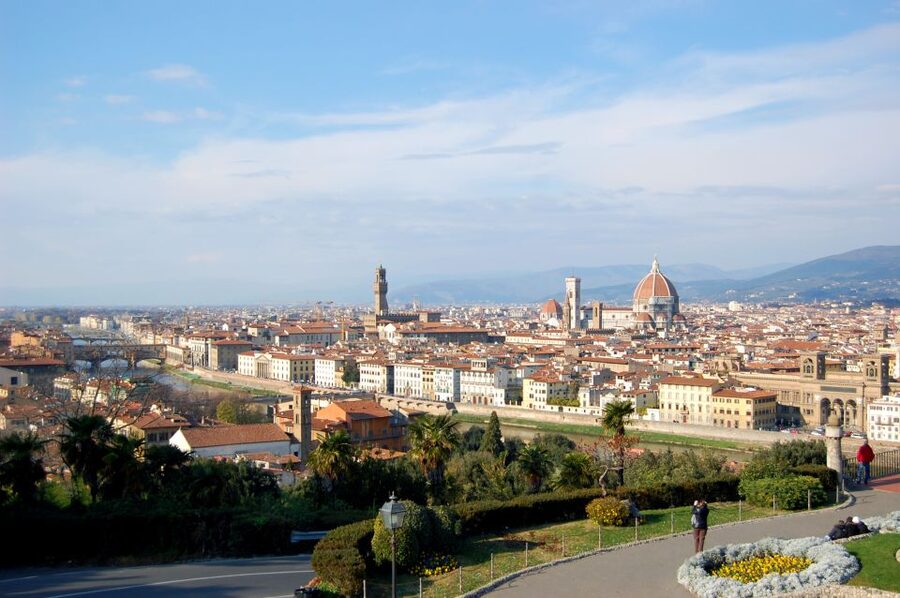
You meet in front of the central door of the Cathedral of Santa Maria del Fiore. That’s a smart start because the Duomo complex is the visual anchor of Florence, and it sets the tone for everything you’ll see next.
From there, you get a guided look at the Duomo complex for about 15 minutes. Expect to connect several key elements in one place: the Baptistery of San Giovanni, the Cathedral of Santa Maria del Fiore, Giotto’s bell tower, and Filippo Brunelleschi’s octagonal dome. Even if you’ve seen photos, standing here helps you understand why Renaissance Florence loved bold geometry and confident engineering.
Practical tip: wear shoes you can trust. The route is built for walking, and the first stop is already a lot of foot traffic and stairs or uneven ground around historic buildings.
The Renaissance Shortcut: Via dei Calzaiuoli and Florence’s Main Spine
After the Duomo area, the tour moves along Via dei Calzaiuoli. This is the kind of street that people speed through, but your guide helps you notice why it matters in real life.
You’ll spend about 15 minutes here with guided commentary. This time helps you connect the bigger monuments you just saw to the everyday flow of the city. Think of it as a transition moment: you go from a religious centerpiece to the commercial and civic rhythms that made Florence such a magnet for talent, trade, and ambition.
If you’re someone who gets overwhelmed by cities that feel all monuments, this section is useful. You’ll come away with a clearer sense of direction in the historic center.
Piazza della Signoria: Politics Meets Art in Real Time
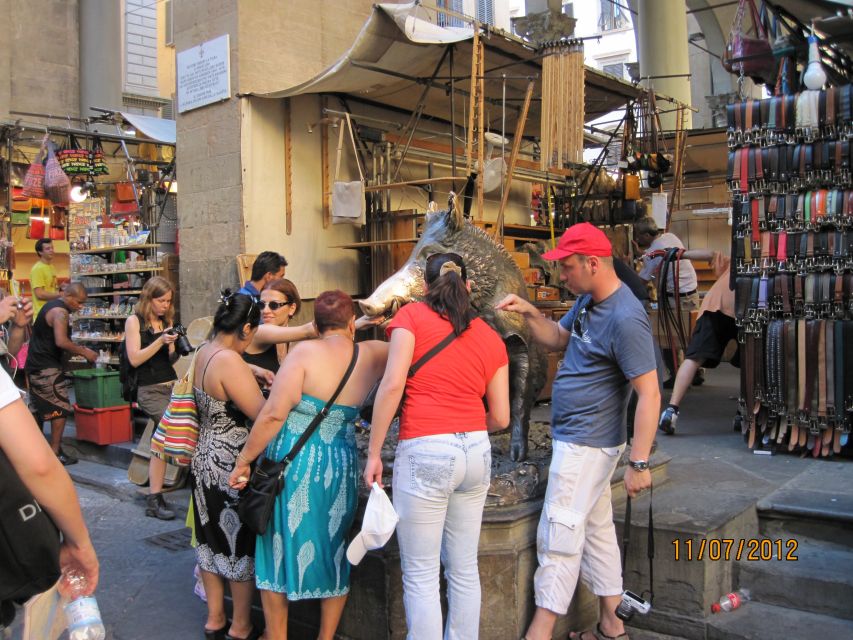
Piazza della Signoria is where Florence starts acting like a political machine. The guide takes you through this square for about 15 minutes, and you’ll see key power symbols up close.
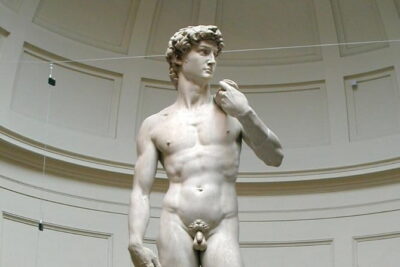
You’ll get pointed attention at the town hall, Palazzo Vecchio, and it’s presented as a visible symbol of civil power, not just an old building. You’ll also be guided to the Statue of David, which you’ll recognize instantly and understand better when it’s framed in context rather than treated as a random selfie stop.
And then comes the part that many people enjoy most: La Loggia dei Lanzi. Your guide brings you to the statues, including The Rape of the Sabine Women, Hercules, and Centaur by Giambologna, plus Perseus by Benvenuto Cellini. These works are outdoors, so you can actually walk around the ideas. It’s a good way to learn how Renaissance sculpture was meant to be seen in public spaces.
A consideration: Piazza Signoria can be crowded, so the short stop time is intentional. You get orientation and key highlights, not a slow gallery-like pacing.
More Florence experiences worth a look
- Cinque Terre and Pisa Tower Tour from Florence Semi Private
★ 5.0 · 1,406 reviews - From Florence: Private Chianti Hills Tour with Tasting
★ 4.3 · 809 reviews - Private Self-Guided E-Bike Ride in Tuscany with Vineyard Visit
★ 5.0 · 775 reviews - Florence Private Transportation in Rickshaw
★ 5.0 · 730 reviews
Uffizi Gallery as a Smart Orientation Stop
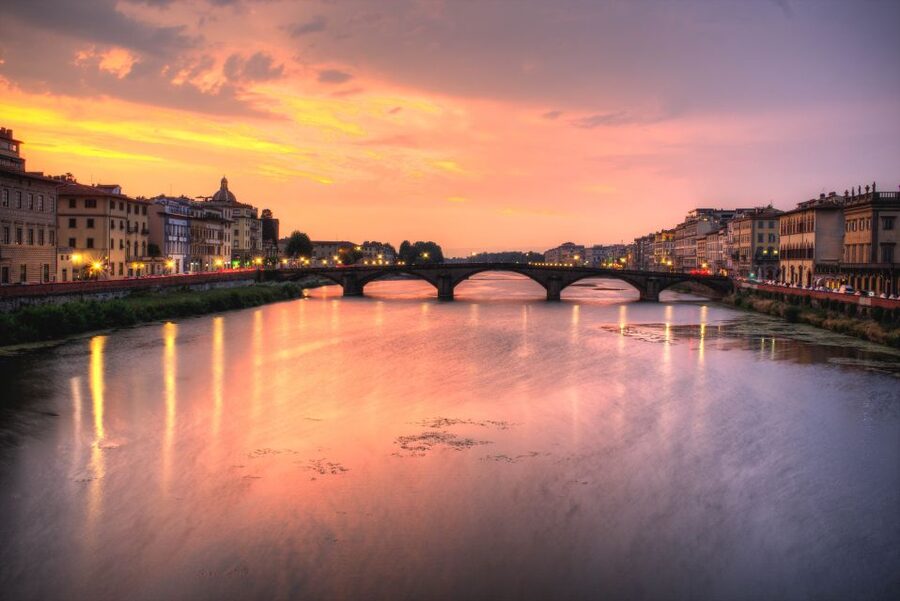
Next you head to the Uffizi Gallery area. The timing here is brief, about 15 minutes, with a sightseeing walk rather than a long museum session.
This works for two types of travelers. If you’re planning a separate Uffizi visit, the tour gives you a priority map in your head: what the museum represents, and what to look for when you have more time. If you are not planning to go inside, you still get a sense of why this location matters in world art history.
Either way, use this stop to decide your next move. For example, you can leave with a shortlist of artists or styles to target later, instead of walking into the museum cold.
Ponte Vecchio Crossing: A Useful Change of Scene
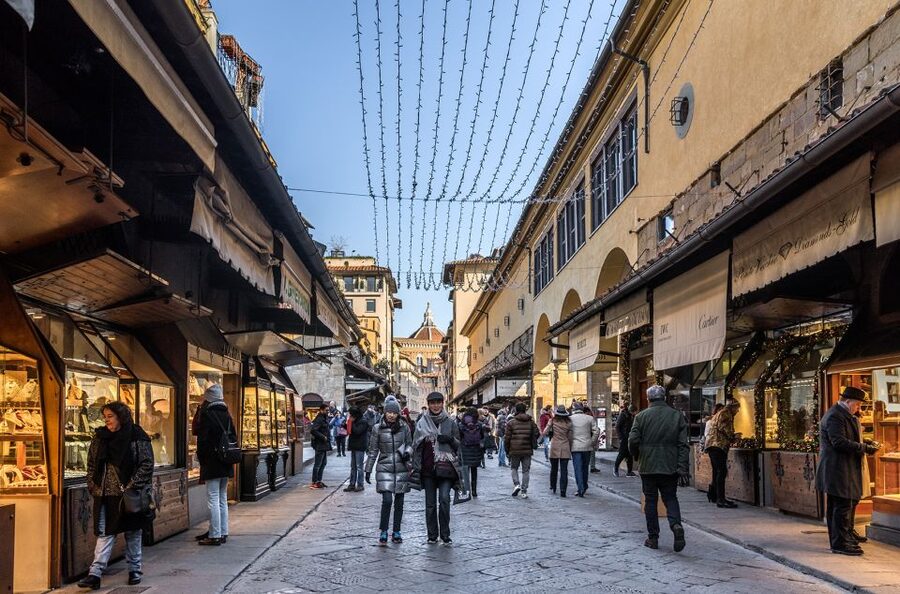
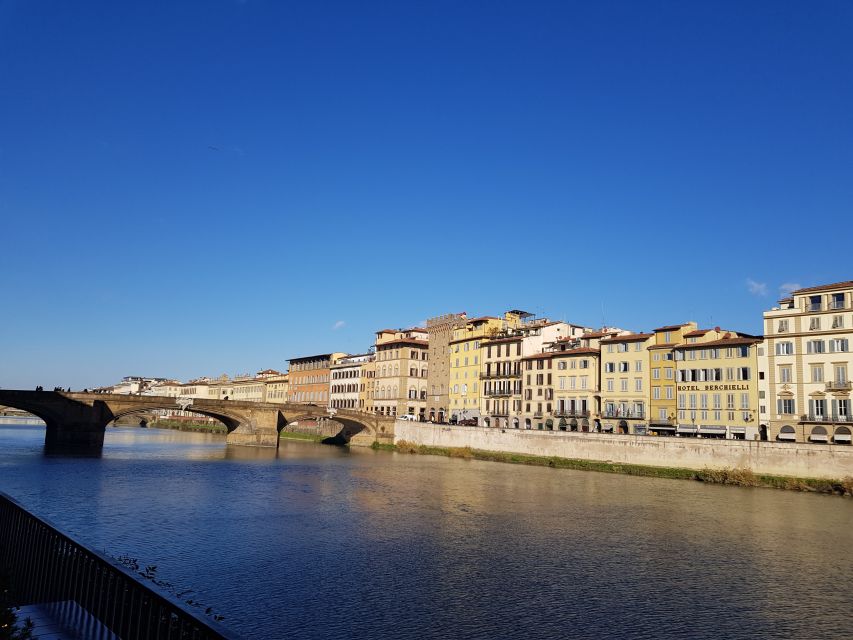
Then you cross Ponte Vecchio, the famous bridge that connects central Florence to the Oltrarno side. The tour gives you about 15 minutes of guided viewing and walking here.
What I like about this moment is the practical payoff. You’re not just looking at a postcard landmark, you’re learning how Florence links its key districts. The bridge feels like a hinge point, and the guide helps you see it as part of the city’s structure, not only a pretty backdrop.
Also, it’s a nice breather. After a set of squares and sculpture, moving across the river is a change in pace, even though you’re still walking.
Oltrarno and Piazza Santa Trinita: Where the City Feels More Lived-In
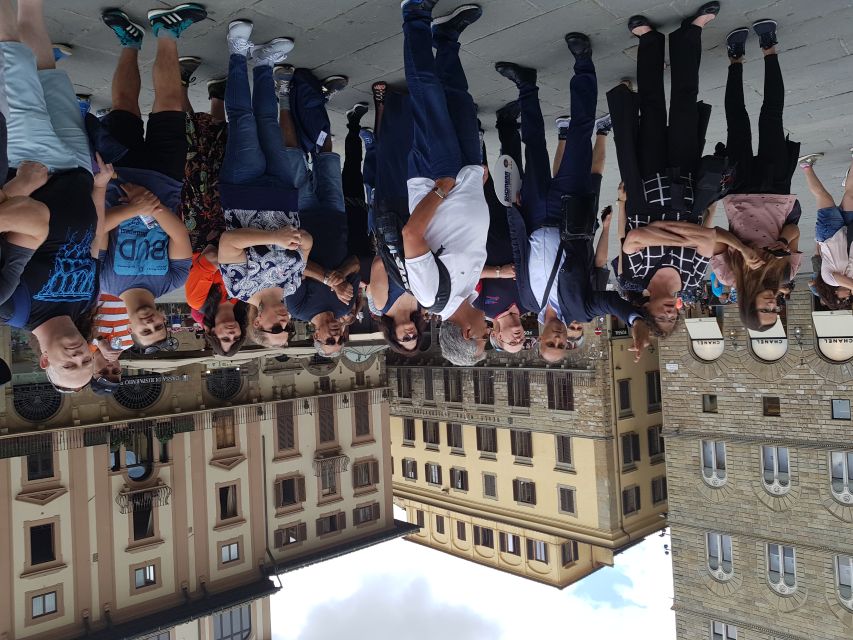
Once you’re on the Oltrarno side, you get about 15 minutes of guided exploration. Oltrarno is often where people go for a more local feeling, and this part of the route leans into that.
Your guide connects what you’re seeing to Florence’s craft and everyday culture. You’ll also take in sights such as Palazzo Pitti and the Basilica of Santo Spirito, with attention to the splendid windows of the antiques in the area.
Then you move toward Piazza Santa Trinita. Expect about 15 minutes that mixes guided stops and a walk. This is the kind of square where your mental map starts to click, because it connects river crossing, neighborhood texture, and the bigger monuments you’ve already seen.
If you enjoy atmospheric wandering but hate doing it blindly, this is a good compromise. You get just enough structure that you’re not lost, but you still move through real streets.
Piazza della Repubblica: Roman Echoes and a 19th-Century Reset
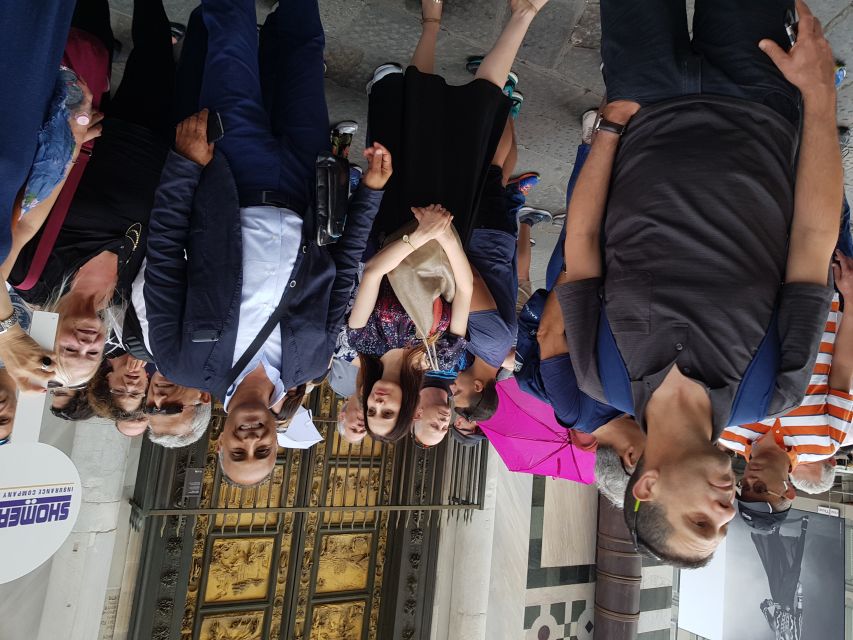
The tour finishes by returning to Piazza della Repubblica for about 15 minutes. This stop is helpful because it gives you a wider timeline than the Duomo and Renaissance power story alone.
Your guide talks about the history tied to the Roman era and also the 19th century. That means you’re not only learning about Florence’s famous Renaissance peak, you’re seeing how older layers connect to what the city became later.
It’s also a practical closing move. Piazza della Repubblica is central and easy to navigate after your tour ends, so you can pick up your next plans without needing to fight your way back to your bearings.
Then you return to the meeting point, back at the Cathedral of Santa Maria del Fiore.
What’s Included, What Isn’t, and How That Changes Your Planning
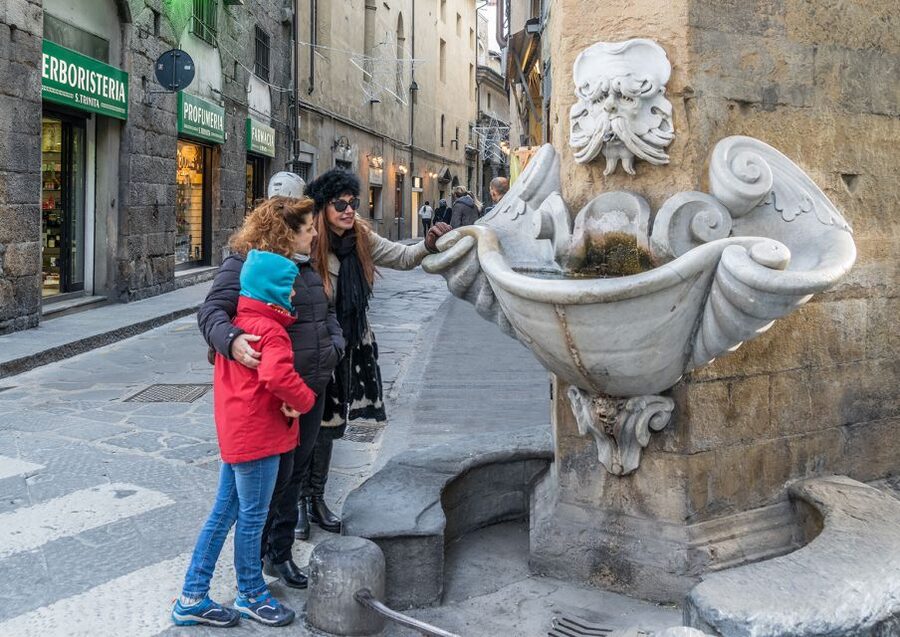
Included in the tour is an expert guide and the private group format. That matters because you’re paying for context. The guide is what transforms a list of famous places into a coherent walk with meaning.
Not included is food and drinks. Plan for a quick snack either before you start or during your own time after the tour. With a route built around several major landmarks, you’ll likely want a small break you control.
The Language Options and Who This Tour Fits Best
The guide speaks French, German, Italian, English, and Spanish. That’s a big deal in Florence, because small details get much easier when you can ask questions or catch nuance in your preferred language.
Wheelchair accessible is listed, and the tour is a private group. So you’re not locked into a rigid crowd schedule where you stand shoulder-to-shoulder the whole time. Still, expect a walking route. If you use a mobility aid, it’s worth asking what the walking and stop surfaces are like for your specific comfort level.
This tour is a great fit if you:
- Want an organized intro to Florence’s most recognizable sites in one morning or afternoon
- Like explanations tied to exact places, including Duomo elements, Medici associations, and political Florence at Piazza della Signoria
- Want a simple plan that includes Ponte Vecchio and the Oltrarno feel without needing separate bookings for each stop
It may be less ideal if you:
- Want long museum hours at the Uffizi Gallery
- Plan to spend lots of time inside major sites on your own during the tour window
Should You Book This Florence Private Walking Tour?
If you want a guided way to connect Florence’s Renaissance greatness to the exact streets and monuments you’re seeing, I think this is a smart booking. It’s especially good for first-timers who need structure, plus anyone who’s already been to Florence but wants their understanding tightened with specific context at the Duomo, Piazza della Signoria, and beyond.
If you’re the type who loves slow, unstructured time in museums, consider using this as your starter plan. Then let the rest of your day belong to the places you felt most drawn to, including the Uffizi Gallery area for a longer visit later.
FAQ
How long is the Florence private city walking tour?
The tour lasts 3 hours.
What does the tour cost?
The price is $192.58 per person.
Where does the tour start and end?
It starts in front of the central door of the Cathedral of Santa Maria del Fiore and ends back at the meeting point.
How many languages are available for the live guide?
The guide is available in French, German, Italian, English, and Spanish.
Is the tour private, and is it wheelchair accessible?
It is a private group tour, and it is listed as wheelchair accessible.
What is included in the price, and what is not included?
An expert guide is included. Food and drinks are not included.
Just reviewed around Florence
- Tuscany: Leonardo da Vinci – Oil and Wine Discovery Tour★ 4.8 · 5 reviews
- Livorno Port, Pisa, Florence: Full-Day Shore Excursion★ 4.8 · 51 reviews
- Legends of Florence: Exclusive Walking Tour by night★ 4.9 · 70 reviews
- Leather and Passion: A Tour of Florentine Craftsmanship★ 5.0 · 16 reviews
- Illuminated Florence Tour for Kids with Gelato & Pizza★ 5.0 · 6 reviews
- Inferno Florence Private 3-Hour Tour★ 4.8 · 20 reviews
- Hidden Florence: 2-Hour Guided Walking Tour★ 4.7 · 36 reviews
- 3-Hour Historic WhoDunIt Tour in Florence★ 3.2 · 6 reviews
Walking Tours, compared.
Skip the line: Uffizi and Accademia Small Group Walking Tour
Read our review →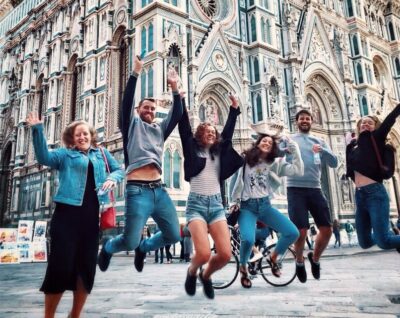
Renaissance and Medici Tales Guided Walking Tour
Read our review →
Skip-the-Line Florence Highlights and David Walking Tour
Read our review →
Browse the lists this tour appears in