
Reviewed · WALKING TOURS
Florence: Occult & Esotericism Walking Tour For The Curious
Florence has always been a city of big ideas, but this walking tour flips the angle toward the occult and esotericism hiding in plain sight. You spend a short, focused 3 hours following a guide as you look for coded carvings, strange allegories, and the darker stories attached to them.
I especially like how the tour connects famous names to specific places you can actually stand in front of, like Piazza della Signoria and the Duomo complex. I also like that the ending isn’t just talk, you get an included visit to the Museum of Masonic Symbols, where the symbolism moves from facades to objects.
One possible drawback: this is not a full stop-by-stop art history course. If you want every single mark on every church wall explained in scientific detail, you might wish you had more time or a more traditional architecture tour.
Key things to know before you go
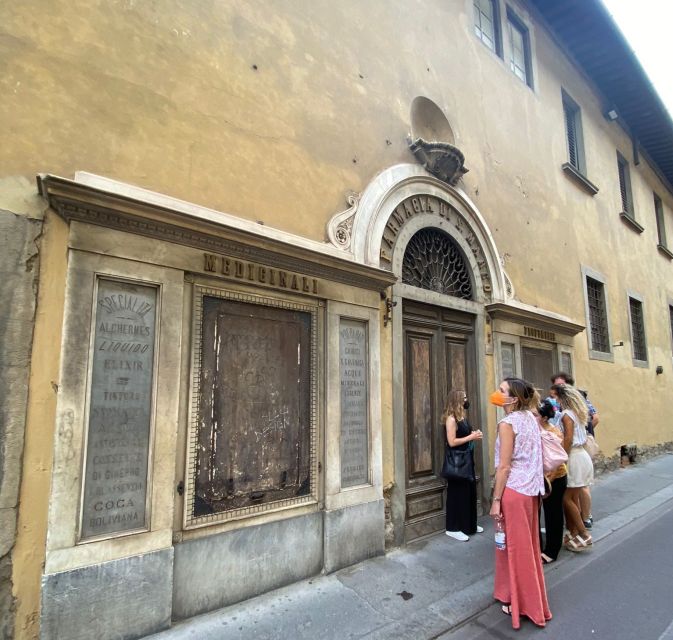
- Esoteric symbols in real locations across central Florence, from piazzas to major church facades
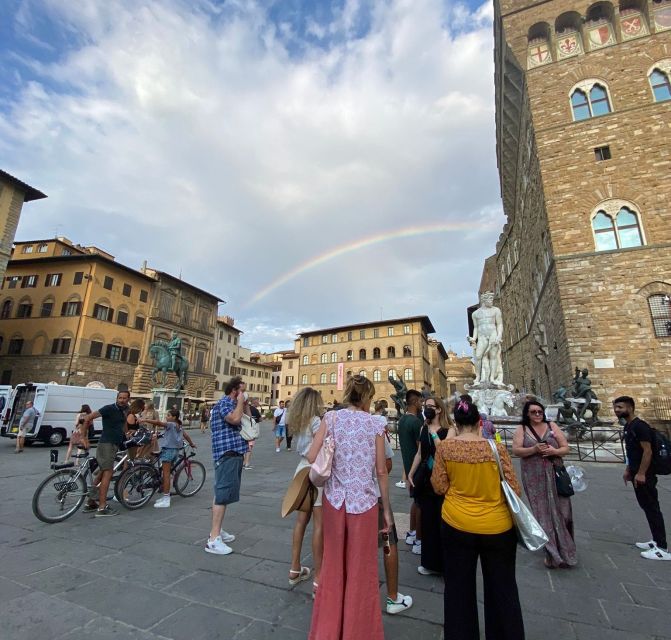
- Savonarola’s 1498 execution in Piazza della Signoria is a major anchor story on the route
- Duomo complex mysteries, including a Latin palindrome said to remain unresolved
- Arsenic poisoning theories tied to Pico della Mirandola and Agnolo Poliziano in 1494
- Neoplatonic Florence meets “magic” via the Medici circle and the Florentine Studio
- Included guided museum time at the Museum of Masonic Symbols, with ritual objects covered in etched and engraved markings
A walking tour where Florence’s symbols get spooky, fast
This tour is built for people who enjoy pattern-spotting. Not the casual, I recognize that church style from a postcard kind of pattern-spotting. More like, why does that emblem repeat here, and what story did someone want you to notice?
You’ll walk through some of Florence’s most recognizable spaces, but the guide’s lens is esoteric. Expect talk about magic and alchemy, religious symbolism, and the way Florence’s thinkers mixed philosophy with coded belief. It’s all wrapped around a theme: Florence’s history has an edge, and you can see it if you know what to look for.
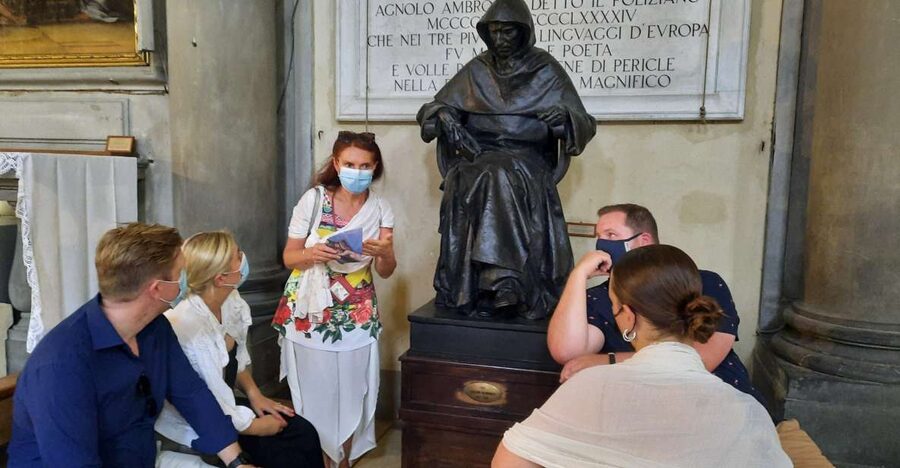
At the center of the tour is the guide. In past groups, Susanna stood out for how smoothly she handled the weird material and kept it fun without turning it into pure theater. If you’re the kind of traveler who likes a guide who explains clearly while staying playful, you’ll probably click with her style.
More walking tours in Florence:
- Florence: Guided Walking Tour
★ 4.5 · 3,334 reviews - Skip the line: Uffizi and Accademia Small Group Walking Tour
★ 4.5 · 3,135 reviews - Florence: Guided Walking Tour
★ 4.6 · 1,602 reviews
San Marco Square to Piazza Santissima Annunziata: the route sets the mood
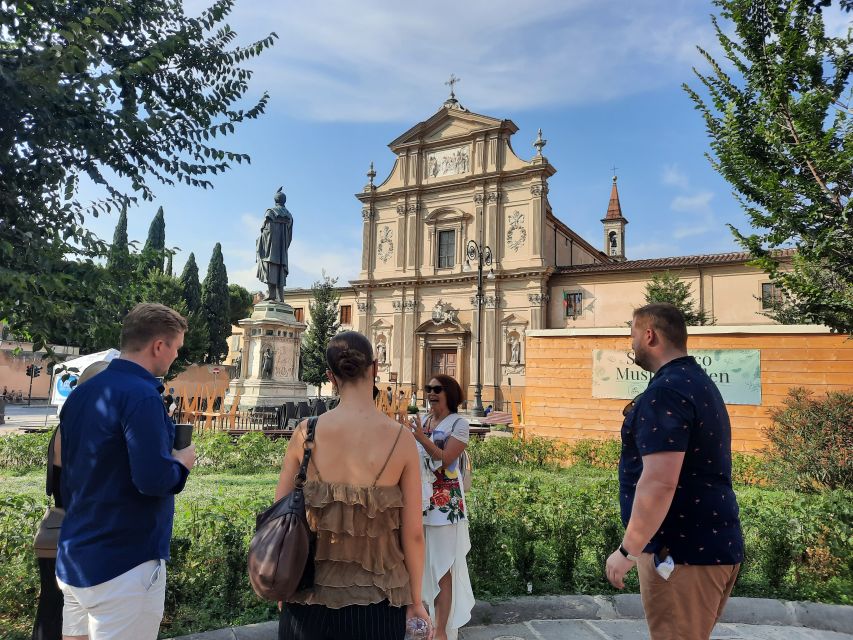
You start at the Monument to General Manfredo Fanti, in the middle of San Marco Square. This matters more than you might think. San Marco sits in the part of Florence where serious learning and big public ceremonies lived side by side, which fits the tour’s theme of ideas that were both sacred and suspicious.
From there, you’ll spend about 15 minutes in Piazza San Marco. Then you move to Piazza Santissima Annunziata for another 15 minutes. These stops are shorter, but they act like setup scenes. The guide points you toward symbols and motifs you can recognize later when you reach the more dramatic sites.
If you like interactive moments, you’re going to appreciate the tour’s later joke-like challenge: at Piazza Santissima Annunziata, you’ll be asked to count the bees on the statue of Ferdinand I. It’s playful, but it also trains you to look closely instead of strolling past details.
Practical tip: in these early stops, keep your eyes up. Florence rewards people who slow down, especially when you’re trying to spot small emblems on stonework.
Duomo complex and Baptistery: where Latin, symbolism, and confusion meet
About 30 minutes in the Duomo complex gives the tour its biggest “look closer” stretch. This is where the guide’s method shows. You’re not just hearing claims about secret messages, you’re getting your bearings in a place where small inscriptions and architectural choices carry meaning.
One specific highlight is the Florence Baptistery, where you’ll hear about a Latin palindrome engraved there that the guide presents as remaining a mystery. Even if you don’t chase the exact reading, it’s a good reminder of how easily Florence can turn language into symbolism.
The tour also frames certain facade details in a way that blends science and esoteric ideas. You’ll be pointed toward the idea that church art wasn’t always just religious decoration. It could also be a coded visual language, aimed at people who knew how to interpret it.
A balanced caution: the Duomo stops are not a museum-grade inspection of every carving. You’ll see selected details and hear explanations, but you won’t be getting a one-to-one map of every inscription in the way a dedicated lettering or conservation walk might.
Piazza della Signoria and the church sites: Savonarola, punishment, and public theater
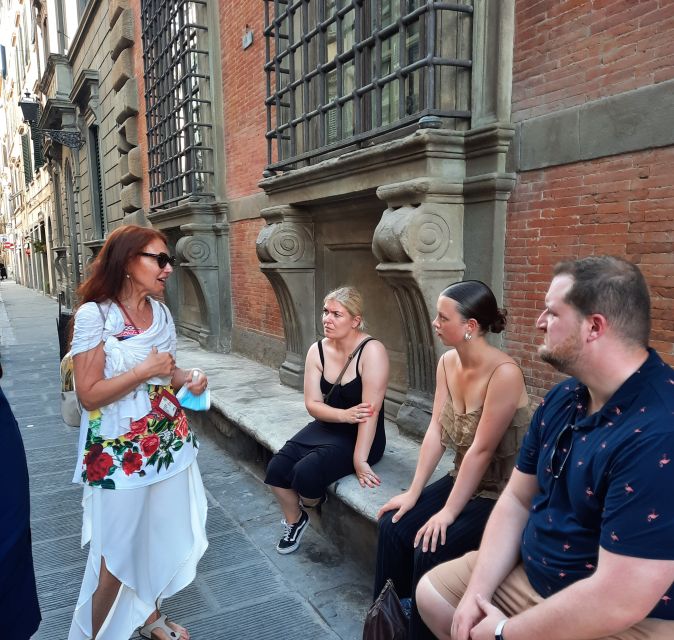
Piazza della Signoria is where Florence’s dark side turns from rumor into public history. You’ll have about 15 minutes here, and the guide uses it like a dramatic waypoint.
The tour highlights the 1498 execution of Girolamo Savonarola, a Dominican preacher. You’ll hear about him being hanged and burned at the stake in Piazza della Signoria. This isn’t background noise. It’s the kind of story that changes how you read the surrounding buildings, because you start imagining what people feared, what they believed, and what they wanted to prove in front of everyone.
After that, the tour keeps moving through the urban fabric that connects these stories. Ponte Vecchio gets about 15 minutes, and then you shift toward Oltrarno for about 30 minutes. The walking time is short enough to keep it energetic, but long enough to feel like you’re traveling through different “minds” of Florence: merchant life, religious authority, and the undercurrent of coded belief.
If you enjoy stories where ideology and power collide, you’ll like the way the guide connects places to thinkers and events rather than treating Florence like a set of isolated monuments.
A different way to spend the day in Florence:
- Florence: Skip-The-Line Uffizi Gallery Timed Entry Ticket
★ 4.5 · 27,832 reviews - Tuscany Day Trip from Florence: Siena, San Gimignano, Pisa and Lunch at a Winery
★ 5.0 · 21,634 reviews - Florence: Timed Entrance Ticket to Michelangelo’s David
★ 4.6 · 16,983 reviews - Florence: Michelangelo’s David Skip-the-Line Entry Ticket
★ 4.5 · 12,764 reviews
Oltrarno and the Medici circle: arsenic, academies, and the “magic” thread
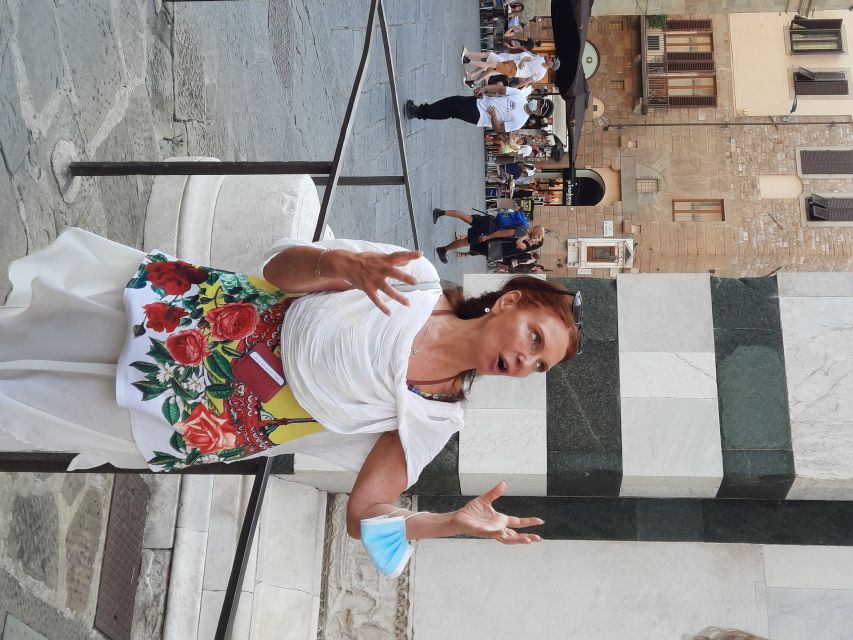
The Oltrarno section is where the tour starts leaning harder into the intellectual and symbolic stories. This is also where you’ll hear the tour’s big name drops, the ones that make “occult Florence” feel grounded in real people.
A major theme is the arsenic poisoning tied to Pico della Mirandola and Agnolo Poliziano in 1494. The guide presents it as a key part of the darker narrative around the intellectual circle connected to Lorenzo the Magnificent. And since both of these figures are connected in the story to the Church of San Marco, you get a sense of how Florence’s biggest ideas could turn deadly.
You’ll also hear about the Neoplatonic Florentine Academy founded by Cosimo de’ Medici, and how that academy helped shape Florence’s literary and artistic culture. The guide then connects this to what the tour calls the Florentine Studio, described as a place that once teemed with philosophers, theologians, and magicians.
That mix sounds wild, but it’s also a useful way to understand Florence. In this city, philosophy and art didn’t live in tidy boxes. People argued about God, nature, mathematics, and symbolism, and sometimes those arguments took on an occult shadow.
This is also where the tour covers additional historical threads, including references to the Templars and Cathars in Florence, and even a mention of Florence’s first Masonic lodge. It’s presented as part of the city’s symbol-saturated atmosphere, not as a separate history lecture.
You should go in knowing one more thing: the guide is working within an esoteric storytelling frame. That means some parts feel like interpretation, and some parts feel like historical narrative. If you like your Florence with a bit of uncertainty and coded meaning, it’s a great fit.
The Easter traditions, the crusader legend, and the Baptistery “why”
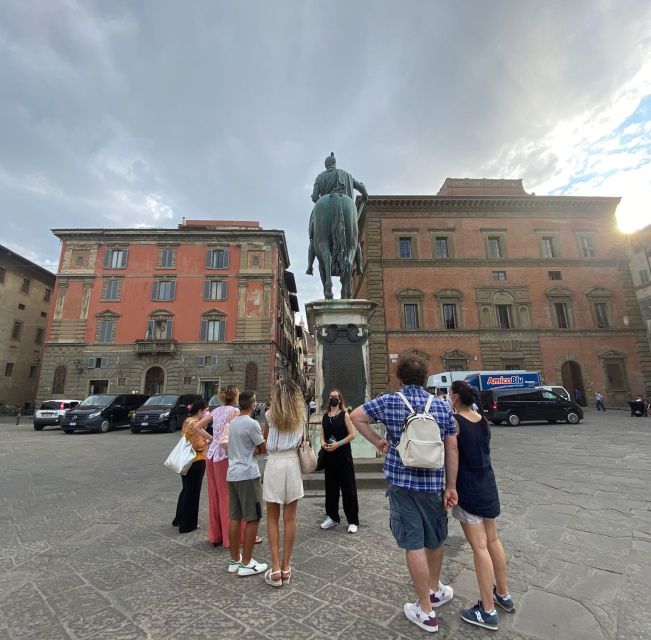
One of the tour’s strengths is that it refuses to keep “occult” in a corner. Even when the subject sounds far from everyday life, the guide ties it back to Florence’s rituals.
You’ll hear about Pazzino de’ Pazzi, described in the tour as a crusader knight from 1050. You’ll also learn about stones of the Holy Sepulcher of Jerusalem that are still used for lighting the Brindellone during Florence’s Explosion of the Chariot on Easter day. That connection helps the tour feel less like spooky fan fiction and more like symbolism becoming tradition.
This same logic shows up again with the Baptistery mystery. The Latin palindrome is presented as unresolved, which is the kind of detail that keeps people leaning in. It turns a stop you’ve probably walked past before into a moment where you ask, Who designed this, and why keep it so hard to pin down?
Even if you don’t leave convinced of every thread, you’ll leave with a new habit: spotting what repeats, what’s odd, and what looks intentionally placed.
Museum of Masonic Symbols: the symbolism moves from stone to ritual objects
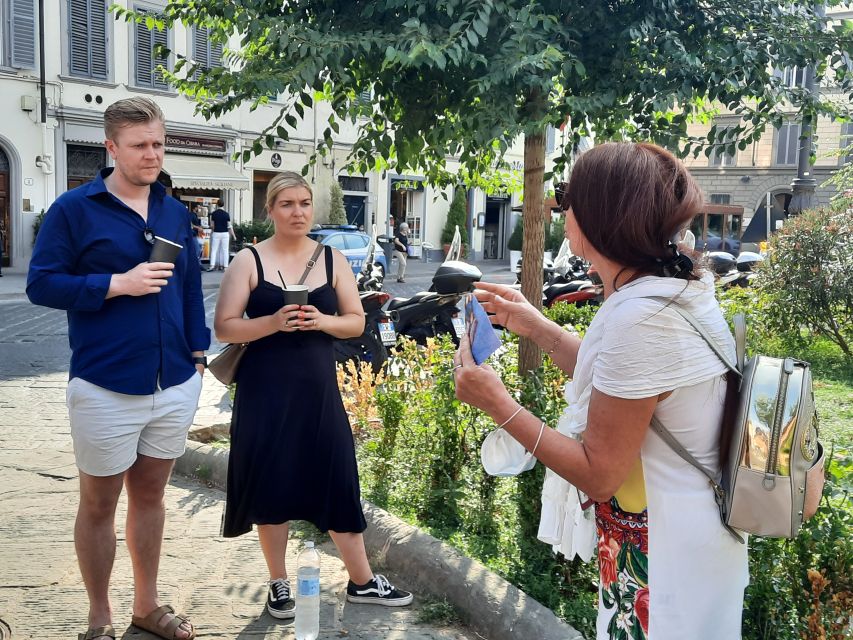
The tour ends with an included visit to the Museum of Masonic Symbols, with a guided visit of about one hour. This is a key value point. Instead of ending the story at the street level, the guide brings you into a space where symbolism is the whole point.
The museum is described as the first Italian museum devoted to Masonic ideology. Inside, you’ll see displays of ritual objects marked with symbols, including items with etched, embroidered, printed, and engraved motifs.
This is where the tour’s earlier “spot the signs” approach makes more sense. On the street, you’re looking for fragments. In the museum, you can compare fragments to a system, even if you don’t know the tradition deeply.
One more benefit: because museum time is included, you don’t have to figure out tickets on your own. You also skip the ticket line, which is a real win in a city where time adds up fast.
If you’re curious about how people build meaning through symbols, this museum stop is the most concrete payoff of the whole experience.
Price and logistics: is $215.24 worth it?
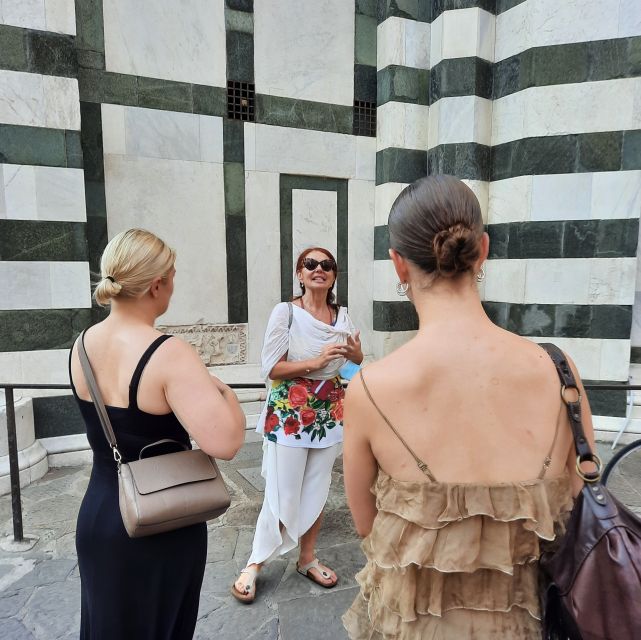
The price is $215.24 per person for a 3-hour guided experience, with museum entry included. That’s not a bargain-basement walking tour. You’re paying for two things: a licensed guide who connects the dots, and an included guided museum visit.
Where it feels like good value is when you actually want the guided interpretation. A self-guided walk through Florence’s churches can be gorgeous, but if you’re aiming to understand why someone points at a facade and insists it carries meaning, the guide’s explanations are the product.
Also, you get a private group format, which usually helps in a tour like this. People ask questions. You can stop and regroup. The guide can adjust pacing when you spot something and want to know if it matters.
Small practical notes you should plan for:
- Wear comfortable shoes, because the stops are spread across a meaningful chunk of central Florence.
- The tour runs rain or shine.
- It’s wheelchair accessible.
Language coverage is solid too: the tour runs in English, Italian, French, and Spanish.
Who this occult Florence walk is best for
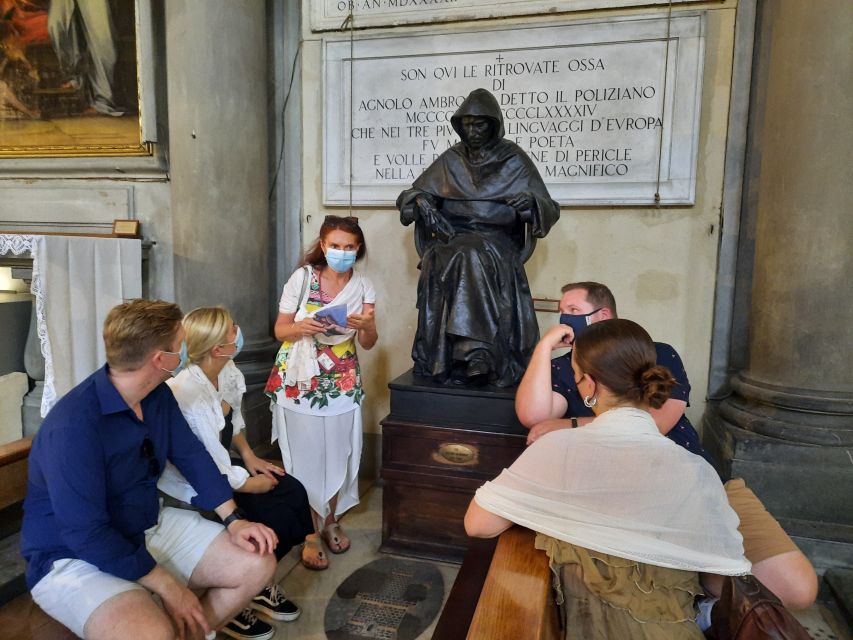
I think this tour is a great fit if you:
- Like Florence for ideas, not just art postcards
- Enjoy symbolic reading and can have fun with mystery
- Want a guided look at specific sites tied to famous figures and dark stories
- Are curious about Freemasonry symbolism as a separate lens for interpreting objects and meanings
It may be less ideal if you’re the kind of traveler who wants only conventional history, or if you expect every facade and code-like detail to be fully mapped and explained. This experience focuses on selected, meaningful stops, not a complete catalog of engravings.
Should you book this Occult and Esotericism walking tour?
I’d book it if you want Florence with a darker storytelling spine, and if the included Museum of Masonic Symbols is on your must-see list. The guide-led format is the reason it works, especially when the tour ties themes like Savonarola, Medici intellectual life, arsenic-poisoning stories, and symbolism on churches into one walk.
Pass if you only want straightforward, document-heavy art history. Also consider looking elsewhere if you feel you need a long time in each building, because the schedule is built for momentum over exhaustive inspection.
FAQ
What is the duration of the Florence Occult & Esotericism Walking Tour?
It lasts 3 hours, with specific starting times depending on availability.
Where does the tour start?
You meet your guide in the middle of San Marco Square at the Monument to General Manfredo Fanti.
Where does the tour end?
The itinerary finishes at the Museum of Masonic symbols after the guided museum visit.
Is the Museum of Masonic Symbols visit included?
Yes. Entrance to the Museum of Masonic Symbols is included, and you skip the ticket line.
What are the main stops on the walking route?
You visit Piazza San Marco, Piazza Santissima Annunziata, the Florence Duomo complex, Piazza della Signoria, Ponte Vecchio, and Oltrarno before the museum.
What topics will the guide cover?
The guide focuses on Florence’s dark history through esoteric symbols, magic and alchemy themes, and stories tied to figures such as Savonarola, Pico della Mirandola, and Agnolo Poliziano, plus topics linked to the Medici circle and Masonic symbolism.
What languages are available for the tour?
The tour is offered in English, Italian, French, and Spanish.
Is the tour wheelchair accessible?
Yes, it is listed as wheelchair accessible.
What should I bring?
Wear comfortable shoes and comfortable clothes. You may need a passport or ID card, and for children, a passport or ID card is required (a copy is accepted).
Does the tour run in bad weather?
Yes, it takes place rain or shine.
Just reviewed around Florence
- Tuscany: Leonardo da Vinci – Oil and Wine Discovery Tour★ 4.8 · 5 reviews
- Livorno Port, Pisa, Florence: Full-Day Shore Excursion★ 4.8 · 51 reviews
- Legends of Florence: Exclusive Walking Tour by night★ 4.9 · 70 reviews
- Leather and Passion: A Tour of Florentine Craftsmanship★ 5.0 · 16 reviews
- Illuminated Florence Tour for Kids with Gelato & Pizza★ 5.0 · 6 reviews
- Inferno Florence Private 3-Hour Tour★ 4.8 · 20 reviews
- Hidden Florence: 2-Hour Guided Walking Tour★ 4.7 · 36 reviews
- 3-Hour Historic WhoDunIt Tour in Florence★ 3.2 · 6 reviews
Walking Tours, compared.
Skip the line: Uffizi and Accademia Small Group Walking Tour
Read our review →
Renaissance and Medici Tales Guided Walking Tour
Read our review →
Skip-the-Line Florence Highlights and David Walking Tour
Read our review →
Browse the lists this tour appears in