
Reviewed · WALKING TOURS
Florence Jewish Quarter History Private Walking Tour
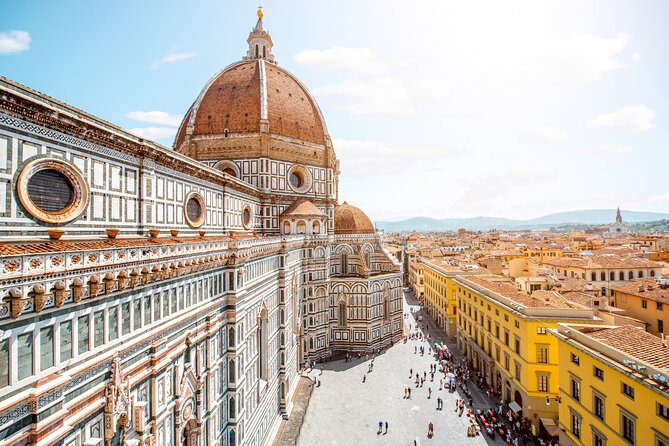
Florence’s Jewish Quarter story is interesting because it turns the city’s most famous landmarks into evidence. This private walking tour links Jewish heritage to streets you already see on a first-time Florence day, with stops near the Florence Cathedral and the Great Synagogue area. In the best versions of this tour, you also get a guide who can explain the why behind what you’re looking at, like Daniela, praised for connecting Jewish history with Florence details.
What I like most is that the tour points out specific clues you would miss on your own. You’ll look for a Jewish inscription tied to the 10 Commandments at the Cathedral, and you’ll also be shown subtle Jewish symbolism on the Santa Croce Basilica facade, including a Star of David. The other big plus is the option to add the Great Synagogue and Jewish Museum visit with skip-the-line entry for time savings.
One thing to consider: if you book the 2-hour option, you should know that guided tours inside the Great Synagogue and Jewish Museum are not included. Since those interiors and exhibits are often the main reason people choose this tour in the first place, the shorter option may feel a bit incomplete if you want to see everything inside.
Key highlights you should pay attention to

- Private, expert-guided walking route through Florence’s Old Town, with a 5-star history expert guide
- Jewish landmarks built into major sights, including the Florence Cathedral and Santa Croce Basilica
- A clear timeline, from the first arrivals in the 14th century through WWII, deportations, and the Holocaust
- Key squares for the story, including Piazza della Repubblica and Piazza della Signoria
- Optional Great Synagogue and Jewish Museum time, with skip-the-line entry included for the 3-hour option
Florence Cathedral to the Jewish Quarter, a story written in stone
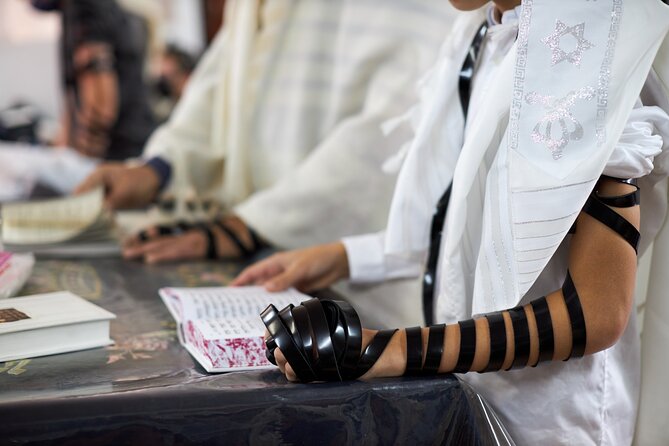
Florence looks like it’s all Renaissance art and grand architecture. This tour quietly flips that expectation. It helps you read the city like a timeline, where Jewish life, commerce, and later persecution left physical traces and symbolic references you can actually spot.
The good guiding here is not just facts. It’s interpretation. When you understand why a Jewish community formed in a particular place, or why a symbol shows up where it does, Florence starts feeling less like a postcard and more like a lived-in city with layers.
And yes, the route includes the big-name sites like Florence Cathedral and Santa Croce. But it’s the Jewish angle that gives those stops extra meaning. You end up with a Florence you can talk about with more than just, It’s beautiful.
More walking tours in Florence:
- Florence: Guided Walking Tour
★ 4.5 · 3,334 reviews - Skip the line: Uffizi and Accademia Small Group Walking Tour
★ 4.5 · 3,135 reviews - Florence: Guided Walking Tour
★ 4.6 · 1,602 reviews
Meeting next to Florence Cathedral: spotting the 10 Commandments clue
The tour meets next to Florence Cathedral (meeting point can vary by option). Right away, you get a very specific prompt: the Cathedral features a Jewish inscription of the 10 Commandments.
That detail matters because it changes your first impression of the building. You’re not only seeing marble and famous chapels. You’re seeing how Jewish texts and references can appear in Christian spaces, and how history can overlap rather than stay neatly separated.
From there, your guide starts linking the Jewish story to the squares and lanes around you. Expect the walk to feel like a guided map through Florence’s center, not a rapid checklist.
A practical note while you’re there
Plan for some standing and looking up. The Cathedral area can be busy, and this tour is focused on observation. If you don’t love crowds, going earlier in the day can help you enjoy the key moments without constant jostling.
Piazza della Repubblica: the old market and where the ghetto formed
Next comes Piazza della Repubblica, tied to the old market where commercial trade took place. This is also identified as the location where Florence’s Jewish Ghetto was established.
This part works well because it gives you a reason, not just a label. You’re shown how Jewish residents were connected to commerce, and how economic roles shaped daily life. The square becomes more than a traffic roundabout. It turns into a historical anchor for how communities formed and were managed.
Your guide also ties the story into Florence’s political power, including the role of Jewish people in commerce and their connections to the powerful Medici family. When you learn that, Palazzo Vecchio and the surrounding power structures start making more sense as context for real people’s lives.
More history tours in Florence:
- Tipsy Tour: Guided Bar Crawl In Florence with Dark History
★ 5.0 · 271 reviews - Florence Cooking Course with Historic Local Market Visit
★ 4.5 · 151 reviews - Florence: Medici Family History Tour
★ 4.3 · 93 reviews - Florence: Fashion History Guided Walking Tour & Museum Visit
★ 4.2 · 72 reviews
Piazza della Signoria and Palazzo Vecchio: power you can see, history you can ask about
As you walk around Piazza della Signoria, you’ll be in the gravitational center of Florence’s civic life, with Palazzo Vecchio nearby. The tour uses this area to explain how Jewish community history intersects with Florence’s political and economic world.
The value here is that you’re not only learning about tragedy. You’re also learning about the earlier social roles, trade connections, and the way influential families shaped the atmosphere Jews lived in.
If you’re the kind of person who likes to ask questions mid-walk, this is a good place to do it. Your guide can connect what you see in the public square to the roles Jews played in commerce, and why those connections mattered.
Santa Croce Basilica facade: the Star of David symbol you might miss
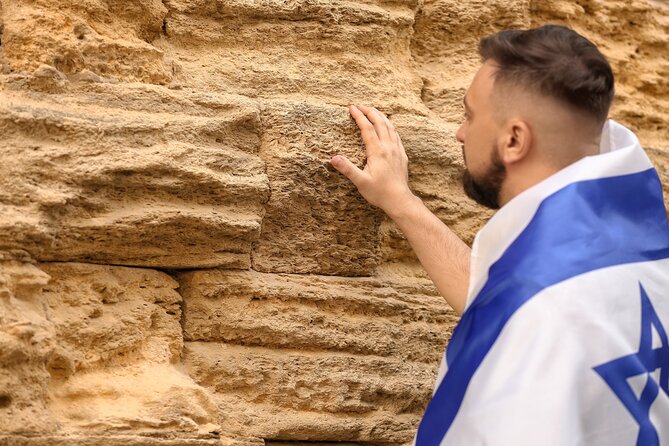
Santa Croce Basilica is one of Florence’s most recognizable stops, and it becomes more meaningful here. Your guide shows you hidden Jewish symbolism on the basilica facade, including a Star of David.
This is the kind of detail that makes a walking tour worth it. Left to your own devices, you might glance at the facade and move on. With guidance, you learn what to look for and why it’s there.
It’s also a reminder that history can be coded into art and architecture. The tour doesn’t treat symbols as trivia. It treats them as evidence of identity, presence, and community memory.
Following the former Jewish Quarter: what changed after the ghetto was demolished
After you cover the key landmark symbolism, the route continues toward the former Jewish Quarter. This is described as the area where many Jews moved after the ghetto was demolished.
That shift is crucial. It helps you understand that Jewish life in Florence wasn’t frozen in one neighborhood forever. Policies changed. Spaces changed. People moved, and the city changed around them.
Your guide keeps bringing you back to big themes across the centuries. Expect stops that connect to the first arrivals in the 14th century, then to the later eras that include arrests and deportations.
Great Synagogue and Jewish Museum: what the 3-hour option adds
If you choose the 3-hour option, you add the Great Synagogue and the Jewish Museum visit. Skip-the-line tickets are included to save time, and you get immediate entry at your booked time rather than waiting at a ticket office.
This is the difference-maker for many people, because the tour isn’t only about what’s visible outside. You also get interior context.
Here’s what you can expect inside:
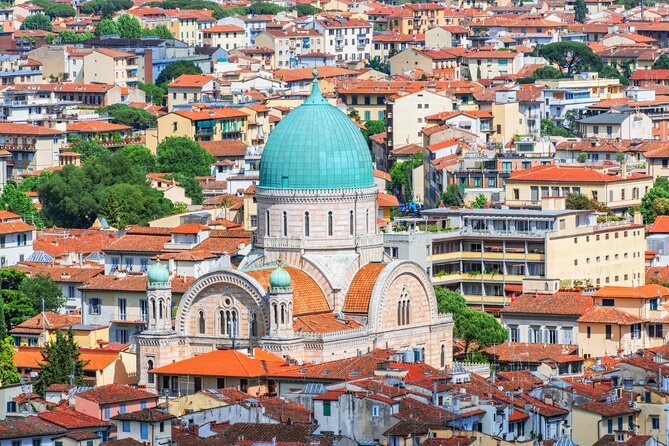
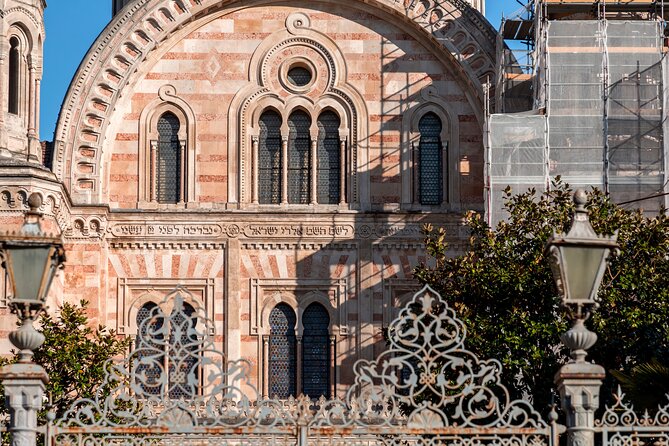
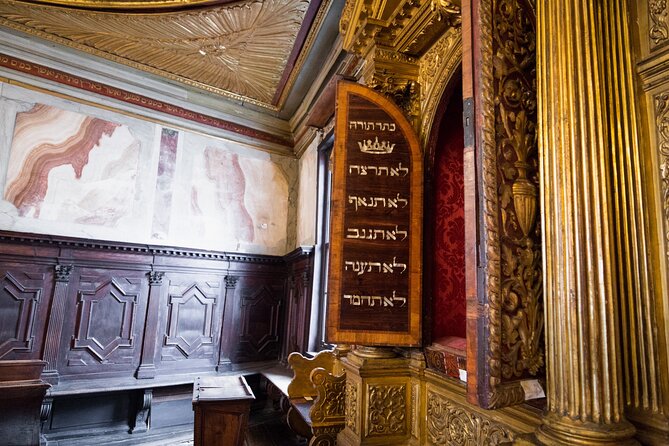
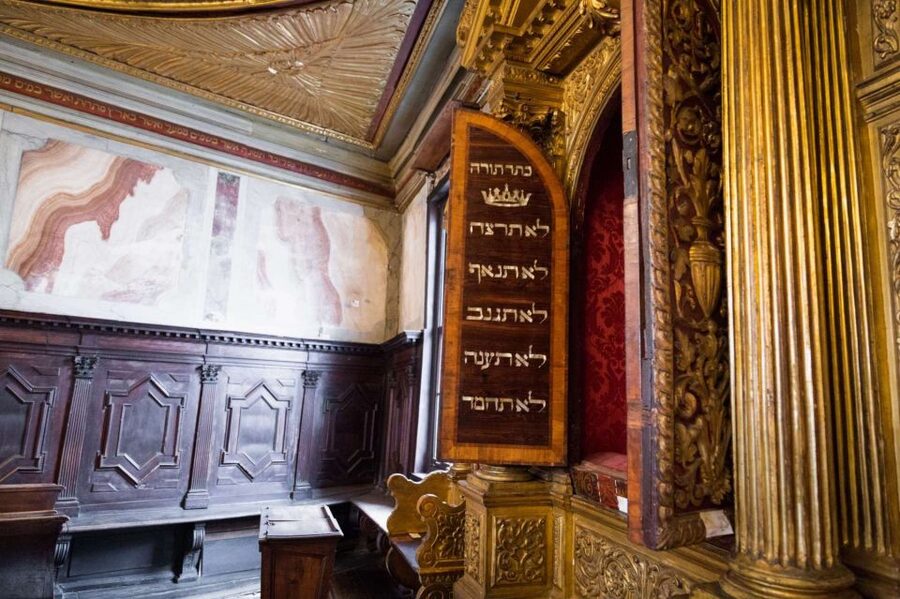
- The Great Synagogue is described as one of the most important synagogues built in Europe during the age of Jewish emancipation.
- The Jewish Museum displays religious items and clothing.
- There are exhibits commemorating Holocaust victims.
This part is where the tour turns emotional and serious. You learn about arrests, deportations, and the Holocaust as part of Florence’s Jewish story. Seeing museum exhibits makes those topics harder to treat like abstract history.
A respectful reality check
The Great Synagogue is an active place of worship. Interior tours during scheduled events like Sabbath, prayer times, concerts, and similar happenings are limited. The tour information also notes that yarmulkes are available on site free of charge, and you should dress and act appropriately.
If you’re traveling on a day with synagogue events, you might have fewer interior moments than you hoped for. Still, the museum and the guided approach are the core reason the 3-hour option is worth considering.
Choosing 2 hours or 3 hours, and getting value for your time
The listing offers two lengths:
- 2-hour option focused on tracing Jewish history across Florence’s Old Town highlights, including the Cathedral area and the move through the former Jewish Quarter.
- 3-hour option includes the Great Synagogue and Jewish Museum visit, with skip-the-line entry.
If you have limited time but want the city walk and landmark symbolism, the 2-hour option can be a strong overview. But it’s important to understand what you won’t get: tours inside the Great Synagogue and Jewish Museum are not included in the 2-hour plan.
If your main goal is to see the synagogue and museum exhibits in person, go for the 3-hour option. Time saved matters here too, since skip-the-line entry helps you avoid losing your most “inside” time to queues.
Timing and route pacing for a comfortable Old Town walk
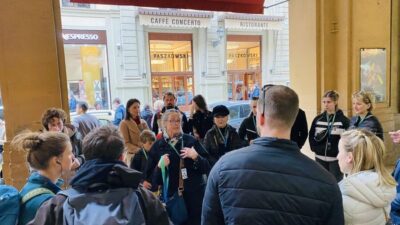
You’re looking at 2 to 3 hours of walking. The route is built around central Florence, so you’ll likely cover a mix of quiet side streets and busier squares.
To enjoy it, treat it like a guided conversation with stops, not a race. The route needs time for looking closely at facades and inscriptions, plus time to process heavier history topics when you reach the synagogue and museum (in the 3-hour option).
The tour is private, and that usually means you can ask questions and move at a pace that suits your group. It’s still a walking tour, so comfortable shoes are a must. Old stone plus Florentine foot traffic equals sore feet if you go in unprepared.
After the tour: kosher eating options and what your guide can recommend
At the end, you can visit Balagan Café or another kosher restaurant recommended personally by your private guide. I like that this tour doesn’t end at the last sentence. It gives you a next step that matches the theme of what you just learned.
Kosher food spots in Florence can be easier to find when you’re not guessing. Your guide’s recommendation can save you time, and it keeps the experience connected to the community side of the story.
Even if you don’t eat right away, it’s helpful to know where to go. Florence is full of choices, and a themed recommendation helps you make a decision quickly.
Languages, guide style, and group size that helps you hear clearly
The live guide is offered in English, French, Italian, Polish, Russian, and Spanish. That’s a big deal in a topic like this, where wording matters and the context needs to be accurate.
The tour also plans for listening comfort: for the best experience, it uses 1 licensed guide per maximum of 25 guests. If there are 26 to 50 people, it provides two licensed guides, so you can hear well and ask questions without talking over each other.
Based on strong ratings, the guide quality is a clear standout. One review highlights Daniela for being knowledgeable about the history of Jewish people in Florence and for spotting hidden details around the city center. Another review calls the tour excellent and very informative. That’s the kind of combination you want for a historical walk, facts plus street-level clarity.
Practical tips: dress code for the synagogue and what to bring
Because the Great Synagogue is an active worship site, you should be ready for a more formal moment. Dress and act appropriately. If you forgot headwear, don’t stress, because yarmulkes are available free on site.
Also:
- Bring a light layer. Churches and museums can swing cooler than you expect.
- Have water. Squares can be sun-baked, and the walk is long enough that you will feel it.
- If you’re doing the 3-hour option, keep your schedule flexible around synagogue hours, since interior access can be limited during events.
Wheelchair accessibility is listed as available, which is a helpful assurance for mobility planning. The route is still in a historic area, so it’s smart to consider your comfort with uneven pavement.
Should you book the Florence Jewish Quarter History private walking tour?
Book it if you want more than a standard Florence highlight loop. This is for people who like context, symbolism, and a clear timeline that reaches into WWII history. It’s also a good fit if you appreciate guided reading of the city, where inscriptions and facade details matter.
Choose the 3-hour option if seeing the Great Synagogue and the Jewish Museum is a priority for you. That’s where the religious artifacts, clothing displays, and Holocaust commemoration exhibits are part of the experience, and skip-the-line entry helps you use your time well.
Skip the 2-hour option only if you’re specifically craving interior synagogue and museum time. It still sounds rewarding for the Old Town walk and landmark symbolism, but it leaves out the guided interiors.
If you’re curious about Jewish life in Tuscany and want Florence’s streets to make more sense than they did yesterday, this tour is a smart way to do it. You’ll finish with a different mental map of the city, one where history leaves traces you can actually point to.
FAQ
How long is the Florence Jewish Quarter History Private Walking Tour?
The tour duration is 2 to 3 hours, depending on the option you choose.
Where does the tour start?
The meeting point is next to Florence Cathedral, though the exact meeting location may vary depending on the option booked.
Is the Great Synagogue and Jewish Museum included?
The 3-hour option includes a visit to the Great Synagogue and the Jewish Museum. For the 2-hour option, tours inside the Great Synagogue and Jewish Museum are not included.
Are skip-the-line tickets included?
Skip-the-line tickets to the Great Synagogue and Jewish Museum are included for the 3-hour option to help you enter immediately at your booked time.
Is the Great Synagogue accessible for visits during services?
The Great Synagogue is an active place of worship, and interior tours during scheduled events such as Sabbath and prayer times are limited. Yarmulkes are available on site free of charge, and you should dress and act appropriately.
What languages are the private guides available in?
The tour offers live guides in English, French, Italian, Polish, Russian, and Spanish.
Is the tour wheelchair accessible?
Yes, the tour is listed as wheelchair accessible.
Just reviewed around Florence
- Tuscany: Leonardo da Vinci – Oil and Wine Discovery Tour★ 4.8 · 5 reviews
- Livorno Port, Pisa, Florence: Full-Day Shore Excursion★ 4.8 · 51 reviews
- Legends of Florence: Exclusive Walking Tour by night★ 4.9 · 70 reviews
- Leather and Passion: A Tour of Florentine Craftsmanship★ 5.0 · 16 reviews
- Illuminated Florence Tour for Kids with Gelato & Pizza★ 5.0 · 6 reviews
- Inferno Florence Private 3-Hour Tour★ 4.8 · 20 reviews
- Hidden Florence: 2-Hour Guided Walking Tour★ 4.7 · 36 reviews
- 3-Hour Historic WhoDunIt Tour in Florence★ 3.2 · 6 reviews
Walking Tours, compared.
Skip the line: Uffizi and Accademia Small Group Walking Tour
Read our review →
Renaissance and Medici Tales Guided Walking Tour
Read our review →
Skip-the-Line Florence Highlights and David Walking Tour
Read our review →
Browse the lists this tour appears in