
Reviewed · WALKING TOURS
Experience Florence’s Art and Architecture on a Walking Tour
Florence can feel like a museum that happens to have traffic. This walking tour is interesting because it maps the city’s art and architecture into a single, manageable morning route, without making you wrestle with a guidebook.
I like that most stops are free to enter, so you are not paying again and again just to stand in the right place. I also like the small group size and leader-led pacing, which helps you connect the dots across churches, sculptures, and major squares.
One thing to consider: the tour spends time in busy, echo-y public spaces. If you are sensitive to audio, you should plan to stand close to the guide at key moments.
Key things you will like about this Florence walking tour
- Most major stops are free to visit, with only the Cathedral complex costing extra if you want entry
- A tight 2h15 route that hits the highlights in one morning
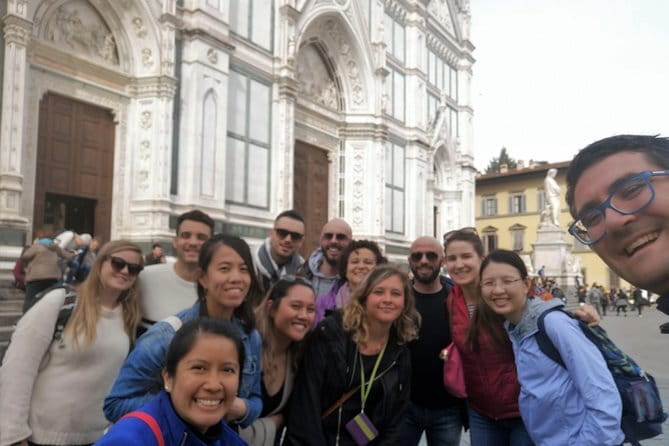
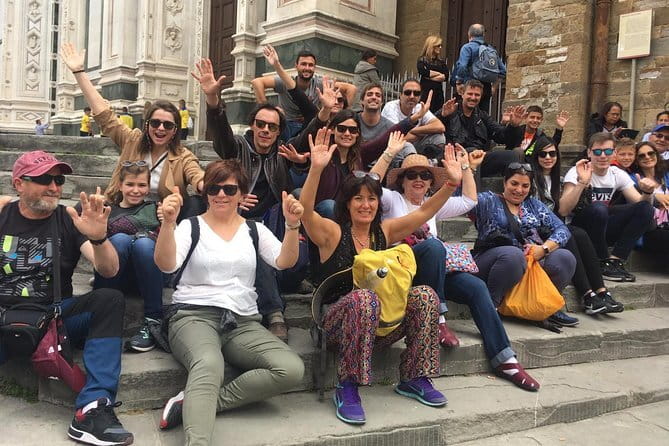
- Small group, max 20 for a more human pace and easier questions
- Expert storytelling from named guides like Ludi and Natalia (and Ludovica also gets strong mentions)
- Iconic Florence landmarks in one line: Santa Maria Novella, the Duomo area, Orsanmichele, Piazza della Signoria, and Santa Croce
- A finish at Piazza Santa Croce, so you can naturally continue your day without backtracking
A budget-friendly way to understand Florence’s art, fast
Florence is famous for Renaissance art, but the trick is learning what you are looking at while you are looking at it. This tour is designed for that exact moment. In about 2 hours and 15 minutes, you get a guided route through the city’s core, with leaders pointing out the stories behind the buildings and sculptures.
At a price like $3.63 per person, this is the kind of deal that makes you double-check the details. The catch is not effort, it is scope. You are moving briskly through several big sites, so this is not a slow sit-down museum day. If you want long lines inside every monument, plan a second visit later.
The best value here is the way the tour helps you see connections. You go from a major Dominican church area to medieval civic squares, then into sculpture collections connected to the city’s guild and power. After the walk, the Duomo complex and the main piazzas feel less random, more like a connected story.
More walking tours in Florence:
- Florence: Guided Walking Tour
★ 4.5 · 3,334 reviews - Skip the line: Uffizi and Accademia Small Group Walking Tour
★ 4.5 · 3,135 reviews - Florence: Guided Walking Tour
★ 4.6 · 1,602 reviews
The walk’s backbone: where you start, where you end, and why the route works
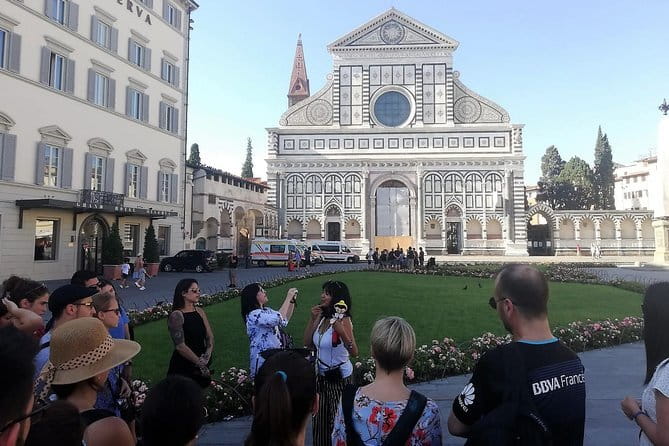
The tour meets at Piazza di Santa Maria Novella, at P.za di Santa Maria Novella, 4n (near the station area), with a 10:30 am start. It ends at Piazza di Santa Croce, at Piazza di Santa Croce, 18R.
That start and finish are not just geography. Starting near Santa Maria Novella gets you into Florence’s old center quickly, while ending in Santa Croce gives you a smooth landing spot for lunch, a museum visit, or a relaxed afternoon stroll in the southern part of the historic core.
It is also a route that works for first timers. You do not need a map, and you do not have to decide in real time which corner is worth your time. The leader does the planning for you, and you do the fun part, which is looking closely.
Santa Maria Novella: getting oriented in a church that anchors the city
Your first stop is Basilica of Santa Maria Novella. The tour includes a short look at the church’s background and how it fits into Florence’s larger religious and artistic world. Admission for this stop is listed as free.
Why this stop matters: Santa Maria Novella is not just a landmark you pass on the way to somewhere else. It is a useful starting point because Florence’s art culture grows around places like this. The leader helps you understand the church as a foundation, not a random photo opportunity.
Practical note: you only have about 10 minutes here. That means you should come in ready to listen and focus on the big takeaways. If you want to linger longer, you can, but the walk is structured as a highlight circuit.
Via de’ Tornabuoni and the Palazzo Strozzi area: architecture plus real street life
Next you walk down Via de’ Tornabuoni, passing by Piazza Antinori and sections of the shopping streets, then heading toward Palazzo Strozzi and Piazza Santa Trinita. This segment is about 10 minutes, and admission is listed as free.
This is the “Florence is not only monuments” part of the tour. You see how palaces and piazzas relate to everyday street flow. Palazzo Strozzi is a key visual stop because it represents the kind of civic and private power that shaped what got built.
A small caution: shopping streets can feel crowded, so keep your listening ears on. The leader’s job here is to make the buildings make sense, even if you are jostling your way through pedestrian traffic.
A different way to spend the day in Florence:
- Florence: Skip-The-Line Uffizi Gallery Timed Entry Ticket
★ 4.5 · 27,832 reviews - Tuscany Day Trip from Florence: Siena, San Gimignano, Pisa and Lunch at a Winery
★ 5.0 · 21,634 reviews - Florence: Timed Entrance Ticket to Michelangelo’s David
★ 4.6 · 16,983 reviews - Florence: Michelangelo’s David Skip-the-Line Entry Ticket
★ 4.5 · 12,764 reviews
Piazza della Repubblica: a quick hit on Firenze Romana
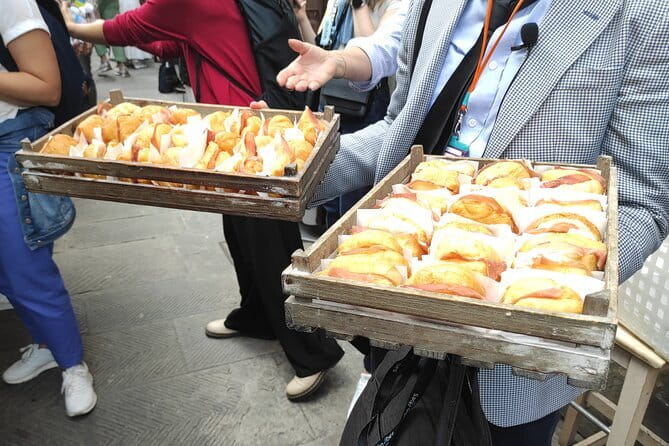
Then it is off to Piazza della Repubblica, with a stop timed at about 5 minutes. Admission is free.
This is a fast moment, but it gives you something useful: a reminder that Florence was not born fully Renaissance. Piazza della Repubblica is linked to earlier layers of the city, and the tour frames it as a starting point for understanding Florence’s longer timeline. If you have only seen the Duomo and the major Renaissance names, this tiny stop helps you broaden the story.
Because time is short, do not try to memorize everything. Treat this like a mental breadcrumb. Later, when you notice older street alignments or architecture styles, this stop helps you connect them.
The Duomo area: Santa Maria del Fiore, Giotto’s Campanile, Baptistery, and Brunelleschi’s dome
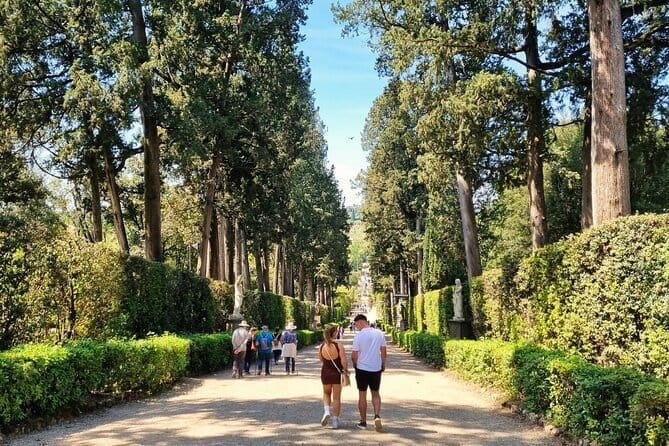
Now comes the biggest postcard area: the tour reaches Cathedral of Santa Maria del Fiore, with specific attention to the Baptistery, Giotto’s Campanile, and Brunelleschi’s dome.
Admission at this stop is listed as not included. That means if you want to go inside or access ticketed parts connected to the complex, you will need separate entry decisions and tickets. You will still get the architecture context from the outside and the surrounding viewpoints, but do not assume the tour price covers those admissions.
This stop is about 10 minutes, so the goal is recognition plus meaning. You will learn what to look for and why these elements matter. Once you understand the roles of the bell tower and the dome in Florence’s identity, the skyline stops being background and starts being a map.
Orsanmichele: sculpture you can actually spot, from Donatello onward
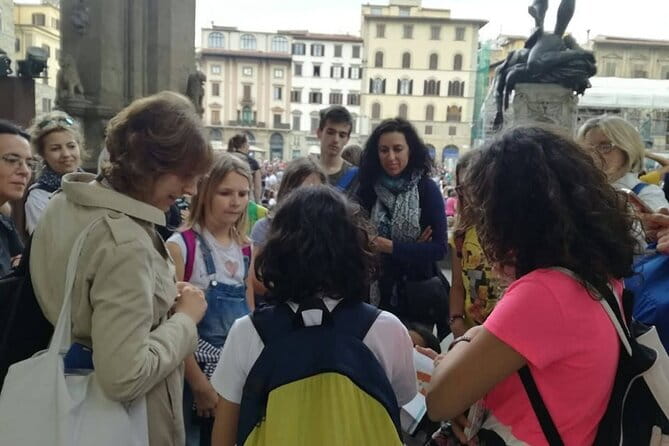
Your next major sculpture stop is the church and museum of Orsanmichele, where the tour focuses on statues connected to names like Donatello, Ghiberti, Giambologna, Brunelleschi, Verrocchio, Sangallo, Orcagna, and more. This stop is about 10 minutes and is listed as free.
This is one of the best stops for value because it is not just a pretty building. Orsanmichele is where you connect the city’s art to the people who commissioned it and the institutions that supported it. Even if you only catch part of the sculpture displays, the leader’s framing helps you understand what makes each artist’s work distinct.
The time limit is real, but the names alone signal the point. Florence’s Renaissance strength is not only painters and frescoes, it is also sculpture and craftsmanship tied to civic life.
Piazza della Signoria to Ponte Vecchio area: politics, power, and the Medici machine
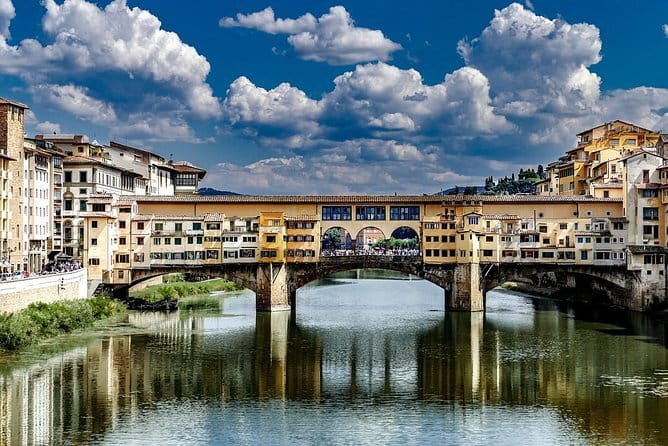
The walk then hits Piazza della Signoria for about 15 minutes. Admission for this stop is listed as free, and the sights along this section include Palazzo Vecchio, Uffizi, Ponte Vecchio, Loggia de’ Lanzi, Torre di Arnolfo, plus key artworks and symbols associated with the city’s ruling stories, like David, Marzocco, and references to Cosimo de’ Medici, Perseo, and Cellini.
This is a lot for 15 minutes, but that is why a guide matters. The piazza can feel like a jumble of statues and buildings until someone tells you what role each one played. The tour gives you quick context: civic authority here, artistic patronage there, and a constant presence of power symbolism.
I also like that this stop connects square life to river life. Ponte Vecchio is not just a bridge for photos. In Florence, it is tied to how the city organized trade and influence over time. When the leader ties the bridge to what you saw in the square, you understand why people keep coming back.
One practical consideration: this is often a high-traffic area. If you want the best viewing and audio, you need to stand in the zone the guide chooses, not wander off toward the back of the group.
Santa Croce: where Dante’s name hangs over the stone
The tour ends at Basilica of Santa Croce, including a look at the history of the basilica and its connection to Dante’s monument. This stop is about 10 minutes, and admission is listed as free.
Santa Croce is a strong finish because the energy changes. Earlier in the walk you cover the big architectural icons and major civic squares. Here, you get a sense of Florence as a place where literature, religion, and public memory overlap.
If you like a tour that leaves you with an emotional aftertaste, Santa Croce does that. Even if you do not plan to go inside for longer, the leader’s framing helps you understand why Dante’s presence belongs in Florence’s art story.
And because the tour ends in Piazza Santa Croce, you can keep going right away. It is a naturally convenient launch pad for lunch nearby and an afternoon on foot.
Guides, pace, and what makes this tour feel worth it
The tour is led by English-speaking guides, and the quality of the narration makes a real difference here. In particular, names like Ludi and Natalia come up again and again for their ability to connect art to real life and Florence’s people. Ludovica also receives strong praise for leading a route through streets that feel less like the same old tourist loop.
I also take note of the practical stuff. On hot days, a good guide can adjust the pace and find shade. One guide is specifically praised for keeping things comfortable even when the weather is punishing. Another guide handled crowd disruption during Florence’s annual marathon season and kept the experience smooth.
Audio is the one wildcard. A couple of guests reported difficulty hearing despite a small speaker system. You cannot control crowd density, but you can control your spot. If you have trouble hearing on tours in general, position yourself near the guide at the start of each stop.
How the price makes sense, and how to think about value in Florence
You are paying $3.63 per person for a guided, 2h15 walking tour covering major landmarks. That price is unusually low for a city like Florence, and it sets expectations: you are not buying time inside every building, you are buying orientation and guided interpretation.
The value comes from a few clear points:
- Time efficiency. You see a tight circuit of major sights in one morning.
- Free-entry stops. Most parts of the walk are listed as free entry, so your extra costs are controlled.
- A leader who gives meaning. Florence is full of stone and names. A guide turns that into something you can use later.
Also, this is the kind of experience where tips matter. Some guests explicitly mention tipping the guides. If you book, plan to reward good guiding, even if you already paid a low base price.
One more practical cost point: the Cathedral complex stop lists admission as not included. If you want the full inside experience, you should budget for that separately.
Who should book this walking tour
This is a great fit if you:
- are in Florence for the first time and want an organized start
- want to learn architecture and art without spending your whole day in line-heavy sites
- like guided context and appreciate a brisk but manageable pace
- prefer a route that ends where you can continue your day easily, instead of doubling back
It is less ideal if you:
- need long, quiet stops at each monument
- struggle in crowded areas where audio can be imperfect
- want a full ticketed Duomo complex visit within the tour time
Should you book this Florence art and architecture walking tour?
If you want an efficient, low-cost way to understand why Florence looks the way it does, I would book it. The route hits the key names and spaces that shape the city, and the structure is simple: churches, civic squares, sculpture, then Santa Croce to close the loop.
The only real reasons to hesitate are practical. The Cathedral stop is ticketed for those portions, and time is tight at each stop. If you are the type who likes to linger for 45 minutes in one place, this will feel short.
Still, as a first morning in town, this tour is hard to beat. You will finish knowing what matters, what to look for next, and where your curiosity wants to go after the walk.
FAQ
Where does the tour start and where does it end?
The tour starts at Piazza di Santa Maria Novella, 4n, 50123 Florence, and ends at Piazza di Santa Croce, 18R, 50122 Florence.
What time does the tour begin and how long is it?
The start time is 10:30 am. The duration is about 2 hours and 15 minutes.
Is the tour offered in English?
Yes, the tour is offered in English.
Is it a mobile ticket?
Yes, the tour includes a mobile ticket.
Which sites are free to enter, and which ones cost extra?
Most stops list admission tickets as free, including Santa Maria Novella, Via de’ Tornabuoni areas, Piazza della Repubblica, Orsanmichele, Piazza della Signoria, and Santa Croce. The Cathedral of Santa Maria del Fiore stop lists admission as not included for the cathedral complex sights mentioned.
How many people are in the group?
The tour has a maximum of 20 travelers.
Is service available for guests with mobility needs?
The tour states that most travelers can participate. Service animals are allowed.
What if the weather is bad?
The experience requires good weather. If it is canceled due to poor weather, you will be offered a different date or a full refund.
What is the cancellation policy?
Cancellation is free. You can cancel up to 24 hours in advance for a full refund, and the cutoff is based on the local time in Florence.
Just reviewed around Florence
- Tuscany: Leonardo da Vinci – Oil and Wine Discovery Tour★ 4.8 · 5 reviews
- Livorno Port, Pisa, Florence: Full-Day Shore Excursion★ 4.8 · 51 reviews
- Legends of Florence: Exclusive Walking Tour by night★ 4.9 · 70 reviews
- Leather and Passion: A Tour of Florentine Craftsmanship★ 5.0 · 16 reviews
- Illuminated Florence Tour for Kids with Gelato & Pizza★ 5.0 · 6 reviews
- Inferno Florence Private 3-Hour Tour★ 4.8 · 20 reviews
- Hidden Florence: 2-Hour Guided Walking Tour★ 4.7 · 36 reviews
- 3-Hour Historic WhoDunIt Tour in Florence★ 3.2 · 6 reviews
Walking Tours, compared.
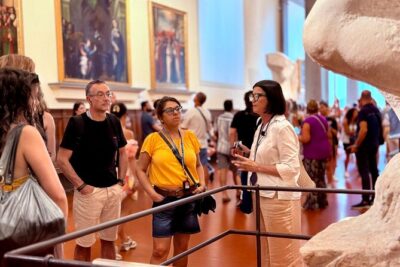
Skip the line: Uffizi and Accademia Small Group Walking Tour
Read our review →
Renaissance and Medici Tales Guided Walking Tour
Read our review →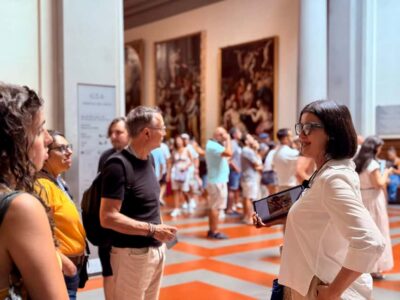
Skip-the-Line Florence Highlights and David Walking Tour
Read our review →
Browse the lists this tour appears in