
Reviewed · WALKING TOURS
Florence: LGBTQ Renaissance Walking Tour with Mila
Florence is usually sold as art, churches, and grand palaces. This LGBTQ Renaissance walking tour with Mila makes it feel personal and specific, like you are reading the city through the lives of people who did not fit the rules. I love how Mila ties together real places like Piazza della Repubblica and the Ponte Vecchio with the laws and social pressure behind medieval and Renaissance life, and I love the way the tour keeps a warm, funny tone even when the subject gets dark.
One consideration: you are walking for two hours rain or shine, and Mila talks openly about punishments and fines connected to sodomy, plus denunciation practices tied to LGBTQ people. If heavy history makes you tense, it helps to go in prepared.
Key things to know before you go
- Meet Mila at Piazza della Repubblica by Hard Rock Cafe under the Loggia, look for her sign
- Headset included, so you can hear Mila clearly in busy streets
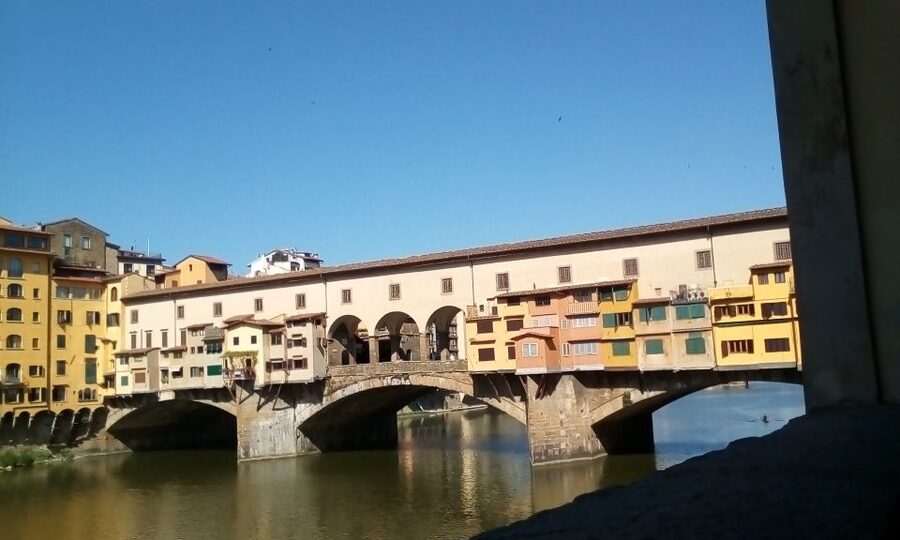
- Ponte Vecchio gets a new meaning, including its medieval and Renaissance cruising connection
- Medici focus on Gian Gastone, one of the most controversial Medici heirs
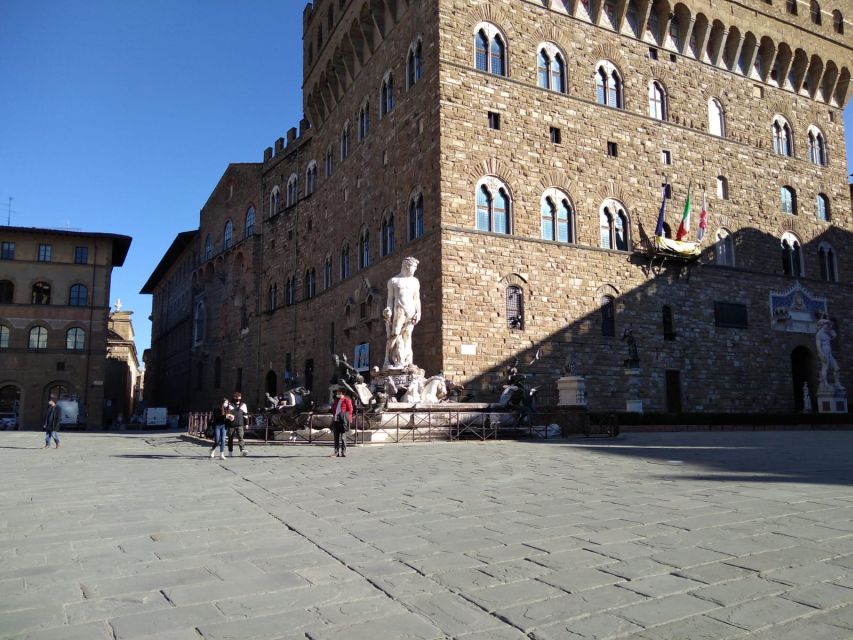
- Art stops are not just pretty, you will see Cellini’s Perseus and a David copy while talking context
- Orsanmichele Church and denunciation boxes, a chilling detail that changes how you view the neighborhood
A 2-hour route that reframes Florence, step by step
This tour is built for a short window, just two hours, but it does not feel rushed. You move through key squares and bridges and then connect them to a theme: how LGBTQ people lived under changing rules during the Middle Ages and the Renaissance.
You will be walking outside most of the time, and it runs rain or shine. That matters because your comfort affects your attention. I recommend wearing shoes you trust and bringing water, especially in warm weather, since Mila also manages the group in heat.
Because the tour includes a headset, you do not have to play guessing games when you are near traffic or groups. That is a real quality-of-life upgrade on any Florence walk.
More walking tours in Florence:
- Florence: Guided Walking Tour
★ 4.5 · 3,334 reviews - Skip the line: Uffizi and Accademia Small Group Walking Tour
★ 4.5 · 3,135 reviews - Florence: Guided Walking Tour
★ 4.6 · 1,602 reviews
Meeting Mila at Piazza della Repubblica, right where the story turns
Your start is Piazza della Repubblica, next to the Hard Rock Cafe under the Loggia. Mila will be there with a sign, and the tour begins right on time.
This is a smart meeting point because Piazza della Repubblica sits at the intersection of power and public space. Starting here helps Mila set the tone quickly, and it gives you a base location to orient yourself once you spread out across the city.
If you like tours that feel like a conversation, you are in the right place. Multiple people noted that Mila stays warm and funny, then turns serious when the topic demands it, without turning the whole evening into a lecture.
Piazza della Repubblica: punishments, fines, and how laws shift
The opening section focuses on how Florence treated people who were accused under sodomy laws. Mila meets you at the square and talks about the punishments and fines that could be imposed, which is not the kind of detail most standard walking tours cover.
This is valuable because it changes how you interpret the rest of the route. Once you know that laws and enforcement were part of everyday life, places like bridges and churches stop being just scenic backdrops. They become stages where public order collided with private behavior.
One standout point from Mila’s style is that she does not just tell stories. She also points out sources she uses to verify her narratives, which gives the tour a grounded feel. And yes, she takes questions, so if something sparks curiosity, you can usually ask in the moment.
Santa Trinita Bridge: crossing from public power to private life
After you leave Piazza della Repubblica, you cross Santa Trinita Bridge. This is one of those Florence moments where the view and the walking rhythm make it easier to absorb history instead of fighting it.
Mila uses the bridge crossing as a transition. It is not only about getting to the next stop, it is about moving through social geography. Florence’s power centers and meeting spaces were connected, but they did not operate the same way for everyone.
Expect this section to feel like the tour is building layers. You learn that laws were enforced, but the day-to-day reality was complicated. That contrast keeps the tour from becoming one-note.
A different way to spend the day in Florence:
- Florence: Skip-The-Line Uffizi Gallery Timed Entry Ticket
★ 4.5 · 27,832 reviews - Tuscany Day Trip from Florence: Siena, San Gimignano, Pisa and Lunch at a Winery
★ 5.0 · 21,634 reviews - Florence: Timed Entrance Ticket to Michelangelo’s David
★ 4.6 · 16,983 reviews - Florence: Michelangelo’s David Skip-the-Line Entry Ticket
★ 4.5 · 12,764 reviews
Pitti Palace Square and the Medici story, with Gian Gastone in focus
From Santa Trinita, you reach Pitti Palace Square and learn about the Medici family, including the last male member, Gian Gastone. Mila explains why he became one of the most controversial figures in European history, and she connects that controversy to the broader political and social climate.
This part is great if you want context without drowning in genealogy charts. The Medici are everywhere in Florence, but Mila’s angle helps you see them as actors in a society where reputation, control, and power shaped what people could safely say or do.
Some tours use famous names as decorations. This one uses them as characters, then ties the characters back to real urban spaces you can stand in. That is the value of the walking format.
Ponte Vecchio: the bridge that once mattered for cruising
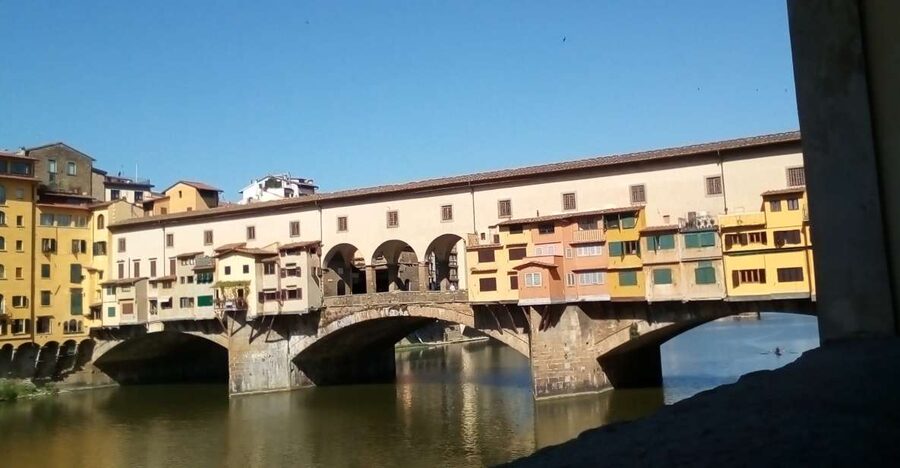
Next comes Ponte Vecchio, one of Florence’s most famous landmarks. Here, Mila makes the point that Ponte Vecchio was once one of the most popular places for cruising in medieval and Renaissance times.
This is not a squeamish topic, and the way Mila handles it is part of why people rate this tour so highly. She balances discomfort with clarity, and she keeps the focus on historical reality rather than shock value.
What you can do as you walk: look at the bridge as a social space. Think about lines of sight, foot traffic, and why a landmark like this would attract people looking for anonymity. Even if modern Ponte Vecchio is a tourist magnet, you can still understand why this location made sense historically.
Piazza dei Signori: Cellini’s Perseus, Michelangelo’s echo, and meaning
As you head toward the older center near Piazza dei Signori, the tour shifts into an art-and-context moment.
You will see Cellini’s Perseus with the Head of Medusa in this square. Mila uses this as more than a photo stop. The point is that art does not exist in a vacuum. It reflects patronage, taste, and power, and it can help you think about how Florence signaled values publicly while other things stayed hidden.
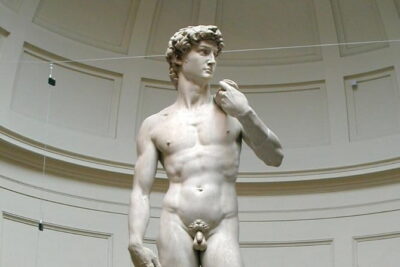
You will also encounter a copy of Michelangelo’s David. The combination of Perseus and David makes the stop feel like a mini survey of Florence’s public symbolism. Mila’s explanations help you see why these images still matter when you are thinking about identity and acceptance in a society governed by strict rules.
Orsanmichele Church: the denunciation boxes detail you will not forget
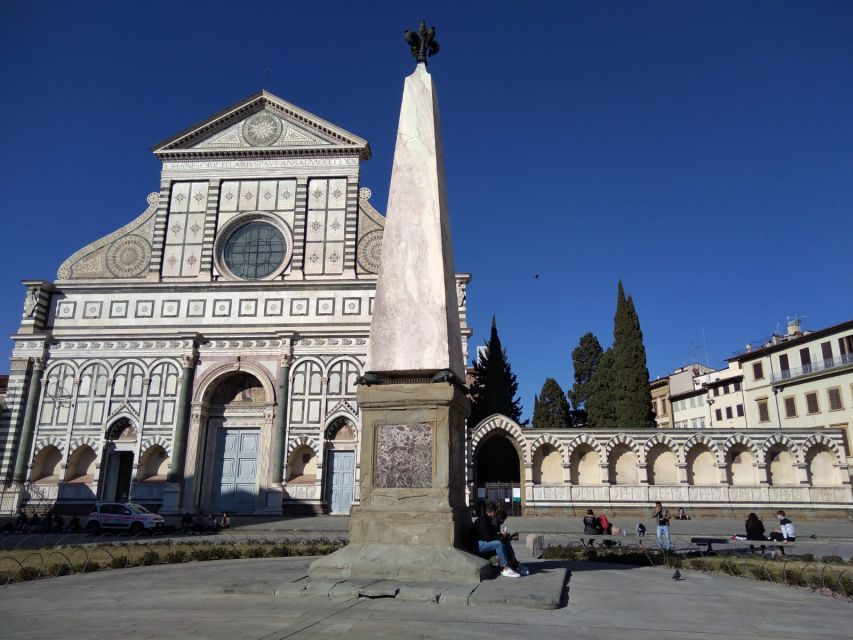
Then you walk to Orsanmichele Church. This stop includes one of the most specific details in the whole tour: the church hung special boxes to denounce members of the LGBTQ community, especially gay men.
This part is intense, and it should be. It is also exactly the kind of place-based evidence that makes the tour feel real. You are standing in a location tied to enforcement mechanisms, not just reading about them later.
If you are sensitive to heavy topics, go in with the right expectations. One reviewer said the tour felt wholly appropriate for a 15-year-old, but that does not mean it is light. It means Mila sets a tone that is thoughtful and appropriate, even when the subject is hard.
“Queer Florence” beyond the headlines: how Mila handles balance
A lot of LGBTQ history in the written record is skewed by who got documented and who got punished. In this tour, Mila primarily centers gay men, which matches the historical record described on the walk, but she also includes context about lesbians and women in general during the period.
That balance matters. It prevents the tour from feeling like a single-story slogan. You get a broader picture of how social roles, power, and visibility shaped different people in different ways.
Another consistently praised feature is Mila’s pacing. People mention that she keeps the group engaged, answers questions, and stays warm and funny while staying serious when needed. That combination is hard to pull off, and it is one reason the reviews are so strong.
Price and value: what $29 gets you in two hours
At $29 per person for a two-hour guided walk, the value comes from what is included and how it is delivered.
You are getting:
- a local guide (Mila)
- a headset
- a walking tour experience
You are not paying for entrance fees since those are not included. That matters because most of the tour’s payoff comes from standing in the right places and hearing the connections Mila makes. If you expect the kind of tour where you buy tickets into multiple venues, you may need to plan for that. But if you want a focused, story-led route, this setup fits well.
Is it cheaper than a big multi-stop day? Yes, because it is short. Is it worth it compared with a basic sightseeing walk? For many people, yes, because it changes how the same famous spots feel. You are not just seeing Florence, you are learning how Florence watched, judged, and controlled.
Practical tips so you hear everything Mila says
If you want to make this tour easy on yourself, do these small things.
First, arrive a few minutes early so you are not rushing when you meet Mila by Hard Rock Cafe. Second, wear comfortable shoes. This is a walking tour through squares and bridges, so your feet will be part of the experience.
Third, bring a phone charger or offline notes if you like to take follow-up notes. Mila talks with stories and sources, and you may want to look up something later.
Last, bring the right mindset. This tour is not just about surviving stereotypes, it is about how laws, public spaces, and art interacted with real lives.
Who should book this tour, and who might want to choose something else
You should book if you want Florence from a different angle. If your usual itinerary is all domes and museum tickets, this tour gives you a human lens.
It is also a good fit if you like guides who answer questions and name sources. People repeatedly praised Mila for being friendly, funny, and careful with difficult material, plus for being responsive when people ask things.
Consider choosing another option if you are not up for history that includes punishments, fines, and denunciation practices tied to LGBTQ people. The tour does not soften those parts. It explains them and connects them to the city.
If you are traveling with family, you may be reassured by the fact that one reviewer specifically said it felt appropriate for a 15-year-old. Still, decide based on your family’s comfort with sensitive topics.
Should you book the Florence LGBTQ Renaissance walking tour with Mila?
I think you should book this if you want a short Florence plan that gives a long mental payoff. The route hits big landmarks, but Mila uses them like chapters in a story, with details that make you see the city differently.
The strongest reasons to choose it are simple: Mila’s storytelling, the way the tour stays warm while addressing heavy facts, and the place-based specifics like Ponte Vecchio’s cruising connection, Cellini’s Perseus at Piazza dei Signori, and the denunciation boxes associated with Orsanmichele Church.
If that blend sounds like your kind of travel, this is one of the best ways to spend two hours in Florence.
FAQ
Where do I meet Mila for the tour?
You meet Mila at Piazza della Repubblica, next to the Hard Rock Cafe under the Loggia. Mila will have a sign.
How long is the tour, and is it walking?
The tour lasts 2 hours and is a walking tour.
Is the tour in English?
Yes, the live tour guide speaks English.
Is the tour wheelchair accessible?
Yes, the tour is wheelchair accessible.
Does the tour run in bad weather?
The tour takes place rain or shine.
What is included, and are there entrance fees?
Included are the local guide, headset, and the walking tour. Entrance fees are not included.
Just reviewed around Florence
- Tuscany: Leonardo da Vinci – Oil and Wine Discovery Tour★ 4.8 · 5 reviews
- Livorno Port, Pisa, Florence: Full-Day Shore Excursion★ 4.8 · 51 reviews
- Legends of Florence: Exclusive Walking Tour by night★ 4.9 · 70 reviews
- Leather and Passion: A Tour of Florentine Craftsmanship★ 5.0 · 16 reviews
- Illuminated Florence Tour for Kids with Gelato & Pizza★ 5.0 · 6 reviews
- Inferno Florence Private 3-Hour Tour★ 4.8 · 20 reviews
- Hidden Florence: 2-Hour Guided Walking Tour★ 4.7 · 36 reviews
- 3-Hour Historic WhoDunIt Tour in Florence★ 3.2 · 6 reviews
Walking Tours, compared.
Skip the line: Uffizi and Accademia Small Group Walking Tour
Read our review →
Renaissance and Medici Tales Guided Walking Tour
Read our review →
Skip-the-Line Florence Highlights and David Walking Tour
Read our review →
Browse the lists this tour appears in