
Reviewed · WALKING TOURS
Florence: Guided Walking Tour with Entry to Santa Croce
Florence feels like it was built to reward slow walking, and this combo tour gives you exactly that. You start with Santa Croce, one of the city’s most important churches, then you roll right into classic Renaissance Florence by foot. I especially like the way the Santa Croce visit connects big-name artists to real chapels you can stand inside, and the radio system makes the guide’s explanations easy to catch even when the church is busy.
The one real thing to think about is the dress code. Knees and shoulders must be covered, so bring long pants or plan on a layer, especially if the weather turns warm. If you show up dressed too casually, entry can be refused and you will not be rescheduled or refunded.
Key Tour Highlights You Can Count On
- Reserved Santa Croce entry plus a guided walk through the key interiors
- 16 chapels in one church visit, so you see more than just the main nave
- Frescoes by Giotto and other major painters, including story scenes tied to specific chapels
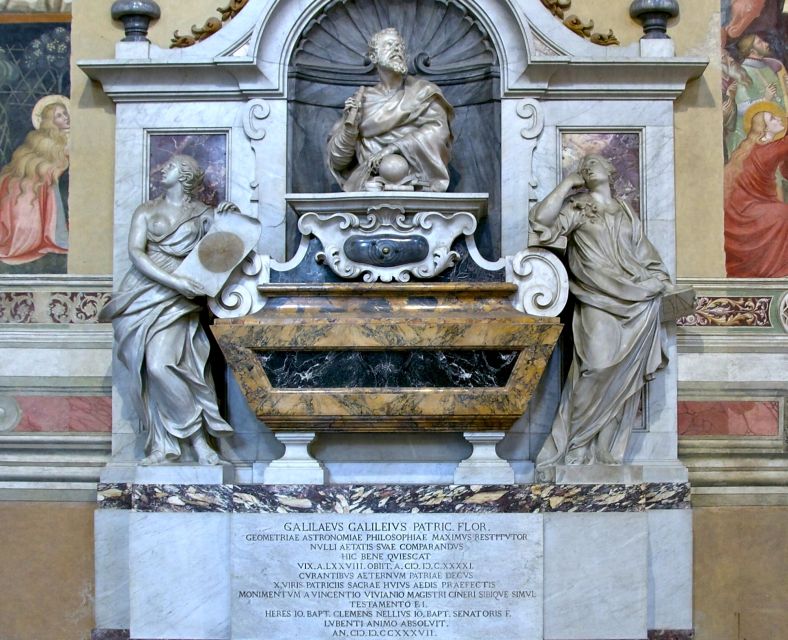
- Michelangelo-linked sights, including the famous burial place associated with him
- Donatello and Brunelleschi artworks and design ideas, explained in a way you can actually picture
- A guided Florence loop that links Duomo Square, Piazza della Signoria, Ponte Vecchio, and the Pitti area
Why Santa Croce Plus a City Walk Works So Well
I like tours where one stop explains the next. Santa Croce is not just pretty architecture, it’s a living map of Florence’s power, families, and art, and the guide’s job is to show you how those pieces connect. Then, once you’re out in the streets, the walking route helps you recognize what you’re looking at instead of guessing.
This works especially well because the Santa Croce portion focuses on specific chapels and artworks. You get context for what you’re seeing, not just a list of names. And once you move into the city, you’re not “doing Florence by checkmark,” you’re getting your mental bearings for how the Renaissance city spaces relate to each other.
One more practical plus: you are given a headset radio system. In a church, where sound bounces and crowds can interrupt, it makes the experience feel smoother and less stressful. Bring your comfortable shoes mindset, because the day is made for walking, and Florence streets reward good footwear.
More walking tours in Florence:
- Florence: Guided Walking Tour
★ 4.5 · 3,334 reviews - Skip the line: Uffizi and Accademia Small Group Walking Tour
★ 4.5 · 3,135 reviews - Florence: Guided Walking Tour
★ 4.6 · 1,602 reviews
Santa Croce Entry: Your Ticket to 16 Chapels and Big Names
Santa Croce is the kind of place where the scale of art can hit you all at once. The guide starts you in a main meeting area near the Monument to Dante Alighieri, and from there you transition into the church and its chapels. The tour segment inside Santa Croce runs about an hour, but it feels longer because you’re not rushing. You move from area to area, guided by what matters artistically and historically.
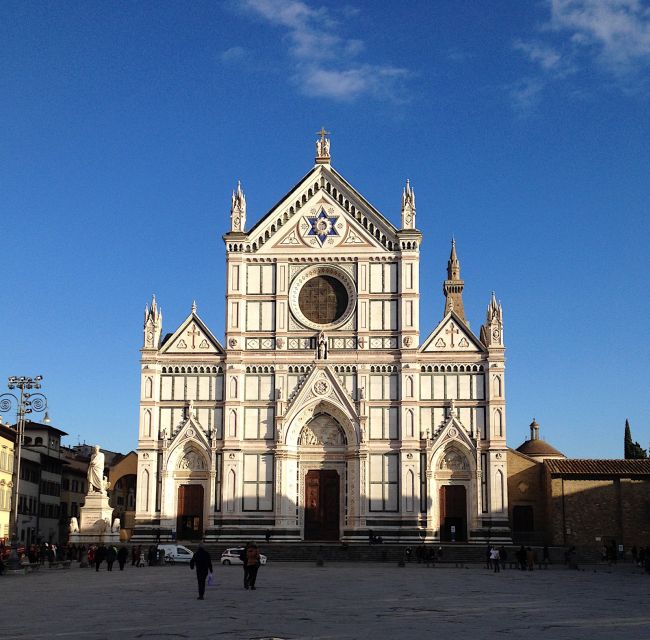
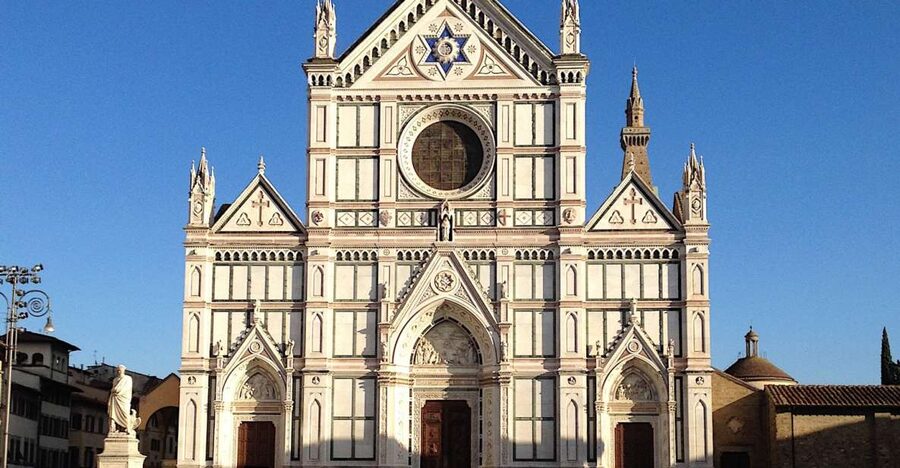
The highlight is the chapel circuit. You visit the church’s interior and then the 16 chapels with guided stops that focus on major artists and distinct artistic themes. The guide also covers the exterior: Santa Croce is known for its polychrome marble façade, so you get that “inside to outside” perspective that makes the architecture click.
If you care about how Renaissance Florence managed to turn religion into art and messaging, Santa Croce is a great anchor. It’s also a place where you can spot how multiple generations shaped the same building. That matters in a city like Florence, where “everything is from different periods” can otherwise feel confusing.
Inside Santa Croce: Giotto Frescoes, Donatello, Brunelleschi, and the 1966 Scars
When I think about why Santa Croce tours are worth it, it’s because the paintings and chapels are not random. In this visit, you get guided attention on specific works that tell you what to look for.
Here are the standout art points you’re guided to see:
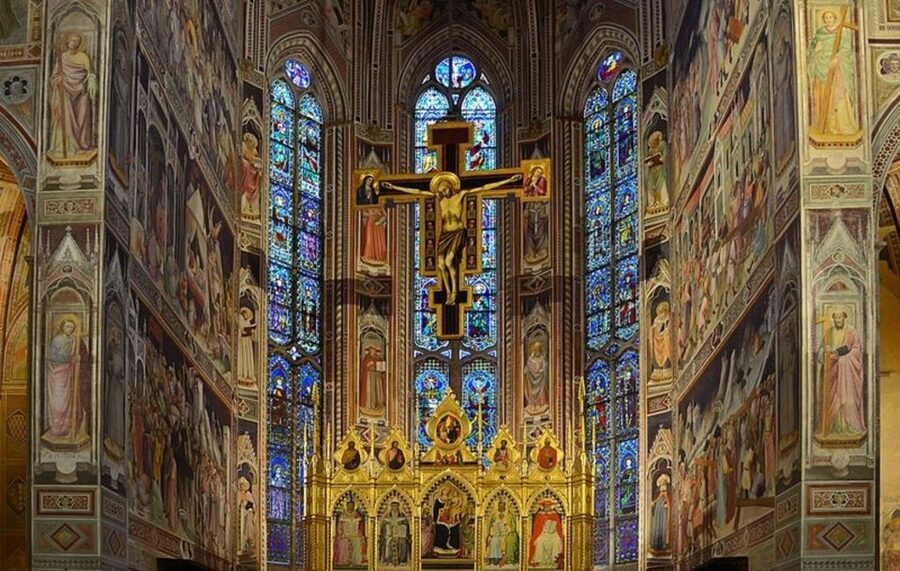
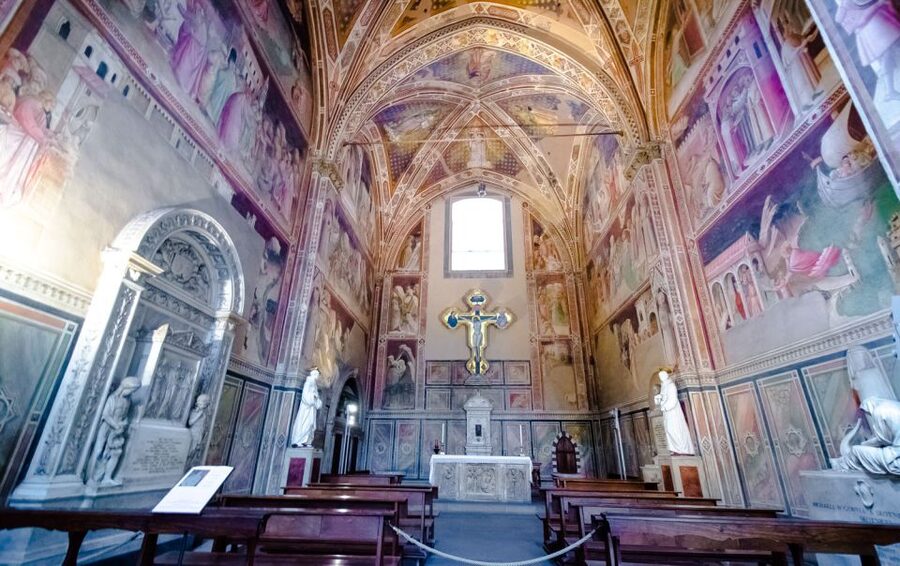
- Giotto frescoes in the Bardi and Peruzzi Chapels, with scenes tied to St. Francis and St. John the Evangelist.
- Frescoes (from around 1380) by Gaddi in the Cappella Maggiore, where the story connected to Santa Croce is told through painted scenes.
- Donatello’s crucifix, presented as a Renaissance jewel so you understand why it matters beyond its beauty.
- A chapel designed by Brunelleschi, including the architectural harmony of the Chapel of Fools concept.
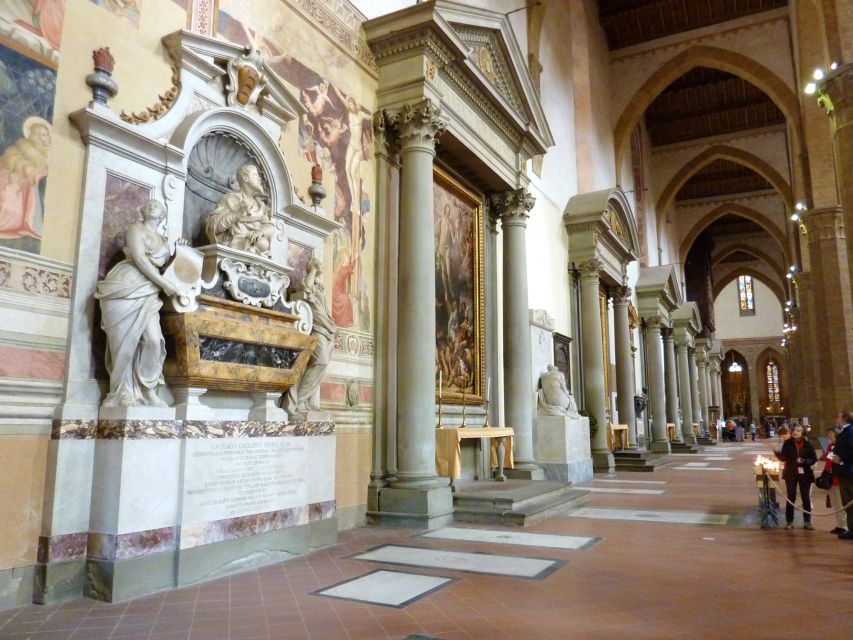
Then there’s the personal and political side of the church, which is why Santa Croce always feels “human” even when it’s grand. You learn about major burials connected to Florence and Italian masters, including Michelangelo. You also see commemorations and monuments connected to Florence’s cultural memory.
A detail I really appreciate is how the tour addresses the scars of history. Santa Croce bears marks from the tragic flood of 1966, including damage to paintings and the loss of the monumental cemetery, later restored. If you’ve ever wondered how historic places survive modern threats, this gives you an honest answer while you stand in the spaces still carrying evidence of that past.
The Dante and Donatello-to-Architectural-Florence Story
The tour doesn’t just throw names at you. It builds a line that you can follow while you walk, so the church feels like part of the broader Florence story.
You start near the Monument to Dante Alighieri, which sets a tone for literary and artistic Florence. As you move toward the entrance, the guide helps you spot a memorial for Giovanni Battista Niccolini, a 19th-century playwright, noted as an inspiration connected to the Statue of Liberty. It’s one of those “wait, this is linked to America” moments that makes you look around with fresh eyes.
Inside, you get the Donatello thread through his works like the crucifix. Then you pivot to architecture and design ideas, including Brunelleschi’s chapel. The point is not just that these men were famous, but that Renaissance Florence treated art, sculpture, and buildings as one system for meaning. When you hear how a chapel’s design works with the art, you start to understand why people fell in love with these spaces in the first place.
Also, here’s a fun local context you should file away: the tour begins in a central square where the famous Calcio Storico Florentino happens every year in June. Even if you’re not there in June, it helps you picture the energy of the city outside of museums and churches.
More Florence experiences worth a look
- The Best tour in Florence: Renaissance & Medici Tales – guided by a STORYTELLER
★ 5.0 · 12,316 reviews - Florence: Duomo Cathedral Guided Tour
★ 3.9 · 5,970 reviews - Uffizi Gallery Small Group Tour with Guide
★ 4.5 · 4,923 reviews - Florence: Accademia Gallery Guided Tour
★ 4.6 · 4,156 reviews
From Piazza della Repubblica to Duomo Square: Getting Your Bearings
Once you move out into Florence streets, the day shifts from “stand and look” to “walk and understand.” The city portion starts at Piazza della Repubblica, then you head straight toward Piazza della Duomo.
This is a smart order, because Duomo Square is one of the places where first-time visitors often feel overwhelmed. A guide helps you see how the older buildings shape the space around the Duomo area, and you also get a sense of the city’s layout and priorities.
The tour is designed to keep you moving through landmarks without turning it into a sprint. You pass through historically significant streets and buildings, and the guide points out the connections that make Renaissance Florence feel logical instead of random.
If you’re short on time, I like that this part gives you a “mental map” effect. You’ll come back later and recognize corners, bridges, and squares more quickly because you’ve already walked the route once with explanations.
Piazza della Signoria and Michelangelo’s David in Context
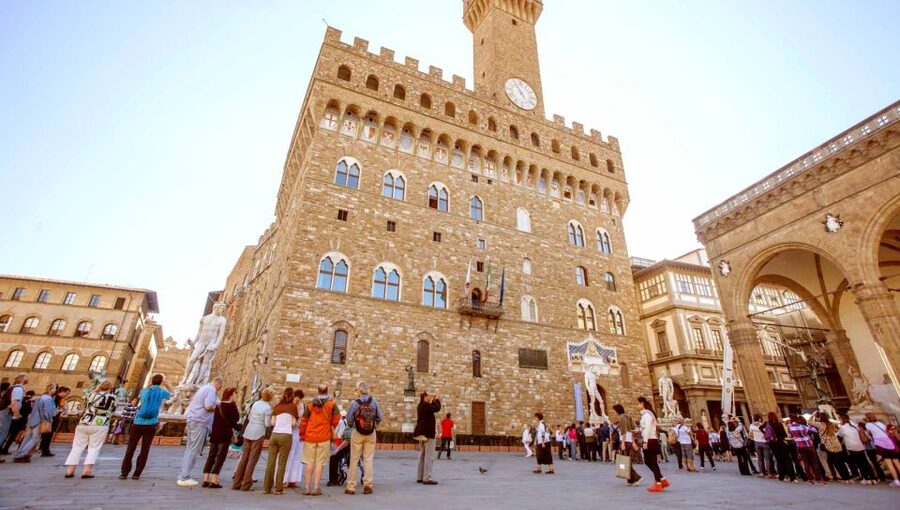
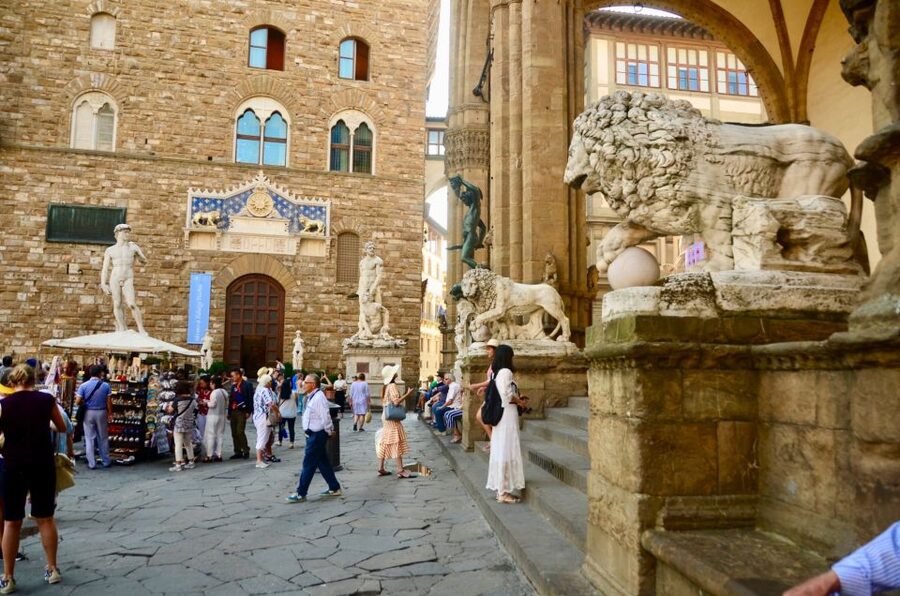
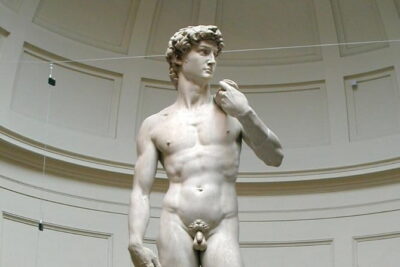
A major stop along the city route is Piazza della Signoria. This is where Florence signals its artistic confidence in a big public way. The guide shows you key sights around the square, including the Sculpture of David by Michelangelo at Palazzo Vecchio.
Even if you have seen David in photos, seeing it in the context of the palace square changes the feeling. Here, the artwork is part of public identity. You’re not looking at an object in a vacuum, you’re seeing how art communicates power in a city where politics, patronage, and culture were tightly linked.
You also pass by the Uffizi Gallery area, and the guide offers talk-through context about what the Uffizi is and why it matters. You might not go inside on this tour, but you still get a clearer understanding of why the building and collections are treated as world-class.
This is also where I appreciate the walking pace. You get time to look up, glance at façades, and soak in scale, without feeling like the group has moved on before you properly registered what you saw.
Ponte Vecchio: The Bridge People Fight for, But You Still Get the Story
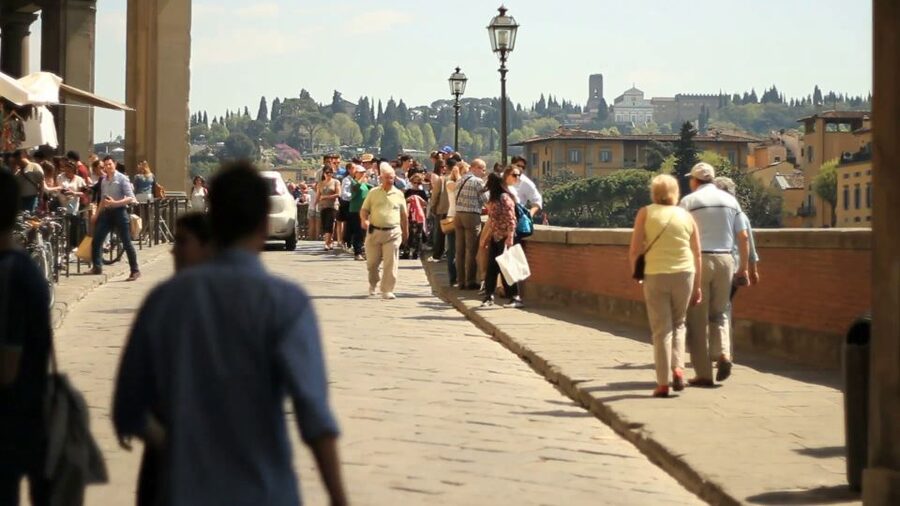
Then comes Ponte Vecchio, Florence’s most famous old bridge. If you’ve seen it in postcards, your expectations might be high, but the guided portion helps you look past the obvious.
The guide’s job here is to connect the bridge to the city’s rhythm, and that makes it feel more than just a photo stop. You get a better sense of why this bridge became iconic and how it fits into the flow between major palace areas and the riverfront city life.
Practical note: you will likely see crowds, especially if you’re in peak season. Plan to take your time anyway, because the real value is not just the view, it’s the context that makes the view mean something.
If you like walking with purpose, this stop delivers. You get a recognizable landmark, but you also understand why people historically wanted to live around it and why it became so central to how Florence presents itself.
Palazzo Pitti Area: The Brunelleschi Connection and the Streets Between
The final major city stop is Palazzo Pitti. This area matters because it’s not just a palace, it’s part of the scale of Renaissance Florence. The tour frames it as an enormous palace and architectural monument associated with Filippo Brunelleschi, which helps you connect the design ideas from Santa Croce into the broader city.
Then comes the part I enjoy most on foot: the narrow streets and the chance to spot details you might miss otherwise. The guide helps you notice hidden touches and explains city secrets as you move. That matters in Florence, where the prettiest scenes often happen just off the most photographed routes.
You also get to end with a sense of direction. After seeing Santa Croce, the squares, the palace zone, and the bridge, you understand how Florence’s “big art” and “big architecture” relate to the everyday city fabric around them.
Price and Value: Why $66.84 Can Make Sense Here
The price is listed at $66.84 per person, and the value comes from what’s bundled into the experience.
You get:
- An officially certified guide
- A radio system to hear explanations clearly
- An entrance ticket with reservation to Santa Croce
- A guided city walking tour
That’s the key. A Santa Croce entry ticket plus a structured guide often costs more on its own, and adding a guided Florence walk that links multiple major landmarks makes the overall package feel efficient. You also avoid the common pitfall of spending your time in line or trying to guess what’s worth your attention inside the church.
Two things to consider for your own money math:
- Entrance tickets to other attractions during the walking portion are not included.
- You are relying on good walking legs and proper attire to avoid losing access to places of worship.
If you want a guided “art and city logic” day without planning museum logistics, this is a solid value play. It’s not the cheapest option in Florence, but it’s also not a shell game. You’re paying for the guide’s ability to connect the dots.
Who This Tour Fits Best (and Who Might Want a Different Plan)
This tour fits you if you like real art context, not just facts. It’s also a good match if you want to see Florence’s major landmarks while still getting explanations that help the places make sense. The Santa Croce focus is ideal for people who enjoy frescoes, sculpture, and architecture together.
It can be less ideal if:
- You plan to dress casually and don’t want to manage a religious site dress code.
- You prefer totally independent exploration with no guided flow.
- You want to spend long stretches inside multiple major museums. This tour is more about guided insight and walking between points of interest, not an all-museum day.
Good news: the tour is wheelchair accessible. Also, the guide speaks multiple languages, including French, Spanish, Italian, German, and English, so you should be able to find a comfortable language option when you book.
What to Wear and Bring So You Enjoy Every Stop
You can make the whole experience easier by planning for three things: feet, weather, and site rules.
Bring:
- Comfortable shoes, because you’ll be walking through historic streets
- Passport or ID card
- Comfortable clothing
- Weather-appropriate layers
Wear:
- Covered knees and covered shoulders
- No shorts, no short skirts, no sleeveless shirts
The dress code is not a suggestion here. If you fail to comply, you can be refused entry, and that means no reschedule or refund for that portion.
Also, keep an eye on timing. If you arrive after the tour start time, you will not be able to join and the tour is not rescheduled or refunded. For your sanity, arrive early enough to settle in before the guide starts.
Should You Book This Florence Santa Croce and Walking Tour?
I’d book it if you want a guided, art-first Florence day that connects Santa Croce to the city’s big Renaissance landmarks. The combination is efficient: you get reserved entry to Santa Croce, an hour-long chapel-focused interior visit with major artists, then you walk through the Florence highlights that most people only ever see from the outside.
Skip it only if you hate structured group walking, you want to spend time inside lots of different museums, or you know you won’t follow the simple church dress rules. If you’re comfortable with walking and you can dress appropriately, this is one of those tours that saves you time and gives you better looking.
FAQ
Where does the Santa Croce portion of the tour start?
It starts next to the Monument to Dante Alighieri in front of the church, Piazza di Santa Croce, 16, 50122 Firenze FI. You should be there at least 15 minutes before departure.
How long is the Santa Croce experience?
The duration listed for the activity is 2.5 hours, and the Santa Croce interior tour is described as about an hour.
What is included with entry to Santa Croce?
You get an entrance ticket with reservation to Santa Croce, along with a guided tour of the church and its chapels. A radio system is also included to hear the guide.
What route does the walking portion cover?
The guided city walk includes stops and pass-bys around Piazza della Repubblica, Piazza della Duomo, Piazza della Signoria, Ponte Vecchio, and the Palazzo Pitti area, including a view of Michelangelo’s David at Palazzo Vecchio.
Are tickets to other attractions included during the walking tour?
Entrance tickets to attractions during the walking tour are not included.
What languages are available for the live guide?
The live tour guide is offered in French, Spanish, Italian, German, and English.
Is there a dress code?
Yes. You need knees and shoulders covered. Shorts, short skirts, and sleeveless shirts are not allowed.
Is the tour wheelchair accessible?
Yes, the tour is listed as wheelchair accessible.
Just reviewed around Florence
- Tuscany: Leonardo da Vinci – Oil and Wine Discovery Tour★ 4.8 · 5 reviews
- Livorno Port, Pisa, Florence: Full-Day Shore Excursion★ 4.8 · 51 reviews
- Legends of Florence: Exclusive Walking Tour by night★ 4.9 · 70 reviews
- Leather and Passion: A Tour of Florentine Craftsmanship★ 5.0 · 16 reviews
- Illuminated Florence Tour for Kids with Gelato & Pizza★ 5.0 · 6 reviews
- Inferno Florence Private 3-Hour Tour★ 4.8 · 20 reviews
- Hidden Florence: 2-Hour Guided Walking Tour★ 4.7 · 36 reviews
- 3-Hour Historic WhoDunIt Tour in Florence★ 3.2 · 6 reviews
Walking Tours, compared.
Skip the line: Uffizi and Accademia Small Group Walking Tour
Read our review →
Renaissance and Medici Tales Guided Walking Tour
Read our review →
Skip-the-Line Florence Highlights and David Walking Tour
Read our review →
Browse the lists this tour appears in