

Reviewed · SIENA TOURS
Siena: City Tour in German
What makes this Siena tour genuinely interesting is the way it connects the big, famous sights to the everyday street plan that Sienese people use to understand their city. You start with the Basilica of San Domenico and get a view that helps you see how Siena was built, then you follow the medieval lines of movement into the heart of town.
I like two things most. First, the tour is guided by Janine, a local guide who keeps the story personal and tied to what it feels like to be Sienese. Second, you get clear context for the Palio of Siena as you end in Piazza del Campo, so the square is more than a pretty postcard.
One consideration: this is a German-only walk, and it is still a walking tour, so you will want comfortable shoes and a plan for lots of steps on old streets.
Key highlights to look forward to
- San Domenico first, with the relics of St. Catherine and a fast way to orient yourself in Siena
- Via della Sapienza, tied to the University of Siena founded in 1240
- Via Francigena in real form, since you pass a section called Via Banchi di Sopra
- Contrade storytelling, so the neighborhoods behind the Palio make sense
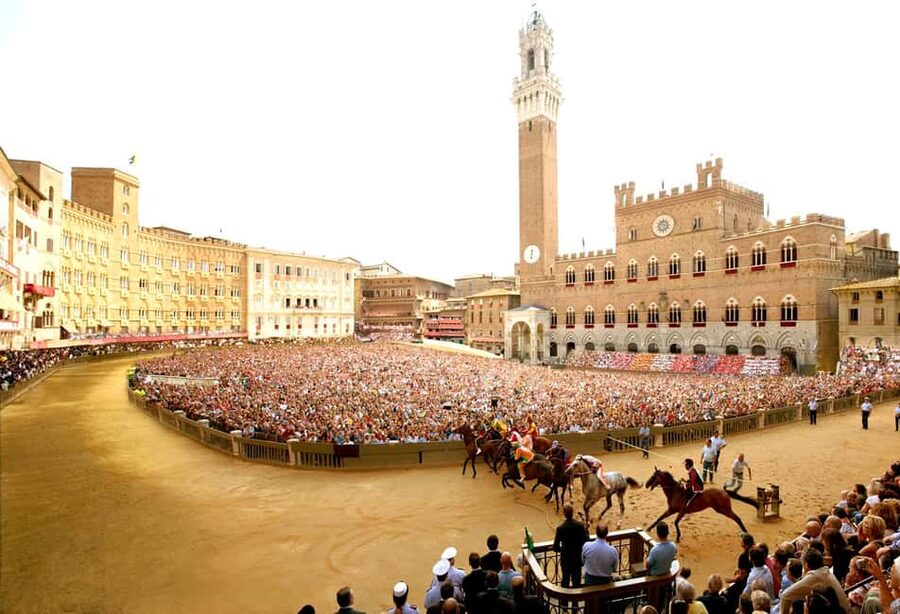
- Piazza del Campo at the end, where the Palio tradition becomes easy to visualize
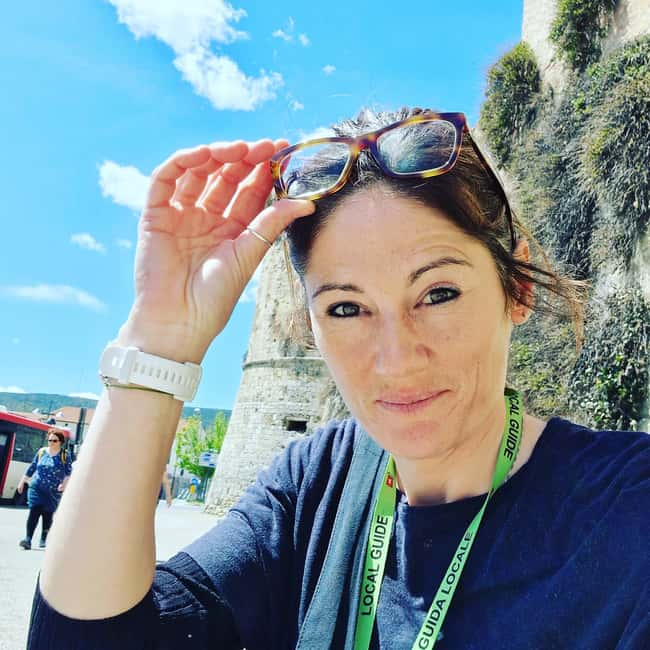
- Local guide energy, led by Janine with a clear local identity badge
Why this 2-hour German walk is such a smart Siena intro

If Siena is new to you, it can feel like a maze at first. Streets twist, hills show up in unexpected places, and suddenly you are staring at an enormous square while you have no idea how you got there. This tour is built to fix that problem quickly, because it moves in a logical loop that mirrors how Siena’s medieval paths actually connect.
You will also like the practical pacing. Two hours is long enough to learn names, landmarks, and street logic, without draining your energy. And because it is in German, you can follow every detail without doing mental translation.
I also appreciate that it stays focused. You do not spend the whole time waiting in lines, and the tour is designed around looking, walking, and understanding.
More Siena tours:
- Tuscany Day Trip from Florence: Siena, San Gimignano, Pisa and Lunch at a Winery
★ 5.0 · 21,634 reviews - Florence: Pisa, Siena and San Gimignano Day Trip with Lunch
★ 4.6 · 9,771 reviews - Florence: Pisa, Siena, San Gimignano, and Chianti Experience
★ 4.5 · 8,393 reviews
San Domenico: where St. Catherine and the city view set the tone
You meet at the big tree in front of the San Domenico church. From there, you start at the Basilica of San Domenico, a key opening point because it houses the relics of St. Catherine, patron saint of Italy and Europe. That matters, because it gives you a spiritual anchor before you start chasing streets and squares.
Then the guide shifts you into orientation mode. You get a breathtaking view of the city that helps you understand where and how Siena was built. This is one of those moments that makes everything that follows easier to read, even if you only catch it for a few seconds while you look around.
Practical tip: go in with your eyes open, because the view is part of the teaching. If you rush past it, you will miss the mental map the guide is building.
Via della Sapienza and the University of Siena founded in 1240
After the initial orientation, you move toward the central street of the city. One of the next steps is Via della Sapienza, the street connection that ties directly to the University of Siena, founded in 1240.
This is a great stop for two reasons. First, it connects Siena’s medieval identity to an institution that was established so long ago. Second, it gives you a sense that this was not only a place of towers and towers of politics, it was also a place where learning mattered.
You will likely feel the difference as you walk. The guide uses street names and locations to build meaning, instead of asking you to memorize random facts.
Via Banchi di Sopra and the Via Francigena route
Next you reach Via Banchi di Sopra, which the route describes as a section of the Via Francigena. This is an important European road axis in medieval times, and that context is what makes Siena feel bigger than its own walls.
Siena often gets explained as if it grew in isolation, but the Via Francigena angle reminds you that medieval cities were connected. Trade, travel, pilgrims, and information all moved along routes like this, and Siena benefited from that attention.
This part of the walk also helps you understand why certain plazas and crossroads appear where they do. The tour keeps linking movement on the ground to the historical role of the city.
More Siena experiences worth a look
- Skip the Line: Siena Duomo and City Walking Tour
★ 5.0 · 689 reviews - Siena: 3h Private City Walking Tour with Optional Cathedral
★ 4.7 · 392 reviews - Siena: Italian Opera Concert in the heart of the City
★ 4.7 · 33 reviews - Siena: Private City Highlights Walking Tour
★ 4.8 · 4 reviews
Piazza Salimbeni and the old-world banking story
From there, you arrive at Piazza Salimbeni. The key detail here is that it houses the headquarters of Banca Monte dei Paschi, described as the oldest bank in the world still in existence.
That might sound like trivia until the guide explains why it matters for Siena. Banks are not only about money, they become long-term civic institutions, tied to the city’s identity and power structures. Seeing it on a real square helps you understand how economics and architecture lived side by side here.
If you like the idea of Siena as a working medieval city, not just a staged museum, this stop usually clicks fast.
Piazza Tolomei and the Church of S. Cristoforo, plus Palazzo Tolomei
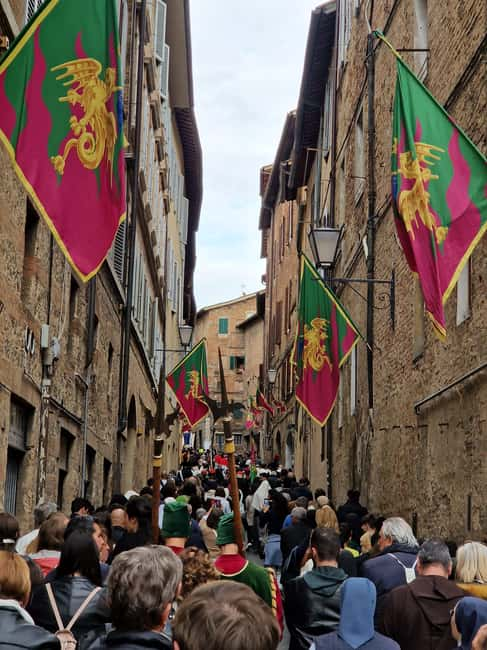
You then reach Piazza Tolomei, a smaller but telling moment along the route. Here you will find the Church of S. Cristoforo and Palazzo Tolomei, and the guide uses the grouping to show you how Siena’s center is organized around important addresses.
This is the kind of stop that helps you stop thinking of the city as one grand monument. Instead, you see it as a sequence of places that each have a purpose: worship, residence, civic life, and connection to major street lines.
If you want photos, this is a good stretch to slow down. The architecture and the street alignment give you strong angles without needing to hunt.
Croce del Travaglio, where Siena’s main streets meet
As you keep moving, you pass Croce del Travaglio. This is presented as the crossroads of Siena’s three main streets: via Banchi di Sopra, via Banchi di Sotto, and via di Città.
This is one of the moments where the tour becomes more than sightseeing. A crossroads is not just a place to stand, it is a tool for understanding how you move through town. When you learn that three major street lines meet here, Siena stops feeling random.
I also like this part because it builds momentum. By the time you reach the next stage, you are already thinking like a local map, not like a visitor following arrows.
Contrade up to the Duomo area, then the Palio-ready finale
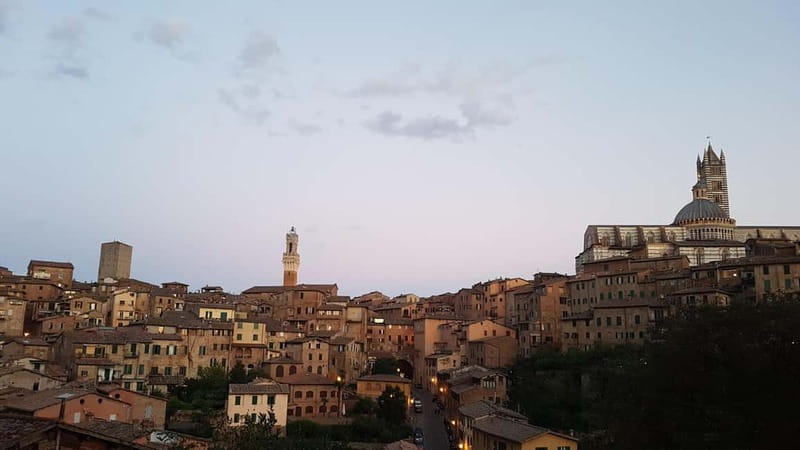
Then comes one of the most important ideas in Siena: the Contrade. The tour says you will pass through many Contrade until you reach the highest and most ancient point of the city, the Piazza del Duomo.
You do not need a long explanation to see why this matters. The Contrade are the neighborhoods people identify with, and the Palio tradition is tied to that pride. Walking through them on foot turns what can feel like a cultural headline into something tangible: you experience the neighborhoods as you move from one key point to the next.
Finally, the tour ends in Piazza del Campo, the site of the Palio of Siena. This is where the ending earns its value. You are in the right place, at the right time in the tour flow, with enough context to understand why the square means so much.
If you have any interest in local traditions, this finale is the part that usually sticks. The square is dramatic on its own, but with the guide’s Palio framing, it becomes more meaningful than just a large open space.
Price and value: what $74 buys you in 2 hours
The price is listed at $74 per person for a 2-hour guided city tour. That is not a budget-only price, so you should look at what is included rather than just the number.
What you do get is a structured walk led by a local guide, in German, with no entrance fees included. That means the value is mainly the guidance itself, plus the street-based context that makes Siena easier to navigate and understand.
You might find this feels like good value if you want fast orientation and interpretive storytelling, especially if you are traveling in German and do not want to piece together information on your own. If you prefer a self-paced wander with no guide, you could spend less by exploring alone. But you would lose the linking logic between streets, institutions, and the Palio tradition.
A fair warning: since entrance fees are not included, if you want to go inside specific churches or other spaces during your walk, you may need to plan for additional costs. The tour keeps the focus on the walking route and viewpoints.
What to expect on the ground, time, and practical pacing
This is a live guided tour in German and it is listed as wheelchair accessible. The route is walking-heavy, and you should assume old town terrain. The guide also clearly identifies as a local guide, with a badge that has a green lanyard and the words local guide, which makes it easier to confirm you are with the right person.
The duration is 2 hours, and starting times depend on availability. That is useful because you can pick a time that fits your day, especially if you are pairing it with other sights on your own.
Because the group moves through multiple streets and plazas, you will get the most out of it if you show up ready to walk. Bring comfortable shoes, and keep your phone charged, since you will likely want photos as you approach major squares and viewpoints.
Who this Siena experience is best for
This tour is a strong match if you want a guided route that gives you a mental map in a short time. It also suits you if you care about local pride and traditions, because the Palio context is built in by the time you reach Piazza del Campo.
It is especially good if you enjoy explanations tied to place names, not just general descriptions. You are walking specific street sections like Via Banchi di Sopra, and you get specific institutional details like the University of Siena founded in 1240.
If your group includes people who need English-only support, this one might be a mismatch because the tour is in German. On the other hand, if German is your comfort zone, you will probably feel the story lands more clearly, with less effort.
Should you book this Siena City Tour in German?
Book it if you want a guided 2-hour loop that teaches you Siena’s street logic fast, then lands you in Piazza del Campo with Palio context you can actually picture. It is also a great choice if you like local-guide storytelling and you prefer your history tied to the streets you are standing on.
Skip it only if you want a longer, inside-the-buildings type of experience, or if German is a barrier for your group. If you are unsure, think about this: Siena can be confusing without context, and this tour is designed to give you that context without turning your day into a marathon.
If your priority is orientation plus a tradition-driven finale, this is a solid value at $74 for 2 hours with a local guide, and it is paced so you can still enjoy the city afterward on your own.
FAQ
How long is the Siena city tour in German?
The tour lasts 2 hours.
When does the tour start?
Starting times depend on availability, so you need to check what times are offered.
Where do I meet the guide?
Meet at the big tree in front of the San Domenico church.
Where does the tour end?
The activity ends back at the meeting point.
What language is the guide?
The live tour guide speaks German.
Is the tour wheelchair accessible?
Yes, the activity is listed as wheelchair accessible.
What is the price per person?
The price is $74 per person.
Are entrance fees included?
No entrance fees are included. The tour is a guided walk without entrance fees.
What should I bring?
Wear comfortable shoes.
Just reviewed around Siena
- Chianti Best + Pisa, Wine and Wildlife walk, Siena, San Gimignano from Florence★ 5.0 · 4 reviews
- Florence: Day Trip with Free Time in San Gimignano and Siena★ 5.0 · 72 reviews
- Siena and Chianti Wineries Excursion by Private Luxury Van from Florence★ 5.0 · 11 reviews
- Best of Tuscany Private Tour: Siena, San Gimignano, Monteriggioni★ 5.0 · 7 reviews
- From Florence: Siena and Chianti Day Trip with Dinner★ 4.2 · 126 reviews
- From Siena: Chianti and San Gimignano Sunset Tour★ 4.8 · 67 reviews
- Siena Underground Wine tasting in a Medieval Cave★ 5.0 · 6 reviews
- Siena: Traditional Tuscan Cooking Class with Fresh Pasta★ 4.9 · 9 reviews
Siena Tours, compared.
Tuscany Day Trip from Florence: Siena, San Gimignano, Pisa and Lunch at a Winery
Read our review →
Pisa, Siena and San Gimignano Day Trip with Lunch
Read our review →
Pisa, Siena, San Gimignano, and Chianti Experience
Read our review →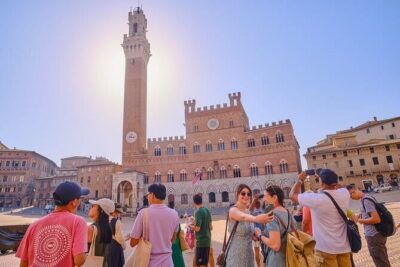
Pisa, Siena and San Gimignano Day Trip with Lunch & Wine Pairing
Read our review →
Siena, San Gimignano, Pisa & Lunch at Winery
Read our review →
San Gimignano, Siena, Monteriggioni, Chianti Day Trip with Lunch & Wine Tasting
Read our review →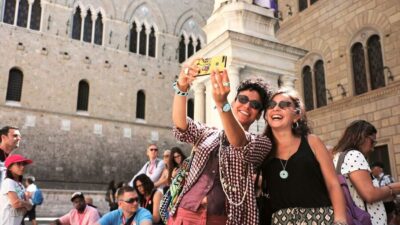
Pisa, Siena, S. Gimignano, Chianti Wine & Lunch
Read our review →
Browse the lists this tour appears in