
Reviewed · SIENA TOURS
Siena: Cathedral Complex Pass with Audio Guide (OPA SI PASS)
Siena’s Cathedral complex is interesting because it is not just one church, it is a whole stacked story in stone, art, and underground rooms, all in one ticket. I love the access-all-areas style planning, because you can move from big public spaces to quieter corners without hunting for new entries. I also love that the included digital audio guide helps you connect what you are seeing, even if you do not want a live guide. One drawback to plan for, the pass excludes the Gate of Heaven rooftop entrance, so you will not get that higher view as part of this ticket.
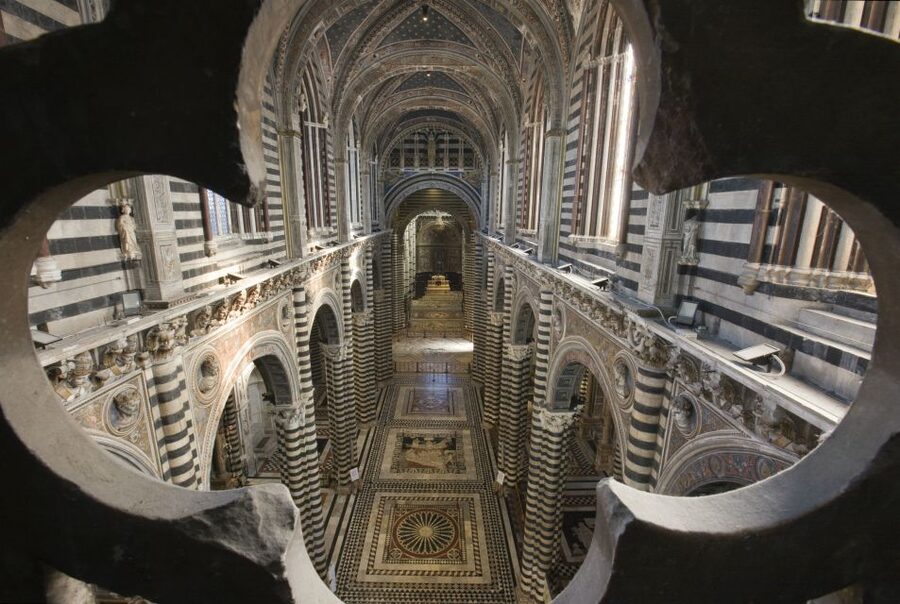
If you like going at your own pace, this works well. You can take time with mosaics on the floor, pause for sculpture details, then go deeper into the crypt and picture-filled library rooms. Just know it takes real time to do it properly, and the Facciatone viewpoint can slow you down with timed group exits.
Key highlights you will feel right away
- Skip most entry friction with a single pass covering multiple parts of the Duomo complex
- Smartphone audio guide gives you context stop-by-stop, so you understand what you are looking at
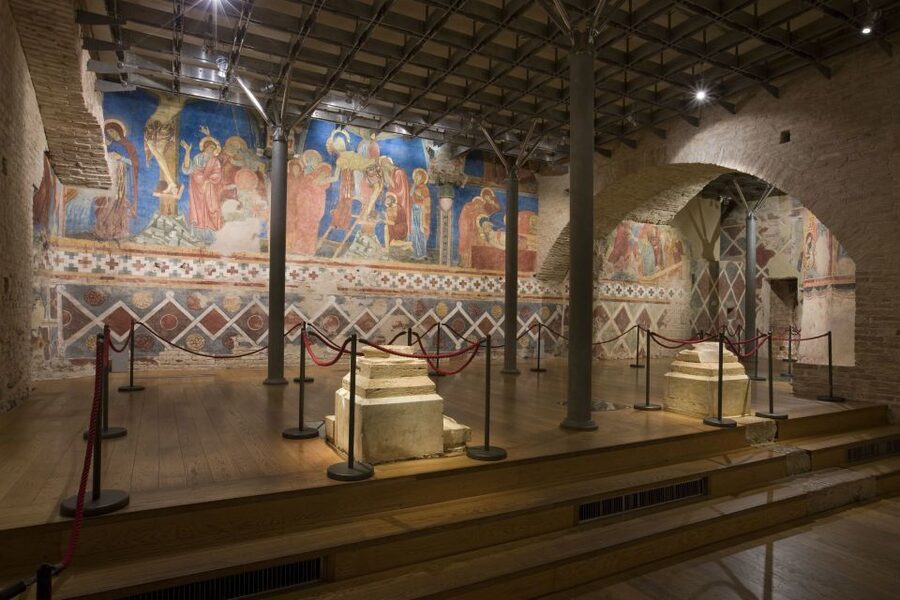
- Crypt access lets you see the underground fresco setting that has stayed out of sight for centuries
- Piccolomini Library frescoes include Pinturicchio’s episodes from the life of Pope Pius II
- Museo dell’Opera collection preserves cathedral-era fragments and artworks you can study up close
- Facciatone viewpoint climb finishes the visit with an outlook over Siena and the Tuscan hills
OPA SI PASS in plain terms: what the pass really does
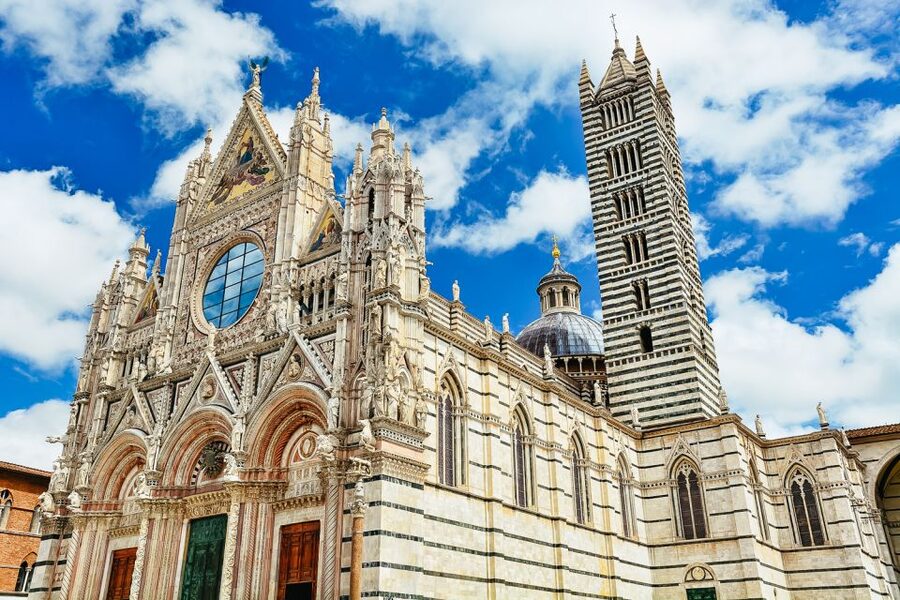
The OPA SI PASS is basically your master key for Siena’s Duomo complex. You get entry to the main cathedral areas plus major supporting spaces like the Baptistery, Crypt, Piccolomini Library, Museo dell’Opera, and the Oratory of San Bernardino. You also get access to the Facciatone viewpoint, which is a great way to end the visit after spending time indoors.
The pass is self-guided. That means no live guide is included, but you do get a digital audio guide you use on your phone. For me, that is a good fit when you want quiet time to look closely, rather than rushing because a group is waiting.
There is one clear limitation you should accept up front. The pass excludes the rooftop, specifically the Gate of Heaven entrance, so if that is a must-do for you, you will need to plan for an extra ticket or option.
More Siena tours:
- Tuscany Day Trip from Florence: Siena, San Gimignano, Pisa and Lunch at a Winery
★ 5.0 · 21,634 reviews - Florence: Pisa, Siena and San Gimignano Day Trip with Lunch
★ 4.6 · 9,771 reviews - Florence: Pisa, Siena, San Gimignano, and Chianti Experience
★ 4.5 · 8,393 reviews
Price and value: why $21 can work out well here
At about $21 per person, this ticket can be good value because it bundles several separate, high-demand parts of the complex into one timed experience. Instead of paying for each venue and risking schedule overlap, you can build one continuous loop around the Duomo core.
What you are paying for is not just “entry.” You are buying access to multiple art-heavy rooms and display spaces, plus a guided-by-your-phone explanation that keeps you oriented. That matters in Siena because the Duomo complex can feel like a maze if you just walk in cold.
Also, the pass includes a booking fee in the total price, and that is worth checking because it affects what you pay at checkout. If you are budgeting, this is one of those tickets that tends to pay off if you actually plan to do most of the included stops.
Timing basics: last entry, validity window, and building your route
Your pass is valid for 3 days, but you must use the voucher on the booked date. That means you cannot treat the ticket like a flexible “any day” pass once you pick your entry date. Plan to go on the day you book so you do not get stuck at the gate.
One timing rule is important: the last entry to Siena Cathedral is 30 minutes before closing time. That is not far from the end of the day, so if you like slow museum pacing, you should arrive with extra slack rather than assuming you can stroll in near closing.
As for the route, I like thinking of it as three layers. First layer is the cathedral interior experience. Second layer is the deeper, quieter art rooms, especially the library and museum spaces. Third layer is the outdoor payoff at Facciatone.
Where to exchange your voucher at the Duomo complex
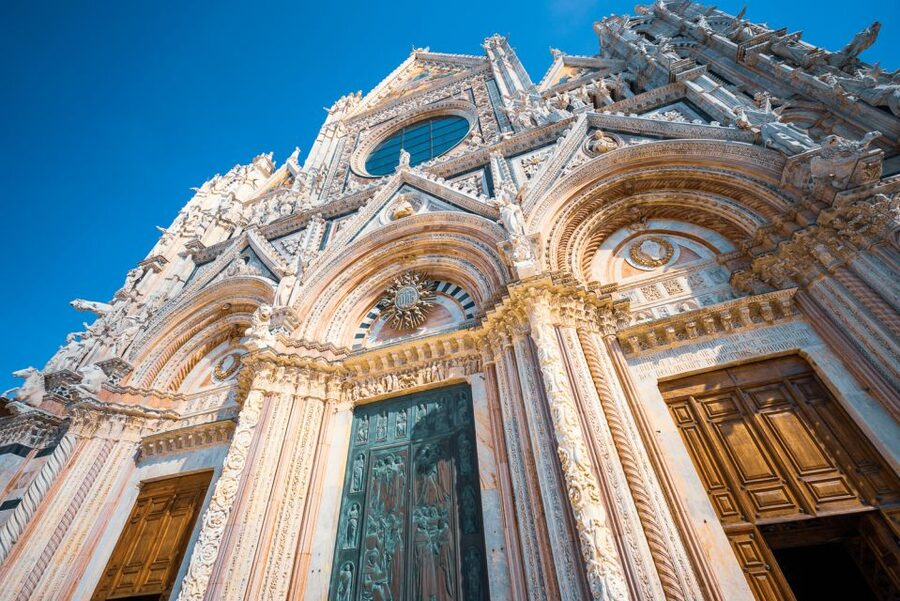
You start by exchanging your voucher at the official ticket office at Cripta del Duomo di Siena. This is the moment where many people feel a bit stressed, because the process is quick when you know where to go, and confusing when you do not.
If you arrive and feel turned around, look specifically for the ticket exchange setup connected to the reserved entry process. One practical tip I recommend is to walk up with your voucher ready and do the exchange before you start wandering in the surrounding Duomo area.
Your visit ends back at the meeting point. That does not mean you have to sit there. It just means the activity is tied to that start area, so keep that location in mind if you are navigating by phone.
More Siena experiences worth a look
- From Siena: Brunello di Montalcino Guided Wine Tour W/ Lunch
★ 4.9 · 357 reviews - Discover Siena: Guided Walking Tour and Cathedral Visit
★ 4.3 · 314 reviews - The Best tour in Florence: Renaissance & Medici Tales – guided by a STORYTELLER
★ 5.0 · 12,316 reviews - Florence: Duomo Cathedral Guided Tour
★ 3.9 · 5,970 reviews
Entering the Siena Cathedral interior: mosaics, scale, and key artworks
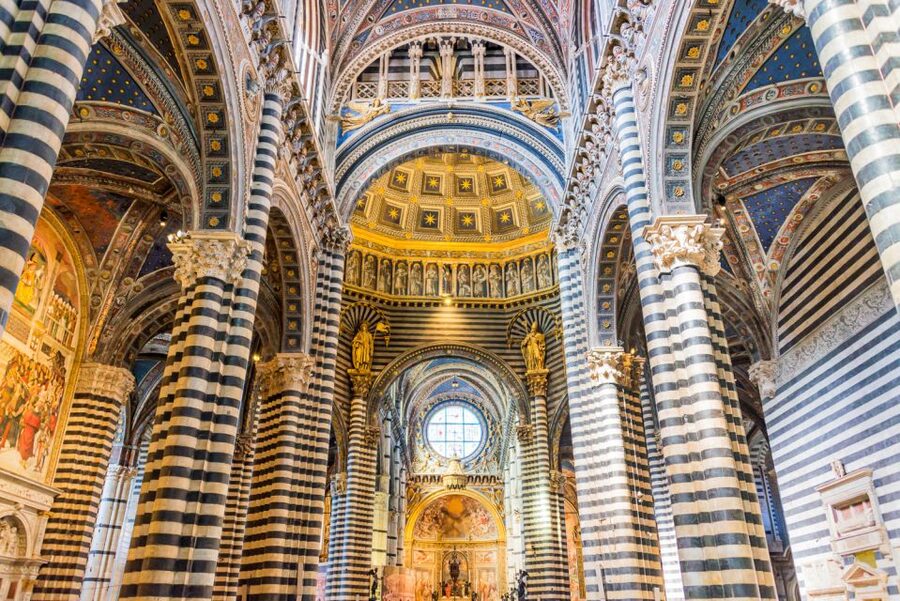
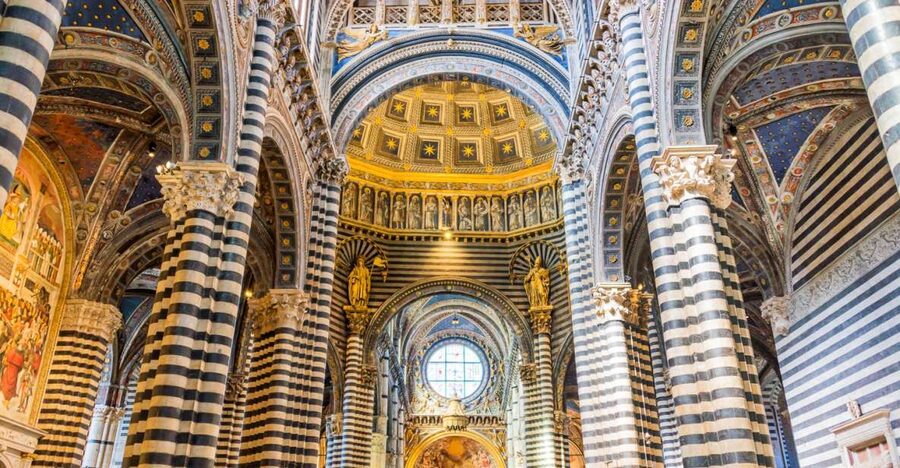
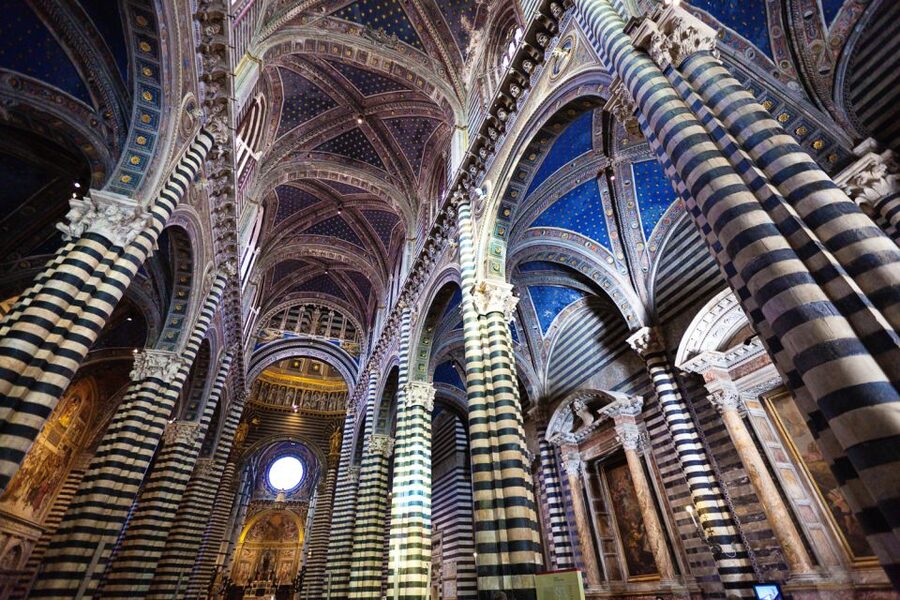
When you enter, you are stepping into the main cathedral experience, with enough scale to make you look up without trying. You can walk along the cathedral’s mosaic marble floor, which is one of the most memorable “slow look” parts of the complex. If you enjoy seeing the symbolism in the artwork embedded in the space, this is where you start to feel the whole place is telling stories on multiple levels.
As you move around, you will also spot sculptures and major artworks placed around the cathedral. The names you may hear in the audio guide and look for include Donatello’s Feast of Herod and Michaelangelo’s St. Paul, among other works. Even if you are not hunting them like a checklist, the presence of these big-name pieces is a clue that you are in a museum-grade space, not just a worship building.
The audio guide approach makes a difference here. Instead of trying to read every label in silence, you can listen as you walk, then pause when a detail catches your eye. That is often the best way to turn “I saw a cathedral” into “I understood why this cathedral is important.”
Baptistery of San Giovanni and the Baptismal Font moment
From the cathedral, you can head to the Baptistery of San Giovanni within the Duomo complex. This is one of the most rewarding stops because the Baptismal Font is the kind of object you want to see without distractions.
In practical terms, plan to slow down here. The Baptistery is a focal space, so you will naturally be drawn toward the font, and you will want a few minutes to take it in from different angles if possible.
If you are using the audio guide, this is also a good time to listen while you look. The narration helps you connect what you see with how the complex was shaped around spiritual meaning.
Crypt visit: the underground room that changes your perspective
Next comes the Crypt, the underground quarters that remained hidden for more than seven centuries. This is where the experience shifts, because you go from bright cathedral space into a darker, more enclosed feeling.
What I like about crypts in general is that they force you to pay attention to texture and survival. You can study how the space holds art and how the atmosphere supports the idea that these rooms are meant to feel separate from everyday life.
The crypt stop is especially notable for the fresco environment. You should expect wall decoration that creates a “you are in the story” feeling rather than a simple storage space vibe. If you only have energy for one indoor art zone beyond the main cathedral, this is a strong candidate.
Piccolomini Library with Pinturicchio frescoes: art that fills the walls
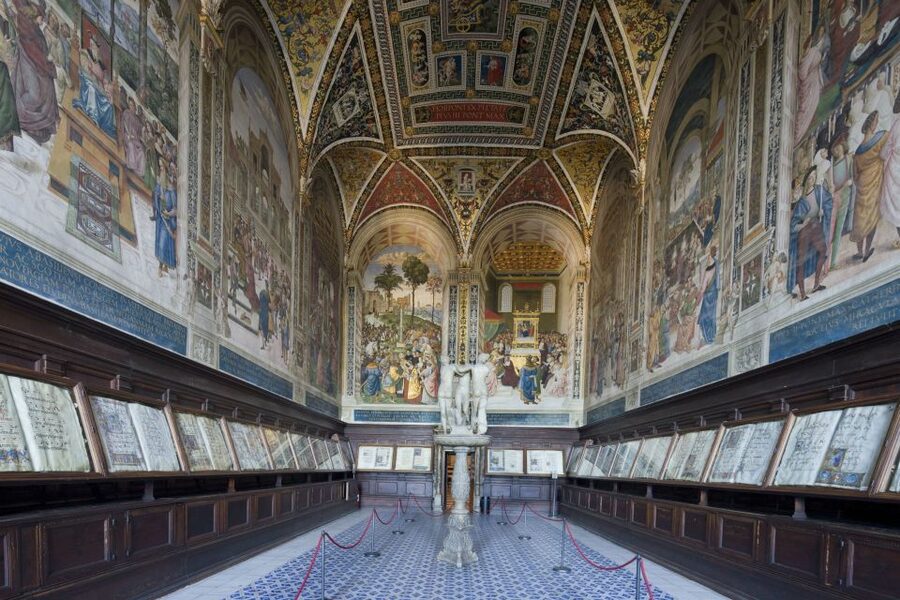
After the crypt, the Piccolomini Library is the next big art moment. You walk through and gaze upward at colorful frescoes that cover major narrative scenes.
The featured artist named for this stop is Pinturicchio, and the scenes depict ten episodes from the life of Pope Pius II. That matters because it means this is not random decoration. It is a structured series, and the audio guide can help you follow the sequence instead of just admiring color.
The library is also a reminder that Siena’s Duomo complex is both civic and devotional. It is art made to be read and remembered, not just looked at.
Museo dell’Opera: where cathedral history becomes tangible
The Museo dell’Opera is where you go to see cathedral-era fragments and artworks that were once part of the Duomo. This is a smart stop because it gives you context for what you already saw in the cathedral itself.
You can expect a range of pieces, including archaeological fragments and sculptures connected to the cathedral’s earlier artistic world. Gothic sculptures associated with Giovanni Pisano are one of the named highlights, and you may also see paintings by Ambrogio Lorenzetti and Pietro Lorenzetti.
This is also where I think the audio guide earns its keep. The narration can help you understand what these objects are, why they mattered, and how they fit into the cathedral complex as a whole. If you like museum-style looking, you will enjoy the slower pace.
A note on extra viewing: one option you might find during your museum time is a sky-walk area included with the museum visit. It is not something I would treat as guaranteed, but it is worth watching for when you are inside.
Oratory of San Bernardino and religious art collection
Then there is the Oratory of San Bernardino, tied to a collection connected with religious art. You are entering the Diocesan Museum of Religious Art, with its core in the upper oratory chapel.
This stop is useful if you want a wider time span. You can see Siennese painting from the 13th through the 18th century. That time window matters because it shows how beliefs, patrons, and artistic styles shifted over generations, all within the same cathedral ecosystem.
If you want to understand Siena as a living cultural machine, not a one-time snapshot, this oratory stop helps. It is also a good counterbalance if you feel museum-fatigue after the library.
Facciatone viewpoint: timing the exit bottleneck for the best photo
Finish with the climb up to the Facciatone viewpoint. The reward is the view over Siena and out toward the rolling Tuscan hills.
Here is the practical consideration: you may be sent out in small groups because of a narrow way out and the shared route back. One real-world detail to plan for is that groups can be around 15 to 20 people at a time. That means you should not assume instant access as soon as you reach the viewpoint stair area.
My advice is to treat the viewpoint as your final focus, not something you rush through. Give yourself enough time buffer so the group system does not make you feel rushed at the very end. If sunset is your goal, choose an entry slot that lets you arrive without stress, and remember last entry timing for the overall cathedral complex still applies.
How long you should plan, and the smartest order if you have limited time
This pass can be done in a single day if you keep moving, but it still needs real time. If your goal is genuine looking, you will want breaks for each art-heavy room. The good news is the complexity of stops makes a natural route, so you are not zigzagging across town.
A smart order is the one that naturally fits the building layers. Start with the cathedral and Baptistery, then go down to the crypt, then up into the library, and then out into the museum and oratory spaces. Finish with Facciatone because you get the outside reward after you have absorbed the indoor story.
If you are choosing an early entry time, it can help you experience the complex with more breathing room. Even in a quieter season, you will likely see enough people that planning matters.
Who this OPA SI PASS is for, and who should consider something else
This pass is ideal if you want self-guided access to multiple parts of Siena’s Duomo complex without the hassle of buying separate tickets. You should especially enjoy it if you like art rooms, narrative frescoes, and a museum-like approach to architecture.
You might consider an additional live guide option if you know you want deeper interpretive storytelling. The audio guide gives solid context, but if you prefer a human voice answering questions on the spot, you may want to add a guided element elsewhere in the day.
Also, this is best for travelers who can handle a climb and indoor waiting. The Facciatone viewpoint exit can slow things down, and there is limited time right before closing.
What is not included, and what that means for your wish list
Two key things to know:
First, the Gate of Heaven rooftop entrance is not included in this pass. If rooftop views are a priority, you will need to plan separately.
Second, no live guide is included. You are relying on the digital audio guide, plus your own reading of what you see.
Everything else listed as included is part of the ticket experience, including all the named indoor sites and the digital audio guide.
Should you book the OPA SI PASS?
If you want maximum access for one price and you like exploring at your own pace, I think this is a strong book. The best part is how the ticket strings together cathedral interior art, underground crypt atmosphere, Pinturicchio fresco storytelling in the library, and museum-grade pieces in Museo dell’Opera.
Book it if you are okay with self-guided learning and you do not feel you must have the rooftop Gate of Heaven experience as part of the plan. If rooftop access is your top must-do, then you may want to compare options that include it, so you are not disappointed at the one door you cannot open with this ticket.
Just reviewed around Siena
- Full-Day Excursion to Siena, San Gimignano & Chianti★ 4.8 · 29 reviews
- Full-Day Excursion to Siena, San Gimignano & Pisa★ 4.9 · 7 reviews
- From Siena: San Gimignano, Chianti, and Montalcino Day Trip★ 4.5 · 6 reviews
- From Siena/Chianti: Dinner & Drinks in the Chianti Vineyards★ 4.0 · 95 reviews
- From Siena: Chianti Countryside E-Bike Tour w/ Lunch & Wine★ 4.8 · 44 reviews
- From Florence: Siena, Cortona, Montepulciano & Val D’Orcia★ 4.9 · 43 reviews
- From Florence: PRIVATE Siena and Chianti Classico Trip★ 5.0 · 3 reviews
- From Florence: PRIVATE Trip to Pisa, San Gimignano, & Siena★ 5.0 · 5 reviews
Siena Tours, compared.
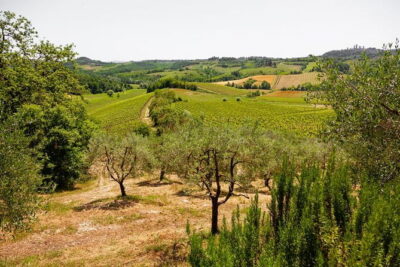
Tuscany Day Trip from Florence: Siena, San Gimignano, Pisa and Lunch at a Winery
Read our review →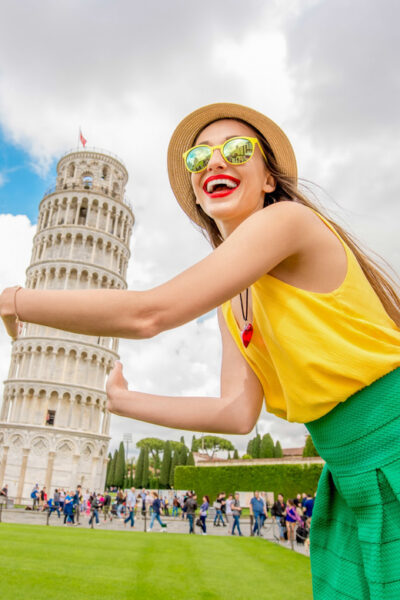
Pisa, Siena and San Gimignano Day Trip with Lunch
Read our review →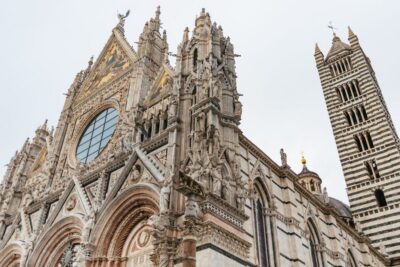
Pisa, Siena, San Gimignano, and Chianti Experience
Read our review →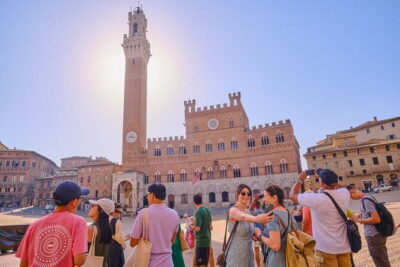
Pisa, Siena and San Gimignano Day Trip with Lunch & Wine Pairing
Read our review →
Siena, San Gimignano, Pisa & Lunch at Winery
Read our review →
San Gimignano, Siena, Monteriggioni, Chianti Day Trip with Lunch & Wine Tasting
Read our review →
Pisa, Siena, S. Gimignano, Chianti Wine & Lunch
Read our review →
Browse the lists this tour appears in