
Reviewed · COOKING CLASSES
Private Cooking Class with Tasting in Arezzo
A private cooking class in a Cesarina home in Arezzo is interesting because it is not a studio show. You cook in a real kitchen, with a real local host, and you eat what you make with regional wine. I love the private attention you get, and I love the Arezzo-style tips that make the food feel practical, not performative.
You should consider one thing: the experience runs at a home pace, so it is more intimate than a big group tour. If you want a highly scheduled, stop-and-go sightseeing style day, this may feel a little slower and more conversational.
Key things to know before you go
- Private Cesarina instruction in the home kitchen, not a public cooking school
- Cook three dishes using seasonal local choices, then eat together
- Wine tasting with regional red and white, plus other drinks depending on the host
- Real pasta options you might make, like gnudi, pici, pappardelle, or potato tortelli
- Tuscan dessert variety ranging from cantucci and castagnaccio to tiramisu
- Caring hygiene habits in the home, with sanitizing tools and distance guidance
Why an in-home Arezzo class feels different
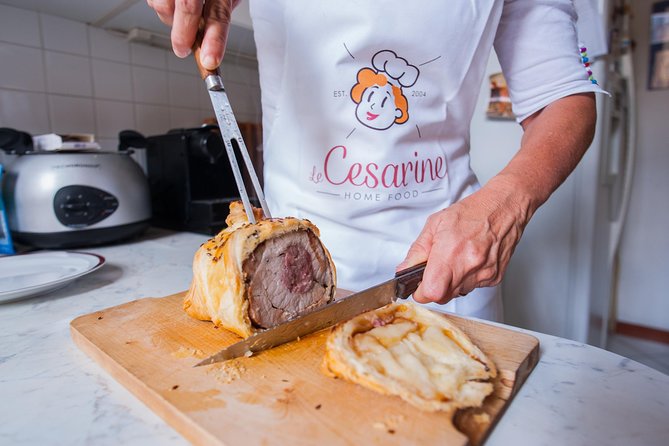
This is the kind of activity that lets you understand Tuscany through food, not through a lecture. You start in the Arezzo area and return back to the meeting point at the end, but the real story happens inside your host’s kitchen and dining area.
The Cesarine model matters here. You are not just watching a teacher, you are working alongside them. That is why the class feels like you are borrowing a local’s rhythm. One host experience shared a lovely garden setting for the meal, with people eating under the Tuscan sun. Another described a warm, relaxed household vibe, with conversation and history mixed in while hands are busy at the counter.
It also helps that this is private. Only your group participates, so you can ask questions without worrying about keeping up with a crowd. It is especially nice if you are traveling as a couple or with a small family.
One more practical note, the class is offered in English, so you can focus on technique instead of playing translator in your head.
More Tuscan countryside outings:
- Brunello Wine Tour and Val D’Orcia Landscape
★ 5.0 · 93 reviews - Hands-On Cooking Class in an Exclusive Kitchen in Cortona
★ 5.0 · 69 reviews - Cortona – Easy guided eBike tour around the Etruscan City.
★ 5.0 · 62 reviews
What you’ll make in 3 hours (and what that teaches you)
The class runs about 3 hours, and most of that time is spent doing. The structure is simple, you cook a starter, a main, and a dessert. The menu is designed to fit the season, so you get local flavors that are not stuck in a template.
Here is the typical menu flow you can expect:
- Starter: a seasonal starter
- Main: fresh pasta
- Dessert: a Tuscan dessert
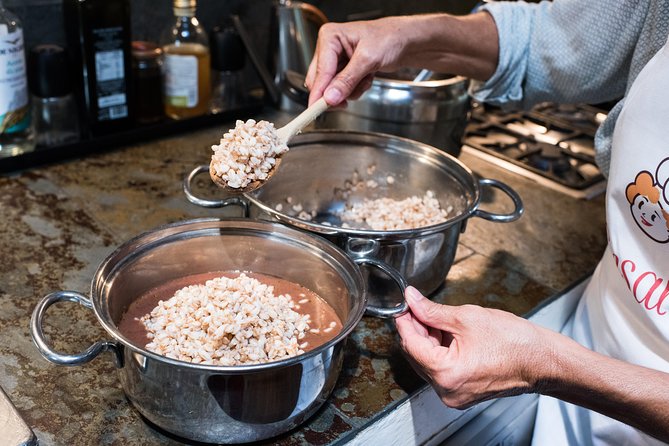
The main event is fresh pasta. Based on the class menu, you might make gnudi, pici, pappardelle, or potato tortelli. Even if you choose something familiar like pasta dough, you learn what makes it work in an Arezzo kitchen, like the texture targets and the small choices that keep it from turning chewy or bland.
Then comes the dessert. Options can include cantucci, castagnaccio, panpepato, tiramisu, or something similar that fits local habits.
You finish by tasting what you made, plus wine. In at least one hosted evening, the drinks included prosecco, wine, and a digestif. In general, you should count on sampling red and white regional wine.
The seasonal starter: small dish, big technique
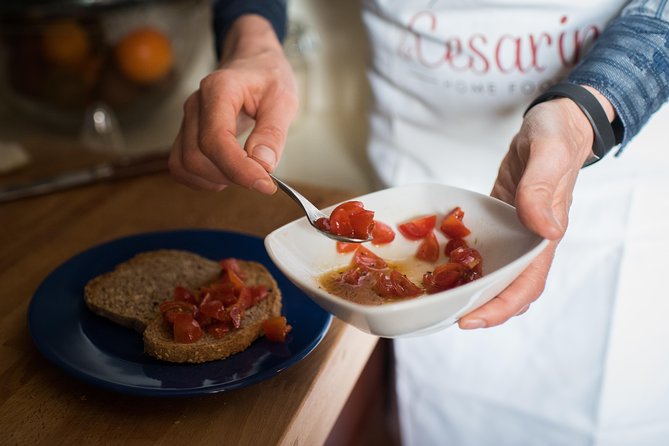
Your starter is built to set the tone. It is usually seasonal, which means the flavors change with the time of year. In one memorable session, people were making a salad appetizer as part of the starter moment, which is a good reminder that Italian starters do not have to be fussy to be impressive.
What I like about the starter part is that it teaches you the Italian approach to balance. You learn how local ingredients are handled simply, then how seasoning and timing turn it from plain to memorable.
Even if your starter seems straightforward, this is often where pasta lessons connect. You might be prepping ingredients that later show up alongside your pasta, or you might learn how to build flavor in a way that feels consistent across the whole meal. This is also a good stretch of time if you are traveling with kids, since you can help with easy tasks while the host and assistants handle the trickier steps.
Fresh pasta workshop: gnudi, pici, pappardelle, and more
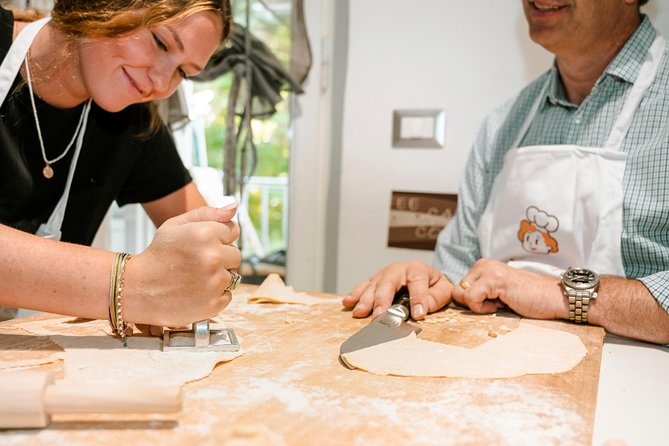
If you came for pasta, you came to the right place. The main dish is fresh pasta, and the menu gives several real possibilities. You may make gnudi, pici, pappardelle, or potato tortelli, depending on what the host selects for the season and group.
This is where the private format pays off. You are not just learning a recipe. You are learning how the dough should feel, how to roll or shape it, and how to avoid common mistakes like overhandling. One host described the instruction in an especially patient way, even for a 10-year-old, which tells me the class is designed to be friendly and hands-on, not rigid.
You also get cultural context that makes the technique stick. Cooking class is fun, but it becomes useful when someone explains why a method matters in Tuscan cooking. In one experience, the host blended cooking and history in the conversation while the group worked.
Expect a mix of demonstration and hands-on work. The best classes are the ones where you do real steps yourself, and this one is built for that.
More cooking classes in Arezzo:
- Exclusive Cooking Lessons in Tuscany with a Professional Chef
★ 5.0 · 39 reviews - Personal Chef – Cooking class at your villa
★ 5.0 · 26 reviews - Colorful Pasta Tagliatelle and Ravioli Cooking Class near Arezzo
★ 4.5 · 25 reviews - Cooking class in Tuscan Villa near Cortona
★ 5.0 · 24 reviews
Dessert in Tuscany: cantucci, castagnaccio, panpepato, and tiramisu
Dessert is where you get the full Tuscany signal. The menu lists cantucci, castagnaccio, panpepato, tiramisu, or similar typical desserts.
I like that the choices are distinct. Cantucci often connects to the idea of crunch and pairing with a drink. Castagnaccio brings a chestnut-forward feel and a rustic texture. Panpepato adds the spiced, dense personality that makes Tuscan festive desserts different from what you might find in a generic Italian restaurant menu.
And then there is tiramisu, which is usually the crowd-pleaser. In one hosted cooking session, the host shared a practical twist for tiramisu: mixing a bit of Italian sweet wine into the coffee. That kind of detail is exactly what you want from a local class, because it gives you something you can recreate later at home.
Dessert also makes the class feel complete. After pasta work, the dessert step resets your brain and gives you a satisfying finish.
Your Cesarina hosts, translation help, and the family-table vibe
The quality of the experience lives with the host. Cesarine are ready and excited to host you in their homes, and the tone seems to be warm and attentive. Several experiences highlighted welcoming families, casual conversation, and a dinner-table atmosphere rather than a classroom setup.
Names that showed up in examples include Dina, Francisco, Tania, Stefania, and Giuseppe. You may meet a different host, but the pattern is the same: a caring home environment where instruction flows while you share a meal.
Language support is also real-world helpful. One experience mentioned translation with apps when needed, including Google translation support. Even if you have basic Italian, that kind of help makes the class easier to enjoy, and it helps you understand key steps instead of guessing.
Wine tasting in context: red, white, and what to notice
The class includes wine tasting, with sample red and white from the region. That is more useful than it sounds. It turns your meal into a mini lesson in pairing and flavor awareness.
You do not need to become a wine expert. The goal is to notice how the wine changes your perception of food. With pasta, you want to pay attention to acidity and how it makes flavors feel cleaner. With dessert, you want to notice sweetness and how it affects the coffee or chocolate notes, especially if tiramisu is on the menu.
In at least one described session, the drinks lineup went beyond the core wine tasting to include prosecco and a digestif. If that happens in your class, think of it as the host’s way of extending the evening and giving you more tastes that match the course progression.
Getting there and what to expect on arrival
You start in the Province of Arezzo area and end back at the meeting point. The activity is near public transportation, so you should have options if you are not renting a car.
One detail to plan around: some hosts handle local pickup. For example, Dina picked people up in Arezzo and took them to her home. That tells me the exact meet-up routine can vary. When you book, double-check the exact starting point and how you will connect with your host.
Because it is in-home, expect a more personal arrival. You might be greeted at the door, then directed into a kitchen setup where cooking tools and ingredients are ready. That is another reason this is worth doing, you are not arriving to a blank room, you are joining a household plan already in motion.
Price and value: is $174.23 worth it?
At $174.23 per person, this sits firmly in the mid-range for guided food experiences. The key question is what you actually receive for the money.
You get:
- A private cooking class (only your group)
- Hands-on instruction as you cook three courses
- A meal that includes what you make
- Wine tasting with regional red and white
- A home setting with local host guidance
For many people, the value comes from the combination. You are paying for private attention, a host who teaches you technique, and an authentic meal setting. If you compare this to paying for a cooking class plus a separate dinner plus wine, it starts to make sense.
It is also good value if you are the type who wants to learn a few repeatable steps. One host shared a specific tiramisu coffee method, and those details are the kind you can recreate later. That is where the class becomes more than a one-night souvenir.
Who should book this, and who might skip it
This is a great fit if you:
- Want a hands-on food experience rather than watching from the sidelines
- Like learning technique and not just eating a meal
- Prefer smaller, home-based travel over big-group tours
- Are traveling with a partner, friends, or a family who enjoys cooking
It may not be for you if you:
- Want strict, clockwork sightseeing with lots of outdoor walking
- Prefer restaurant-style meals with no hands-on work
- Are very sensitive to being in a home environment with other household routines
A key upside for families is that the class can be patient and accommodating. One experience noted the host was relaxed and informative with a 10-year-old, and the session still moved at a good pace.
Health and hygiene rules you should expect in the home
The homes provide essential sanitary equipment, including paper towels for washing hands and hand sanitizing gel. The class also follows important distance guidance, with a note to maintain 1 meter distance.
If distance is not possible, you should expect the guidance to include masks and gloves. It is worth packing a small mindset adjustment, this is a home experience. The house will have the basics you need, but you should still plan to follow the host’s instructions calmly.
The decision: should you book this Arezzo cooking class?
Book it if you want an evening that feels like learning from a local family, not just collecting a stamp. The biggest win is the private instruction and the fact you leave with technique, not just memories.
I would especially book this if you love fresh pasta and want to try a real Tuscan-dessert lineup, whether that ends up being cantucci, castagnaccio, panpepato, or tiramisu with a coffee and sweet wine twist. And if you are after regional wine with dinner you helped make, this hits the sweet spot.
If you are trying to choose between a cooking class and a standard dinner, I would lean cooking class here. You get more participation, and it is the kind of experience that stays useful after the trip.
FAQ
How long is the private cooking class in Arezzo?
It lasts about 3 hours (approx.). One described experience felt closer to 4 hours, so it is smart to plan for a bit of flexibility.
Is this experience private?
Yes. It is a private tour or activity, and only your group will participate.
What language is the class taught in?
The class is offered in English.
Where does the class take place?
It takes place in Arezzo, in the Cesarina’s home. The start and end point are in the Province of Arezzo area.
What dishes will I cook?
You will cook three dishes: a seasonal starter, fresh pasta as the main, and a Tuscan dessert. The pasta options can include gnudi, pici, pappardelle, or potato tortelli.
Is wine included in the tasting?
Yes. You sample red and white wine from the region. Some sessions may include additional drinks depending on the host.
What dessert options might be served?
The dessert can be cantucci, castagnaccio, panpepato, tiramisu, or a similar typical Tuscan dessert.
Do the homes provide hygiene supplies?
Yes. The homes provide essential sanitary equipment, including paper towels for washing hands and hand sanitizing gel.
What is the cancellation window?
You can cancel for free up to 24 hours in advance for a full refund. Changes made less than 24 hours before the start time are not accepted.
More Hands-On Workshops in Arezzo
- Share your Pasta Love: Small group Pasta and Tiramisu class in Arezzo
★ 5.0 · 11 reviews - Cooking class Cortona
★ 5.0 · 8 reviews - Pasta and Pizza cooking class in Cortona
★ 4.5 · 7 reviews - Arezzo: Colorful Tagliatelle and Ravioli Home Cooking Class
★ 4.9 · 7 reviews
More Food Tours in Arezzo
- Tour through the vineyards and wine and olive oil tasting in Tuscany
★ 5.0 · 97 reviews - Discover Sustainable Wines in a Guided Tour and Tasting
★ 5.0 · 57 reviews - Private Tour: Montalcino Wine Tasting Experience
★ 5.0 · 55 reviews - Cellar Tour & Wine Tasting
★ 5.0 · 43 reviews
Just reviewed around Arezzo
- Cooking class Cortona★ 5.0 · 8 reviews
- Discover Sustainable Wines in a Guided Tour and Tasting★ 5.0 · 57 reviews
- Wine & Oil Tasting Experience★ 5.0 · 21 reviews
- Bike Ride immersion val d’Orcia★ 5.0 · 5 reviews
- Private Tour: Montalcino Wine Tasting Experience★ 5.0 · 55 reviews
- Val D’Orcia Dreaming!!★ 5.0 · 18 reviews
- Tuscan Brewery Guided Tour with beer and food tasting★ 5.0 · 6 reviews
- Pienza – Ebike tour for a full immersion in Val d’Orcia.★ 5.0 · 29 reviews
Cooking Classes, compared.
Florence Pizza or Pasta Class with Gelato Making at a Tuscan Farm
Read our review →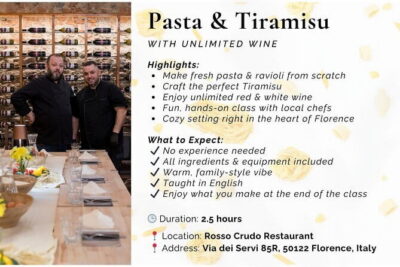
Pasta & Tiramisu Cooking Class with Unlimited Wine
Read our review →
Cooking Class and Lunch at a Tuscan Farmhouse with Local Market Tour from Florence
Read our review →
Cooking Class Pasta & Tiramisu Making Unlimited Wine
Read our review →
Florence Cooking Class The Art of Making Gelato & Authentic Pizza
Read our review →Browse the lists this tour appears in