
Reviewed · MONTEPULCIANO WINE TOURS
Montepulciano: Pasta-Making Class with Tasting and Wine
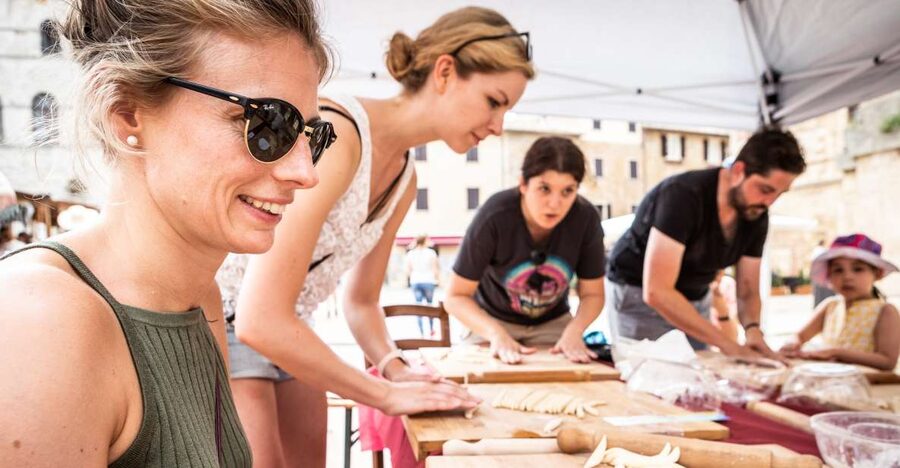
This experience is interesting because you learn a Tuscan pasta shape the real way, by hand, with a method locals describe as appiciare. I love the hands-on focus, and you end up with a meal you helped create, not just a demo. I also like that your work gets rewarded immediately with a glass of wine to match your first courses.
One thing to consider is logistics: transportation is not included, and you meet at a farmhouse location that gets shared after booking.
5 key things to know before you go
- You learn pici plus other fresh pasta like tagliatelle, with classic Tuscan sauces to season them.
- The pici technique is physical: thick dough rolled and shaped by rubbing with both hands, using the local appiciare gesture.
- Small group size keeps the class interactive, limited to 10 participants.
- Your pasta turns into lunch or dinner paired with wine, so you eat what you make.
- The farmhouse setting matters: several sessions happen on a working property with a relaxed, home-kitchen feel.
Why Montepulciano’s Pici Class Feels Like Real Tuscany
Montepulciano is the kind of place where food is taken seriously but not stiff. This class gives you that same vibe. You start with dough and end up eating a proper meal, usually lunch or dinner, paired with wine.
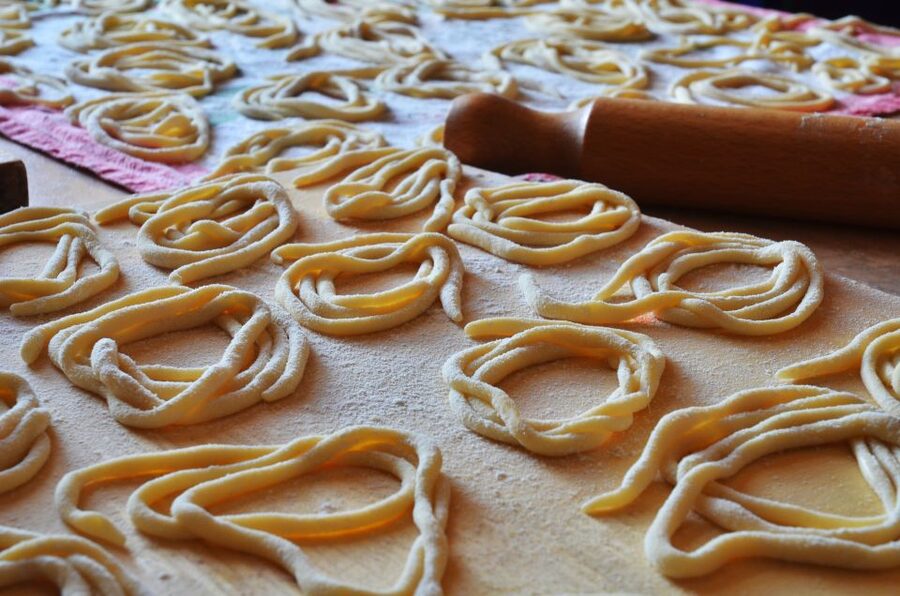
The star is pici, one of the most famous pastas in the Province of Siena. It is thicker than spaghetti, and it is made by hand in a way that is surprisingly learnable, even if you do not cook much at home. Expect the instructor to slow things down so you can copy the motions, not just watch them.
I also like the way the session connects technique to taste. You make pasta, then learn how Tuscan sauces actually work with fresh shapes. The end goal is not showmanship. It is dinner, and a recipe you can repeat later.
Getting Started at a Farmhouse Kitchen (and What You’ll Actually Do)
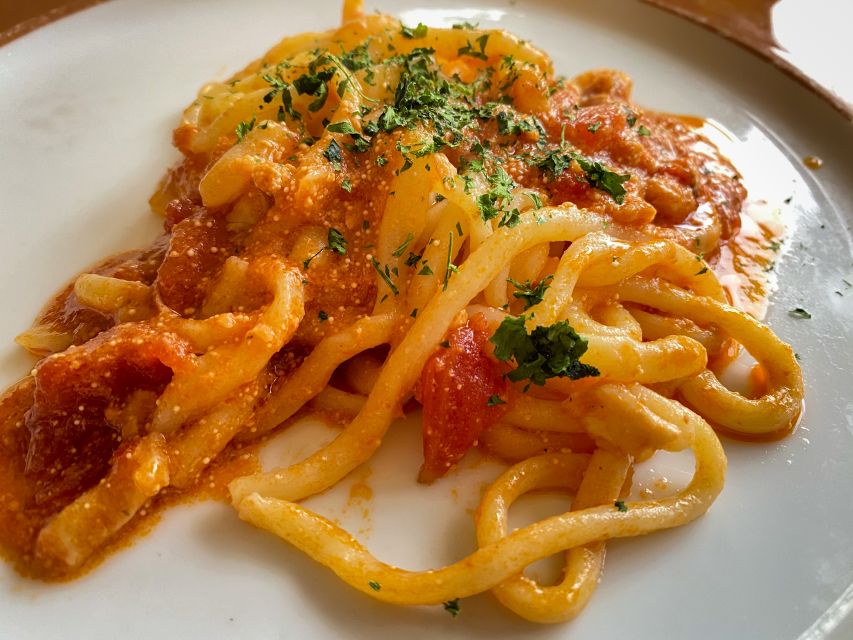
The day begins at the farmhouse, and the exact spot is sent after booking confirmation. From there, you spend about 3 hours in a small group, with instruction in Italian and English (so you can follow along without guessing).
What happens first is usually the foundation: how to handle the dough, how to portion it, and how to keep your work consistent. Fresh pasta can feel fussy when you are at home, but in class the pace is built for learning. You get feedback early, so mistakes do not snowball.
Then comes the main event, shaping pici. This is where the class earns its reputation. You will roll the dough and rub it with both hands to get that thick, uniform strand. In local dialect, the gesture is called appiciare. It sounds technical, but in practice it is muscle memory. The instructor helps you find the right pressure and rhythm.
In some sessions, the class also adds other pasta forms beyond pici. One group experience included tagliatelle and even ravioli, while the general course focus is pici plus typical Tuscan fresh pasta like tagliatelle.
More Montepulciano wine tours:
- Montepulciano: Wine Tasting and Cellar Tour
★ 4.8 · 545 reviews - Montepulciano: Winery Tour and Tasting
★ 4.6 · 187 reviews - Montepulciano: Wine Tasting & Lunch in a Typical Winery
★ 4.6 · 183 reviews
How Pici Shapes Your Dough Skills for Home Cooking
Pici matters because it teaches you a core truth of Italian cooking: pasta is not just food, it is structure. Thickness changes how sauces cling and how flavors land on your tongue.
When you make pici, you learn three practical skills at once:
- How to manage dough that is soft but not sticky.
- How to shape evenly enough that cooking stays consistent.
- How to work with hand pressure, not tools.
That last one is the big win. A lot of cooking classes stop at, Here is what to do. This one helps you do it with your own hands. So later, when you try again at home, you have a reference for the feel of the dough, not just a written recipe.
And because pici is a peasant recipe, the attitude is practical. The goal is not perfection like a factory. It is a repeatable method you can get right with time and a little flour on your sleeves.
The Sauces: Meat Ragout, Aglione, and Cacio e Pepe
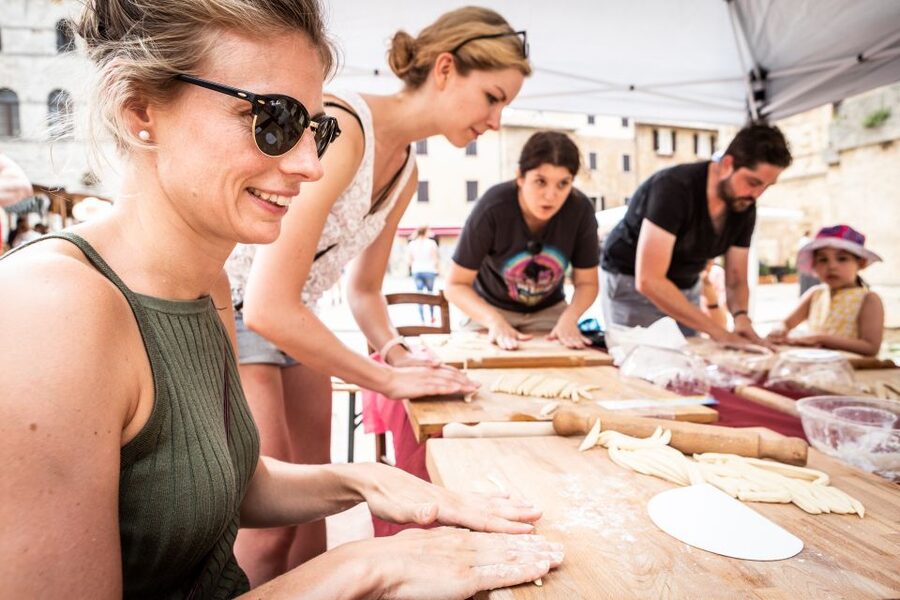
Pasta is only half the equation. The other half is sauce, and this class does not treat sauce like an afterthought.
You learn to make and season with classic Tuscan-style options, including:
- Meat ragout (ragù)
- Aglione sauce, a bold garlic-forward flavor
- Cacio e pepe, cheese and pepper
These choices are smart for learning value. Ragout teaches you how a slow-cooked meat sauce builds body. Aglione helps you understand garlic as a flavor base, not just a sharp ingredient. Cacio e pepe teaches the balance between cheese richness and pepper heat, which is the kind of thing that separates decent pasta from memorable pasta.
Some classes also incorporate simple add-ons that broaden the meal. In one experience, the group made bruschettas and even picked strawberries on the property for one of the bruschetta components. You should not assume every session includes foraging, but it is a good signal that fresh farm ingredients can be part of the fun.
Lunch or Dinner with Wine Pairing, Not Just a Bite
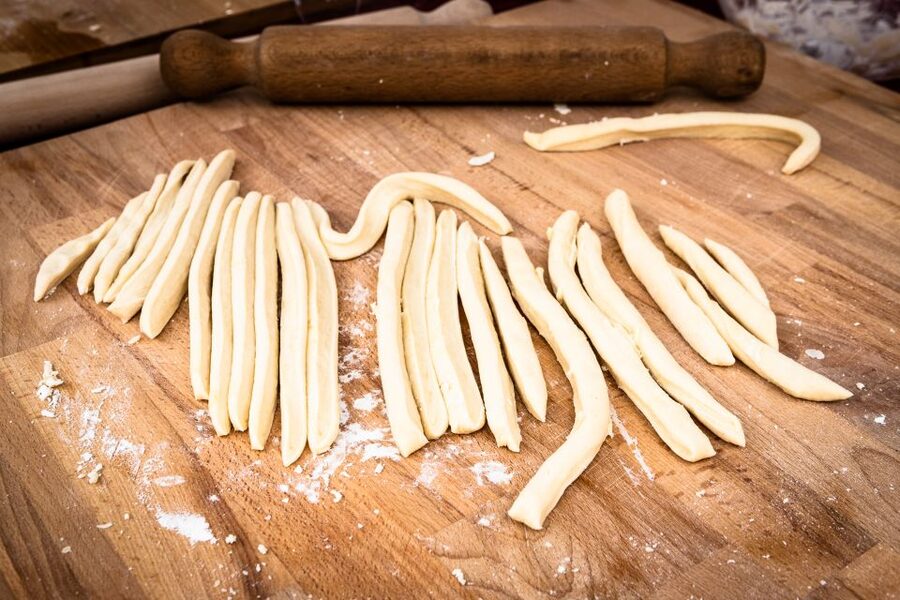
The class turns into a real meal. After shaping and cooking your pasta, you sit down for the first courses made from what you learned.
You will also enjoy what you made with a glass of wine. That matters because wine pairing is not just about fancy rules. It is about pacing. Wine helps you shift from kitchen focus to table relaxation while you taste how the sauce performed with the pasta shape you created.
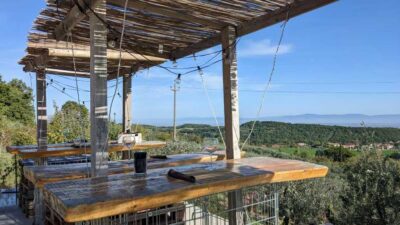
Multiple experiences describe the meal happening on a patio, with the cooking results served in a relaxed farmhouse rhythm. Expect a slower pace than a city restaurant, and more of a sit-and-chat tone. If you are traveling with someone, this format is especially good because you share the food with the story of how it was made.
Also, you get a small present: an apron from the true Tuscan Chef. It is a nice souvenir because it actually belongs to the experience.
More pasta classes in Montepulciano:
- Montepulciano: Pasta and Tiramisu Class at a Local’s Home
★ 5.0 · 23 reviews - Florence: Pasta Cooking Class with Unlimited Wine
★ 4.9 · 10,285 reviews - Florence Pizza or Pasta Class with Gelato Making at a Tuscan Farm
★ 5.0 · 6,801 reviews - Florence: Pasta & Tiramisu Cooking Class with Unlimited Wine
★ 4.9 · 6,708 reviews
Meet the Instructors, Home-Kitchen Help, and the English-Friendly Tone
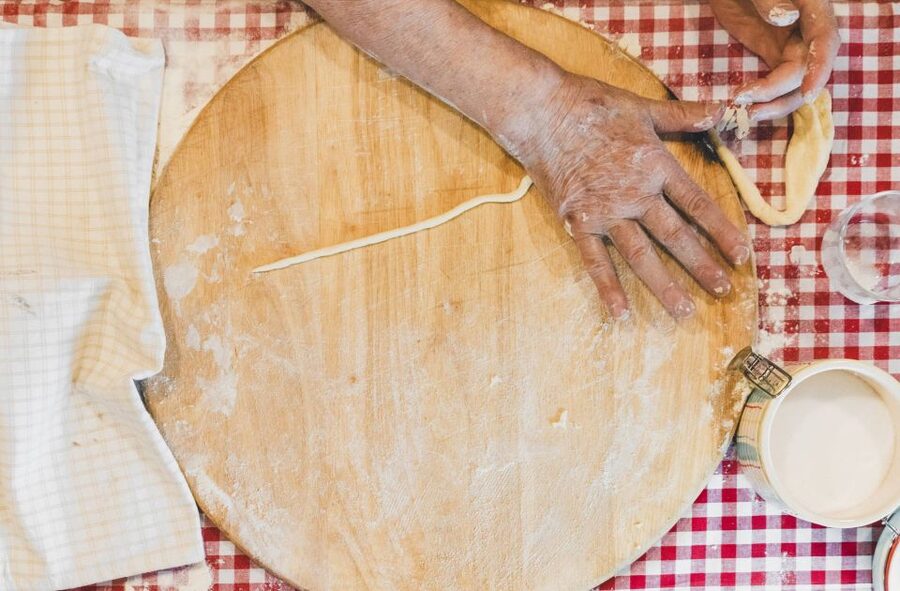
A big part of why this class rates so well is the teaching style and the warmth. You might be greeted by hosts and home cooks such as Maria, Daniela, Daniel, Simonetta, or Irena, depending on the session. Some groups also mention assistants who help during the prep, like Susanna and other helpers in the kitchen team.
Here is what that usually means for you, practically:
- You get clear guidance, not just a single lecture.
- Questions get answered in plain terms, often with English support.
- The class stays interactive, so you can correct your shaping technique while it still matters.
English support is explicitly part of the experience (host or greeter speaks Italian and English). That lowers the risk of standing there with flour on your hands while everyone else nods wisely.
Price and Value: What $141.61 Buys in Tuscany
At $141.61 per person, this is not a budget cooking workshop. But it is also not just a quick pasta demo. You pay for a real, structured session that includes:
- A fresh pasta class (with pici and other pasta training)
- A lunch or dinner built around the pasta you make
- A glass of wine
- A small group limit of 10 participants
- An apron as a keepsake
When I think about value, the biggest factor is the meal. Classes that end with a token tasting can feel like you paid for labor and left hungry. Here, you are eating first courses as part of the experience, so the cost shifts from pure instruction to instruction plus dinner.
The other value factor is attention. Small groups are easier on your learning curve. When you can see what you are doing wrong and fix it, you leave with skills you can actually repeat at home.
One caution for value: transportation is not included. If you are staying far from the countryside, you may need to plan a taxi, rental car, or pickup arrangement on your own.
Who Should Book This Pasta-Making Class (and Who Might Skip)
This class fits best if you want hands-on food learning in a real setting. It is ideal for:
- Couples and friends who want a shared activity that ends with dinner
- Food lovers who learn faster by doing, not watching
- People who want a Tuscany memory that is edible and repeatable
It might feel less ideal if you:
- Are short on time and do not want a farmhouse session that runs about 3 hours
- Hate getting a little messy, because shaping fresh pasta involves flour and dough
- Are relying on included transportation, since the course does not provide it
If you are comfortable with basic cooking tasks and you like eating what you cook, you will likely enjoy this more than a passive sightseeing stop.
Practical Stuff to Plan Before You Go
Here are the nuts and bolts that help you enjoy the day without stress.
First, expect a rural setup. The farmhouse location is shared after booking. That is normal for countryside experiences, but it means you should be ready to navigate to a specific address once you have it.
Second, dress for hands-on cooking. Wear something you can get flour on. Even if the kitchen is tidy, pasta dough has a personality. It sticks when you are unsure and behaves when you get the technique right.
Third, bring an appetite. The class includes lunch or dinner with fresh pasta. You are not buying a snack. You are planning a meal.
Finally, go in curious, not perfectionist. Pici is learned through feel. Your first attempts might not look identical to the instructor’s, and that is fine. The goal is to understand the method, then improve as the dough in front of you teaches your hands.
Should You Book It?
Yes, if you want a small-group hands-on Tuscany experience that ends with a proper meal. This class is strongest when you care about technique, enjoy eating immediately, and like the idea of learning sauces you can cook again at home.
Skip it if you cannot handle rural logistics or you want transportation handled for you. Also skip if you prefer quick tastings over real cooking time.
If you book, you are signing up for more than pasta. You are getting a simple, peasant-style craft (pici and classic sauces) taught in a friendly farmhouse kitchen, with wine waiting at the finish line.
More Food Tours in Montepulciano
- Montepulciano: Twilight Saga New Moon Tour with Wine Tasting
★ 3.9 · 10 reviews - Montepulciano: Wine Tasting in the Tuscan countryside
★ 4.9 · 7 reviews - Montepulciano: Bruciata Wine Tasting in a Cave
★ 4.6 · 7 reviews - Montepulciano: Wine Tour and tasting
★ 4.2 · 6 reviews
More Wine Experiences around Montepulciano
- Montepulciano: Artisan Heroic Wine Tasting at the Terrace
★ 4.9 · 116 reviews - Montepulciano: Tuscan Winery Tour with Wine Tasting & Meal
★ 4.9 · 88 reviews - Montepulciano: Historical Cellars Guided Tour & Wine Tasting
★ 4.4 · 83 reviews - Montepulciano: Winery Tour, Tasting, and Vineyard Picnic
★ 4.8 · 43 reviews
Just reviewed around Montepulciano
- Tasting and Tour Vino Nobile di Montepulciano★ 5.0 · 5 reviews
- Paciano: Organic Cooking Class at a Farm with Lunch & Wine★ 4.9 · 19 reviews
- Montepulciano: Winery Tour, Tasting, and Vineyard Picnic★ 4.8 · 43 reviews
- Montepulciano: Wine Tasting in the Tuscan countryside★ 4.9 · 7 reviews
- Montepulciano: Guided Wine Tasting Tour with Lunch★ 5.0 · 3 reviews
- Montepulciano: Wine Tasting with typical Tuscan Cold Cuts★ 5.0 · 4 reviews
- Montepulciano: Pasta and Tiramisu Class at a Local’s Home★ 5.0 · 23 reviews
- Montepulciano: Twilight Saga New Moon Tour with Wine Tasting★ 3.9 · 10 reviews
Montepulciano Wine Tours, compared.
Val d’Orcia Brunello Wine Tour with Montalcino and Montepulciano
Read our review →
Small-Group Montepulciano and Pienza Day Trip from Siena
Read our review →
Valdorcia Wine, Brunello Montalcino, Montepulciano
Read our review →
Browse the lists this tour appears in