
Reviewed · ACCADEMIA GALLERY & DAVID TOURS
Florence Unveiled: The Rivalry of Leonardo and Michelangelo
Florence Unveiled is interesting because it turns the Leonardo versus Michelangelo rivalry into something you can feel in the streets, not just read in a museum caption. I love how Antonio connects art history to specific corners of Florence, so the Renaissance story lands right where it happened. You’ll start at the Fountain of Neptune and keep hopping between the big public spaces that shaped Medici power.
I also like the practical, go-live-your-life extras. You get included food and drinks, plus a photo of Antonio’s secret diary with his best picks for food, music, museums, gardens, and even wine tasting. One thing to plan for, though: it is still a walking tour in the heat, so wear comfortable shoes and carry water.
Key takeaways before you go
- Antonio’s street-level storytelling makes the Leonardo and Michelangelo rivalry feel personal, not textbook
- Photo stops built into the route so you can actually frame the Duomo, bridges, and piazzas
- Antonio’s secret diary photo gives you a usable list for what to do after the tour
- Off-the-beaten-path detours that help you dodge the usual tourist flow
- Michelangelo’s early work at Santo Spirito focuses on the wooden crucifix he carved at 17
- Included food and drinks help you keep energy for the full 3 hours
Leonardo vs Michelangelo, mapped onto real Florence corners
This tour works because it treats rivalry like a local force. You are not just hearing that Leonardo and Michelangelo were famous. You are seeing how Medici patronage, politics, and ego all collided in Florence’s public art commissions and major institutions.
At a basic level, it is about two minds chasing breakthroughs. Leonardo brought his curiosity and experimentation. Michelangelo brought anatomy, proportion, and emotional intensity. Your guide uses Florence’s key sites to explain how that competition pushed the work forward, even when projects got complicated or stalled.
Then it gets more satisfying because you end with a moment from Michelangelo’s early years. At Basilica di Santo Spirito, the focus lands on a wooden crucifix carved when he was only 17. The point is not that it is the biggest masterpiece in Florence. The point is that you see an origin story, with the skills and the mindset that later powered his famous sculptures.
More ways to see David and the Accademia:
- Florence: Timed Entrance Ticket to Michelangelo’s David
★ 4.6 · 16,983 reviews - Florence: Michelangelo’s David Skip-the-Line Entry Ticket
★ 4.5 · 12,764 reviews - Florence Accademia Gallery Tour with Entrance Ticket Included
★ 4.5 · 6,148 reviews
Meeting at the Neptune fountain, and getting your bearings fast
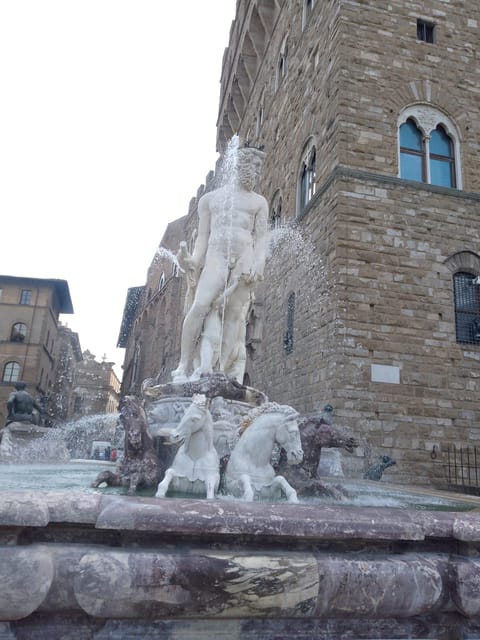
You meet at the Fountain of Neptune, right beside Palazzo Vecchio in Piazza della Signoria. That is a smart start. You are already next to the political heart of old Florence, which makes the rest of the walk feel connected instead of random sightseeing.
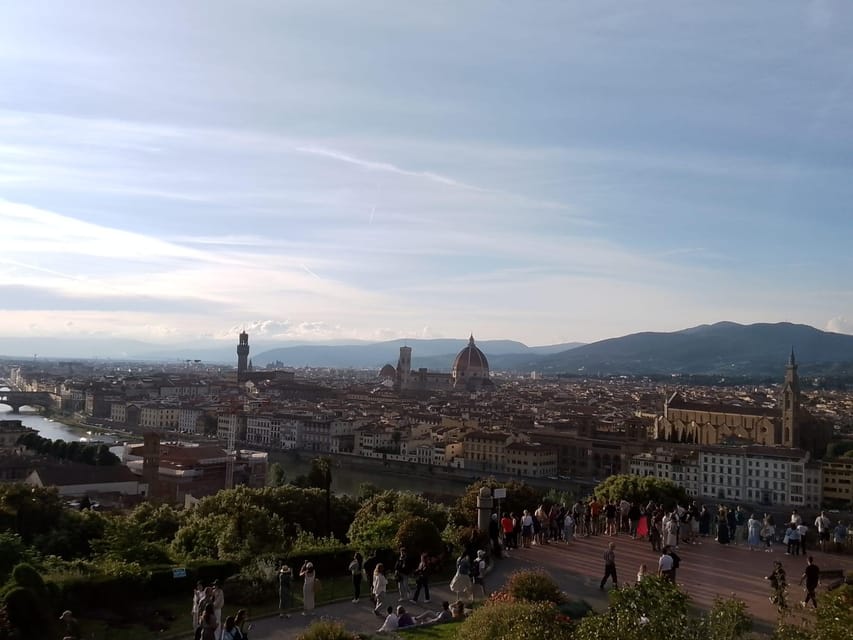
From this point, you can look around and get a map in your head. Piazza della Signoria is loaded with symbolism, statues, and the kinds of spaces where power shows itself. A 40-minute guided segment here also means you are not rushing to the next stop before the story clicks.
Practical tip: plan on looking up. The Cathedral area later in the tour rewards you for climbing your gaze from street level to façades and domes. If you only look straight ahead, you miss half the point.
Piazza della Signoria and Ponte Vecchio: Medici power and the art of persuasion
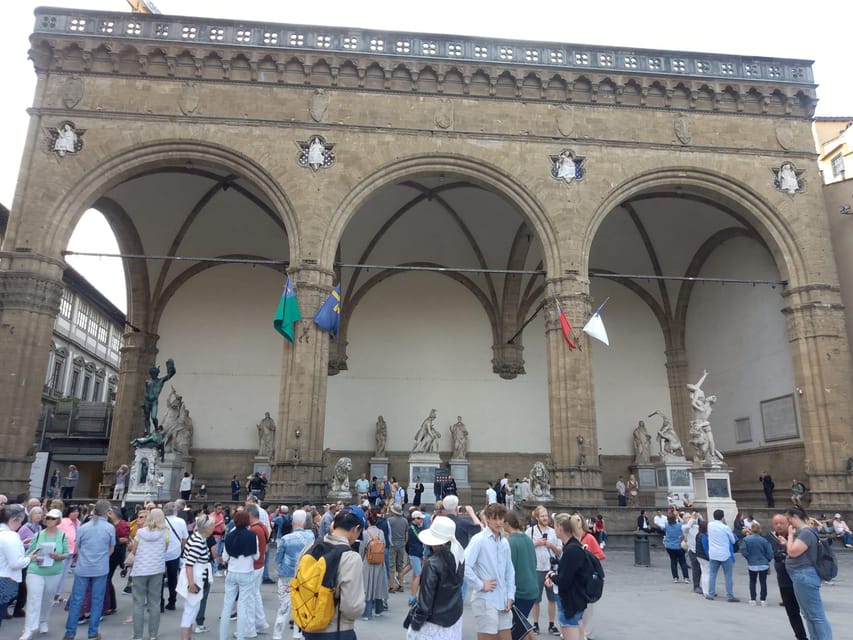
The route spends the first chunk of time at Piazza della Signoria. You get a photo stop, then a guided tour for about 40 minutes. Expect the guide to frame what you are seeing as Medici-era power theatre, because Palazzo Vecchio and the statues nearby are part of that message.
Michelangelo’s David comes up as a replica in the square, and the rivalry theme stays in play. Even if you have seen David before somewhere else, hearing it placed in this specific square changes how it feels. It becomes a reminder that Renaissance art was also political communication.
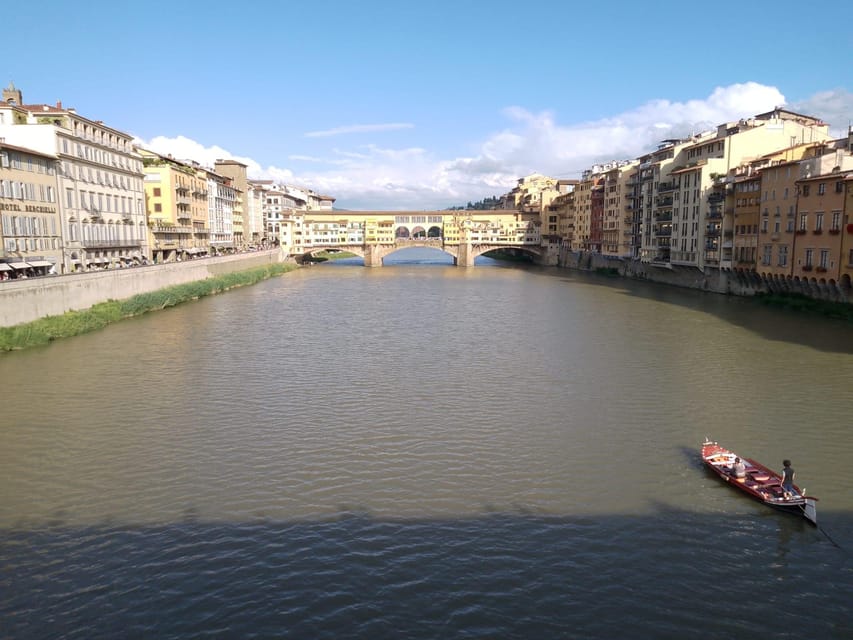
Next comes Ponte Vecchio, the oldest bridge in Florence, with jewelry shops along it since Medici times. The stop is shorter, about 15 minutes including a guided explanation and photo time. The takeaway is how trade, wealth, and urban design all braided together here. If you walk it slowly, you also get a better sense of why this bridge stayed important even as Florence changed.
One consideration: Ponte Vecchio can get crowded. You will still enjoy it, but keep your pace steady and give yourself space for photos.
Piazza della Repubblica to the Duomo complex: Santa Maria del Fiore, Brunelleschi’s dome, Giotto’s bell tower
After the bridge, you swing to Piazza della Repubblica. It is a quick stop, around 10 minutes, with a guided look and photos. Even in a shorter visit, the guide uses it to tie movement through the city back to who controlled Florence and what they wanted people to remember.
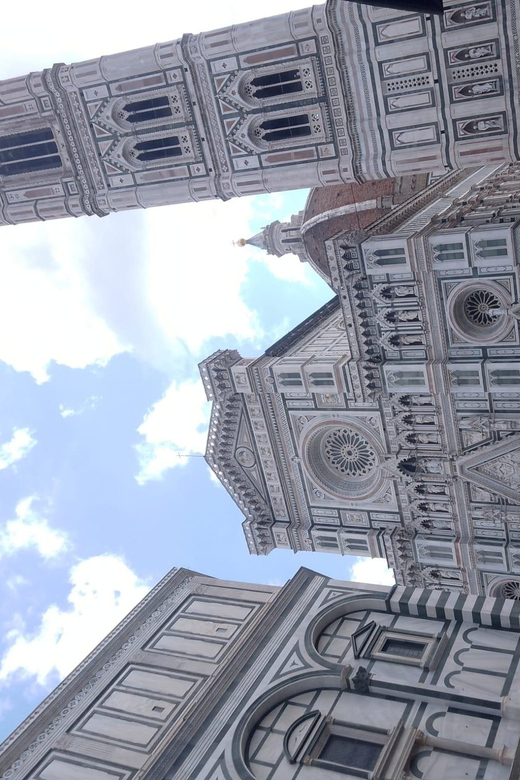
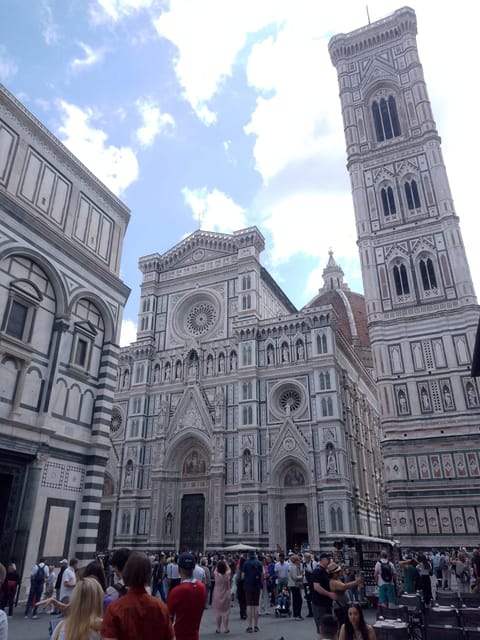
Then the tour leans hard into the Duomo complex. You get Cathedral of Santa Maria del Fiore for about 15 minutes. After that, Brunelleschi’s dome comes next, with a 10-minute stop. Then you visit Giotto’s bell tower area for another 10 minutes.
Why those stops matter on a rivalry-themed tour is simple. Renaissance artists did not work in a vacuum. Architecture was a kind of competition too. Brunelleschi’s dome is the headline move here, a structural achievement that changed what people thought was possible. Giotto’s bell tower adds another layer, because it shows how visual drama and craft skill became part of civic identity.
Your best move on this portion: wear shoes that can handle uneven stone and take advantage of the built-in photo breaks. If the summer sun is strong, use your hat and keep water handy. The tour explicitly recommends at least 500 ml of water and a hat to cool off.
A different way to spend the day in Florence:
- Florence: Skip-The-Line Uffizi Gallery Timed Entry Ticket
★ 4.5 · 27,832 reviews - Tuscany Day Trip from Florence: Siena, San Gimignano, Pisa and Lunch at a Winery
★ 5.0 · 21,634 reviews - The Best tour in Florence: Renaissance & Medici Tales – guided by a STORYTELLER
★ 5.0 · 12,316 reviews - Florence: Leonardo Interactive Museum Entry Ticket
★ 4.5 · 11,763 reviews
Piazza Santa Trinita and crossing into the quieter side of Florence
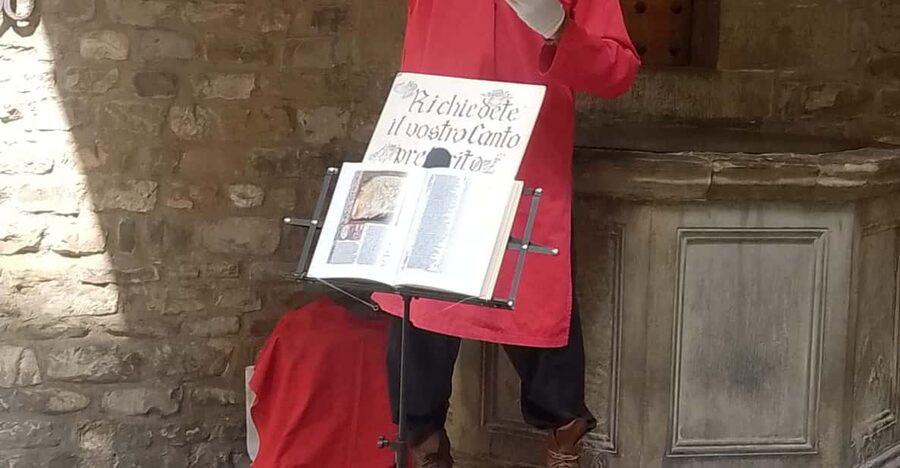
The tour continues toward Piazza Santa Trinita, with about 10 minutes for photos and guided context. This is where the walk starts to feel more local and less like a checklist of big-ticket stops.
You also cross over into Oltrarno, Florence’s side that often feels like it breathes a little slower. The guide points out the imposing Pitti Palace as part of the Medici story, since it ties directly into how the family translated wealth into lasting cultural power. Even if you are not going inside Pitti Palace on this particular walk, the visual size alone helps you understand why Renaissance patrons could shape entire careers.
This segment is useful even if you already know some Florence basics. It gives you a better mental model of where the Medici influence concentrated, and why certain neighborhoods stayed connected to art and court culture.
Basilica di Santo Spirito: the moment Michelangelo at 17 comes alive
The finale is Basilica di Santo Spirito, with about 30 minutes of guided visit time. This is the stop that makes the whole tour feel different from a standard “see-the-sights” walk.
Here is the key story your guide brings into focus: after the death of his patron Lorenzo de’ Medici, Michelangelo lived at the monastery around 1492. The monks allowed him to study corpses from the hospital. That access mattered because it gave him rare insight into human anatomy, which later shaped his lifelike, emotionally charged sculptures.
Inside the church is a specific object you are meant to notice: a wooden crucifix carved by Michelangelo at just 17. It is smaller than the blockbuster works, but it is a bridge between medieval and Renaissance art. You are seeing the earliest phase of a master, with an emphasis on spiritual sensitivity and proportion learned before the fame.
If you want one practical tip for this ending: slow down and let the space do its job. Santo Spirito is a fitting place to cool off your brain after all the big squares and architectural icons. You leave with a clearer understanding of how Michelangelo’s skills formed over time, not all at once.
Finishing at Mercato Centrale, and using your diary for the rest of your trip
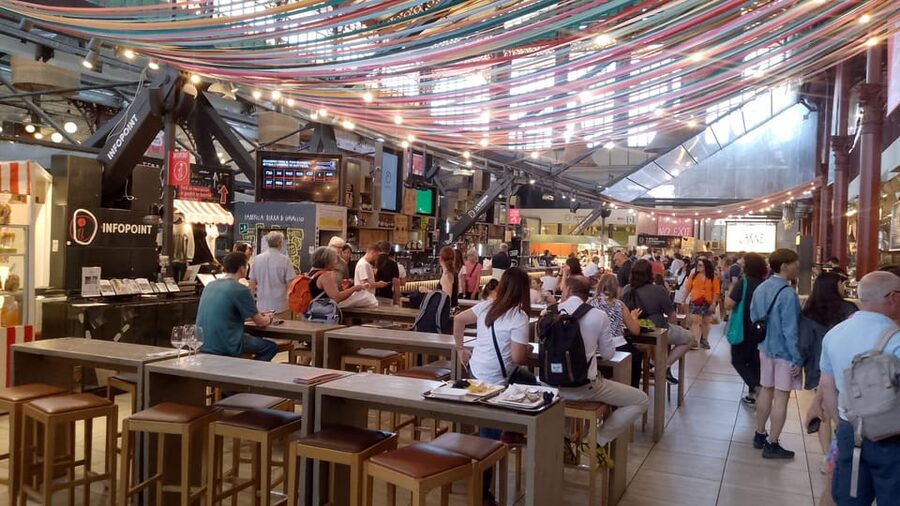
The tour finishes at Mercato Centrale. That is a smart ending because you can turn the walk into a real plan for dinner or a casual late lunch, without needing to hunt for options from scratch.
You also get one of the most useful non-sightseeing items on the tour. Antonio gives you a picture of his secret diary, a list of where to go for food, drinks, music, museums, gardens, and wine tasting. This matters because it helps you avoid the trap of spending your best hours on places that look good but do not fit your style.
What I like about using a list like this is that it makes your next steps faster. You already spent three hours learning how Florence worked. Now you can spend your next hours experiencing Florence as yourself, not as a tour-bubble.
Price, add-ons, and real value at about $53 per person
At $53 per person for a 3-hour walking tour, the value is strongest when you treat it as a planning tool plus a guided story. You are paying for a professional guide, guided time at multiple major sites, and photo stops so you can capture the best angles instead of rushing through.
Included food and drinks are also part of the value equation. In a short tour, even one small meal break can make the whole experience feel less tiring and more enjoyable.
Two add-ons are available if you want to go deeper. You can add a Medici Chapel visit for 19 euros and a Leonardo interactive museum visit for 9 euros, booked online. If you are the type who likes to keep the story moving after the walk, these upgrades can help you extend the same themes of Renaissance art and patronage into museum time.
What is not included: transport, plus there is no pick-up or drop-off. So make sure you can easily get to the meeting point in Piazza della Signoria.
Who should book this Florence Unveiled walk, and who might skip it
This is a good fit if you want a guided Florence that focuses on ideas and relationships: Medici power, Renaissance competition, and the shift from early training to mature genius. It is also a strong option if you like small-group pacing and clear storytelling.
It is not a great fit for very young children. The tour is marked as not suitable for children under 2 years, and it is not suitable for babies under 1 year. If you travel with kids, you might want to consider shorter, more flexible experiences.
If you hate walking in heat, plan carefully. The tour recommends a hat and at least 500 ml of water for scorching Florence summer days, so you will enjoy it more if you come prepared.
Should you book Florence Unveiled? My take
Book it if you want Florence with a spine. The Leonardo versus Michelangelo rivalry is the thread, and the stops are chosen to support that story instead of scattering attention across random landmarks.
Also book it if you like practical help. Antonio’s secret diary is the kind of resource that actually improves your trip after the tour ends, and the included food and drinks keep you from burning out before Santo Spirito.
Skip it only if you already have a very structured art plan and you prefer to do museums on your own. In that case, you might feel like some time is spent on guided outdoor context that you could replace with a ticketed museum day. But if you want your Florence day to make sense quickly, this is a strong way to start.
FAQ
Where is the tour meeting point?
You meet at the Fountain of Neptune, right beside Palazzo Vecchio in Piazza della Signoria.
How long is the walking tour?
The tour duration is 3 hours.
What is included in the price?
The tour includes a professional English-speaking guide, food and drinks, and breaks for photos. You also get a picture of Antonio’s secret diary with recommendations for food, music, museums, gardens, wine tasting, and more.
Is transport provided?
No. Transport is not included, and there is no pick-up or drop-off.
Is the tour in English?
Yes, the live tour guide is in English.
Are there optional add-ons?
Yes. You can add a Medici Chapel visit for 19 euros and Leonardo’s interactive museum for 9 euros, booked online.
Where does the tour finish?
The tour finishes at Mercato Centrale.
What should I bring?
Bring comfortable shoes and comfortable clothes. In scorching Florence summer conditions, the tour recommends a hat and carrying at least 500 ml of water.
Is it suitable for children?
It is not suitable for children under 2 years, and it is also not suitable for babies under 1 year.
Can I get a refund if my plans change?
Yes, free cancellation is available up to 24 hours in advance for a full refund.
Just reviewed around Florence
- Tuscany: Leonardo da Vinci – Oil and Wine Discovery Tour★ 4.8 · 5 reviews
- Livorno Port, Pisa, Florence: Full-Day Shore Excursion★ 4.8 · 51 reviews
- Legends of Florence: Exclusive Walking Tour by night★ 4.9 · 70 reviews
- Leather and Passion: A Tour of Florentine Craftsmanship★ 5.0 · 16 reviews
- Illuminated Florence Tour for Kids with Gelato & Pizza★ 5.0 · 6 reviews
- Inferno Florence Private 3-Hour Tour★ 4.8 · 20 reviews
- Hidden Florence: 2-Hour Guided Walking Tour★ 4.7 · 36 reviews
- 3-Hour Historic WhoDunIt Tour in Florence★ 3.2 · 6 reviews
Accademia Gallery & David Tours, compared.
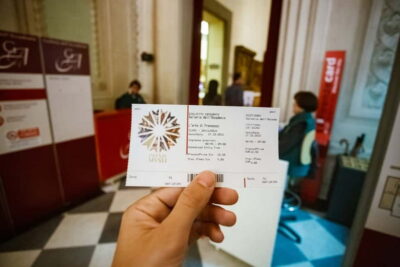
Timed Entrance Ticket to Michelangelo’s David
Read our review →
Michelangelo’s David Skip-the-Line Entry Ticket
Read our review →
Florence Accademia Gallery Tour with Entrance Ticket Included
Read our review →
Timed Entry Ticket to Michelangelo’s David & eBook
Read our review →
Skip the line: Uffizi and Accademia Small Group Walking Tour
Read our review →

Accademia Gallery Guided Tour with Entry Ticket
Read our review →Browse the lists this tour appears in