
Reviewed · PITTI PALACE & BOBOLI GARDENS TOURS
Boboli Gardens Skip-the-Line Tour
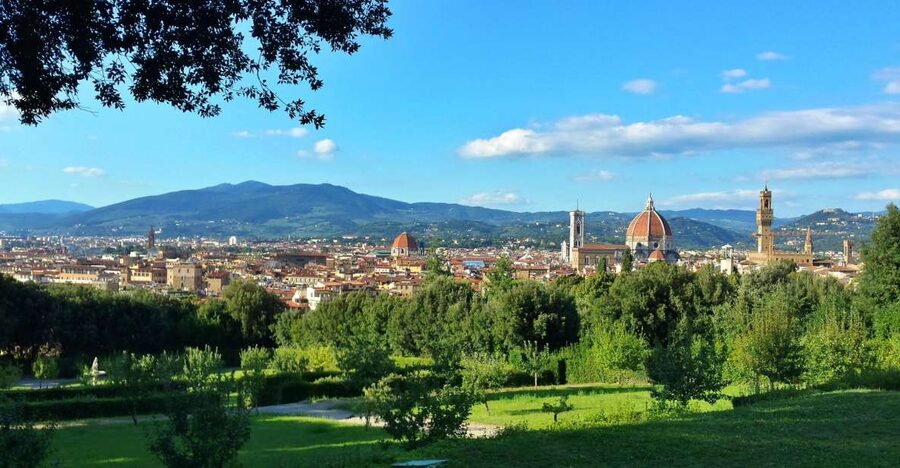
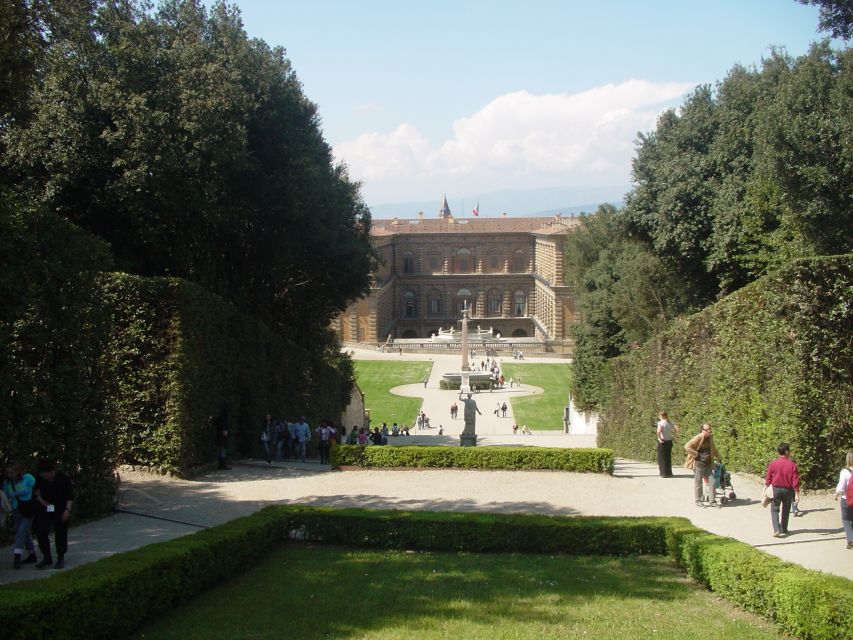
Florence’s Boboli Gardens are interesting because they are not just “pretty greenery.” They are an open-air Medici power map, built with sight lines, statues, and water tricks that make the city feel close. You get the big story of how these gardens were shaped over time, plus the kind of orientation you would miss wandering on your own.
I love the way a good local guide can connect the garden design to Medici ambition. If you’re lucky, you might have a guide like Alessandro, who is known for explaining why the gardens are laid out this way and how to spot meaning in the statues and even distant views.
The main drawback is that this is a guided walking route. If you want a slow, no-plan drift, or you struggle with uneven garden paths and stairs, you may find the pace a bit structured.
Key highlights to know before you go
- Skip-the-line tickets plus a live guide, so you can spend more time in the gardens and less time waiting
- Medici grounds storytelling, from Luca Pitti’s purchase of land to later design changes by major Renaissance names
- Fountains and water features that turn the gardens into a moving, sensory experience
- Grotta Grande for cave architecture that feels theatrical but is still rooted in design
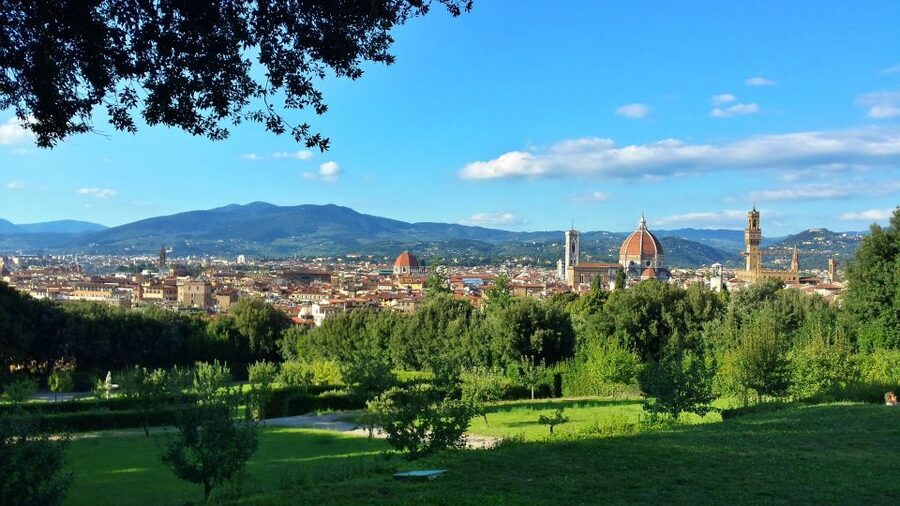
- Kaffeehaus Giardino di Boboli and viewpoints, where Florence shows up in the frame like a living backdrop
- A private, small-group feel that makes it easier to ask questions and get real answers
Florence’s Boboli Gardens: an outdoor museum with a plot
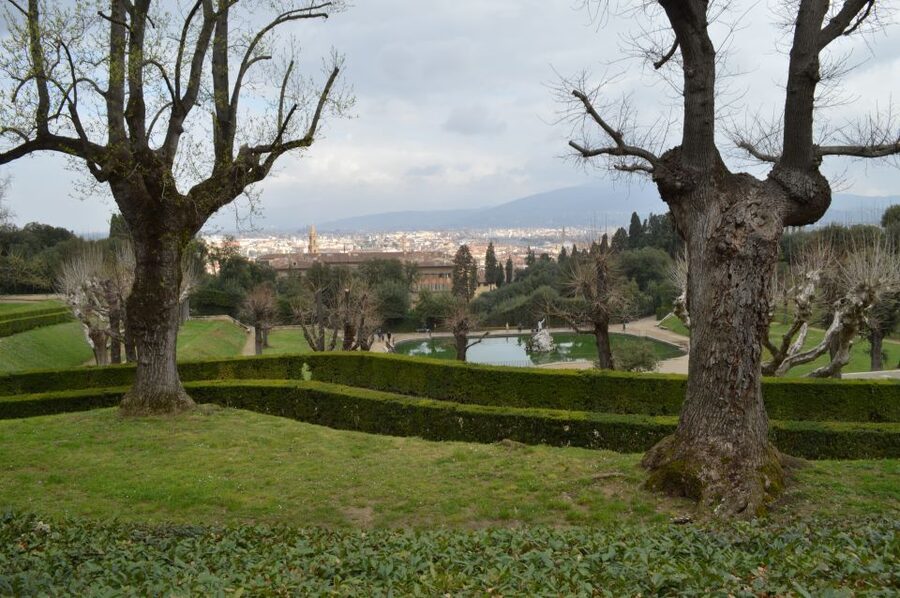
Boboli Gardens are basically Florence viewed through the lens of power, taste, and engineering. You’re walking through 16th-century formal Italian garden design, but the point is not just aesthetics. The layout was meant to guide you, surprise you, and then reward you with views back toward Florence.
What makes this experience click is that the guide helps you read the garden like a text. You learn how land linked to the Medici family ended up here, and why later architects and artists shaped it the way they did. Knowing that the original design is associated with Niccolò Tribolo, then later features connected to Giorgio Vasari, Bartolomeo Ammannati, and Bernardo Buontalenti changes the whole visit. Suddenly, statues and water features are not random decorations, they are part of a plan.
I also like the “breath between attractions” feeling. You are not rushing from one indoor room to the next. You have space to stop, look out, and take in Florence from elevated angles. That outdoor rhythm is perfect if you want something more relaxing than back-to-back museum stops.
More Pitti Palace and Boboli Gardens visits:
- Florence: Uffizi, Pitti Palace & Boboli Combined 5-Day Pass
★ 4.5 · 1,726 reviews - Florence: Pitti Palace and Boboli Gardens Ticket & eBook
★ 4.5 · 835 reviews - Florence: Pitti Palace, Boboli Garden, Palatine Gallery Tour
★ 4.9 · 558 reviews
Finding your way: start at Pitti Palace and get moving fast
Your tour starts in the Piazza de’ Pitti area at the Pitti Palace main entrance. The meeting location is listed as Piazza de’ Pitti, 22 R, and it’s described as meeting in front of the main entrance to Pitti Palace at Piazza de’ Pitti, 1. Either way, you’ll be in the right neighborhood, and the key is to arrive a few minutes early so you can find the group without stress.
Skip-the-line matters here because Boboli can be a popular bottleneck, and you only have about 2 hours total. With tickets pre-arranged and a guide leading the route, you avoid spending your limited time standing in line while your “gardens time” evaporates.
Practical note: this is a walking tour with multiple garden areas, including a grotto and viewpoint stops. Bring comfortable shoes and plan on some uneven ground. Also, keep an eye on where you’re stepping. Stone paths in historic gardens may look flat, but they can be slick or uneven depending on the day.
The Medici landscape: why the garden is built like a story
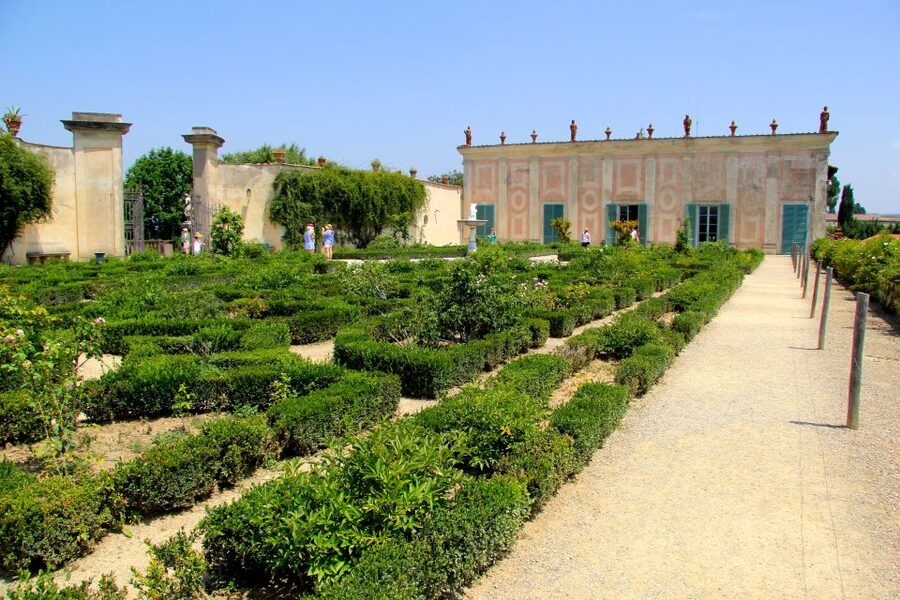
Boboli is often described as an open-air museum, but it behaves more like a staged experience. You move from terrace to terrace, and each bend in the path changes what you see. The guide’s job is to explain what you’re looking at and why it’s placed where it is.
One of the best parts of this tour is the historical through-line. Luca Pitti is central to the story. He bought land from the Borgolo family on the south side of the River Arno after he built his palace. That detail gives you context for why you’re standing where you are, rather than just taking photos in the right spot.
As you walk, you’ll also learn how later additions shaped the overall feel. The tour framework helps you connect design choices to the Renaissance obsession with perspective, spectacle, and control. That’s why you’ll hear references to key contributors like Tribolo for the foundational design and Buontalenti for more theatrical elements.
If you enjoy “how things work” as much as “how they look,” this garden is ideal. Water features, statues, caves, and little landscape moments are arranged with intention. With a guide, you will know what to look for, and that makes your stops feel earned instead of random.
Neptune, fountains, and water features that change how you see the place
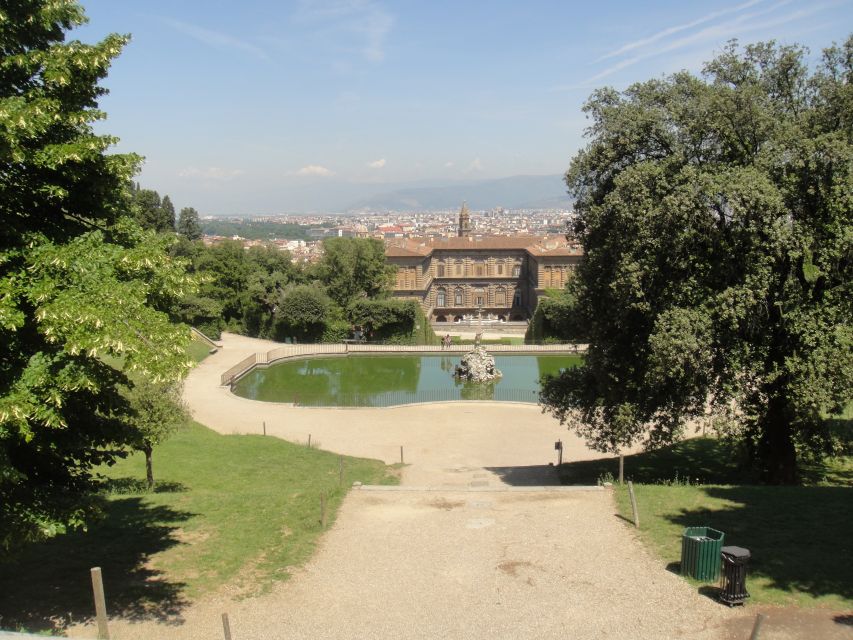
The garden’s water highlights are not an afterthought. They’re part of the show. You’ll spend time around major water features, including the Fountain of Neptune. Neptune sits above the amphitheatre area, so it plays with elevation and audience placement. You’re not just viewing a statue, you’re viewing a scene.
The tour also includes time at other water installations such as Fontana dell’Oceano. These features matter because they do two things at once. They create sound and movement, and they reinforce the garden’s classical references. Even if you’re not a fountain expert, you’ll leave understanding that these are symbolic as well as decorative.
I recommend slowing down at each water stop. The guide’s commentary helps, but the magic also comes from watching how the garden frames the landscape around you. Fountains and little islands tend to create “micro-worlds” inside the larger garden. When you pause, you start to notice how your position changes the view, especially toward Florence’s distant buildings.
A possible drawback to keep in mind: if you are visiting in a season when water features are less active, some of the effect may feel quieter. Still, the sight lines and design remain the point, and the guide will steer you toward what you can best see that day.
More skip-the-line entries in Florence:
- Florence: Skip-The-Line Uffizi Gallery Timed Entry Ticket
★ 4.5 · 27,832 reviews - Florence: Timed Entrance Ticket to Michelangelo’s David
★ 4.6 · 16,983 reviews - Florence: Michelangelo’s David Skip-the-Line Entry Ticket
★ 4.5 · 12,764 reviews - Florence: Leonardo Interactive Museum Entry Ticket
★ 4.5 · 11,763 reviews
Grotta Grande: the cave stop that turns the garden theatrical
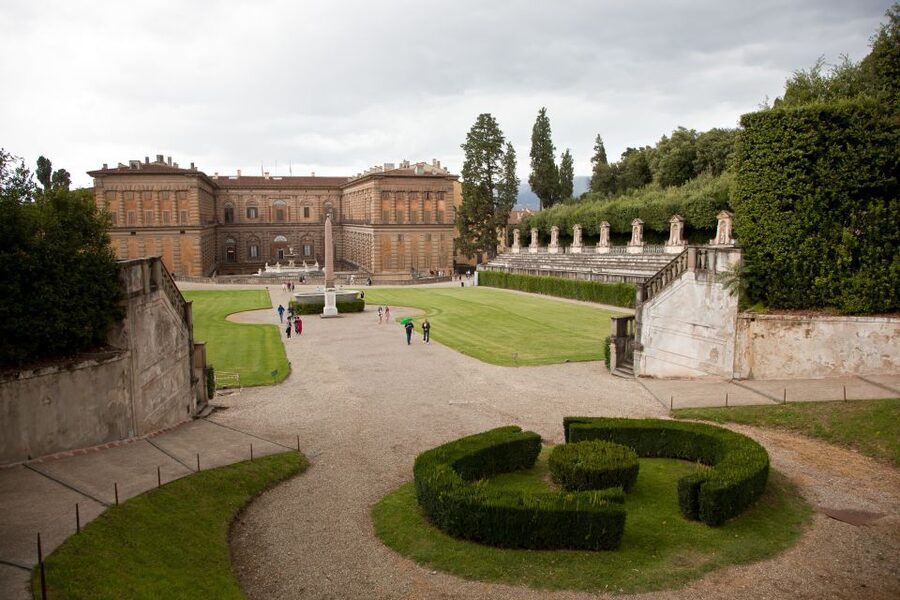
One of the most fun segments is the Grotta Grande area. This stop is brief, around 15 minutes on the plan, but it’s designed as a focused moment. Instead of treating the grotto as a quick photo spot, the guide helps you understand what you’re seeing: caves built into the grounds, with sculptural and architectural elements that make the garden feel like a stage set.
Grotta Grande is tied to the legacy of Bernardo Buontalenti, who is associated with later features. Even if you don’t know his work today, the grotto’s design gives you an immediate sense of Renaissance imagination. It feels constructed for wonder, not just shade.
If you like architecture details, this stop pays off. You can watch how the space shapes light and movement. And because you’re switching from open terraces to enclosed, cave-like areas, it’s a nice contrast that breaks up the walk.
Tip for the grotto: take your time at the entry and then pick one or two angles to photograph. The temptation is to rush and shoot everything. Better to choose an angle where the grotto architecture and the garden context both show up.
Kaffeehaus Giardino di Boboli and the viewpoints you came for

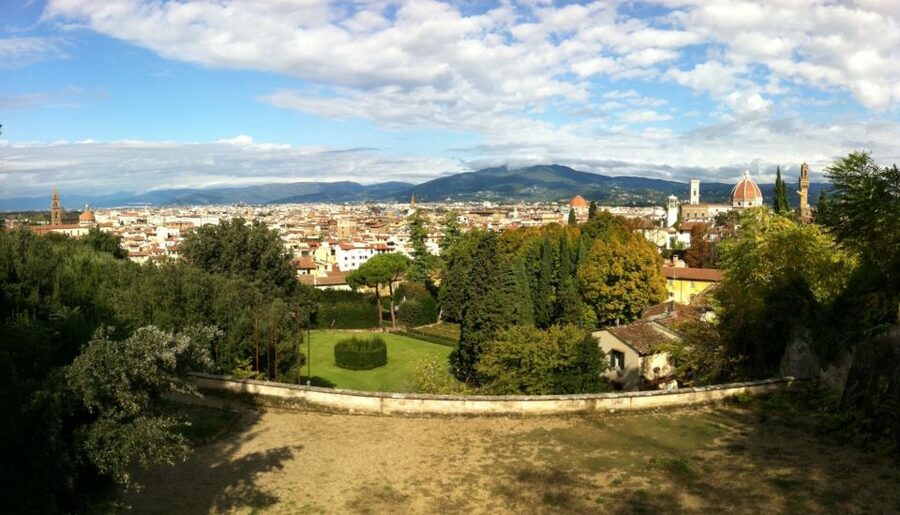
After the grotto, the route swings back toward open air with a longer viewpoint-focused stretch. You’ll spend about 30 minutes at the Kaffeehaus Giardino di Boboli area, where the garden opens into broader sight lines.
This is a great moment to catch your breath and look outward. The tour includes a stop that highlights the Kaffeehouse and nearby garden vantage points, including mention of the Knight’s Garden overlooking the surrounding countryside. Even without “Knight” details in your head, the view itself does the job. Florence and its rooflines start to feel like they’re arranged for you.
What I like about this part is that it encourages a different style of looking. Instead of scanning statues, you shift into “map mode.” You identify what direction you’re facing, where the city sits in relation to the garden, and which structures the garden uses as distant backdrops.
If you’re the kind of traveler who says, I don’t want another selfie, you will probably still enjoy this segment because the views are tied to the landscape design rather than random skyline snapping.
Fontana dell’Oceano: finishing with a classic focal point
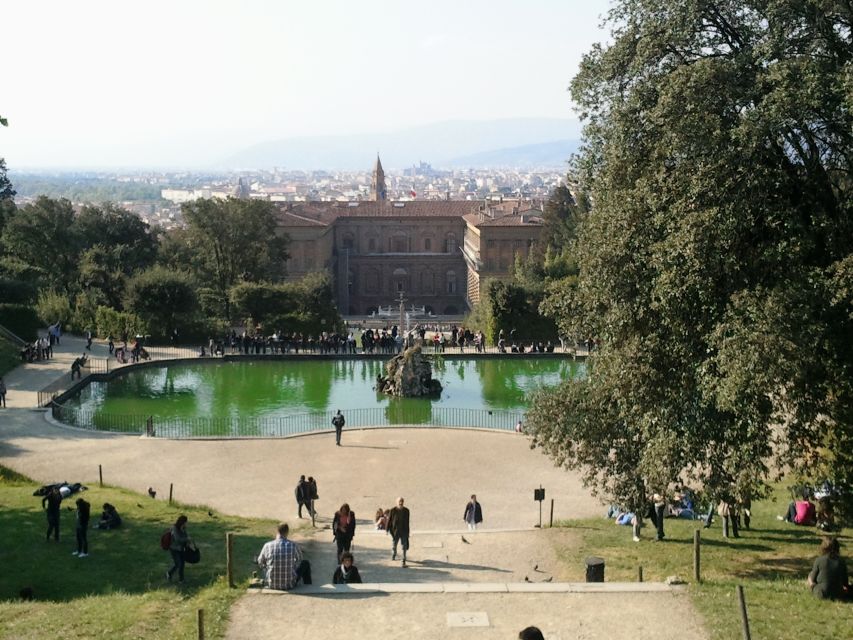
Your last named stop is around Fontana dell’Oceano, also guided for about 15 minutes. If Neptune is the amphitheatre centerpiece, this feels like a strong closing beat: another water feature with classic associations and a different mood.
As a finale, it works because you’re already oriented. By the time you reach this stop, you understand the garden’s rhythm and you’ve learned how to look at details. That makes the final fountain feel less like another stop and more like a payoff.
One practical strategy: save your photo energy for this part too. It’s easy to spend your camera time earlier in the garden and then realize you missed the shot you wanted most. The guide’s timing helps you land at this spot with enough attention left.
Price and value: what $178.42 per person buys you in real time
At $178.42 per person for an about 2-hour guided experience, you’re paying for three things: skip-the-line entry, a live guide, and the structured route through the grounds.
That price can feel steep if your plan is mostly wandering and photos. But if you want to understand what you’re seeing, it starts to make sense. Boboli is full of details, and a guided approach prevents “busy sightseeing confusion.” You’re not just looking, you’re learning what each major feature represents and how it fits into the Medici story.
The tour’s value also improves because it’s set up for smaller group dynamics. You get a live guide with multiple language options, and a private group format. Even if you’re not speaking the main language of your guide, the availability across English, French, German, Italian, Spanish, Portuguese, Russian means you can match your comfort level.
Also, skip-the-line is not a vague promise. When you only have a short time window, pre-arranged entry converts directly into more time inside the gardens.
Who should book this Boboli Gardens skip-the-line tour
This tour is a strong match if you:
- Enjoy garden design, Renaissance art, or architecture details
- Want the quick orientation that makes self-guided wandering feel less random
- Like fountains, statues, and viewpoint stops that connect to a historical story
- Prefer a small, guided route over a long, self-paced day
You might choose another approach if you:
- Want a totally independent walk with no guided stops
- Need a fully flat, low-step route (this is a historic garden with walking and changing terrain)
- Are on a very tight schedule and can only do a minimal visit
If you are pairing Boboli with other Pitti Palace sights, the timing also helps. You’re already in the right neighborhood, and the gardens add contrast to the museum-heavy side of the complex.
Should you book Boboli with a guide? My take
I would book this if you want Boboli to feel like more than scenic background. The combination of skip-the-line access, a live multi-language guide, and a route that hits major anchors like the Grotta Grande, the Kaffeehaus area, and water features including Neptune and Fontana dell’Oceano is exactly what makes a short visit work.
If you’re the type who loves reading the “why” behind what you’re seeing, this tour helps you do that without spending hours on research first. The result is a garden visit that feels organized, meaningful, and still relaxed enough to enjoy the views.
FAQ
How long is the Boboli Gardens skip-the-line guided tour?
The tour duration is listed as 2 hours.
Where does the tour start and end?
You meet at Piazza de’ Pitti, 22 R, at the Pitti Palace main entrance area. The tour ends back at the same meeting point.
What is included in the tour price?
The included items are skip-the-line entrance tickets, a local live guide, and a small group walking tour.
Is transportation included?
No, transportation is not included.
What languages are available for the live guide?
The guide is available in English, French, German, Italian, Spanish, Portuguese, and Russian.
Is there free cancellation?
Yes. Free cancellation is offered up to 24 hours in advance for a full refund.
Can I reserve and pay later?
Yes. The option is listed as reserve now and pay later.
Just reviewed around Florence
- Tuscany: Leonardo da Vinci – Oil and Wine Discovery Tour★ 4.8 · 5 reviews
- Livorno Port, Pisa, Florence: Full-Day Shore Excursion★ 4.8 · 51 reviews
- Legends of Florence: Exclusive Walking Tour by night★ 4.9 · 70 reviews
- Leather and Passion: A Tour of Florentine Craftsmanship★ 5.0 · 16 reviews
- Illuminated Florence Tour for Kids with Gelato & Pizza★ 5.0 · 6 reviews
- Inferno Florence Private 3-Hour Tour★ 4.8 · 20 reviews
- Hidden Florence: 2-Hour Guided Walking Tour★ 4.7 · 36 reviews
- 3-Hour Historic WhoDunIt Tour in Florence★ 3.2 · 6 reviews
Pitti Palace & Boboli Gardens Tours, compared.

Uffizi, Pitti Palace & Boboli Combined 5-Day Pass
Read our review →
Pitti Palace, Boboli Garden, Palatine Gallery Tour
Read our review →
Uffizi, Pitti, Boboli and 7 Attractions 5-Day Pass
Read our review →
Pitti Palace, Boboli Garden & Palatina Gallery Guided Tour
Read our review →
Pitti Palace and Palatina Gallery Ticket and Tour
Read our review →
Pitti Palace, Palatina Gallery and the Medici: Arts and Power in Florence.
Read our review →
Browse the lists this tour appears in