
Reviewed · ACCADEMIA GALLERY & DAVID TOURS
Accademia & Michelangelo’s David Private Tour
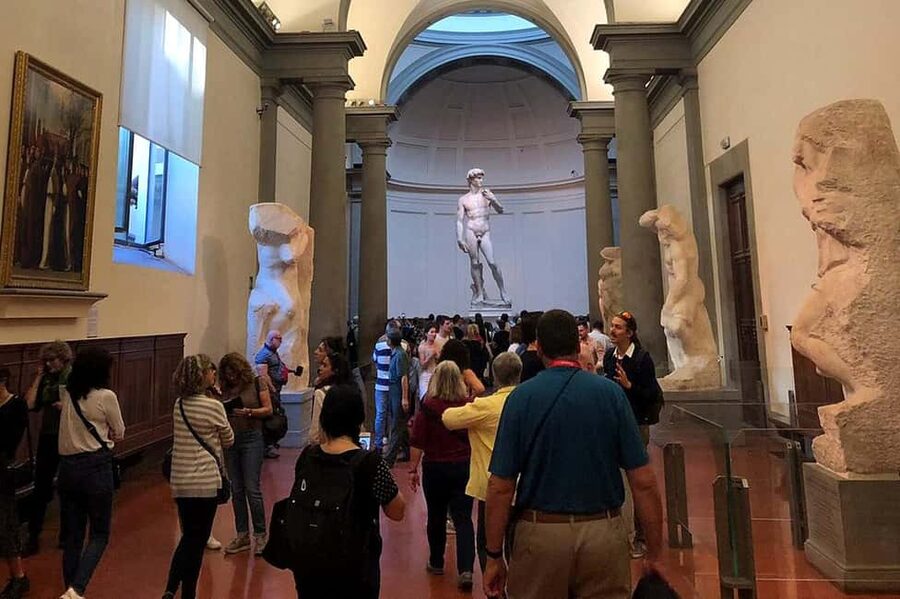
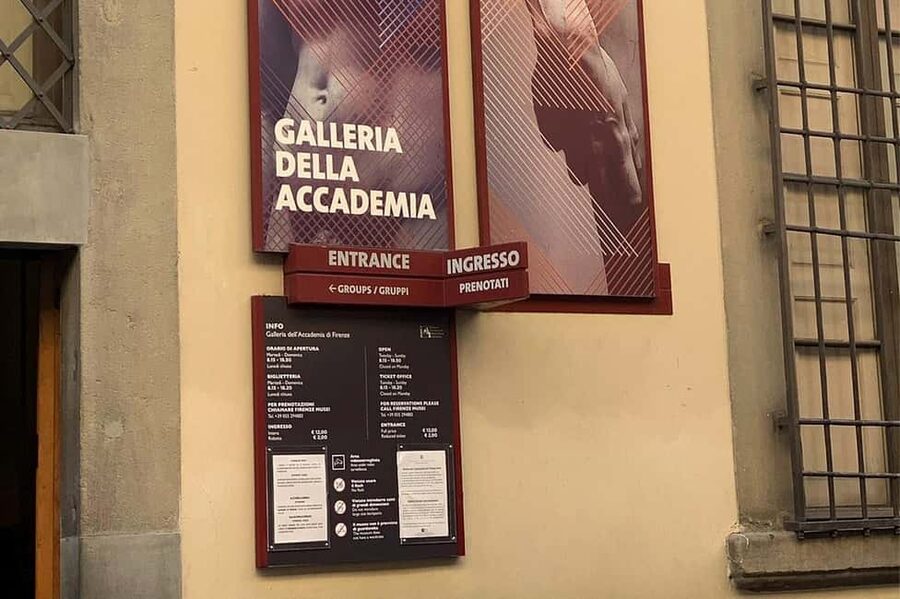
Accademia Gallery is one of those Florence stops that feels way bigger than it looks on a map. In 1.5 hours, you get Michelangelo’s David in person, plus a guided route through the rooms that explain why Renaissance art hit so hard in the first place.
I especially like how the guide turns the statue into a story you can see, not just a photo opportunity. I also love the surprising add-ons, like the Music Instruments Collection with three Stradivari violins and the world’s first piano. One possible drawback: because the tour is time-limited, you will focus on key highlights rather than doing a full, slow museum wander.
Key highlights you will actually remember
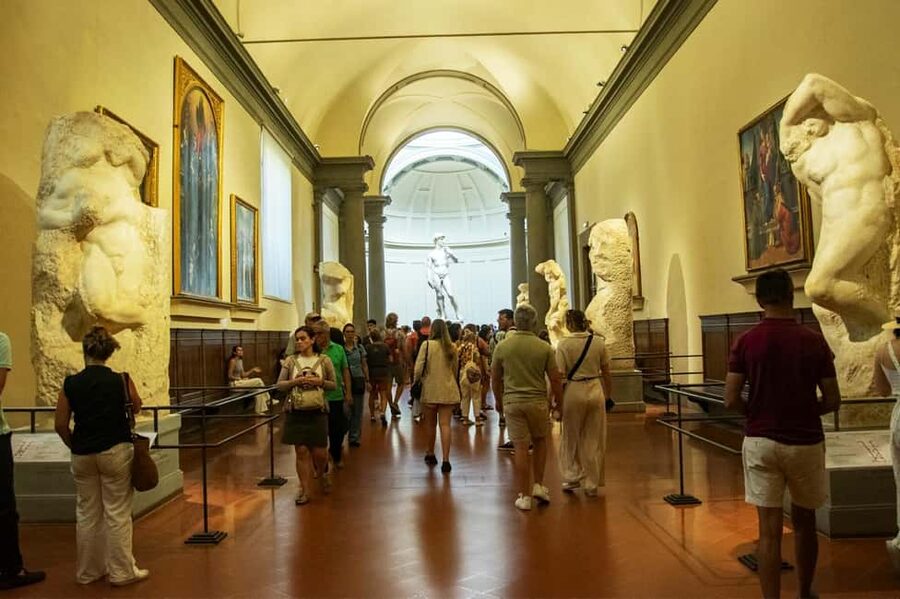
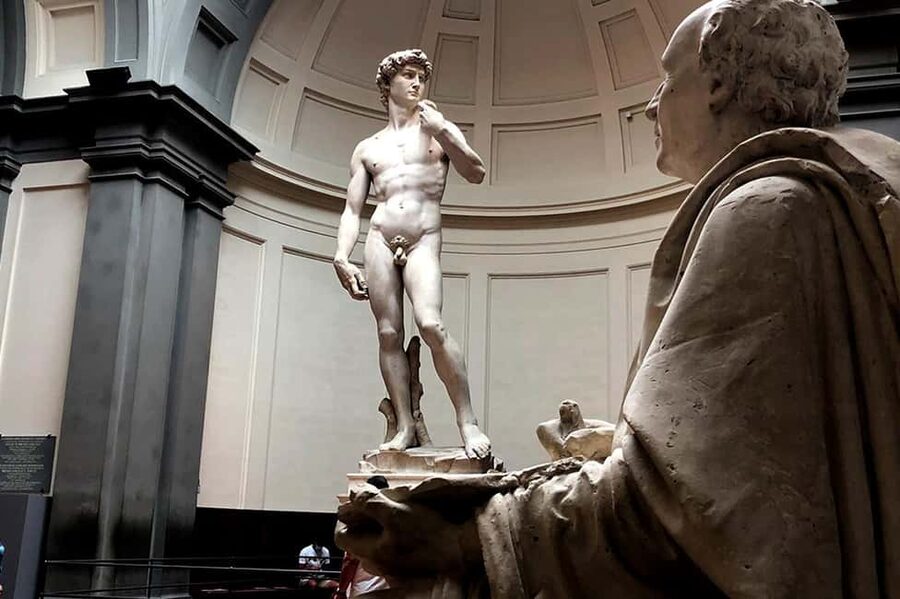
- Michelangelo’s David in the Tribuna: the moment you step in, it commands the room
- Other Michelangelo works: La Pietà, the Prisoners, St. Matthew, and more
- Hall of Plaster Casts: see 18th-century casts connected to Lorenzo Bartolini
- Music Instruments Collection: three Stradivari violins and the world’s first piano
- Lorenzo Monaco paintings: gold leaf and lapis lazuli used for major visual impact
- Giotto frescoes upstairs: perspective history in a space that rewards looking up
Why Accademia Gallery feels like the real Florence version of Renaissance art
Florence can be a lot. One church looks like another, and another, and eventually your brain just wants a snack and a seat. Accademia is different because it is centered on one theme you can understand quickly: how Renaissance artists thought, studied, and created.
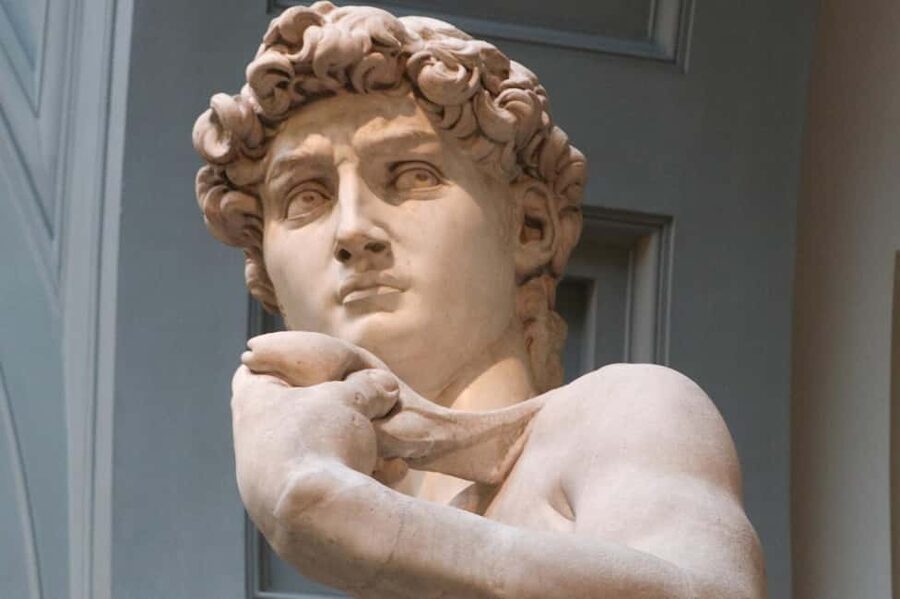
This private format helps. You are not stuck reading tiny labels while other people herd you forward. With an expert local guide, you get context for what you see, especially around Michelangelo. Even if you only know David from postcards, you will notice details that do not show up in flat images, like how the sculpture sits in its space and how viewers reacted to it in Renaissance Florence.
What makes this tour worth your time
You are paying for three things that matter when you have limited time in Florence: access, guidance, and the right “sequence” of rooms. The tour is designed to take you through the Accademia’s headline areas, not just the first door you see when you walk in. That is how you get value from the visit.
And yes, you should know the tour is short. At 1.5 hours, you will experience more than you can remember if you rush. The trick is to let your guide point out the key moments, then slow down for a few minutes in the areas that stick.
More ways to see David and the Accademia:
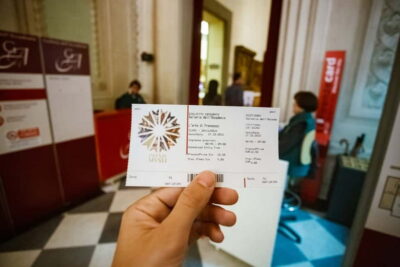
- Florence: Timed Entrance Ticket to Michelangelo’s David
★ 4.6 · 16,983 reviews - Florence: Michelangelo’s David Skip-the-Line Entry Ticket
★ 4.5 · 12,764 reviews - Florence Accademia Gallery Tour with Entrance Ticket Included
★ 4.5 · 6,148 reviews
Meeting on Via Ricasoli 115, and how to avoid the first stress spike
Meet on Via Ricasoli, 115 at the Carrefour Supermarket area. Plan to arrive 15 minutes early so you are not stressed while the group is gathering. A Florence With Locals representative stands in front of Carrefour holding a purple sign that says Florence With Locals.
Even with express security, give yourself a buffer. There can still be a few minutes of waiting because metal detector controls are part of the museum process. Think of it like this, the skip-the-line part saves time, but it does not remove every bottleneck.
Quick practical tip before you go in
Wear shoes you can stand in. You will be upright for a guided circuit, moving room to room. If your feet are unhappy, your attention will follow them.
The Tribuna moment: seeing Michelangelo’s David with context
Your tour centers on Michelangelo’s David, and it is located in the Tribuna. This is the part that makes Accademia famous, and it is also the part where a guide changes everything.
Without context, David can feel like a single masterpiece. With context, it becomes part of a whole artistic system: Renaissance interest in classical form, power in the human body, and the way Florentine culture turned art into civic pride.
More Florence experiences worth a look
- Cinque Terre and Pisa Tower Tour from Florence Semi Private
★ 5.0 · 1,406 reviews - From Florence: Private Chianti Hills Tour with Tasting
★ 4.3 · 809 reviews - Private Self-Guided E-Bike Ride in Tuscany with Vineyard Visit
★ 5.0 · 775 reviews - Florence Private Transportation in Rickshaw
★ 5.0 · 730 reviews
What your guide should help you notice at David
A good guide will help you read David faster. You might look at proportion, stance, and the way the sculpture’s pose communicates tension. You also learn why this work became an icon, beyond being simply famous.
One extra benefit of a private group is that questions are easier. If you want to ask why certain details matter, you are not trying to squeeze a question between other visitors.
Where the other Michelangelo works fit in
After you anchor on David, the rest of the collection makes more sense. You are not just seeing one sculpture, you are seeing a broader Michelangelo cluster: La Pietà, the Prisoners, and St. Matthew are part of what you will encounter. The guide’s job is to connect those works so they feel like a conversation instead of a checklist.
Michelangelo’s sculptures plus Italian masters you might not expect
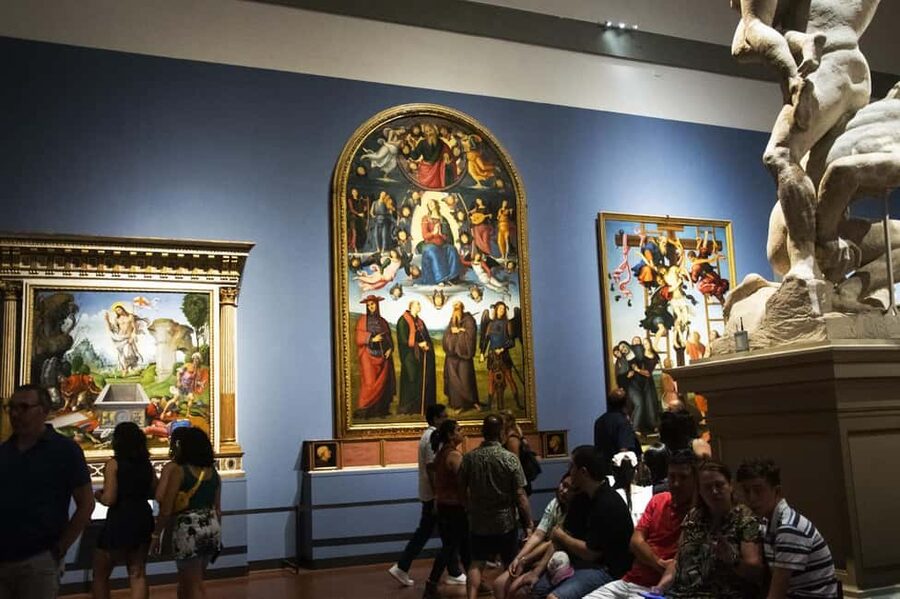
Accademia is best known for Michelangelo, but it is not only Michelangelo. As you move through the museum, you will see paintings and sculptures by major Italian artists such as Botticelli, Domenico Ghirlandaio, Pontormo, Andrea del Sarto, and Giambologna.
This matters because it shows how Renaissance art was not created in a vacuum. Many works you see were commissioned by the Medici family. Even if you do not memorize names, the idea sinks in: art was power, status, and propaganda, all rolled into one.
Why seeing Medici-related context is worth it
Medici commissions explain why subjects and styles often made sense to the people paying for them. Your guide can help you connect what you see to who wanted it and why. That is the difference between looking at art and understanding it.
Also, the Accademia experience is not just visual. A museum guide tends to point out how people learn from sculptors, how workshops operate, and why students would want models, casts, and references. That is where the tour keeps paying off after you walk away from David.
Hall of Plaster Casts: the study material behind Renaissance skills
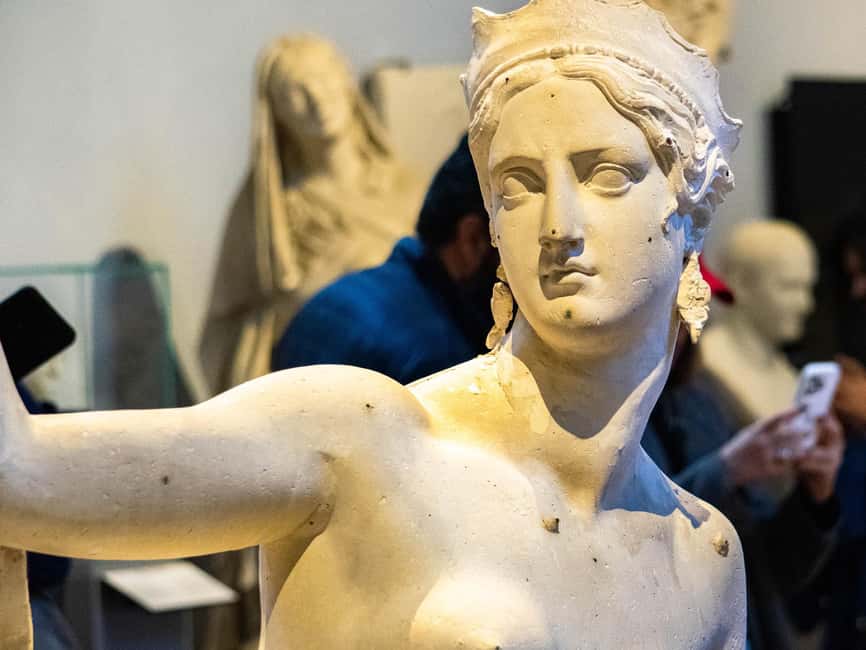
One of the most interesting stops in this itinerary is the Hall of Plaster Casts. This section features works from the 18th century by Lorenzo Bartolini.
Plaster casts can sound boring until you connect them to real art making. They are teaching tools. They also show how later generations wanted to preserve and study earlier masterpieces. In a Renaissance context, that matters because it links Michelangelo’s ideas to how artists trained, practiced, and refined technique over time.
What you should do in this room
Go slowly here and look at surface textures and proportions. Casts can feel like copies, but they are also evidence of how artists and scholars wanted to measure form. Your guide can help you see what is being preserved and why.
If you rush, you might treat it as a break between major rooms. If you give it attention, it becomes the part that explains how the Renaissance kept moving forward.
Music Instruments Collection, Stradivari violins, and the world’s first piano
This is one of those Accademia surprises that makes the 1.5 hours feel smarter, not shorter.
You will see the Music Instruments Collection, including three exquisite Stradivari violins and the world’s first piano. That combination is a reminder that Renaissance and later genius were not only about painting and sculpture. Skilled craftsmanship and sound were part of the same culture of experimentation.
Why this stop works even if music is not your thing
In a normal museum visit, you might walk past instruments and think, cool, but not essential. Here, it connects to the big theme of artistic precision. The museum is basically saying, look how carefully people built culture, sound, and beauty.
You also get a sensory change of pace. After standing in rooms dominated by stone and paint, it is a relief to shift your focus to instruments and workmanship.
Lorenzo Monaco and Giotto: looking up for gold leaf and perspective
Accademia also gives you Florence’s painters, including Lorenzo Monaco. The museum has the most comprehensive collection of paintings by this 14th-century artist. You will see works decorated with gold leaf and lapis lazuli, two materials tied to luxury and status.
That visual weight changes how you read religious and symbolic imagery. Gold leaf does not behave like normal color. It catches light and makes the painting feel alive, especially when you see it in person rather than under a flat camera filter.
Upstairs: Giotto and the history of perspective
As you move to the upper level, you will discover frescoes by Giotto. Giotto is described here as a pioneer of perspective painting.
Even if perspective sounds like a classroom word, in practice it means depth, space, and realism. When you see frescoes in their environment, you understand why perspective was a big deal, it changed how viewers believed the painted world could exist.
A practical tip for this part
Look up, then look again. Frescoes can feel hard to read because you are used to art at eye level. Let the guide set the scene, then give yourself a minute to take in the shapes and depth.
What the 1.5 hours actually feels like, and how to pace it
This tour is scheduled for 1.5 hours, but the experience is designed around key rooms: David, major Michelangelo sculpture moments, Hall of Plaster Casts, the Music Instruments Collection, and the upper-level painter and fresco areas.
So you should arrive with an expectation: you will hit multiple highlights, but you will not see everything the museum offers. If you want a full museum day, plan a longer visit on your own.
How to make the short time work for you
- Pick one or two rooms you will re-enter mentally, David and one other highlight
- Ask questions early, so the guide can steer you while you still have time
- Pause when the guide points something out, rather than moving on immediately
Art rewards patience. You do not need hours, you need the right moments of attention.
Price and value: $110 per person for a focused private museum route
At $110 per person for a 1.5-hour private tour, you are paying for structure. The ticket price includes admission to the Accademia and the guided portion, so you do not have to juggle buying entry on top of everything else.
This is not the kind of price you want if you plan to rush and wing it. It makes more sense when you want your time to feel productive. When you care about Renaissance context, and when you want the route to make sense, a guide is where the money goes.
What is not included
Hotel pickup and drop-off are not included. Food and drinks are also not included. So plan to meet in Florence and handle your own snacks before or after.
Should you book this private Accademia & David tour
I think this is a good booking if you want Florence Renaissance art in a compact, guided package. It works especially well when you care about more than one masterpiece. You get David, key Michelangelo sculptures, and then the extra rooms people often skip, like the plaster casts and the music instruments with Stradivari violins and the world’s first piano.
Skip this tour if you prefer a long, self-paced museum day. Also skip it if you are the type who can spend hours reading every label and slowly roaming. This one is designed for focus, not wandering.
If your goal is to see David and come away understanding why Accademia matters, I would book it.
FAQ
How long is the Accademia & Michelangelo’s David private tour?
The tour lasts 1.5 hours.
What are the main things I will see during the tour?
You will see Michelangelo’s David, plus other Michelangelo sculptures and additional highlights in the Accademia Gallery, including the Hall of Plaster Casts and the Music Instruments Collection.
Is admission to the Accademia Gallery included in the price?
Yes. Admission to the Accademia Gallery is included.
Do I get skip-the-line access?
Yes. You get skip the line through an express security check, though you could still wait a few minutes due to metal detector security controls.
Where is the meeting point?
Meet at Via Ricasoli, 115, in front of the Carrefour Supermarket. A representative will be holding a purple Florence With Locals sign.
What languages are the live guides available in?
The live guide offers tours in Italian, Spanish, and English.
Is the tour wheelchair accessible?
Yes, it is wheelchair accessible.
What should I bring for children?
You should bring a passport or ID card for children.
Is hotel pickup included?
No. Hotel pickup and drop-off are not included.
Just reviewed around Florence
- Tuscany: Leonardo da Vinci – Oil and Wine Discovery Tour★ 4.8 · 5 reviews
- Livorno Port, Pisa, Florence: Full-Day Shore Excursion★ 4.8 · 51 reviews
- Legends of Florence: Exclusive Walking Tour by night★ 4.9 · 70 reviews
- Leather and Passion: A Tour of Florentine Craftsmanship★ 5.0 · 16 reviews
- Illuminated Florence Tour for Kids with Gelato & Pizza★ 5.0 · 6 reviews
- Inferno Florence Private 3-Hour Tour★ 4.8 · 20 reviews
- Hidden Florence: 2-Hour Guided Walking Tour★ 4.7 · 36 reviews
- 3-Hour Historic WhoDunIt Tour in Florence★ 3.2 · 6 reviews
Accademia Gallery & David Tours, compared.
Timed Entrance Ticket to Michelangelo’s David
Read our review →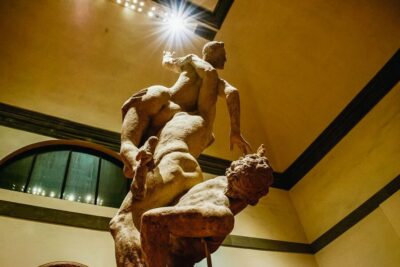
Michelangelo’s David Skip-the-Line Entry Ticket
Read our review →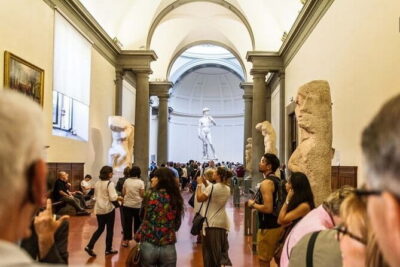
Florence Accademia Gallery Tour with Entrance Ticket Included
Read our review →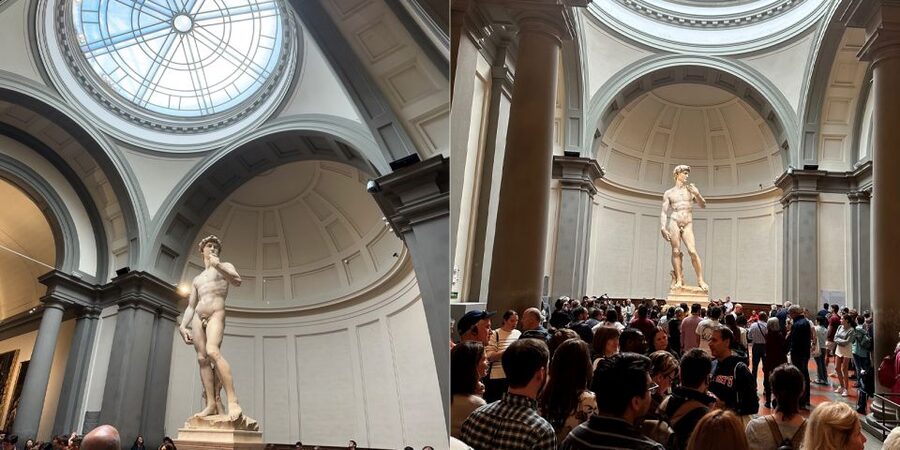
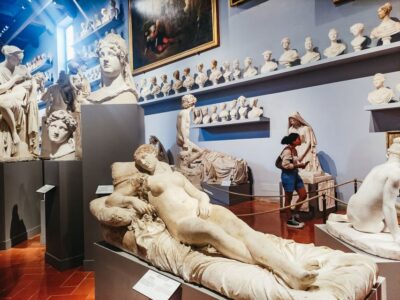
Timed Entry Ticket to Michelangelo’s David & eBook
Read our review →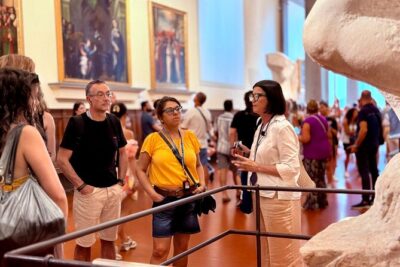
Skip the line: Uffizi and Accademia Small Group Walking Tour
Read our review →

Accademia Gallery Guided Tour with Entry Ticket
Read our review →Browse the lists this tour appears in