
Reviewed · UFFIZI GALLERY TOURS
Florence: Skip-the-Line Uffizi Small Group Tour
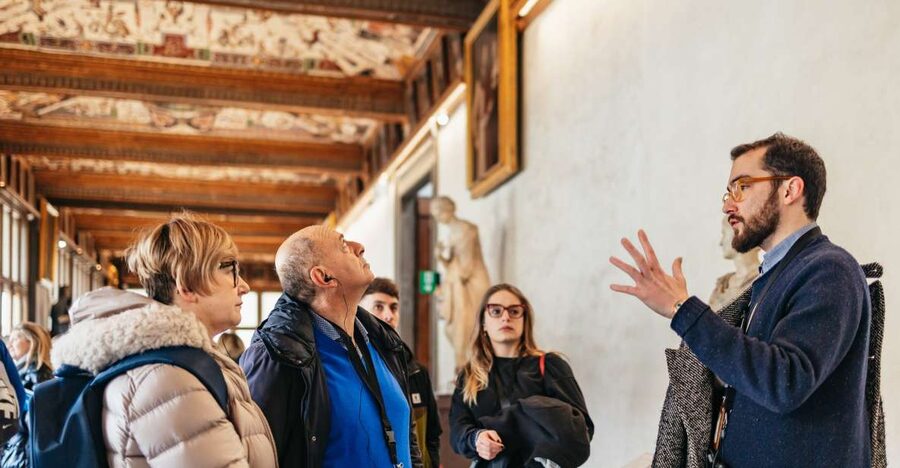
The Uffizi is interesting because it does not just show art, it explains the power game behind it. In this small-group tour, you get the Medici story that shaped the museum itself, with guides who can turn names, dates, and symbols into something you can actually follow. I like that you hear the inside connections, like how Uffizi means offices and how the Medici family turned politics into a private collection. Uffizi and Medici are the two big themes you’ll feel right away.
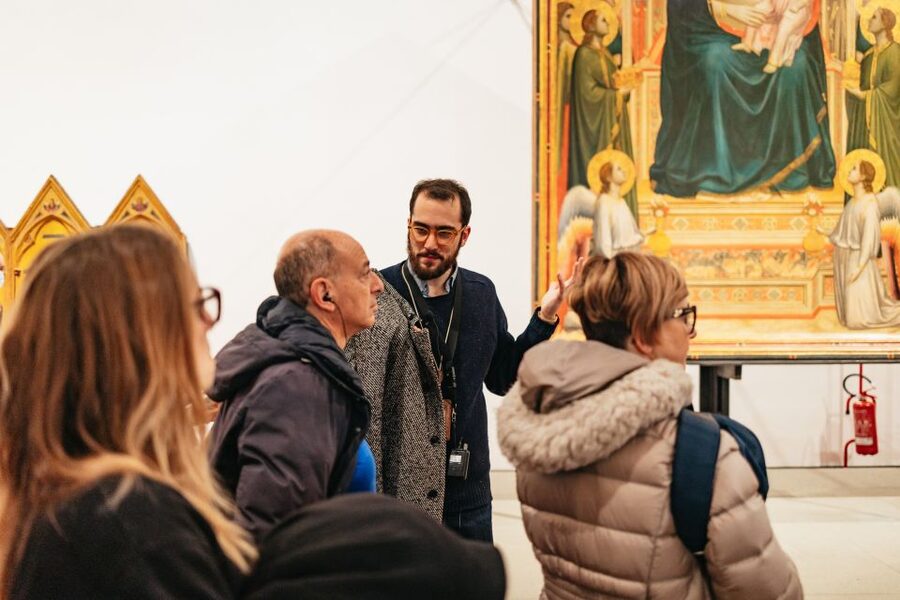
I love the practical side too. Skip-the-line tickets plus a live guide, paired with headsets and earpieces, helps you keep pace in a huge museum without constantly asking someone near you what was just said. And guides such as Chiara, Rachel, Julia, Alessandra, and Sylvia are frequently praised for making the artworks click, whether you want Renaissance context or you just want to understand what you’re looking at.
One thing to consider before you book: the museum lifts are currently not working, so you’ll climb stairs to reach the exhibition halls, which are two floors up. If stairs are a challenge for you, plan extra time and energy, or pick a moment of the day when you’re least tired. Stairs matter here.
Key things to know
- Skip-the-line entry uses a priority line, so you lose less time than doing this solo
- Headsets and earpieces mean you can hear your guide clearly even in busy rooms
- Medici backstory is the thread that connects what you see to why the collection formed
- Meeting point is not inside the Uffizi area, so confirm your exact location before you go
- Terrace refreshment stop lets you regroup after the galleries with views and photos
- Lifts are out of service, so expect a two-floor climb on stairs
Why the Uffizi story starts before you even see the paintings
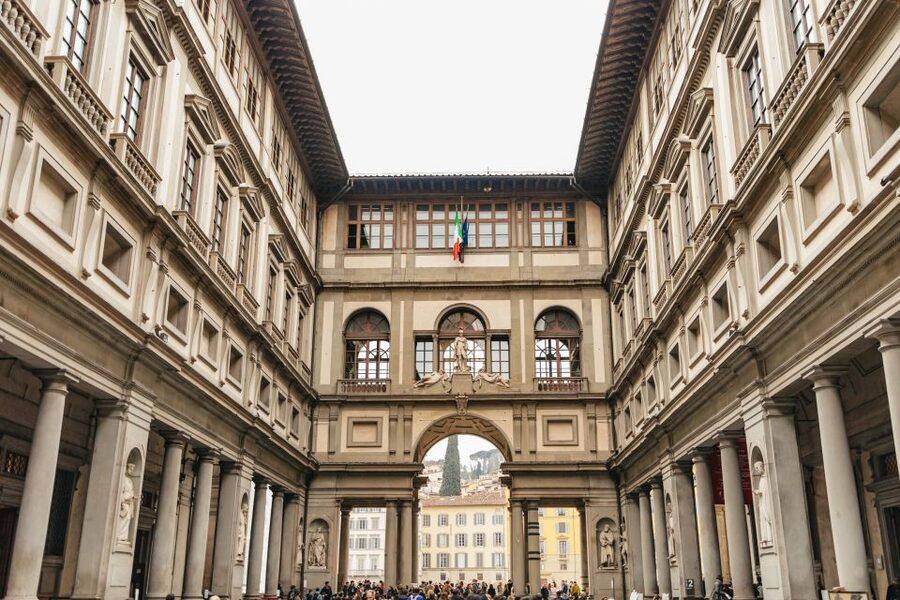
The Uffizi Gallery is famous for art, but it is also famous for its origin. The building was created in 1560 and designed by the Renaissance architect Giorgio Vasari. Knowing that matters because it frames the Uffizi as a place that was built for authority and influence, not just display.
Here’s the key idea you’ll hear from your guide: Uffizi means offices. Cosimo I de Medici decided to re-establish Medici authority after cutting down rivals. He gave offices to those who remained, partly so he could keep an eye on them. Later, Cosimo’s descendants shifted the focus. Francesco I brought his private artworks into the picture and effectively made the Uffizi his own museum.
Once you learn that storyline, the gallery stops feeling like a random sweep of masterpieces. It becomes more like a timeline with motivations. You start to notice how themes, tastes, and power move through the collection. In guides like Chiara and Julia, that context shows up fast, so you are not stuck memorizing facts while your eyes feel overwhelmed.
More Uffizi tours and tickets we've reviewed:
- Florence: Skip-The-Line Uffizi Gallery Timed Entry Ticket
★ 4.5 · 27,832 reviews - Florence: Uffizi Priority Ticket & Masterpieces Audio App
★ 4.2 · 6,402 reviews - Uffizi Gallery Small Group Tour with Guide
★ 4.5 · 4,923 reviews
Getting in faster, and why the guide timing still matters
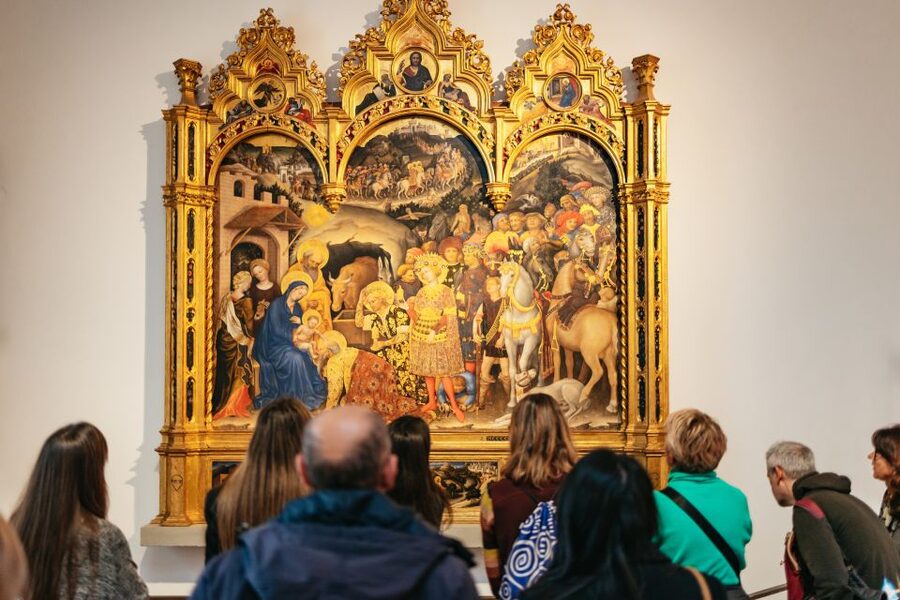
The headline feature is simple: you get skip-the-line tickets and enter through a priority line using a separate entrance. That usually saves real time, especially if you arrive when the main lines get long.
Still, don’t assume this is magic. The tour information also warns you may experience a short wait due to high season. One practical way to handle this is to treat your scheduled start as the best-case scenario, not a guaranteed instant entry. You’ll feel more relaxed when you think this through.
The other timing win is pacing. The Uffizi is enormous and packed with works people come from all over the world to see. In a self-guided visit, it is easy to wander into the wrong rooms first and end up chasing famous paintings at the last minute. With a guide, you follow a route built for comprehension, not just footsteps.
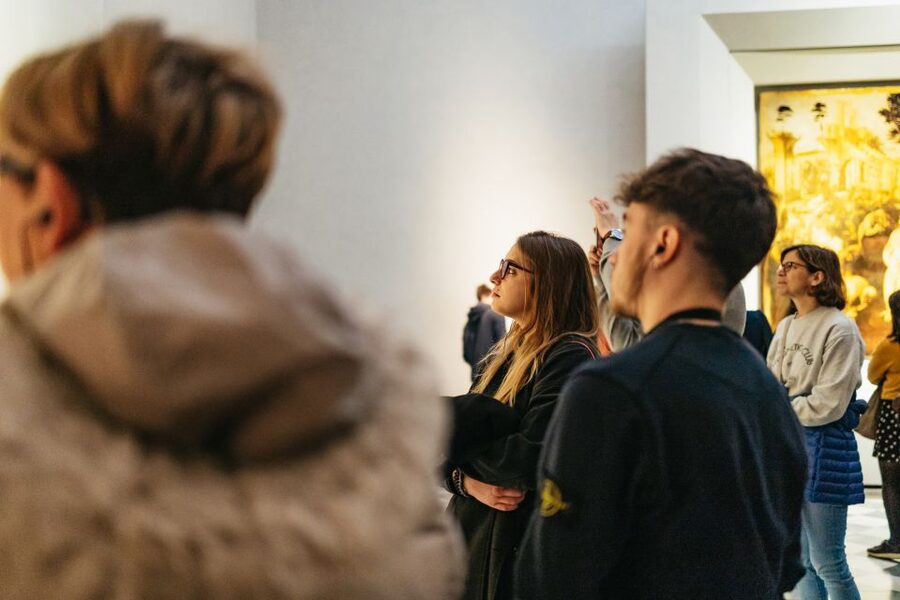
And because the tour includes headsets and earpieces, you won’t lose key details when you stop in a crowded hallway or when another group suddenly blocks your view. Rachel is a good example of the kind of guide who can pitch explanations at the right level, so you feel smart instead of lost.
Meeting point reality: it’s in the neighborhood, not inside the museum
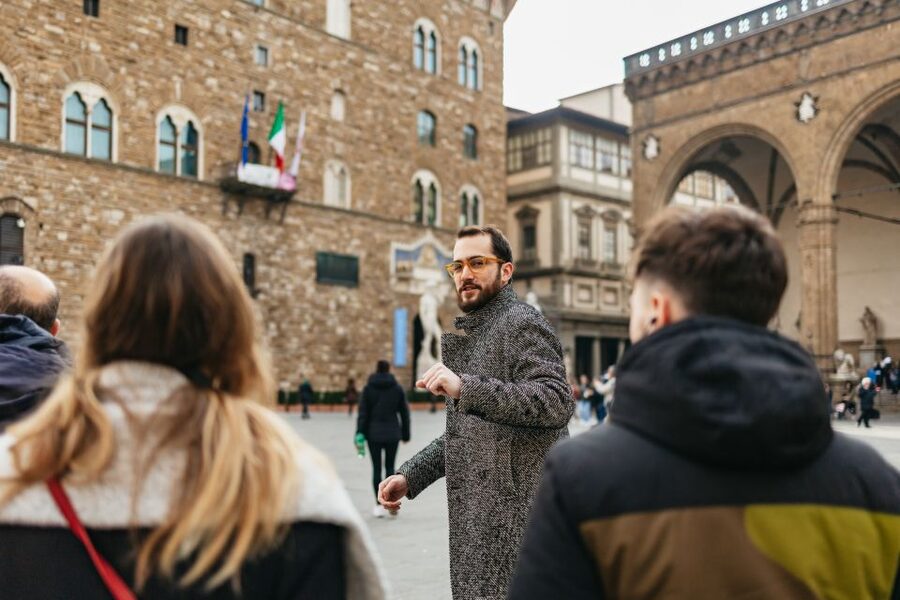
This is one of those Florence details that can save you stress. Your meeting point may vary depending on what you book, and your tour end goes back there too. One common meeting area is Via de’ Martelli, 33R, and you’ll typically connect with the tour before the walk into the Uffizi area.
In plain terms: don’t plan to show up expecting to meet your group at a big Uffizi entrance sign. Aim to arrive early enough to locate your exact spot, and double-check that you’re at the correct Via de’ Martelli address. Mary and Eduardo both get mentioned for keeping the flow smooth, but even the best guide cannot fix a late start caused by confusion about where to meet.
Once you meet up, you’ll walk on foot toward the gallery, with the walking time kept short (about ten minutes). That walk gives you a buffer to get your bearings and settle in before the museum climb begins.
The climb inside: plan for stairs because the lifts are out
Here’s the major logistics note you should treat as firm. The museum lifts are not working right now. All visitors must take the stairs to reach the exhibition halls, which are two floors up.
A lot of people can handle this, but it is still a real factor for comfort and timing. It can take longer than you expect when you include stopping, catching your breath, or waiting for slower-moving groups. If you have mobility limitations, it is smart to consider whether your day is set up for a stair climb, not just a quick walk.
The good news: your tour is described as wheelchair accessible. The tricky part is that elevator access is currently not available for the halls you need. So the experience may still be possible, but it will be more about your stamina and your comfort level with stairs than about the tour operator saying everything is flat and easy.
If you’re bringing anyone who gets winded fast, I’d treat the stairs like part of the museum experience, not an afterthought. Wear supportive shoes, and don’t feel pressured to sprint to keep up.
More skip-the-line entries in Florence:
- Florence: Timed Entrance Ticket to Michelangelo’s David
★ 4.6 · 16,983 reviews - Florence: Michelangelo’s David Skip-the-Line Entry Ticket
★ 4.5 · 12,764 reviews - Florence: Leonardo Interactive Museum Entry Ticket
★ 4.5 · 11,763 reviews - Florence Accademia Gallery Tour with Entrance Ticket Included
★ 4.5 · 6,148 reviews
Inside the Uffizi: what a 1.5-hour guided route actually does for you
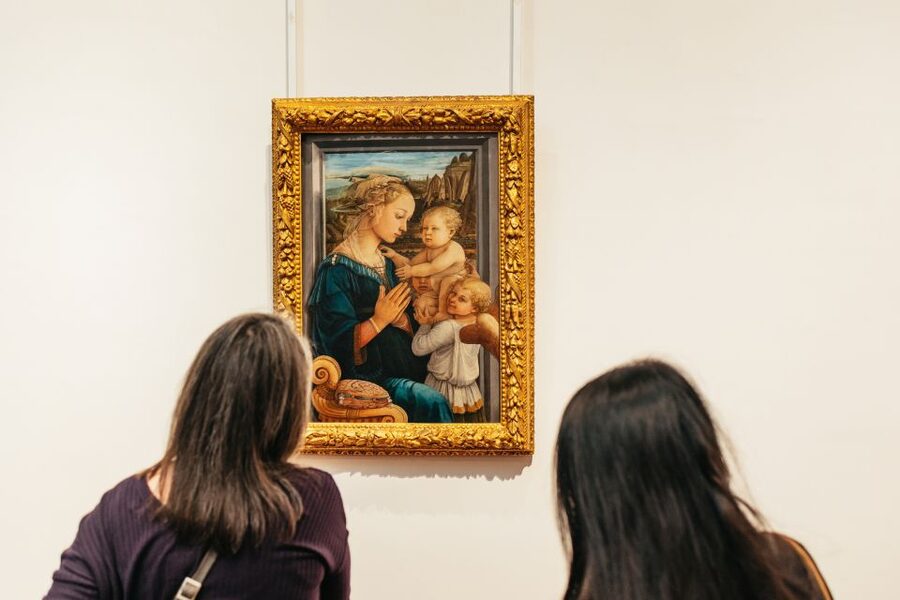
Your guided portion runs about 1.5 hours, which sounds short until you remember how much the Uffizi contains. The point of this tour length is to show you the most influential masterpieces and the stories behind them, without turning the visit into a marathon.
Your guide’s job is basically translation:
- They connect works to the Medici context, so you understand why certain choices mattered.
- They walk you through key Renaissance progressions, so style changes start to make sense.
- They explain symbolism and themes, so you’re not just staring at paint texture and hoping it turns into meaning.
More than one guide, including Chiara and Sylvia, is praised for storytelling that makes the art feel less like museum objects and more like human decisions. You get the sense of how patrons, politics, and artists shaped what ended up here.
You also get a built-in rhythm. Guides like Rachel are noted for pacing that includes stopping for questions and giving people a moment to catch their breath after the stairs. That’s underrated value. The Uffizi can be mentally loud. A guide who manages pacing keeps your attention from turning into scattered scrolling in your own head.
And if your group size is small, the tour can feel personal. People mention private or small-group experiences, and when it is just you or a handful of people, questions come faster and the route can feel tailored to your interests.
Medici politics meets art: the best part of this tour is the thread
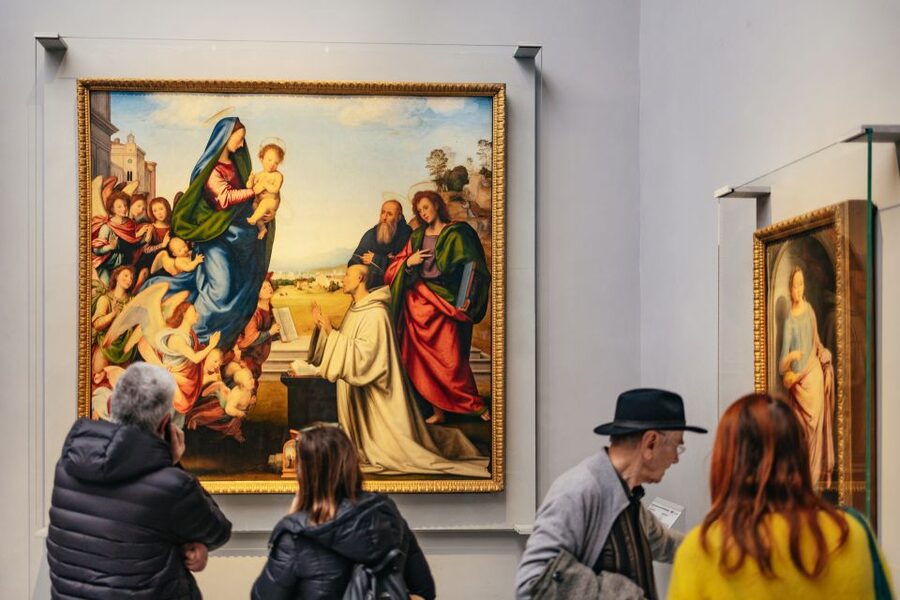
Most Uffizi visits teach you facts. This one aims to teach you a thread.
That thread begins with Cosimo I and the idea of offices. The museum is tied to control, rivalries, and how power gets expressed through culture. Then Francesco I shifts the focus into a private collecting mindset, turning the Uffizi into a place where taste and authority blend.
When your guide brings in these connections, something changes in how you see the galleries:
- You start noticing recurring symbols as part of a bigger system, not isolated decoration.
- You understand why certain subjects and styles fit the political climate of the time.
- You can connect a painting you like to why someone wanted it, not only to what you think is beautiful.
Guides such as Julia and Alessandra are repeatedly described as moving through this storyline clearly. If you enjoy art history, this tour is a shortcut to comprehension. If you are newer to art, it also prevents overload by giving you a simple map in your head.
Also, if you have questions related to biblical figures or general religious context, your guide should be able to address them patiently. Some people specifically highlight that their guide took time to explain context so they could follow the references, even if they were not approaching the art from that background.
Terrace time after the galleries: views, photos, and a breather
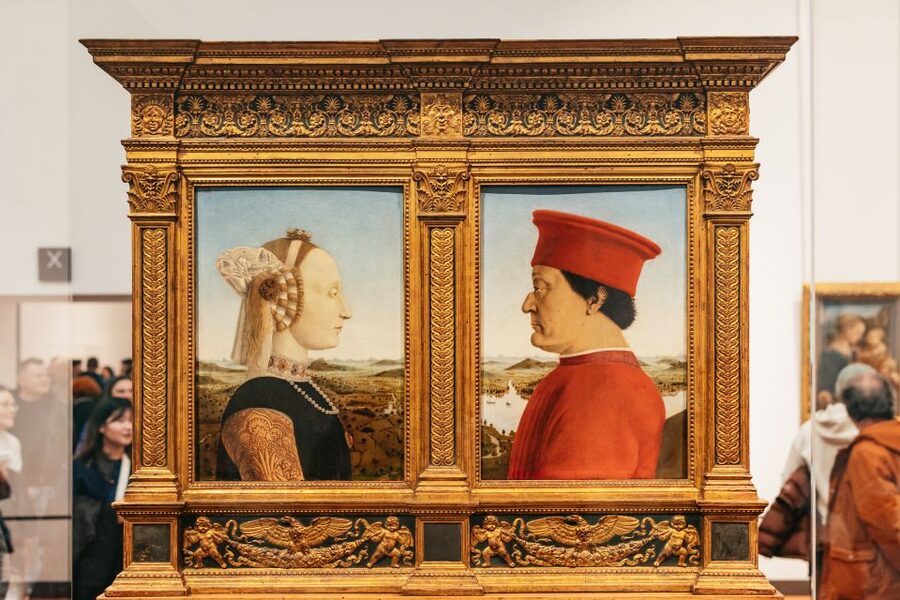
After the guided portion, you’re set up to enjoy refreshments in the cafeteria on the Uffizi terrace. This matters more than it sounds. When you’re inside for a focused 1.5 hours, your brain needs a reset. The terrace gives you that.
You also get city views for photos and a chance to regroup without feeling like you’re wasting time. I like this kind of stop because it turns the tour into an experience, not just a timed ticket scan. Plus, it gives you a natural transition: you come out, hydrate, and then decide whether to stay longer in the museum on your own.
The tour ends back at the meeting point, so you’re not left guessing how to finish. In a city where people sometimes improvise too much, that structure is helpful.
Languages and group style: easier listening, better questions
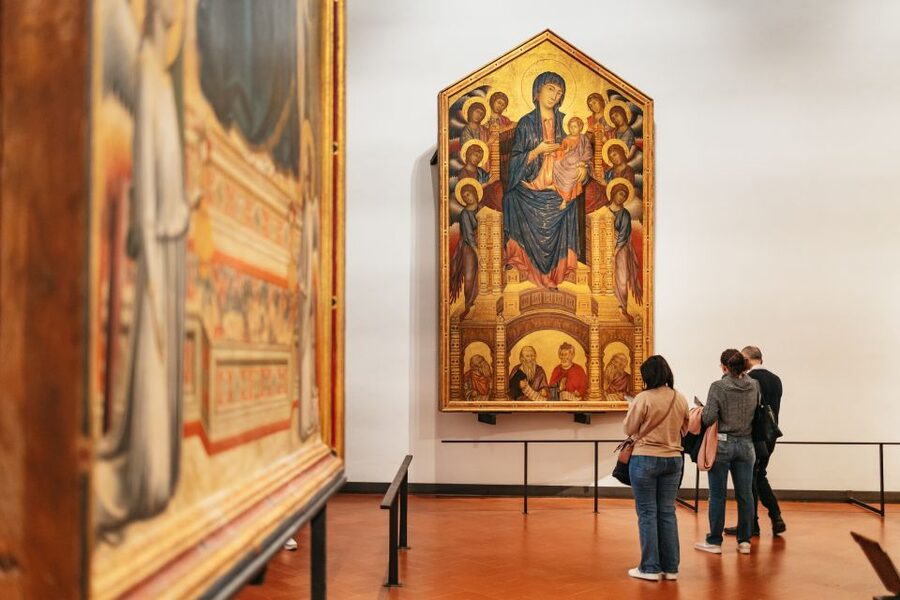
This tour offers guides in multiple languages: English, German, Italian, Russian, Portuguese, Spanish, and French. That variety helps if you’re traveling with someone who wants a specific language and if you want to understand every detail without straining.
Headsets and earpieces also do a lot of work for you. In museums, sound can be a mess. With the radios, you can hear your guide even when the rooms get crowded.
Group style is another value piece. The tour is offered as private or small groups, which usually means less crowd pressure and more chances to ask questions. Eduardo gets specifically praised for keeping a 10-year-old engaged, which tells me these tours can handle mixed ages by keeping things moving and understandable.
Price and value: when $71.60 makes sense (and when it might not)
The price is listed as $71.60 per person. For Florence, that’s not a bargain-bucket deal, but it is also not just paying for a printed ticket. You’re paying for:
- Skip-the-line entry
- A live guide for about 1.5 hours
- Headsets and earpieces
- A luggage deposit
For first-time Uffizi visitors, that combination often feels worth it because you buy back two things that are hard to replace: time and context. If you show up on your own, you might save the tour cost, but you pay in wandering and figuring out what matters most. With a guide, you get a focused route and a narrative that links the museum to the Medici family and Renaissance art progression.
If you already know art history well and you prefer to set your own pace, you might find you do not need the full guided time. But even then, the headsets and the priority line can still be useful, and the Medici storyline can add a helpful layer.
If your priority is simply seeing as many famous pieces as possible, the short guided time might feel limited. But the tour route is designed to hit key works and give you enough context to keep enjoying the rest of the museum afterward on your own.
Who this Uffizi skip-the-line tour is best for
I think this tour fits best when you want structure and clarity without turning the visit into a lecture.
It is especially good for:
- First-time Uffizi visitors who want the museum’s most important ideas explained clearly
- People who like Renaissance storytelling that links politics and art, not just art facts
- Travelers who dislike long lines and want to start seeing immediately
- Families with kids, since some guides manage pacing and keep younger visitors engaged
It may be less ideal if:
- You cannot handle stair climbs, since the lifts are not working
- You want to linger slowly in every room, since this tour is built around a guided route and a set duration
Should you book this Uffizi skip-the-line small group tour?
Book it if you want to walk into one of the world’s best-known art museums and leave with a clear story in your head. The skip-the-line setup, the headsets, and the Medici narrative make the time feel efficient, and the terrace refreshments are a nice reset after the galleries.
I’d think twice if stairs are a problem for you, because the museum requires the climb to reach the exhibition halls right now. If you know you can manage the two-floor stair requirement, this is a strong way to see the Uffizi without wasting the most precious part of your day.
If you’re flexible and you enjoy asking questions, you’ll likely come out feeling like you finally understood what you were looking at, not just what you saw.
FAQ
How long is the Uffizi skip-the-line small group tour?
It lasts about 1.5 to 2 hours. Exact starting times depend on availability.
What is included in the tour?
You get skip-the-line tickets, a live guide, headsets and earpieces, and a luggage deposit.
Where do we meet for the tour?
The meeting point may vary depending on the option you book. One commonly listed meeting area is Via de’ Martelli, 33R. The tour ends back at the meeting point.
Is the tour accessible for people with mobility issues?
The tour is described as wheelchair accessible, but the museum lifts are currently not working. Visitors must take the stairs to reach the exhibition halls, which are two floors up.
Are the tours offered in English?
Yes. Guides are available in multiple languages including English, along with German, Italian, Russian, Portuguese, Spanish, and French.
Is the Uffizi free on the first Sunday of the month?
Entrance is free on the first Sunday of each month, but tickets cannot be reserved ahead of time, so entry is not guaranteed.
Just reviewed around Florence
- Tuscany: Leonardo da Vinci – Oil and Wine Discovery Tour★ 4.8 · 5 reviews
- Livorno Port, Pisa, Florence: Full-Day Shore Excursion★ 4.8 · 51 reviews
- Legends of Florence: Exclusive Walking Tour by night★ 4.9 · 70 reviews
- Leather and Passion: A Tour of Florentine Craftsmanship★ 5.0 · 16 reviews
- Illuminated Florence Tour for Kids with Gelato & Pizza★ 5.0 · 6 reviews
- Inferno Florence Private 3-Hour Tour★ 4.8 · 20 reviews
- Hidden Florence: 2-Hour Guided Walking Tour★ 4.7 · 36 reviews
- 3-Hour Historic WhoDunIt Tour in Florence★ 3.2 · 6 reviews
Uffizi Gallery Tours, compared.

Skip-The-Line Uffizi Gallery Timed Entry Ticket
Read our review →
Uffizi Priority Ticket & Masterpieces Audio App
Read our review →
Skip the line: Uffizi and Accademia Small Group Walking Tour
Read our review →
Uffizi Gallery and Accademia Gallery Guided Tour
Read our review →
Uffizi Gallery Small-Group Guided Tour with Ticket
Read our review →
Michelangelo’s David, Accademia & Uffizi Small Group Tour
Read our review →
Accademia & Uffizi Museums: Small Group Tour with Optional Lunch
Read our review →Browse the lists this tour appears in