
Reviewed · WORKSHOPS
Sculpture in Florence : Traditional Clay modelling class
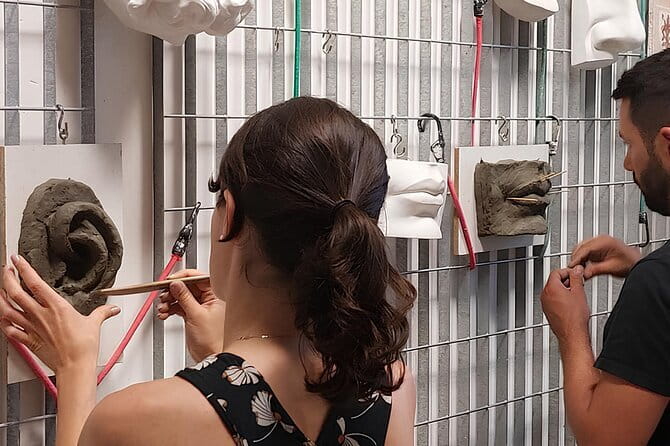
Florence gets hands-on with this traditional clay modelling class. You start in a working atelier with Octavio Palomino and make a figure based on an anatomical detail inspired by Michelangelo’s David. I love that it is tactile and practical, you shape the form with water-based clay, not just watch from the side. I also like that it is private, so your instructor can slow down when you need help, especially if you are a first timer.
One thing to consider: if you later want your piece shipped or reproduced, those extras are not included, so you’ll need to budget for that if you cannot take it home easily. Also, clay gets messy, so plan on clothing you do not mind getting a little worked-in.
Key highlights at a glance
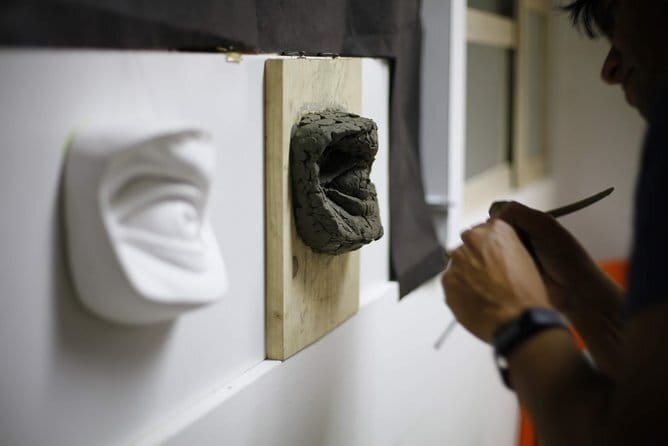
- Real atelier setting in Florence where the work happens, not a staged demo space
- Octavio Palomino leads the class, with hands-on guidance while you model
- Traditional water-based clay that responds to finger pressure and shaping
- You copy an anatomical detail from Michelangelo’s David, which keeps the lesson focused
- Private group format, so you get more personal attention
- Kids can join with the right setup, including a smaller model table when needed
A Florence art class you can actually touch and shape
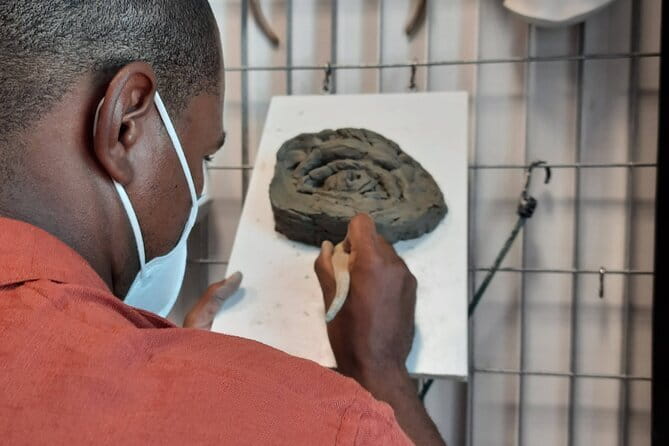
If you have been wandering Florence looking at stone statues, this class flips the experience. Instead of standing back, you put your hands in the material and learn how a sculptor thinks in 3D. That shift is the point. You learn why the first stage is clay, why water-based material matters, and how artists translate observation into form.
The best part for me is how quickly you stop feeling like a spectator. The clay is moist and velvety, and your fingers guide the work as it takes on your shapes. It becomes a slow, quiet process where you adjust, check proportions, and rework details until they sit right.
The “David” approach also keeps you grounded. An anatomical detail is specific enough to learn from, but abstract enough that you can still find your own hand in it. For art lovers, it is a direct line to the discipline behind those famous masterpieces, without needing to be a lifelong sculptor.
More hands-on workshops in Florence:
- Florence: Pasta Cooking Class with Unlimited Wine
★ 4.9 · 10,285 reviews - Florence Pizza or Pasta Class with Gelato Making at a Tuscan Farm
★ 5.0 · 6,801 reviews - Florence: Pasta & Tiramisu Cooking Class with Unlimited Wine
★ 4.9 · 6,708 reviews
Meeting at Via Coluccio Salutati and stepping into a working workshop
The class starts at Via Coluccio Salutati, 3r, 50126 Firenze. It runs about 3 hours, and it ends back at the same meeting point. The location is near public transportation, which matters in Florence, because you want easy access without turning the day into a logistics puzzle.
The biggest practical takeaway here is that you are going into a real local sculpture atelier. You are not in a classroom where supplies sit behind glass. Tools and clay are part of the workflow, and that makes the lesson feel serious. It also means you should arrive ready to work. Bring your curiosity, wear comfortable clothes, and be mentally set for hands-on time.
This is also a private tour/activity, so only your group participates. That tends to make the instruction feel more responsive, since there is no need to rush between multiple groups or compete for attention.
Octavio Palomino and the traditional tools you use from the start
Your instructor is Octavio Palomino Sculptor. While the class is hands-on, guidance is not generic. The point is traditional technique: use the right materials, follow the steps, and learn how sculptors build form.
You are provided with clay and instruments in wood for the modellazione. That matters more than it sounds. Wooden tools are part of classical workflows because they let you cut, smooth, and refine without overpowering the clay. You do not just “play” with texture. You shape edges, soften transitions, and correct mistakes as the form develops.
If you are nervous, do not be. A well-run beginner session should feel like coaching, not pressure. In the experience, the instructor’s style is described as patient and supportive, including the way he adjusts for different comfort levels. If you are traveling with kids, that flexibility can also show up, with setups that allow younger participants to work on their own smaller model.
Your subject: an anatomical detail from Michelangelo’s David
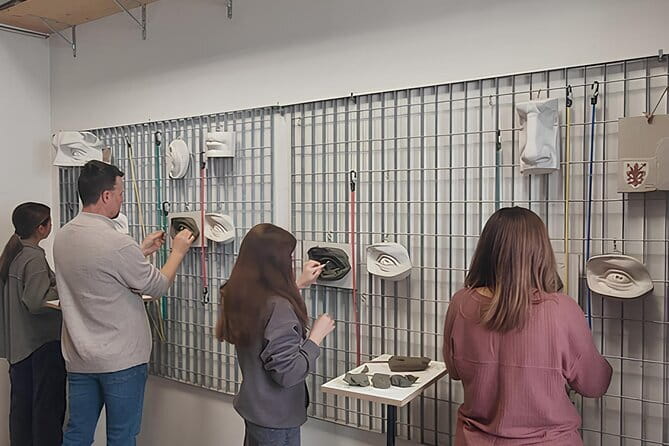
A common way to teach classical sculpting is to reduce the big masterpiece into a manageable piece. Here, you usually work from a selected anatomical detail from Michelangelo’s David. The benefit is focus. Instead of building an entire sculpture from scratch, you learn how sculptors observe proportion and volume in one concentrated area.
This choice helps in two ways. First, it gives you a reference that is recognizable in silhouette and structure. Second, it forces you to work like a sculptor, not like a person doodling in clay. You will spend time checking shapes from different angles, making corrections, and smoothing until forms read correctly.
If you have never sculpted before, the David reference can also make you feel less lost. You have a target. Even if your first attempt is not perfect, the learning is built into the process.
A different way to spend the day in Florence:
- Florence: Skip-The-Line Uffizi Gallery Timed Entry Ticket
★ 4.5 · 27,832 reviews - Tuscany Day Trip from Florence: Siena, San Gimignano, Pisa and Lunch at a Winery
★ 5.0 · 21,634 reviews - Florence: Timed Entrance Ticket to Michelangelo’s David
★ 4.6 · 16,983 reviews - Florence: Michelangelo’s David Skip-the-Line Entry Ticket
★ 4.5 · 12,764 reviews
The 3-hour flow: from moist clay to your own carved form
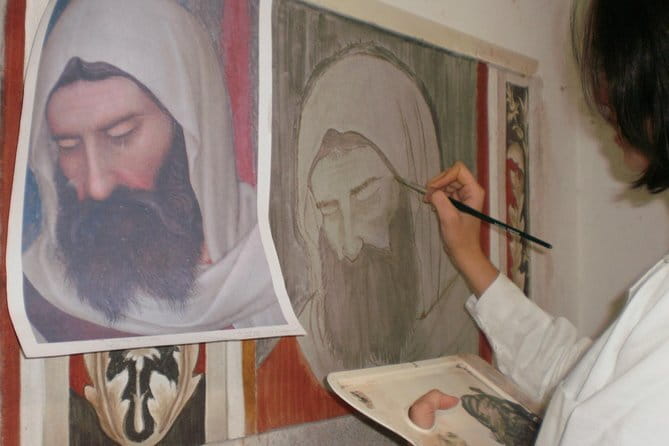
The lesson structure is simple, but that simplicity is what makes it effective.
You begin with traditional water-based clay. You follow the guidance of the master sculptor to create your figure. As you work, the clay responds to finger pressure and shaping. That tactile feedback is not just a fun detail. It is how you learn to control the material, how thin and thick areas behave, and how smooth surfaces require patience.
Expect a rhythm of model, pause, check, and refine:
- You form the rough shape first, focusing on bulk and proportion.
- You adjust contours and transitions, using tools and your hands to guide the surface.
- You refine details so the anatomy reads clearly, not just as lumps.
You will also work inside a real atelier, which means you are watching tools, materials, and technique in context. That setting reinforces the lesson. Classical sculpture is not magic. It is methodical, step-by-step, and it rewards careful attention.
By the end of the session, you should have a finished or near-finished clay artwork that reflects what you learned in those three hours. You will likely feel a shift too, the kind that makes you see sculpture differently back on the streets of Florence.
What is included, and what costs extra if you want finishing or shipping
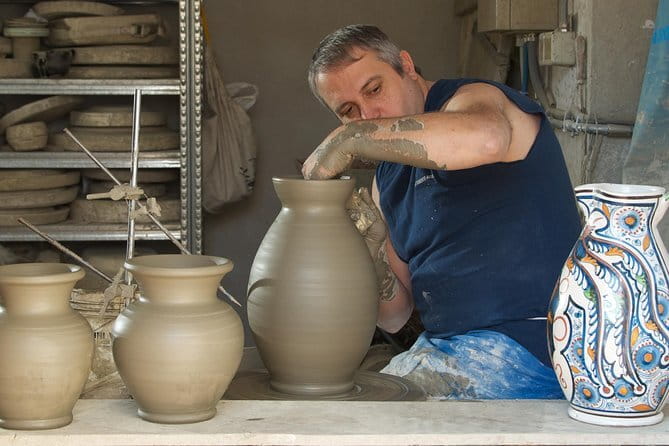
Your class includes clay and wood instruments for modelling. That is straightforward and important for value, because you are not paying to rent equipment and then figure out supplies separately.
What is not included is where people sometimes get surprised:
- spese of shipments
- riproduzione in calco
- terracotta
Those terms matter. They point to services that turn your clay model into something else, or move it. If you think you might want your work cast or transferred into terracotta, plan on paying for those steps separately. And if you need shipping because you cannot travel with your piece, you will need to arrange that with the provider or through the service options they offer.
Practical advice: before you book, consider what you want to do with the final piece. If you will take it home yourself, you can keep the experience closer to the posted cost. If you want later reproduction or shipping, ask how that works and what the extra budget looks like.
How good is the value at about $198.68 for 3 hours?

For many people, $198.68 feels like a “special treat” price. The question is whether you get enough instruction and enough material time to justify it. In a good class, that price buys three things that add up fast.
First, you get a real instructor and real workshop time. This is not a casual drop-in. You are guided to build a sculptural form step-by-step for about 3 hours.
Second, you get materials included: the clay and wooden modelling instruments. That removes a common travel cost sink.
Third, the private format matters. In a shared session, the instructor has to spread time across multiple people. Here, it is your group only, so you are more likely to get help at the exact moment you need it.
If you love art and you want something hands-on that you cannot replicate from photos, the value is usually strong. If you are looking for a quick, low-effort activity while you race to museums, it may feel pricey for a short block of time.
Who should book this clay modelling class in Florence?
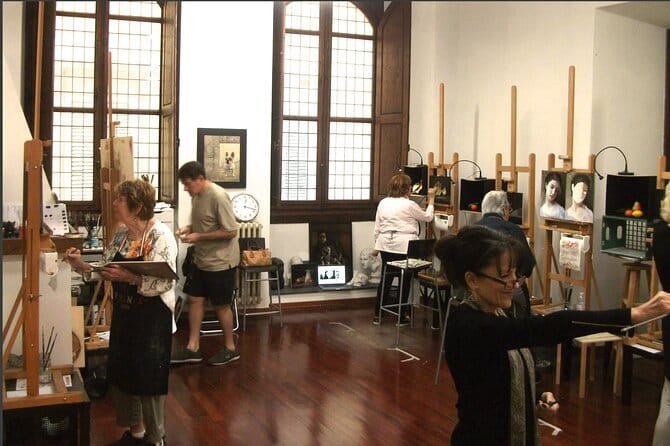
This is a great match if you fall into any of these categories:
- You love art and want to understand how masterpieces start, not just how they end
- You want an activity that feels local and practical, in a real studio setting
- You are traveling with family and want a structured creative task
- You have a beginner mindset and you like learning by doing
It is also a good option for people who like instruction that adapts. The class is described as welcoming for first timers, with an instructor who stays patient and supportive. If your group includes kids, you might find the setup can be adjusted. That is especially relevant in a city like Florence, where family-friendly options can be limited.
Where it may not be ideal: if you hate mess, clay texture, or close, focused work for three hours. This is hands-on sculpting, not a passive viewing experience.
Practical tips to make your day easier
You will enjoy this more if you show up prepared for tactile work.
- Wear clothes you can get clay on. Water-based clay is easier to manage than some materials, but it still transfers and leaves residue.
- Plan your schedule around a 3-hour block. You are not just meeting, you are working, refining, and learning in one session.
- Think about what you will do with the finished piece. If shipping or reproduction interests you, those options cost extra, so plan early.
- Bring curiosity, not expectations of perfection. The point is learning how sculptors shape form, not producing a perfect museum statue on your first try.
Getting to the meeting point is usually straightforward thanks to the location near public transportation. Once you are at Via Coluccio Salutati, you can treat the rest of the day like a studio visit and not a scavenger hunt.
Should you book this traditional clay modelling class?
Yes, if you want a Florence activity that feels real and educational, not just another guided walk. The combination of a private studio lesson, traditional water-based clay modelling, and direct coaching from Octavio Palomino makes it a strong choice for art lovers and curious beginners.
Before you commit, check your goals:
- If you want a hands-on lesson and you do not need shipping or reproduction, it is likely to feel worth the price.
- If you want the final piece shipped or turned into another material, factor in the extra costs now so there are no surprises later.
If you are the kind of traveler who loves to understand the craft behind the art, this is the kind of experience that stays with you, because your fingers learn the lesson first.
FAQ
How long is the Sculpture in Florence clay modelling class?
The lesson lasts about 3 hours.
Where does the class meet in Florence?
The meeting point is Via Coluccio Salutati, 3r, 50126 Firenze FI, Italy, and the activity ends back at the same meeting point.
What is included in the price?
Clay and instruments in wood for the modellazione are included.
What is not included?
Shipping costs and services for reproduction (riproduzione in calco and terracotta) are not included.
What language is the lesson taught in?
The class is offered in English.
Is this a private class or shared group?
It is a private tour/activity, so only your group participates.
Who is the sculptor/instructor?
The sculptor listed for the experience is Octavio Palomino Sculptor.
What is the cancellation policy?
You can cancel for a full refund if you cancel up to 24 hours in advance of the experience start time. If you cancel less than 24 hours before, the amount paid is not refunded.
Just reviewed around Florence
- Art and History in Florence: Small Group Walking Tour★ 5.0 · 25 reviews
- Exclusive Cinque Terre Day Trip from Florence★ 5.0 · 102 reviews
- Florence treasures on a city bike – 1 day rental –★ 5.0 · 25 reviews
- Full-Day Small-Group Cinque Terre Tour from Florence★ 4.5 · 58 reviews
- Cinque Terre Vibes with Postcard Perfection and Lunch Treats★ 5.0 · 3 reviews
- Private Tour to Cinque Terre in English, Español and Purtuguês★ 5.0 · 3 reviews
- Cinque Terre Private with the leaning tower Pisa from Florence★ 5.0 · 9 reviews
- Cinque Terre FULLY GUIDED & ALL INCLUSIVE Tour from Florence★ 5.0 · 16 reviews
Workshops, compared.

Florence Pizza or Pasta Class with Gelato Making at a Tuscan Farm
Read our review →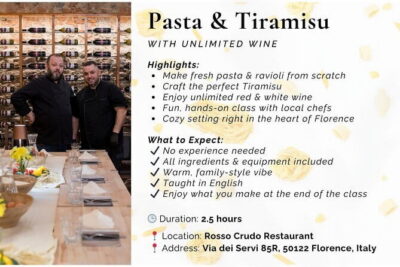
Pasta & Tiramisu Cooking Class with Unlimited Wine
Read our review →
Cooking Class and Lunch at a Tuscan Farmhouse with Local Market Tour from Florence
Read our review →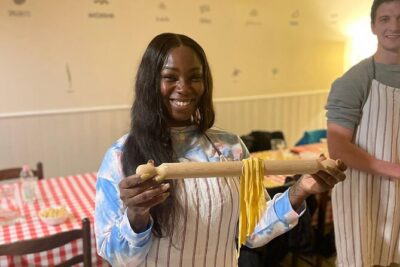
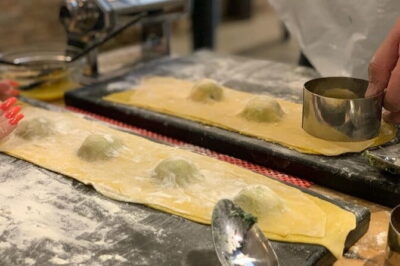
Cooking Class Pasta & Tiramisu Making Unlimited Wine
Read our review →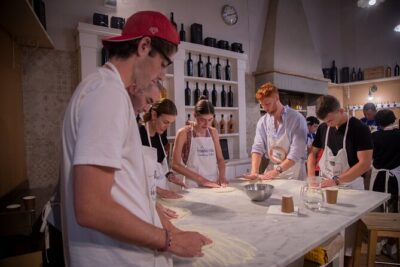
Florence Cooking Class The Art of Making Gelato & Authentic Pizza
Read our review →Browse the lists this tour appears in