
Reviewed · UFFIZI GALLERY TOURS
Museums special: Accademia & Uffizi combo tour – monolingual small group tour
Florence in one half day is not always pretty, but this Accademia plus Uffizi combo is a smart way to stack the biggest Renaissance hits without spending hours figuring logistics. I like that you get skip-the-line entry plus a guide who talks as you move, not after you arrive in a crowd. I also like the built-in city walk that gives you main-squares orientation and a chance to see the Duomo area from the street. The main thing to watch is timing, on busy days there can still be short delays at museum entrances even with reservations.
This format works best if you want guided structure across two heavyweights. You are capped at 15 people, and the tour uses earphones when needed so you can actually hear the guide. One more practical note: the Uffizi portion is a highlights-style route, so if you are the type who wants every room and every floor, you may feel like you only skim the surface.
Key Points to Know Before You Go
- Two major museums in one tour, Accademia first and the Uffizi right after, with guided storytelling throughout
- Skip-the-line access is part of the deal, though busy periods can still cause short entrance delays
- Small group size (max 15) and earphones for easier listening
- You see the non-finito story at Accademia, then get to David with context on Michelangelo
- The Uffizi route is chronological, taking you from Gothic works toward Botticelli and Renaissance masters
- You can stay inside the Uffizi after the tour ends, if you want extra time with specific rooms
Why This Accademia Plus Uffizi Combo Works in One Half Day
Florence is famous for art, but the art is also famous for crowding. What makes this tour interesting is that it treats that reality like a puzzle with a solution: you get one guide, one plan, and pre-arranged museum access for two of the biggest names in town.
You start with the Accademia Gallery, where Michelangelo fans go straight for David. Then you move on to the Uffizi, which is essentially a timeline of Italian painting and sculpture, laid out in rooms you can follow in order. In practical terms, this means less “Which museum next?” and more “Go in, see the right things, understand what you are seeing.”
The walking bit also helps. You get some quick bearings around central Florence, including viewpoints that keep the city feeling real, not just like a museum crawl. That small street time matters, because Florence’s art lives in a living city, and getting oriented makes the rest of the day easier.
More Uffizi tours and tickets we've reviewed:
- Florence: Skip-The-Line Uffizi Gallery Timed Entry Ticket
★ 4.5 · 27,832 reviews - Florence: Uffizi Priority Ticket & Masterpieces Audio App
★ 4.2 · 6,402 reviews - Florence: Skip-the-Line Uffizi Small Group Tour
★ 4.6 · 5,926 reviews
Price and What You Actually Get for $130.97
At $130.97 per person, this is not a bargain-price museum day. But the value comes from bundling several things you would otherwise have to manage separately.
First, both museums come with tickets and reservations included, so you are not hunting for entry windows. Second, you are paying for guided interpretation. Both Accademia and the Uffizi can be overwhelming if you walk in cold, and the guide’s job is to point you toward meaning, not just names.
You should also keep the Uffizi entrance price in mind. The activity notes list Uffizi entry as €29. That is just one museum admission. When you add the Accademia ticket and the guide time for the full route, the price starts looking more like “time-saved and confusion-saved” than “cheap.”
Still, you are paying for a structured highlights path. If you want to spend hours on every room with zero guidance constraints, you might prefer a slower, more flexible approach. This tour is built for momentum.
Meeting Point, Walking Tour, and Getting Through Florence Efficiently
Meet at Via Camillo Cavour, 18, 50122 Firenze FI. The start area is near public transportation, which matters because Florence can be confusing on foot, especially if you arrive with luggage or you are already tired.
From there, you walk to the Accademia Gallery area, about a five-minute stroll. In most days, that short transfer keeps your day flowing. On days when you arrive late or the group gets mixed up, that small walk becomes a bigger deal than it should be, and getting lost is easy in Florence if your meeting point description is not crystal clear.
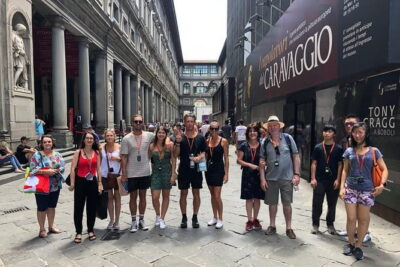
The tour also includes a short walking route through the main sights, with a chance to view the Duomo from street level. This is a good use of time because it gives context. You start seeing how all these masterpieces relate to where people gathered, worshipped, and built their city.
Finally, footwear matters. You are moving between places and inside museums, so plan comfortable shoes and expect some walking.
Entering Accademia: Prisoners, David, and the Michelangelo Thread
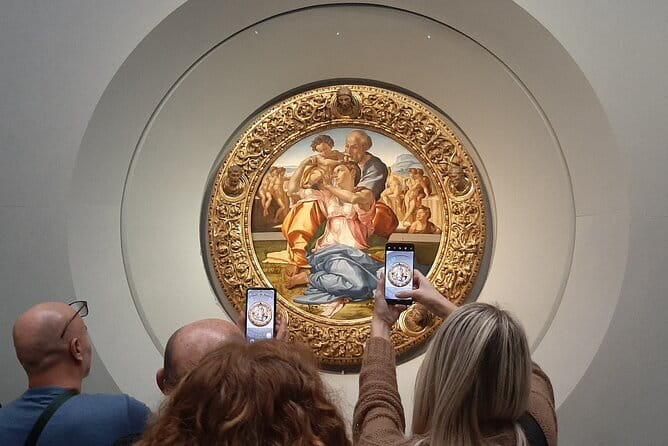
Accademia is where this tour earns its keep. You enter with skip-the-line access and a guide who already has the story lined up for you. That reduces the biggest frustration of museum days: standing around first, then only later getting to the point.
Your Accademia time begins with the famous Hall of Prisoners. This is the room where Michelangelo’s unfinished sculptures sit in an emotional tension with marble that is literally not finished. The guide explains non-finito, the idea that the meaning lives partly in what is left incomplete. That concept is hard to grasp from a brochure, but it clicks when someone points out how the forms feel trapped and alive at the same time.
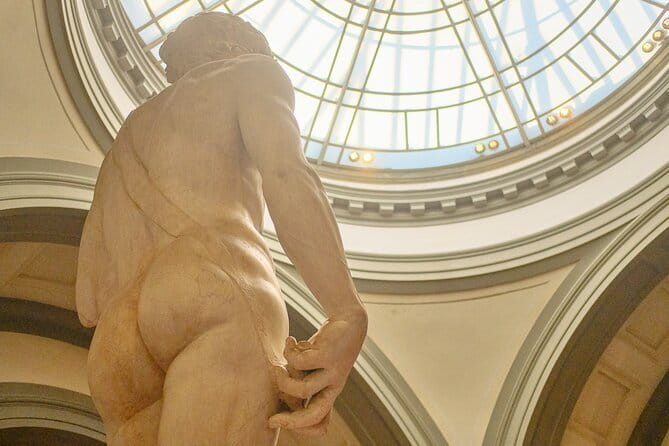
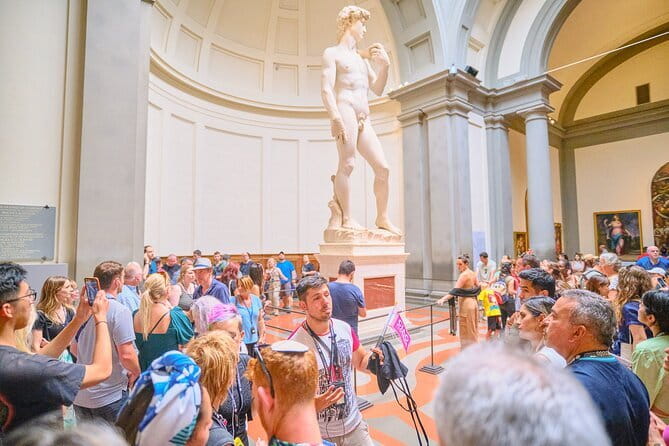
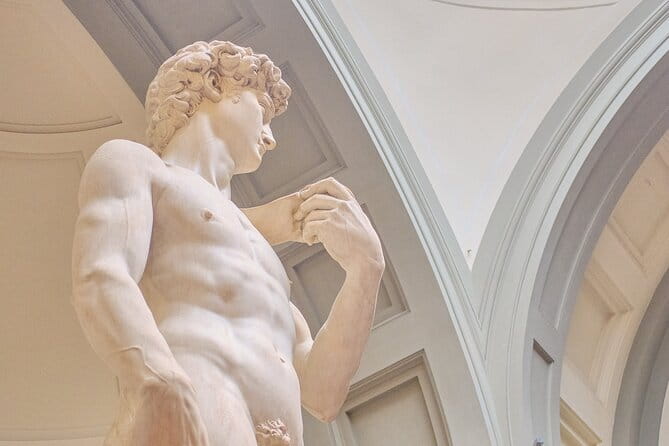
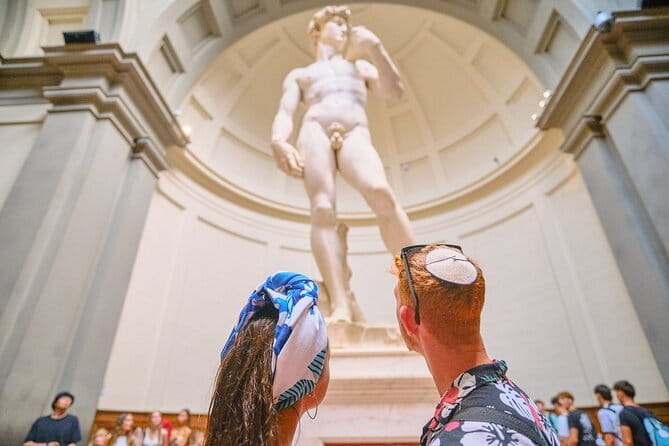
Then you move to the showdown: David. The scale alone hits you quickly, and the tour adds the human details. You are told that Michelangelo finished David at age 26, and you get context on how that early success fits his life. If you have ever stood in front of David and felt like it was just one more statue, this kind of framing changes the experience, because you are not only looking, you are also thinking about intention and process.
I also like that the guide is there for questions. In a museum this famous, questions can turn into something more useful than idle curiosity. They help you connect the artwork to the bigger Renaissance story you are about to continue at the Uffizi.
More ways to see David and the Accademia:
- Florence: Timed Entrance Ticket to Michelangelo’s David
★ 4.6 · 16,983 reviews - Florence: Michelangelo’s David Skip-the-Line Entry Ticket
★ 4.5 · 12,764 reviews - Florence Accademia Gallery Tour with Entrance Ticket Included
★ 4.5 · 6,148 reviews - Florence: Accademia Gallery Guided Tour
★ 4.6 · 4,156 reviews
Accademia Beyond David: Sabines and Renaissance Sculpture Variety
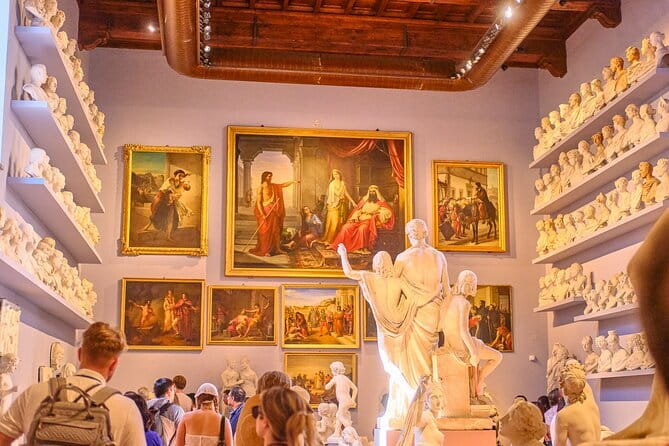
After David, the tour keeps momentum instead of letting you drift. You see other key works, including Giambologna’s Rape of the Sabines. That one matters because it shifts the focus slightly. Instead of only Michelangelo’s “unfinished power,” you get a different sculptural language, with energy and movement that fits the Renaissance taste for drama.
You also see works by other Renaissance masters such as Sandro Botticelli, Jacopo di Cione, and Pacino di Buonaguida. That is helpful if you came for Michelangelo but still want to walk away with more than one name in your head. Accademia can sometimes feel like a single-artist pilgrimage. This route widens the lens.
A practical tip: Accademia is not huge compared to the Uffizi. That means your guide has a real advantage. They can give you enough context to make the time feel intentional, not rushed through highlights.
Uffizi Gallery Route: A Chronological Walk Through What Changes in Art
The Uffizi is where the tour becomes a story. You move through rooms in order, roughly from the 13th century toward later Renaissance art. That matters because the Uffizi is full of tempting distractions. A chronological route keeps you from getting lost in individual masterpieces without understanding what changed over time.
You start with earlier works, including Gothic pieces with gold imagery featuring Madonna and the child. You also hear how the breakthrough into Renaissance style connects to artists like Giotto, who uses more dimensional thinking in his work. This is the kind of background that makes later paintings easier to read.
Between stops, you also have a real chance to reset your eyes. The Uffizi has ancient sculpture elements and frescoed ceilings, plus views from the large windows. Even if you do not plan to “shop for photos,” those breaks help you absorb what you are seeing. The guide’s pacing keeps you in motion, but not so fast that you never stop.
Botticelli at the Uffizi: Birth of Venus and Primavera in Context

No matter how many times you have heard the names, Botticelli hits differently in person. This tour’s Uffizi route gives you time for the essentials: The Birth of Venus and Primavera. The value here is not just seeing them, it is learning why these works are seen as touchstones.
After Botticelli, you continue through central Renaissance themes and artists, including works tied to da Vinci and Michelangelo. Even if the Uffizi is not always the first stop for everyone’s personal “must see,” being guided to the right paintings helps you notice the emotional details that make the Renaissance feel alive instead of academic.
You also see works such as Michelangelo’s Tondo Doni, plus da Vinci works including Baptism of Christ and The Annunciation. Again, the point is that you get a guided path that connects these artists to the larger evolution of style.
And yes, you can stay. The tour notes say you are welcome to remain inside the Uffizi after the guided portion ends. That is perfect if you spot one painting you need to see again for your own reasons.
Pacing Reality Check: Why You Might Feel Like You Miss Rooms

This is the part I want to be honest about. The Uffizi is huge, and guided tours are always going to be selective. In this combo format, the Uffizi visit is structured around a set of highlights rather than a “see everything” plan.
If you want to follow every floor and every room, you may leave wishing you had more time. The Uffizi can also involve some time buffering for security and entry flow, and on crowded days that can eat into the effective guided minutes you feel you got.
That said, a highlights route can still be a smart choice if your goal is to understand the major shifts in art and connect names with meaning. The guide’s job here is to keep you oriented and moving through the biggest “aha” works.
My advice: go in with a small list of what you most want to see. In your case, that might be Botticelli first, or Michelangelo second, or a specific Renaissance storyline. Then use the remaining time after the tour ends to hunt down anything that you feel you did not fully absorb.
Small Group Size and Listening Comfort: What Max 15 Really Means
A maximum of 15 people changes how the tour feels. It is still not quiet, but it is workable. You get earphones when needed, which is one of those small details that makes a big difference in museums.
You are also not navigating museum entry with a massive crowd. That matters for the “I want to see, not stand” mindset. Even with skip-the-line passes, you can hit short delays on busy days. Keeping group size small helps you handle those delays without feeling swallowed by the queue.
The guide factor also shows up. The experience is repeatedly praised for guides who are friendly and personable, and who handle the route with confidence. In the Accademia portion especially, the guidance tends to feel structured and well explained, which is exactly what you want when you are staring at sculptures that can be misunderstood if you only read labels.
Who This Tour Suits Best (and Who Might Want a Different Plan)
This combo tour is ideal if you want:
- One guided day that covers Accademia and the Uffizi without booking two separate guided experiences
- A plan that includes both big names and enough context to make them click
- A small group experience with easier listening via earphones
It might be less ideal if you:
- Want to spend your time hunting for every obscure painting and every corner room
- Are the type who gets frustrated by any pre-set pacing, because this tour is designed to move through major beats
- Plan to arrive mid-day on the busiest days and cannot tolerate any entrance delays, even with reservations
If you love art history but also love structure, this can hit a sweet spot. You are getting explanation where it counts, then you can use the option to stay longer at the Uffizi to follow your own instincts after the guided route.
Should You Book This Accademia and Uffizi Combo?
Book it if you want the smart, time-efficient way to see Florence’s two most-requested museum stops in one half day, with guided context and skip-the-line entry that reduces the usual stress. At $130.97, you are paying for the combo advantage, and for a guide who turns famous works into stories you can actually remember.
Skip it or consider a different format if your top priority is slow, room-by-room wandering. The Uffizi is too large for any one guided highlights route to satisfy a “see everything” mindset. But if you treat this as your orientation plus key masterpieces, then stay in the Uffizi afterward, you can cover both needs.
Also, be careful about your timing. If you can, choose a time that avoids the thickest crowd peaks, because short delays at museum entrances can happen even with reserved access.
If you want one practical check before you commit: have your ID details and full names ready exactly as you booked, because the Uffizi entry requires name matching, and missing paperwork details can cause real problems.
FAQ
What language is the tour offered in?
This experience is offered in English.
How long is the tour?
The tour runs for about 4 hours.
How many people are in the group?
The maximum group size is 15 travelers.
Are tickets to both museums included?
Yes. Accademia Gallery and Uffizi Gallery tickets and reservations are included.
Where do I meet, and where does the tour end?
You start at Via Camillo Cavour, 18, 50122 Firenze FI and the tour ends at Uffizi Galleries, Piazzale degli Uffizi, 6, 50122 Firenze FI.
Do I need a passport or ID for the Uffizi?
Yes. Each traveler must present a valid passport or ID document that matches the name provided at booking for successful entry to the Uffizi Gallery.
Can I stay inside the Uffizi after the tour ends?
Yes. You have the option to remain at the Uffizi after the guided portion finishes.
Will I have to wait in lines?
You get skip-the-line access with museum entry passes, but on the busiest days there can still be some short delays at entrances.
Is there free cancellation?
Yes. You can cancel for a full refund up to 24 hours in advance of the experience start time.
More Museum Visits in Florence
- Florence: Leonardo Interactive Museum Entry Ticket
★ 4.5 · 11,763 reviews - Uffizi Gallery Small Group Tour with Guide
★ 4.5 · 4,923 reviews - Florence: Accademia Gallery Guided Tour with Entry Ticket
★ 4.6 · 2,253 reviews - Golf Cart Tour to Fiesole Roman Theatre and Museum
★ 4.5 · 2,039 reviews
Just reviewed around Florence
- Art and History in Florence: Small Group Walking Tour★ 5.0 · 25 reviews
- Sculpture in Florence : Traditional Clay modelling class★ 5.0 · 12 reviews
- Exclusive Cinque Terre Day Trip from Florence★ 5.0 · 102 reviews
- Florence treasures on a city bike – 1 day rental –★ 5.0 · 25 reviews
- Private Tour to Cinque Terre in English, Español and Purtuguês★ 5.0 · 3 reviews
- Full-Day Small-Group Cinque Terre Tour from Florence★ 4.5 · 58 reviews
- Cinque Terre Vibes with Postcard Perfection and Lunch Treats★ 5.0 · 3 reviews
- Cinque Terre Private with the leaning tower Pisa from Florence★ 5.0 · 9 reviews
Uffizi Gallery Tours, compared.

Skip-The-Line Uffizi Gallery Timed Entry Ticket
Read our review →
Uffizi Priority Ticket & Masterpieces Audio App
Read our review →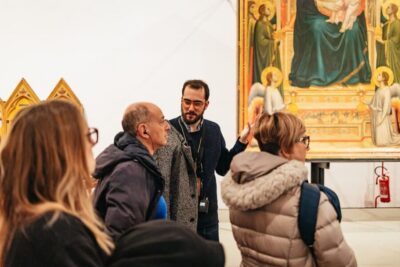

Skip the line: Uffizi and Accademia Small Group Walking Tour
Read our review →
Uffizi Gallery and Accademia Gallery Guided Tour
Read our review →
Uffizi Gallery Small-Group Guided Tour with Ticket
Read our review →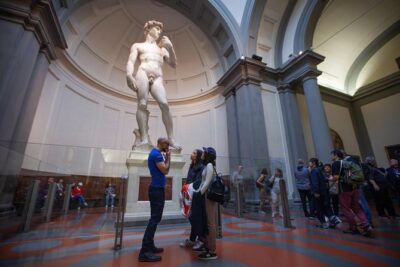
Michelangelo’s David, Accademia & Uffizi Small Group Tour
Read our review →Browse the lists this tour appears in