
Reviewed · TUSCANY COUNTRYSIDE TOURS
Cortona Private walking Tour under the Tuscan sun
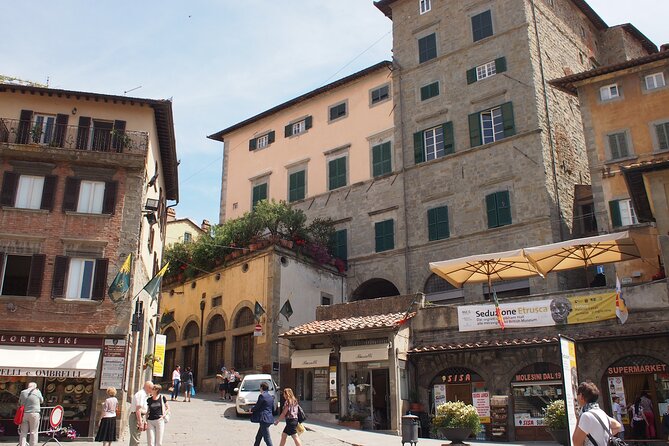
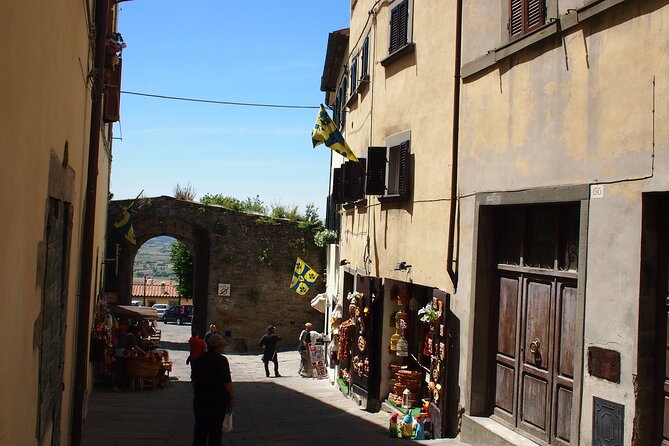
Cortona is one of those hill towns that looks almost built for postcards, yet it still feels real. This private walking tour turns that picture-book vibe into a smart route, with major landmarks and an easy pace for getting your bearings. You are led around town with context, so the stones and streets make sense, not just look pretty.
What I like most is the way Laura keeps things friendly and detailed, sharing her love of Cortona while pointing out what to notice. I also like that the itinerary is tight, about 2 hours, and includes big hitters like Piazza del Duomo, Fortezza di Girifalco, and Porta Bifora without wasting your time. One thing to consider: Cortona sits on a slope, so you should bring comfortable shoes and be ready for some uphill walking in the sun.
Key highlights you should care about
- Laura’s on-the-ground storytelling that connects the town’s medieval and Etruscan layers
- A focused 2-hour loop through Cortona’s main sights without long detours
- Piazza del Duomo complex with Santa Maria Assunta and the Bishop’s Palace area
- Fortezza di Girifalco viewpoint at Cortona’s high point, built for Medici-era defense
- Porta Bifora with its Etruscan double-entrance idea behind the name
- Free admission tickets listed for each stop, so you avoid surprise add-ons
Cortona’s hilltop magic, explained street by street
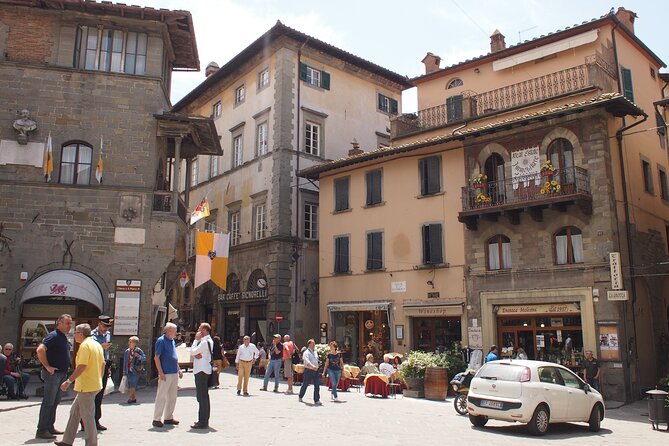
Cortona earns its reputation for a reason. The town rises from Tuscany’s countryside and seems carved into it, with stone buildings, cypress trees, and farmland right beyond the walls. Under the Tuscan sun, it is especially scenic, but the real payoff is learning how the town grew from older eras into the medieval shapes you see today.
This tour is designed for that exact moment when you arrive and think, OK, where do I start? In about two hours, you cover the center plus the high viewpoint area, so you leave with a clear mental map. And because it is private, your group sets the tone, rather than being swept along with strangers.
The practical upside is you do not need to figure out what matters most. Your guide helps you look at the same corners you would find on your own, just with better guidance on why they matter.
More Tuscan countryside outings:
- Brunello Wine Tour and Val D’Orcia Landscape
★ 5.0 · 93 reviews - Hands-On Cooking Class in an Exclusive Kitchen in Cortona
★ 5.0 · 69 reviews - Cortona – Easy guided eBike tour around the Etruscan City.
★ 5.0 · 62 reviews
Meet your guide Laura, and why the private format matters
Your tour is run by Florence Tours by Made of Tuscany, and the guide you may meet is Laura, based on the strong feedback tied to this experience. The reviews point to the same thing again and again: Laura is friendly, eager to share Cortona, and careful about details. That matters in a place where streets loop and viewpoints pop up suddenly. You do not just walk from sight to sight, you learn how they connect.
Private also means your group is the only one on the tour. That tends to make the conversation flow more naturally. If you have questions like how the town’s past changed what you see today, you are more likely to get an answer on the spot.
One more small benefit: the tour is designed for people who want to enjoy Cortona without turning it into a stamina test. It is still walking, so you will get steps in, but the timing works for most visitors.
Your 2-hour walking route in Cortona, step by step
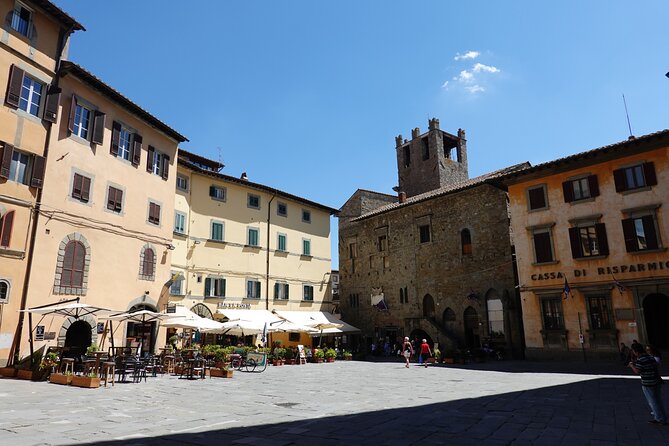
This is a 2-hour walking tour that starts and ends at Piazza Garibaldi, 52044 Cortona AR, Italy. The stops are placed like a best-of route, mixing the town’s public squares, key architecture, a high fortress viewpoint, and the Etruscan-influenced gate.
You can think of the structure like this:
- You start with the square area tied to Cortona’s cultural past.
- You move into the religious and civic heart around the cathedral complex.
- You climb up toward the fortress at the top for the view and the defensive story.
- You finish with Porta Bifora, the town gate that hints at much older origins.
You will also see how Etruscan influence shows up in names and in the idea of entrances and walls, even when you are standing in a medieval setting.
Stop 1: Piazza Signorelli and the Etruscan Academy Museum area
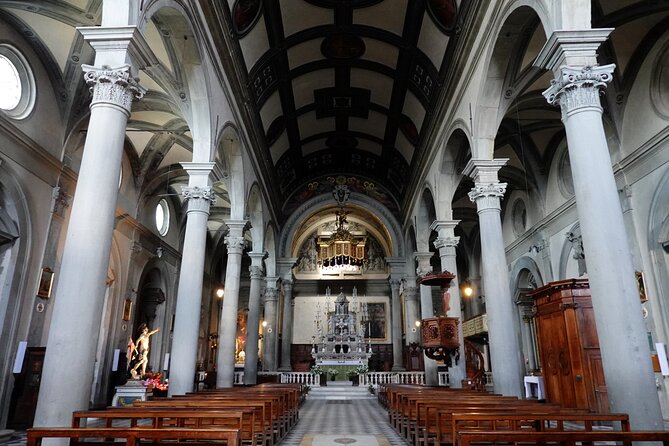
The tour begins at Piazza Signorelli, a central square named for the Renaissance painter Luca Signorelli. This area is a useful kickoff point because it anchors you in the town’s identity. From here, it is easier to understand how Cortona’s story is layered.
Right at this stop, you are connected to the Etruscan Academy Museum, which is described as holding a substantial collection of bronze, ceramic, and funerary items that reflect Cortona’s Etruscan past. Even if you are not planning a separate museum visit, the way your guide frames what you are seeing helps you connect today’s streets to older civilizations.
What to expect here:
- A short square orientation, plus context about the town’s Etruscan roots
- Free admission listed for this stop, which keeps the experience straightforward
A quick consideration: because this is a walking tour with multiple stops, you will likely spend a short amount of time at each place. That is ideal if you want the big picture, but if you want a deep museum session, you might still plan one extra time on your own.
More walking tours in Arezzo:
- Walking Tour in Cortona
★ 4.5 · 15 reviews - Arezzo: Private Walking Tour
★ 4.9 · 10 reviews - Cortona private walking Tour
★ 5.0 · 8 reviews - Arezzo Private walking tour
★ 5.0 · 6 reviews
Stop 2: Piazza del Duomo and the Santa Maria Assunta complex
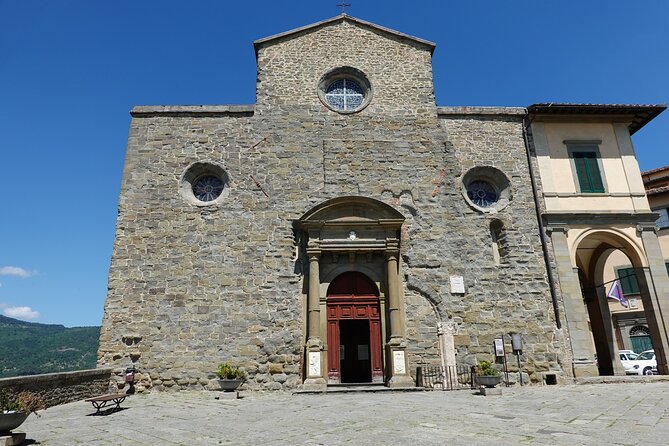
Next up is Piazza del Duomo, where the skyline changes. Here, religious architecture dominates the square, and you feel the weight of centuries in stone.
The key feature is the Cathedral of Santa Maria Assunta. It is described as Renaissance style, built above an older church associated with S. Maria. Your guide also points out that some remains of that older church can still be seen on the facade. That is a great example of why a guide helps: without context, you might just see a pretty front. With context, you understand it as a building that sits on layers of older worship.
Around the square, you also have the monumental complex of Jesus and the Bishop’s Palace. This matters because it is not only about religion, it is also about the civic role the church played in town life.
What makes this stop valuable for you:
- You see Cortona’s spiritual and civic center in one concentrated area
- You get the architectural timeline, Renaissance on top, older traces below
- Free admission is listed, so the cost stays predictable
Possible drawback: this can be one of the more crowded areas in town, depending on season and day. If you prefer quiet photo time, go easy with your pacing and let your guide handle the best moments.
Stop 3: Fortezza di Girifalco, the high-point fortress
The tour then climbs toward Fortezza di Girifalco, located at Cortona’s highest point and built to overlook the town. This is where Cortona’s hilltop position pays off, because the fortress location is meant to give visibility.
The fortress is described as built in 1561, based on a project by Gabrio Serbelloni, at the request of Grand Duke Cosimo I dei Medici. That detail is not trivia for trivia’s sake. When you know the who and the why, you start reading the structure as defense and control, not just scenery.
What you will likely enjoy most:
- The shift from square-level town life to a commandingly high viewpoint
- The change in atmosphere once you reach the fortress zone
- A clear payoff for your uphill walking effort
Time at this stop is short, about 30 minutes, so the focus is on essentials: the fortress setting, the historic framing, and a sense of how the town is arranged below you.
If you visit on a hot day, this stop can feel exposed because you are higher up. Bring water, and if you are sensitive to sun, time it so you get shade when you can.
Stop 4: Porta Bifora and the idea of an Etruscan double entrance
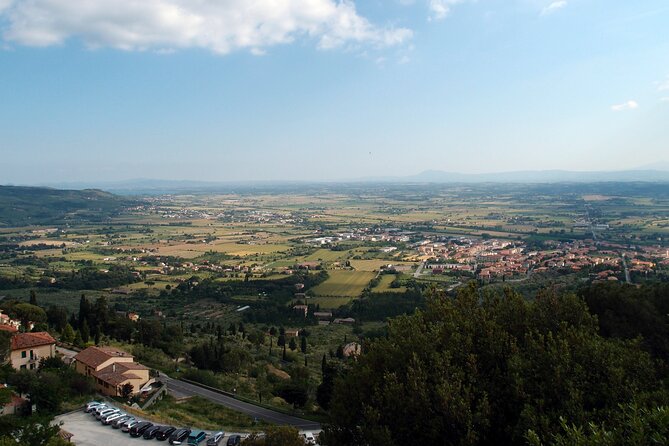
For the final stop, you reach Porta Bifora, also known as the Ghibellina. This is one of those places where the name itself tells you something if your guide explains it.
The tour information notes that in Etruscan times, the gate area consisted of a double entrance, which is part of where the name Porta Bifora comes from. It is not just a medieval gate sitting alone in time. It is tied to an older concept of how people moved through Cortona’s boundaries.
Why this stop is a smart finale:
- It connects the tour back to Cortona’s deeper roots, the Etruscan influence
- It gives you a tangible piece of the wall and entry story
- It ends the walking loop with a clear landmark you can find again on your own
Because the gate is a specific structure rather than a large interior space, it is also easier to handle with a short time window. You can take a few photos, absorb the explanation, and then get back to the starting area.
Price and value: Is $185.22 per person worth it?
At $185.22 per person, this is not a budget stroll. But it can still be good value depending on how you travel and what you want from your time in Cortona.
Here is what you are paying for, based on the experience format:
- It is private, meaning you are not sharing the guide’s attention with other groups
- The route hits multiple high-demand landmarks in about 2 hours
- The tour lists free admission tickets for each stop, which helps keep the total cost from creeping up
So the value argument looks like this: if you want a guided map of the town’s key sights, with context that makes architecture and Etruscan references click, a private guide can feel worth it quickly. If you prefer wandering with a self-guided app and spending more time in museums or churches, you might save money and do it on your own.
One more thing: there are group discounts listed for this experience. If you have a small group, check whether you can reduce the per-person cost. The private format can shift from expensive to very reasonable when you split intelligently.
Timing, meeting point, and how to plan your day
The tour starts at Piazza Garibaldi and ends back there. That is helpful because it means you can plan dinner and the rest of your day without needing a separate pickup or a long walk back.
It also says the meeting point is near public transportation, which is good if you are using buses or arriving from nearby places. And since there is a mobile ticket, you should be able to handle it without extra printed materials.
Most travelers can participate. Still, be realistic. Cortona is a hill town, and even when the route is well planned, you will be on foot. If anyone in your group has mobility limits, you will want to think about whether you can manage the walking comfortably.
Who this tour suits best
This is a great fit if you:
- Want an efficient first visit to Cortona and want it to feel coherent
- Care about how Etruscan origins connect to later medieval and Renaissance layers
- Prefer a private guide who can tailor pacing and answer questions, rather than following a scripted group
It also works well for couples, friends, and small families who want a structured walk. If you are traveling solo, it is still worth considering because private tours can help you avoid dead ends and confusing streets.
If you are the type who loves long museum hours and slow interior exploration, you may want to treat this as the orientation layer and then add your own time for deeper stops afterward.
Should you book Cortona Private walking Tour under the Tuscan sun?
I think you should book this if you want your first taste of Cortona to be guided, practical, and meaningful in a short amount of time. The standout strength is the guide factor. The feedback tied to Laura consistently praises her as friendly, eager, and detail-minded, with a clear ability to explain what you are seeing as you walk.
Book it when:
- You have about half a day for Cortona
- You want the main sights connected into one storyline
- You want the reassurance of a route designed to keep you moving confidently
Skip it or rethink it if:
- You want long stays at museums or churches and prefer to roam without structure
- Your group hates any uphill walking or strong sun exposure
FAQ
How long is the Cortona private walking tour?
It lasts about 2 hours.
What is the meeting point for the tour?
The tour starts at Piazza Garibaldi, 52044 Cortona AR, Italy and ends back at the meeting point.
Is this a private tour or a group tour?
It is a private tour/activity, so only your group participates.
Is there a ticket cost for the stops?
Admission tickets are listed as free for the tour stops included in the itinerary.
Where does the tour take place?
The tour takes place in Cortona, which is in the Arezzo area of Tuscany, Italy.
How far in advance should I book?
On average, it is booked 22 days in advance.
What is the cancellation policy?
You can cancel for a full refund up to 24 hours in advance of the experience’s start time. If you cancel less than 24 hours before, the amount paid is not refunded.
Just reviewed around Arezzo
- Cooking class Cortona★ 5.0 · 8 reviews
- Discover Sustainable Wines in a Guided Tour and Tasting★ 5.0 · 57 reviews
- Wine & Oil Tasting Experience★ 5.0 · 21 reviews
- Bike Ride immersion val d’Orcia★ 5.0 · 5 reviews
- Private Tour: Montalcino Wine Tasting Experience★ 5.0 · 55 reviews
- Val D’Orcia Dreaming!!★ 5.0 · 18 reviews
- Tuscan Brewery Guided Tour with beer and food tasting★ 5.0 · 6 reviews
- Pienza – Ebike tour for a full immersion in Val d’Orcia.★ 5.0 · 29 reviews
Tuscany Countryside Tours, compared.
Small-Group Wine Tasting Experience in the Tuscan Countryside
Read our review →
San Gimignano, Siena, Monteriggioni, Chianti Day Trip with Lunch & Wine Tasting
Read our review →
Siena, San Gimignano & Monteriggioni with Tasting
Read our review →
Full Day Tour to Val d’Orcia and Gladiator’s Fields with Wines
Read our review →
Tuscany Vespa Tour: Lunch & Wine Tasting, Countryside Roads
Read our review →
Countryside Tour with Wine Tasting & Pasta Class
Read our review →Browse the lists this tour appears in